
What Is Pranayama? Meaning and Types
What is pranayama, at its simplest? Deliberately controlling the breath's length, pace, and rhythm to influence the body and mind. Learn its meaning and types with Habuild's guided practice.
Key Takeaways
- Pranayama is deliberate breath control to influence the body and the flow of ‘prana.’
- Techniques split into calming types (slow, alternate-nostril) and energizing (rapid, forceful).
- A slow exhale signals safety to the body; a fast, forceful breath nudges it toward alertness.
- Start with one calming technique for five minutes daily before adding anything energizing.
- Practice on an empty stomach – a full stomach limits how much the belly can expand.
What is pranayama, at its simplest? It’s the yogic practice of deliberately controlling the breath — its length, pace, and rhythm — to influence both the body’s physical state and, in traditional terms, the flow of “prana,” or life energy. Anyone who has taken a slow breath before a stressful moment has already brushed up against the basic idea, even without naming it — pranayama simply makes that instinct structured and repeatable.
What Pranayama Means
What pranayama means, broken into its Sanskrit roots, is “prana” (life force or breath) plus “ayama” (extension or control). Practically, this translates into specific breathing techniques — some calming, some energizing — each with a distinct rhythm and effect on the nervous system.
What Is Pranayama and Its Types
Broadly, techniques fall into calming types (like slow alternate-nostril breathing) and energizing types (like rapid, forceful breathing techniques). What is pranayama and its types really comes down to matching the technique to your goal — a calming type before sleep, an energizing type in the morning. Understanding what is pranayama’s range of techniques upfront saves a lot of trial and error later. Our detailed guide on types of yoga breathing walks through the individual techniques in depth.
Why Pranayama Matters Beyond Just Breathing
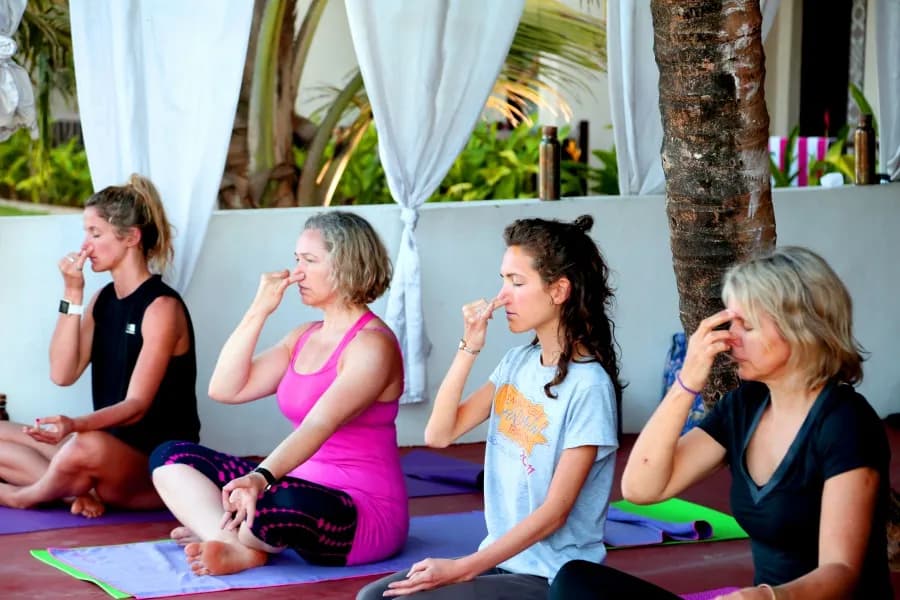
Unlike normal, automatic breathing, pranayama is deliberate and structured, which is exactly why it has a measurable calming or energizing effect — you’re consciously overriding the body’s default pattern. Normal breathing is run by the brainstem without any input from you; pranayama hands the steering wheel to conscious attention instead, and that switch alone changes how the nervous system responds. A slow, extended exhale signals safety to the body and nudges it toward the parasympathetic, “rest and digest” state. A fast, forceful breath does the opposite — it mimics the breathing pattern of exertion and nudges the body toward alertness. This is what separates pranayama from simply “taking a deep breath,” and it’s why specific techniques are taught with precise instructions — ratio of inhale to exhale, which nostril, how forceful — rather than loose general guidance.
Photo: Pinkpanther0, CC BY 4.0, via Wikimedia Commons
How to Actually Begin Practicing Pranayama
If you’re asking what is pranayama in a purely academic sense, the answer above is enough. But if you want to practice it, the starting point matters. Begin with one calming technique — slow, equal-length breathing through the nose, or alternate-nostril breathing — for five minutes a day before you add anything energizing. Sit with your spine reasonably upright; slouching restricts the diaphragm and makes every technique harder than it needs to be. Practice on an empty stomach, ideally in the morning, since a full stomach limits how much the belly can expand on the inhale. The most common beginner mistake is rushing the exhale to match the inhale’s pace — in most calming techniques, the exhale should be as long as or longer than the inhale, not shorter. Another common mistake is holding tension in the shoulders and jaw while trying to control the breath; the breath should move the belly and lower ribs, not the shoulders.
Who Should Be Cautious With Pranayama
Most gentle pranayama is safe for most people, but the more forceful, energizing techniques deserve caution if you have high blood pressure, a heart condition, are pregnant, or have had recent abdominal surgery — the rapid pressure changes in the chest and belly can be too much in these situations. Anyone with a severe respiratory condition like uncontrolled asthma should also check with a doctor before trying the vigorous types. Calming techniques are generally far gentler and suitable for a much wider range of people, though it’s still worth starting slow rather than pushing straight into long sessions. If you’re wondering what is pranayama’s safest entry point, a slow, equal-count breath through the nose is about as low-risk as any practice gets.
Pranayama in Everyday Life, Not Just on the Mat
People often ask what is pranayama for outside a formal practice session, and the honest answer is: it’s most useful exactly when life gets stressful. A few rounds of slow, extended-exhale breathing before a difficult conversation, a stressful meeting, or a sleepless night can shift your state in a way that’s hard to get from willpower alone. This is really what is pranayama offering that ordinary breathing doesn’t — a tool you can reach for in the middle of an ordinary day, not just during a dedicated session. You don’t need a mat, a quiet room, or twenty minutes; even two minutes of a calming technique at your desk, in a car before you walk into a meeting, or lying in bed before sleep, counts as real practice. This is one reason pranayama has stayed relevant well beyond traditional yoga circles — it doesn’t ask for much, and it delivers something noticeable almost immediately.
Frequently Asked Questions
Related Articles
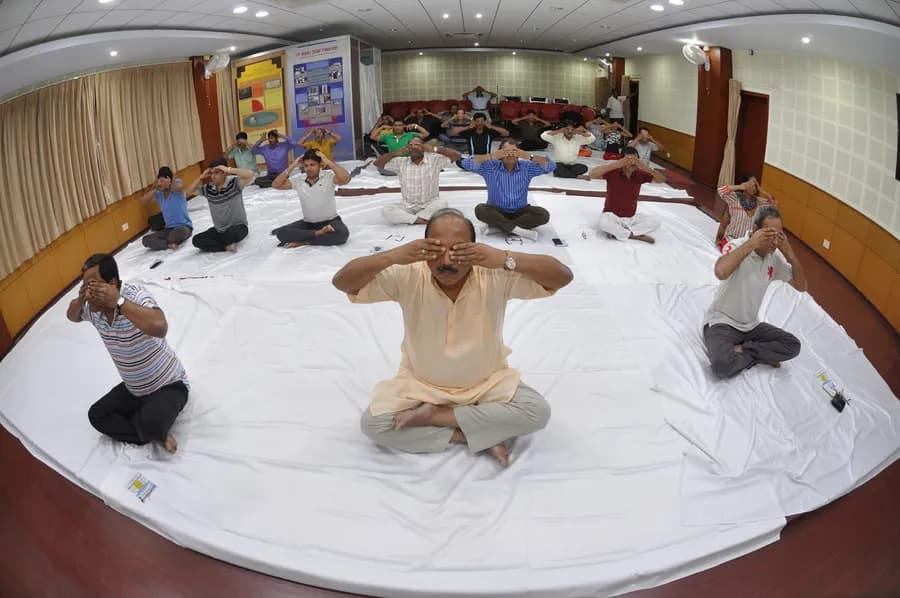
Bhramari Pranayama: Steps, Benefits and Precautions
Bhramari pranayama, the humming bee breath, brings the head still and quiet within seconds. Learn the correct hand position, steps, and precautions with Habuild's guided practice.
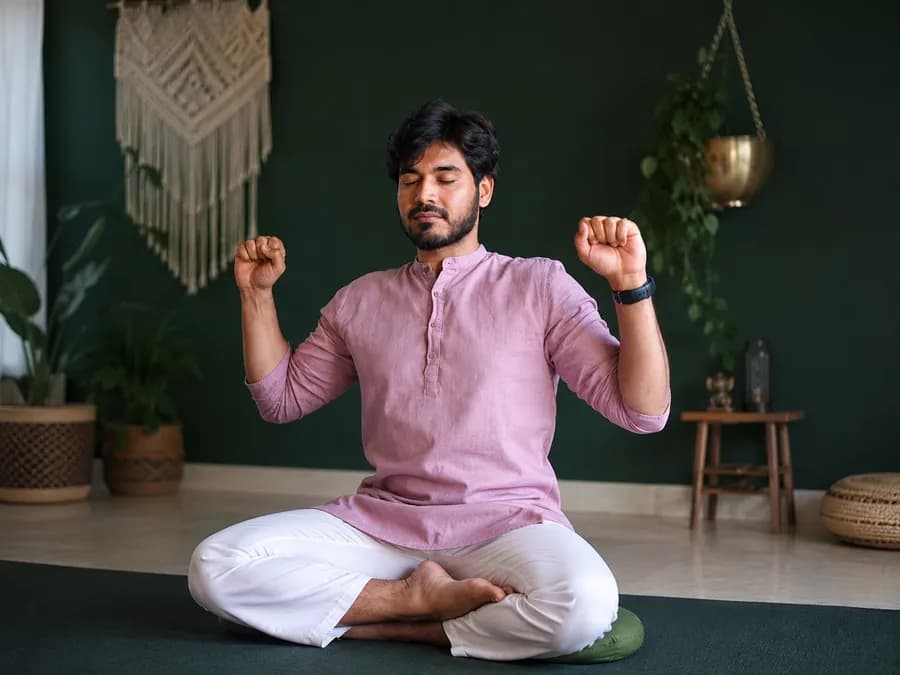
Bhastrika Pranayama: Steps, Benefits and Precautions
Bhastrika Pranayama is one of the more energetic breathing techniques in yoga — a loud, rhythmic 'whoosh' that wakes you up from the inside out. Learn the steps, benefits, and precautions with Habuild.
Meditation for ADHD: What Actually Helps
Meditation for ADHD isn't a treatment or cure — it's a support for attention regulation, used alongside proper diagnosis and care. See what realistically helps, and try guided sessions with Habuild.