
Bhramari Pranayama: Steps, Benefits and Precautions
Bhramari pranayama, the humming bee breath, brings the head still and quiet within seconds. Learn the correct hand position, steps, and precautions with Habuild's guided practice.

Key Takeaways
- Bhramari, the humming bee breath, pairs a low hum with closed ears.
- Named after ‘bhramar,’ the Sanskrit word for the black Indian bee.
- Exhale-focused and calming, unlike energising techniques like Kapalbhati.
- Shanmukhi Mudra seals eyes, ears, nostrils, and lips for a deeper effect.
- Distinct from Bhramara Mudra, a separate hand gesture without humming.
- A gentle entry point for anyone new to conscious breathing practices.
If you have ever sat quietly, closed your eyes, hummed like a bee, and felt your whole head go still and quiet within seconds – you already know why Bhramari Pranayama is one of the most loved breathing practices in yoga. Often called the humming bee breath, it is a simple exhale-focused technique where you make a low, steady humming sound while gently closing your ears with your thumbs. It sounds almost too simple to do much. But if you have tried it even once, you know the calm it brings is real and almost immediate.
In this guide, we will walk through exactly what Bhramari Pranayama is, the correct hand and finger position, a clear step-by-step method you can start today, the genuine benefits backed by how the body responds to sound and vibration, and the precautions to keep in mind. This is one of the gentlest pranayama techniques out there, and it is a lovely place to begin if you are new to conscious breathing.
What Is Bhramari Pranayama?
The word “bhramari” comes from the Sanskrit word for the black Indian bee, “bhramar.” In this practice, you inhale normally through the nose and then exhale slowly while producing a continuous, low humming sound in your throat – much like the steady drone of a bee. The ears are closed with the thumbs so that the sound and its vibration turn inward, filling your head with a soft, resonant hum instead of drifting out into the room.
This is what makes Bhramari Pranayama so different from most other pranayama practices. Techniques like Kapalbhati and Bhastrika work with forceful, rapid breathing to energise the body. Bhramari does the opposite. It is slow, soft, and turned entirely inward, which is exactly why it calms rather than stimulates. If you have already read about the different types of pranayama, you will notice Bhramari sitting quietly at the “calming” end of that spectrum, alongside practices like Anulom Vilom.
There is also a fuller version of this practice where, along with humming and closing the ears, you gently close the eyes, nostrils, and lips with your fingers in a specific pattern – this complete hand seal is known as Shanmukhi Mudra, meaning “the seal of six gates” (both ears, both eyes, and both nostrils, plus the lips held softly closed). When it is practised together with this six-gate seal, all of the senses are drawn inward at once, and the effect on the mind is even deeper. You do not need the full mudra to benefit from Bhramari – closing just the ears with the thumbs, as described below, is enough for most beginners.
One quick point of clarity, since the names sound alike and often get mixed up: Bhramari Pranayama is a breathing practice, while Bhramara Mudra is a separate hand gesture used in meditation and asana practice, without the humming breath at all. They share a root word and a family resemblance, but they are not the same technique. If you are curious about that hand gesture on its own, Bhramara Mudra is worth a separate look.
Bhramari Pranayama Steps: How to Do It the Right Way
Learning how to do Bhramari Pranayama correctly takes only a few minutes, and the steps stay the same whether you are a complete beginner or have been practising yoga for years. Here is the simplest way to learn it.
1. Find a quiet, comfortable seat. Sit cross-legged on the floor, on a cushion, or upright in a chair, whichever feels steady. Keep your spine tall but relaxed, shoulders soft, and close your eyes. A quiet space helps at first, since you are listening closely to your own hum.
2. Set up the hand position. This is the signature part of the practice. Raise both hands to your face. Use your thumbs to gently close the tragus, the small flap of cartilage just in front of your ear canal, pressing it in lightly to soften outside sound. Rest your index fingers lightly on your closed eyelids, your middle fingers alongside your nose, your ring fingers just above your upper lip, and your little fingers below your lower lip, at the corners of your mouth. Nothing here needs to be pressed hard. It is a light, soft touch, almost like framing your face rather than covering it.
3. Take a slow breath in. Inhale gently through your nose, letting your belly and chest expand naturally.
4. Exhale with a hum. Keeping your mouth closed, breathe out slowly through your nose while making a steady, even humming sound, like a bee droning or the sound of “mmmmm.” Let the sound vibrate through your face, your skull, even down into your throat. Try to keep the pitch smooth and unbroken from the start of the exhale to the end.
5. Pause briefly, then repeat. Once the exhale is complete, release your hands, take one normal breath if needed, then bring the hands back up and begin again.
6. Continue for five to ten rounds. Beginners can start with five to seven rounds and slowly build up to ten or more over a few weeks, once it feels comfortable. There is no need to rush this.
A few practical tips for these bhramari pranayama steps: keep your jaw and tongue relaxed, do not clench your teeth, and let the hum come from a comfortable pitch rather than straining for a deep or dramatic tone. Early morning, on an empty stomach, is the best time to practise it, though many people also use it in the evening to unwind after a long day, or right before sleep if their mind feels busy. It pairs beautifully with a short seated meditation right after, since the mind is already quiet by the time you finish.
If you are new to pranayama in general and want to see how Bhramari fits alongside other breathing styles, it helps to first get a broad sense of the different types of yoga breathing practised in the tradition – that context makes it easier to understand why this one is grouped with the calming, cooling techniques rather than the energising ones.
Photo: Biswarup Ganguly, CC BY 3.0, via Wikimedia Commons
Bhramari Pranayama Benefits
The benefits of Bhramari Pranayama are mostly about calm, and this is where the practice genuinely shines. Here is what it can offer, described honestly rather than with exaggerated claims.
It calms the nervous system almost immediately. The humming sound creates a gentle vibration that travels through your skull and face, and there is a real physiological reason this feels soothing. Humming stimulates the vagus nerve, which plays a large role in switching the body from a stressed, alert state into a relaxed, “rest and digest” state. This is likely the biggest reason people reach for this practice when they feel anxious, irritated, or overwhelmed – the sound itself seems to nudge the nervous system toward calm.
It helps ease anxiety, anger, and stress. Many long-time practitioners describe Bhramari as one of the fastest ways to defuse a spike of frustration or anxious energy. Because the exhale is long, slow, and steady, it naturally slows the breathing rate, which is itself one of the simplest ways to calm the body down.
It may support better sleep. Practising a few rounds before bed, in a dim and quiet room, can help settle a racing mind. It will not cure chronic insomnia on its own, but as a wind-down ritual, it is gentle and effective for many people.
It may offer some relief from mild tension headaches and migraines. The soft vibration and slow breathing can ease tightness around the temples, jaw, and forehead for some practitioners. This is not a substitute for medical treatment of migraines, but as a complementary practice, it is worth trying.
Some people with tinnitus find it soothing. A few practitioners with mild ringing in the ears report that the internal hum of Bhramari feels comforting, possibly because it gives the ears and mind something steady and self-generated to focus on instead of the ringing. This is anecdotal rather than a proven treatment, so anyone with tinnitus should treat it as a gentle addition alongside proper medical advice, not a cure.
It sharpens focus and quiets mental chatter. Because the hands, ears, and attention are all drawn to one point – the sound and its vibration – the mind naturally has less room to wander. This is part of why it is often taught as a bridge into meditation.
It is worth being honest here: Bhramari Pranayama is not a medical treatment, and none of these benefits should replace advice from a doctor for a genuine health condition. What it offers reliably is a short, accessible way to calm your nervous system using nothing but your own breath and voice, which on its own is a pretty wonderful thing to have available anytime, anywhere.
If you want to understand why breath work affects the body and mind this deeply, it connects back to the yogic idea of prana, the life force that pranayama practices are designed to direct and regulate.
Precautions for Bhramari Pranayama
This is one of the gentlest and safest pranayama techniques you can learn, especially compared to more vigorous practices like Kapalbhati or Bhastrika, which involve forceful breathing and are not suitable for everyone. That said, a few sensible precautions are worth keeping in mind.
- Ear infections or recent ear surgery: Since this practice involves pressing on the tragus and closing off outside sound, anyone with an active ear infection, ear pain, or recent ear surgery should skip it until fully healed, or check with their doctor first.
- Pregnancy: Bhramari is generally considered gentle enough for pregnant women, but as with any new breathing practice during pregnancy, it is best to check with your doctor or a qualified prenatal yoga teacher before starting, especially in the first trimester.
- Severe vertigo or dizziness: If humming or ear pressure tends to trigger dizziness for you, practise sitting down, go slowly, and stop if you feel lightheaded.
- High blood pressure: Bhramari is usually considered safe and even helpful for calming blood pressure, but if you have a diagnosed condition, it is always wise to practise any new pranayama under guidance at first.
- Do not press too hard: The thumbs should rest gently on the tragus, not push firmly into the ear canal. Hard pressure is unnecessary and can be uncomfortable.
As with any pranayama, if something feels off, stop and rest. It is meant to feel soothing from the very first round, not strained.
Bhramari Pranayama is proof that a calm mind does not always need a complicated routine – sometimes it just needs a few quiet minutes, closed eyes, and a gentle hum. If you would like a simple, guided way to build a daily habit around practices like this one, Habuild’s free yoga challenge is a good place to start, walking you through breathing and movement together, one day at a time.
Frequently Asked Questions
Related Articles
Pranayama Asana: A Guide to Breathing Poses Benefits and Practice
Practice Pranayama Asana with Habuild. Learn pranayama breathing types, steps, and benefits for lung health, stress relief, and daily vitality. Start today!
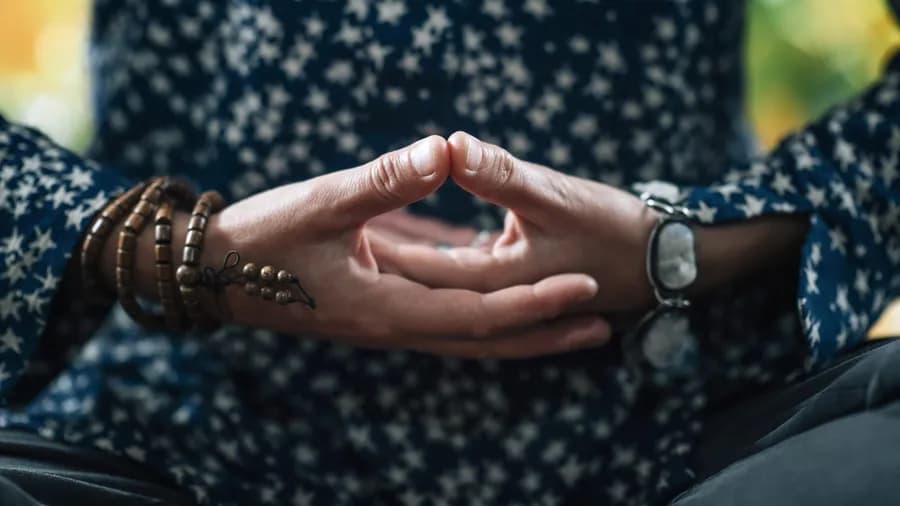
Dhyana Mudra: How to Practice and Its Benefits for Meditation
Practice Dhyana Mudra with Habuild. Follow the meditation hand gesture steps to calm the mind, deepen concentration, and support your daily practice. Start!

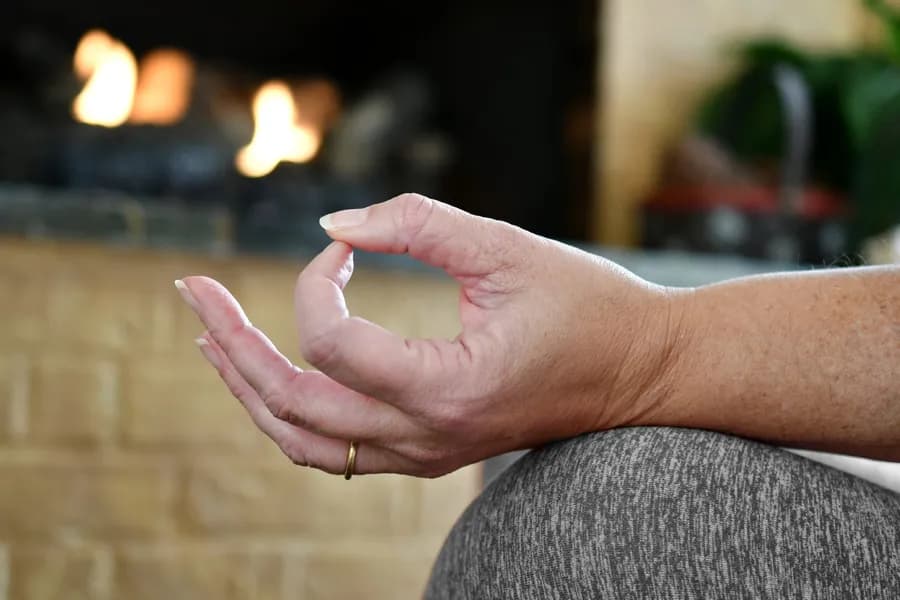
Chin Mudra: How to Practice and Its Benefits for Calm and Clarity
Practice Chin Mudra with Habuild. Follow the consciousness hand gesture steps to calm the mind, improve focus, and deepen your pranayama practice. Start today!