
Different Types of Squats — 7 Variations to Build Stronger Legs, Glutes, and Functional Strength
The right squat variations target different muscles, mechanical positions, and movement patterns, building complete lower-body strength rather than partial development. See all 7 most effective variations.
Key Takeaways
- A 2018 study found mixed squat variations produce 20-25% greater total leg strength than one style.
- Sumo squats are specifically named for emphasising the inner thighs, unlike standard back squats.
- Pistol squats and Bulgarian split squats expose the imbalances that bilateral squats conceal.
- The NSCA found varied squat training improves vertical jump by 5-10% within 8-12 weeks.
- Deep squats and pause squats are specifically credited with improving hip and ankle mobility.
- Different sports match different squat patterns – single-leg for running, explosive for jumping.
There are dozens of squat variations, but only 7–10 produce dramatic results for most practitioners. The right squat variations target different muscles, mechanical positions, and movement patterns — building complete lower-body strength rather than the partial development that single-style squat practice produces. This guide covers the 7 most effective squat variations, their specific benefits, the right progression path, and the daily routine that produces lasting strength. The same habit-building structure that powers our daily online yoga classes makes consistent practice possible.
7 Benefits of Training Multiple Squat Variations
Training multiple squat variations produces measurable benefits beyond what single-style squat practice delivers.
- Complete Lower-Body Development Across All Functional Patterns — Different squat variations emphasise different muscles — back squats build overall mass, sumo squats emphasise inner thighs, Bulgarian split squats build single-leg strength. A 2018 study in the Journal of Sports Science and Medicine found that mixed-variation training produced 20–25% greater total leg strength gains than single-variation programmes across 12 weeks.
- Reduced Plateau and Continued Strength Adaptation — Single-style squat practice plateaus within 8–12 weeks — the body adapts to identical stimulus and stops responding. Variation introduces novel stimulus that drives continued adaptation across months and years. Members focused on broader lower-body work often pair their squat training with our strength training for legs programme.
- Better Single-Leg Strength and Imbalance Correction — Bilateral squats (both legs working together) hide strength imbalances. Single-leg variations like Bulgarian split squats and pistol squats expose and correct these imbalances.
- Improved Athletic Performance and Sport Carryover — Different sports require different squat patterns — running benefits from single-leg variations, jumping from explosive variations, lifting from pause variations. The National Strength and Conditioning Association confirms that varied squat training produces measurable improvements in vertical jump (5–10% gains) and sprint performance within 8–12 weeks.
- Better Mobility and Flexibility — Squat variations like deep squats, sumo squats, and pause squats improve hip and ankle mobility — addressing the chronic tightness adults develop from prolonged sitting. Members building broader lower-body capacity often pair their work with our lower body workout programme.
- Reduced Boredom and Better Long-Term Adherence — Doing the same squat for 6 months drives most practitioners to abandon their leg training. Variety keeps practice engaging and produces the consistency that all strength gains depend on.
- Foundation for Advanced Strength and Skill Training — Mastering squat variations is the foundation for advanced strength training (Olympic lifts, weightlifting, sport-specific power) and translates directly to better functional capacity. Members building advanced squat capacity often pair their work with our squat workout programme.
How to Get Started with Squat Variations
What You Need to Begin
A flat clear floor space, comfortable clothing, and 15–20 minutes daily. A sturdy chair or bench helps with split squats. Optional resistance bands, dumbbells, or weighted backpack enhance progression but are not required for the first 4–8 weeks.
Setting Realistic Goals
Master the standard bodyweight squat (3 sets of 15 reps with perfect form) before progressing to advanced variations. Most beginners spend 4–6 weeks establishing the foundation before moving to single-leg variations and weighted versions.
Start with the Basics
Begin with three foundational practices: master bodyweight squats to 15 reps with perfect form (3–4 weeks), add goblet squats for progressive loading (3 sets × 12 reps), and add Bulgarian split squats for unilateral strength (3 sets × 12 reps per leg).
7 Best Types of Squats (From Beginner to Advanced)
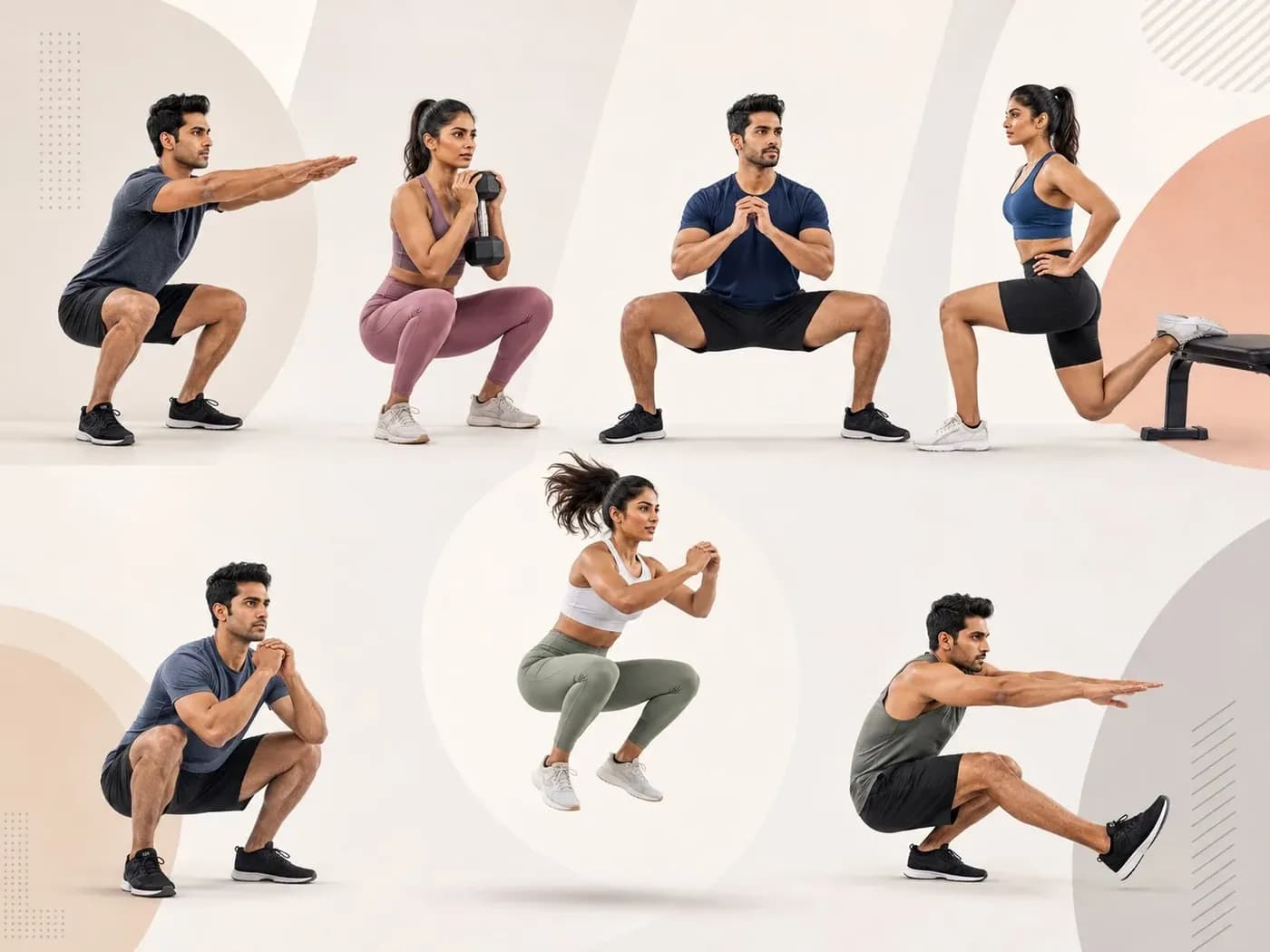
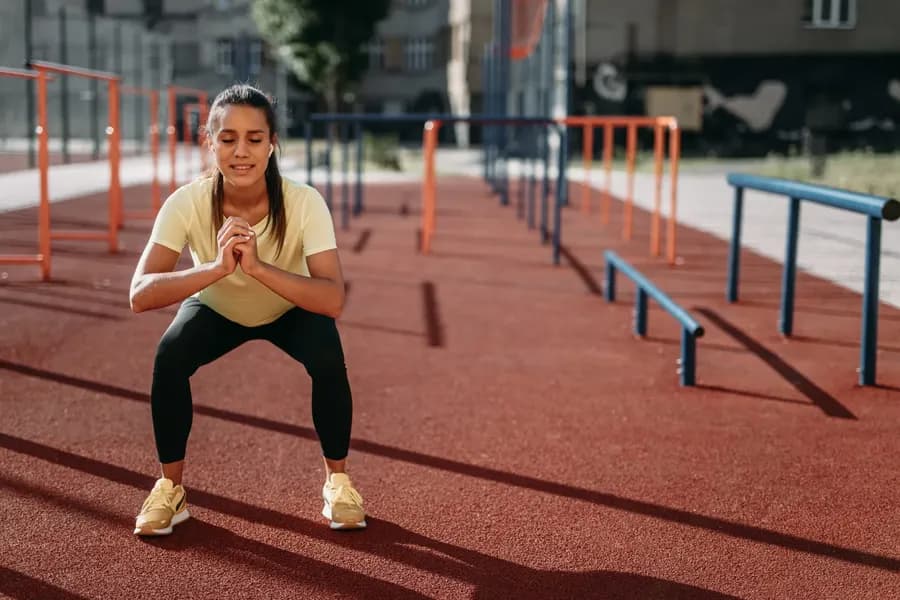
Bodyweight Squat — Glutes, Quadriceps, Hamstrings, Core — 3 Sets × 15 Reps
The foundational squat. Master this before any variation. 3 sets of 15 reps with 60 seconds rest, 3–4 times per week. Modification: chair-assisted squats for beginners.
Goblet Squat — Glutes, Quadriceps, Core — 3 Sets × 12 Reps
Holds a weight close to the chest, adding load for muscle and strength gains. The most beginner-friendly weighted squat variation. 3 sets of 12 reps with moderate weight, 60 seconds rest, 2–3 times per week.
Sumo Squat — Inner Thighs, Glutes — 3 Sets × 12 Reps
Wider stance with toes pointed outward — emphasises the adductors (inner thighs) and glutes. 3 sets of 12 reps, 60 seconds rest, 2–3 times per week.
Bulgarian Split Squat — Single-Leg Glutes, Quadriceps — 3 Sets × 12 Reps per Leg
The most effective single-leg squat variation. Performed with rear foot elevated on a chair or bench. 3 sets of 12 reps per leg with 60 seconds rest, 2 times per week. Modification: shallow range of motion with wall support for beginners.
Pause Squat — Increased Time Under Tension — 3 Sets × 10 Reps with 3-second Hold
Adds a 3-second hold at the bottom of each rep — dramatically increasing time under tension and building genuine bottom-position strength. 3 sets of 10 reps with 3-second pause, 90 seconds rest, 2 times per week. Members focused on broader glute development often pair their work with our strength training for glutes programme.
Jump Squat — Power + Cardiovascular Demand — 3 Sets × 10 Reps
Adds an explosive jump at the top of each rep — increasing power output and cardiovascular demand. Modification: regular bodyweight squats for beginners; build to jump squats over 4–6 weeks.
Pistol Squat (Single-Leg Squat) — Maximum Single-Leg Strength — 3 Sets × 5 Reps per Leg
The advanced single-leg variation. Performed standing on one leg with the other extended forward. 3 sets of 5 reps per leg with 90 seconds rest, 1–2 times per week. Modification: assisted pistol squats holding a doorframe for early progression; build to unassisted over months.
Common Mistakes to Avoid
- Skipping Variation Progression — Doing standard squats for months without exploring variations produces a plateau and leaves significant lower-body development potential unrealised.
- Skipping Warm-Up Before Advanced Variations — Cold tissue and unprepared joints make advanced squat variations injury-prone. Always warm up for 5–10 minutes before any squat session.
- Progressing to Advanced Variations Without Mastering Basics — Advancing to pistol squats or jump squats before bodyweight squats are solid produces poor form across all variations and increases injury risk.
- Inconsistency — Trying different variations occasionally produces minimal benefit. Consistent daily or near-daily practice drives the cumulative lower-body adaptations that strength gains require.
Who Should Try Multiple Squat Variations?
- Intermediate Practitioners Who Have Mastered Basic Squats — Once standard bodyweight squats reach 15 reps with perfect form, variations are the next logical progression.
- Women Building Comprehensive Lower-Body Strength — Different variations target different aspects of lower-body shape — sumo squats for inner thighs, goblet squats for glute size, split squats for unilateral definition.
- Older Adults Maintaining Functional Lower-Body Strength — Lower-body decline affects multiple movement patterns — standing up, climbing stairs, walking. Those with knee, hip, or back conditions should consult a doctor before beginning advanced variations.
- Athletes and Sport Participants — Most sports require multiple squat patterns — running benefits from single-leg variations, jumping from explosive variations.
Build Complete Lower-Body Strength with a Routine That Actually Works
Building genuine lower-body strength isn't about doing one type of squat for longer — it's about consistency, intelligent variation, and following a structured plan that builds all aspects of lower-body function.
What you get with Habuild's Strong Everyday Programme:
- Daily live guided strength and yoga sessions
- Beginner to advanced progression
- No-equipment and home-friendly workouts
- Expert guidance to ensure correct form
- Community support to stay consistent
Related reads: Types of Lunges Exercise — 7 Variations to Build Stronger Legs, Glutes, and Single-Leg Strength · Types of Planks — 7 Variations to Build Stronger Core, Better Stability, and Lasting Results
Squat variations produce dramatically different results depending on which ones you train and how consistently you cycle through them, which is exactly the kind of decision a structured programme is built to make for you. Random variation without a plan rarely adds up to real progress over time. Strong Everyday is designed to sequence squat variations like these into genuine lower-body progression.
Frequently Asked Questions
Related Articles
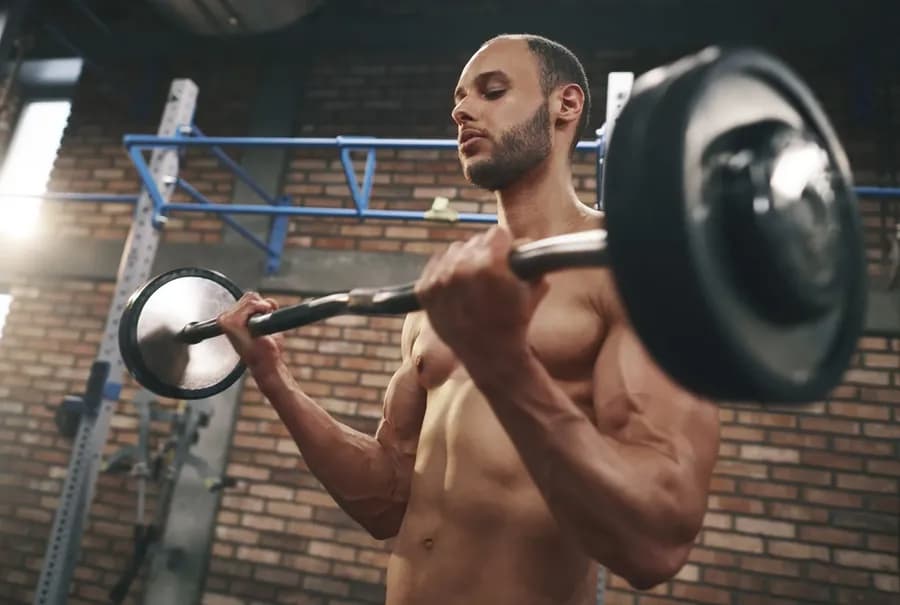
How to Increase Muscle Mass: a Practical Home Training Guide
Progressive overload, adequate protein, and proper recovery working together are what actually build muscle, whether training with bodyweight or dumbbells. See the practical home training guide.
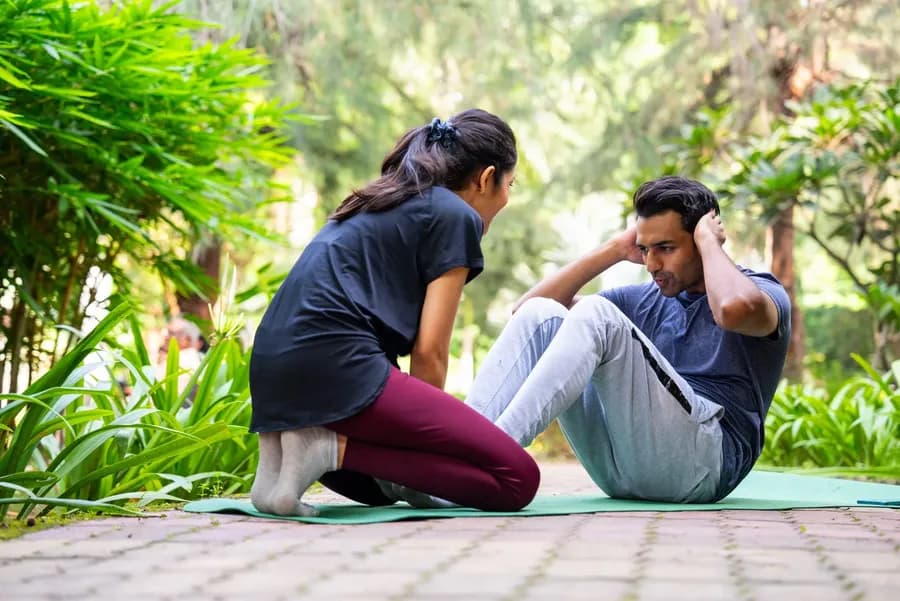
What Are Crunches: a Complete Guide to the Classic Ab Exercise
Crunches bias the upper portion of the rectus abdominis, the visible six-pack muscle most beginners want to develop first — though most people perform them poorly. See the complete guide.
Benefits of Squats for Women — 7 Real Results from Daily Practice and What to Expect Honestly
Consistent daily squat practice produces measurable results in glute shape, leg strength, and posture within 8-12 weeks — the 'bulky thigh' myth doesn't hold up given women's hormonal profile. See all 7 real results.