
Calisthenics Training for Beginners: Complete Guide
New to calisthenics training for beginners? Learn the best exercises, workout plans, and tips to build strength at home with zero equipment.
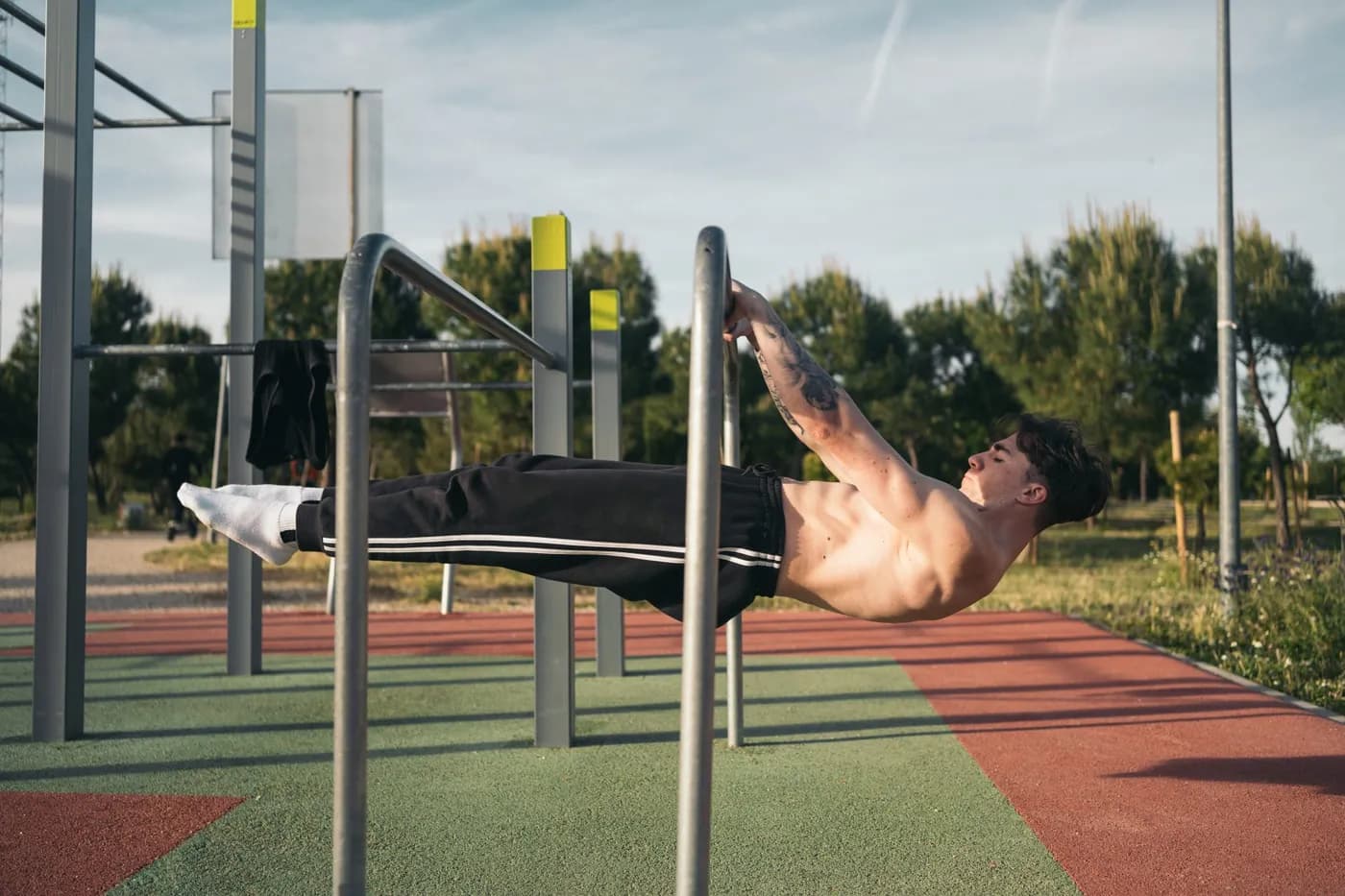
Key Takeaways
- Builds real, functional strength using nothing but your own bodyweight – no gym, no equipment.
- Every push-up, squat, and inverted row teaches the body to move as a coordinated unit.
- Deep squats and pike push-ups improve joint mobility through full range-of-motion movement.
- Progresses from basic push-ups and squats toward pike push-ups, archer squats, and handstands.
- Building muscle through calisthenics raises resting metabolic rate over months of training.
- The first four weeks focus on form and consistency rather than pushing for intensity.
Calisthenics training for beginners is one of the smartest ways to build real, functional strength using nothing but your own bodyweight. No gym membership, no expensive equipment, no complicated machines — just movement, consistency, and progression. Whether you want to build muscle, improve posture, or simply move better every day, calisthenics offers a structured, scalable path starting from day one.
Most people assume strength training requires a gym. Calisthenics proves otherwise. A clear workout plan, correct form, and the discipline to show up consistently are the only inputs you genuinely need — and this guide covers all three.
7 Key Benefits of Calisthenics Training
- Builds Functional Strength Unlike isolated machine exercises, calisthenics trains multiple muscle groups together. Every push-up, squat, and inverted row teaches your body to move as a coordinated unit — the kind of strength that carries over directly into daily life.
- Improves Body Composition Regular calisthenics training gradually supports fat reduction while helping you build lean muscle. Over time, this shift reflects in how you look and feel — without needing weights or a gym. To understand how this process works in depth, see Strength Training For Body Recomposition.
- Increases Mobility and Flexibility Full range-of-motion movements like deep squats and pike push-ups naturally improve joint mobility and muscle flexibility. Over weeks, this translates to better posture and noticeably reduced stiffness.
- Boosts Metabolism Building muscle through calisthenics raises your resting metabolic rate. Your body burns more calories even at rest — an effect that compounds over months of consistent training.
- Requires Zero Equipment A beginner calisthenics workout plan at home needs no dumbbells, no bench, no pull-up bar initially. Your living room floor or a small outdoor space is enough to get started effectively.
- Scales with Your Progress Calisthenics is infinitely progressive. You begin with basic push-ups and bodyweight squats, then advance toward pike push-ups, archer squats, and eventually handstands. The difficulty grows with you — making it a genuinely lifelong practice.
- Supports Mental Discipline and Consistency Because calisthenics relies entirely on your own body and effort, it builds a powerful sense of ownership over your fitness. That mental discipline — showing up daily — is the single biggest predictor of long-term results.
How to Get Started with Calisthenics Training
What You Need to Begin
Almost nothing. A yoga mat or a clean floor surface is ideal for comfort. Comfortable clothing and enough ceiling space to stand and extend your arms overhead is all you genuinely need. Building a strong stamina base matters too — explore Strength Training For Stamina to understand how to pace yourself from the very first session. A pull-up bar becomes useful as you progress, but it is not required at the start.
Setting Realistic Goals
In the first four weeks, your goal is not transformation — it is habit. Focus on completing each session with correct form. Strength gains typically become noticeable between weeks three and six. Visible muscle definition takes longer, usually eight to twelve weeks of consistent practice.
Set process goals such as showing up four times a week rather than outcome goals like losing five kilos in a month. Overtraining is a common beginner error. Rest days are not laziness — they are when muscles actually repair and grow. Plan at least two rest or active-recovery days per week.
Start with the Basics
Your first two weeks should cover only the foundational movement patterns: push (push-ups), pull (inverted rows), squat (bodyweight squat), hinge (glute bridge), and core (plank). Master these before adding complexity. This foundation is what makes every advanced move possible later.
Best Calisthenics Exercises for Beginners
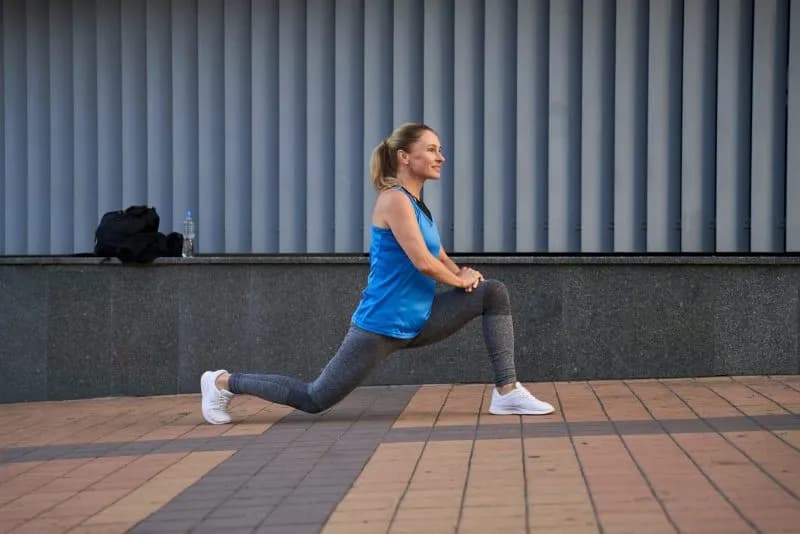
Push-Ups
The foundational upper-body push movement. Targets chest, shoulders, and triceps simultaneously. Beginners should start with knee push-ups or incline push-ups before progressing to standard form. Start with: 3 sets × 8–12 reps.
Bodyweight Squats
The single most important lower-body exercise. Builds quads, hamstrings, and glutes while training knee-tracking mechanics. Keep your chest tall, knees over toes, and lower until thighs are parallel to the floor. Start with: 3 sets × 12–15 reps.
Glute Bridge
Lying on your back with knees bent, drive your hips up and squeeze at the top. Strengthens the posterior chain — glutes, hamstrings, and lower back — which are chronically underdeveloped in people who sit for long hours. Start with: 3 sets × 15 reps.
Plank
The bedrock of core stability. A correctly held plank — spine neutral, hips not sagging, glutes engaged — trains your entire core as one integrated unit. Avoid letting the lower back collapse. Start with: 3 sets × 20–30 second holds.
Inverted Rows
Using a sturdy table or low bar, lie underneath and pull your chest up to the edge. This is the most accessible pulling movement before you can do a full pull-up. Trains the back, biceps, and rear shoulders effectively. Start with: 3 sets × 8–10 reps.
Lunges
Step forward and lower your back knee toward the floor. Lunges train each leg independently, improving balance and correcting strength imbalances between sides. Start with: 3 sets × 10 reps per leg.
Mountain Climbers
From a push-up position, drive your knees alternately toward your chest in a controlled rhythm. Trains core endurance, hip flexors, and cardiovascular fitness simultaneously. Start with: 3 sets × 20 reps (10 each side).
Common Mistakes to Avoid in Calisthenics
- Poor Form Over Ego Reps Twenty sloppy push-ups are less productive — and more injury-prone — than eight clean ones. Every rep trains a motor pattern. If you train poor patterns, your body locks them in. Prioritise quality over quantity from day one.
- Skipping the Warm-Up Five to eight minutes of light movement — arm circles, hip rotations, leg swings, and a slow jog in place — prepares your joints and raises muscle temperature before training. Skipping a warm-up is the fastest way to collect a preventable strain.
- Overtraining Without Recovery More is not always better. Muscles grow during rest, not during the workout itself. Beginners who train every single day without rest frequently hit a fatigue plateau in week two or three. Build in rest days and treat them as part of the programme, not gaps in it.
- Inconsistency and Workout Hopping The biggest enemy of calisthenics progress is changing your programme every two weeks. Consistency over six to eight weeks with one simple plan produces far better results than constantly switching routines. Stick to the fundamentals long enough to see compounding progress.
Who Should Try Calisthenics Training?
- Beginners Calisthenics is arguably the most beginner-friendly strength modality available. Every movement has an easier regression — push-ups become incline push-ups, pull-ups become inverted rows. There is no minimum fitness level required to start today.
- Women A common concern is that strength training will make women appear bulky. Calisthenics does the opposite. Building lean muscle raises metabolism, improves posture, and creates a toned appearance over time. Women lack the testosterone levels required for rapid hypertrophy, so the bulk concern is largely unfounded. Calisthenics suits women at every fitness level.
- Older Adults Bodyweight training supports bone density, improves balance, and maintains joint mobility — all of which become increasingly important with age. Movements can be easily modified for safety and comfort. Those managing existing medical conditions should consult their doctor before beginning any new exercise programme.
- Working Professionals A beginner calisthenics workout plan at home takes 30–40 minutes per session and requires no commute. For desk workers, calisthenics directly addresses the postural imbalances caused by prolonged sitting. Pairing it with Strength Training For Back Muscles as you advance makes a meaningful difference in how your spine and shoulders feel after a long workday.
Build Strength with a Routine That Actually Works
Building strength through calisthenics is not about doing random workouts. It is about having a structured plan you can follow consistently, day after day, with guidance that keeps your form correct and your motivation intact. That is exactly what Habuild’s Strong Everyday programme provides.
What you get with Habuild’s Strong Everyday programme:
- Daily live guided strength sessions — calisthenics-based and home-friendly
- Beginner-to-advanced progression so you always know what to do next
- No equipment required — workouts designed for your living room
- Expert coaches who support correct form in real time
- A consistent community to keep you showing up every day
If you are ready to move beyond random workouts and follow a plan that compounds over time, explore the Full Body Workout For Strength programme — designed for exactly this progression.
Related reads: Calisthenics for Beginners: the Complete Starter Workout Plan · Strength Training for Beginners at Home: The Complete Guide
Beginners often plateau with calisthenics not because the moves are wrong, but because they repeat the same handful of reps sporadically instead of progressing. Real strength comes from a plan that raises difficulty in small, deliberate steps week after week. Habuild’s Strong Everyday program handles that progression for you, turning scattered bodyweight sessions into steady improvement.
Frequently Asked Questions
Related Articles
How to Start Calisthenics at Home: Beginner’s Guide
Learn how to start calisthenics at home with no equipment. A beginner-friendly guide to build real strength through consistent daily practice.
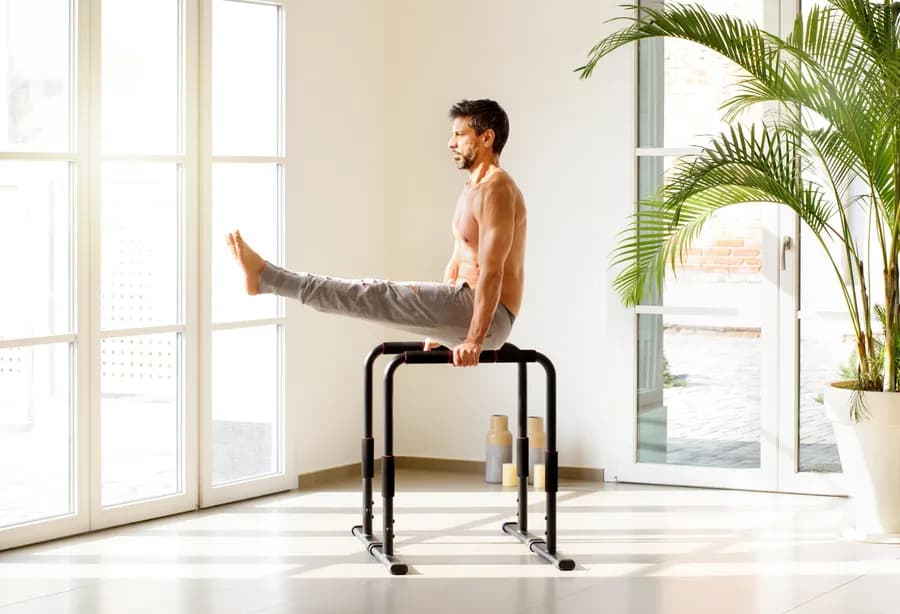
Home Calisthenics Routine: Build Strength Without Equipment
Build real strength with a home calisthenics routine. No gym, no equipment needed. Start your beginner-friendly plan today — try Habuild with a 14-day free trial.
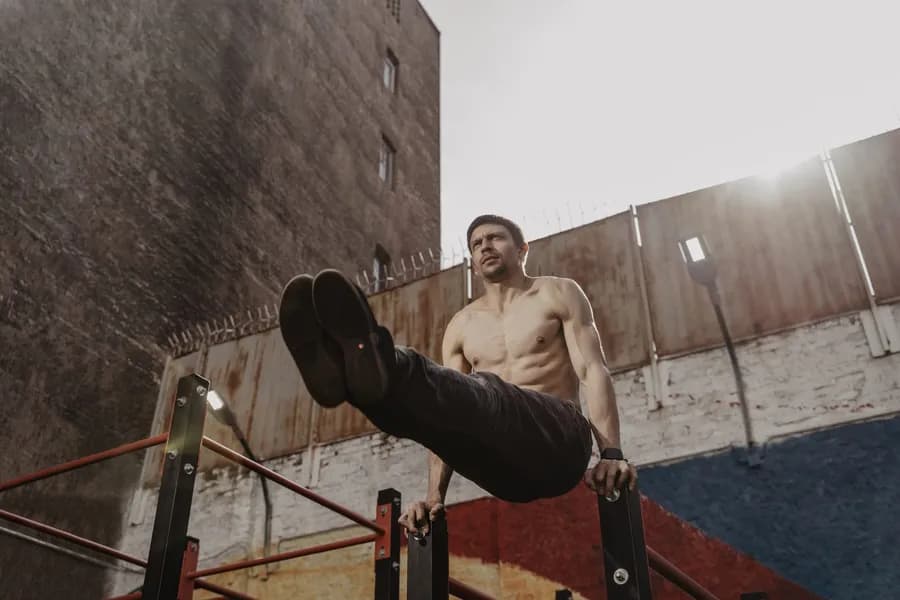
What is Calisthenics? Types, Exercises and Benefits Explained
From the Greek words for beautiful and strength, calisthenics uses only bodyweight to develop strength, flexibility, and physical capability. See the types, exercises, and benefits.
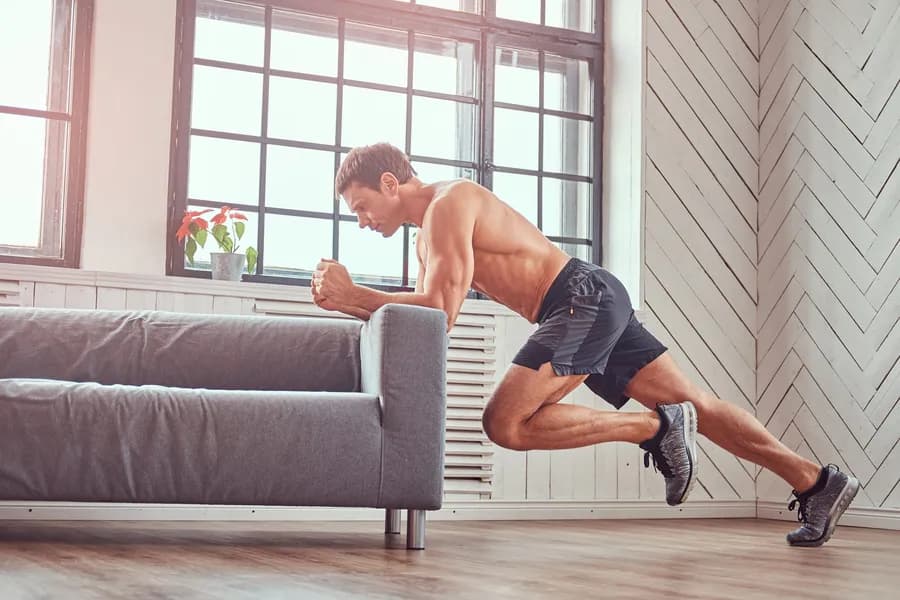
How to Build Body at Home: the Complete No-Equipment Muscle Building Guide
The best available workout is the one performed daily, not the theoretically best programme that requires a commute and a fee. See the complete no-equipment muscle building guide.
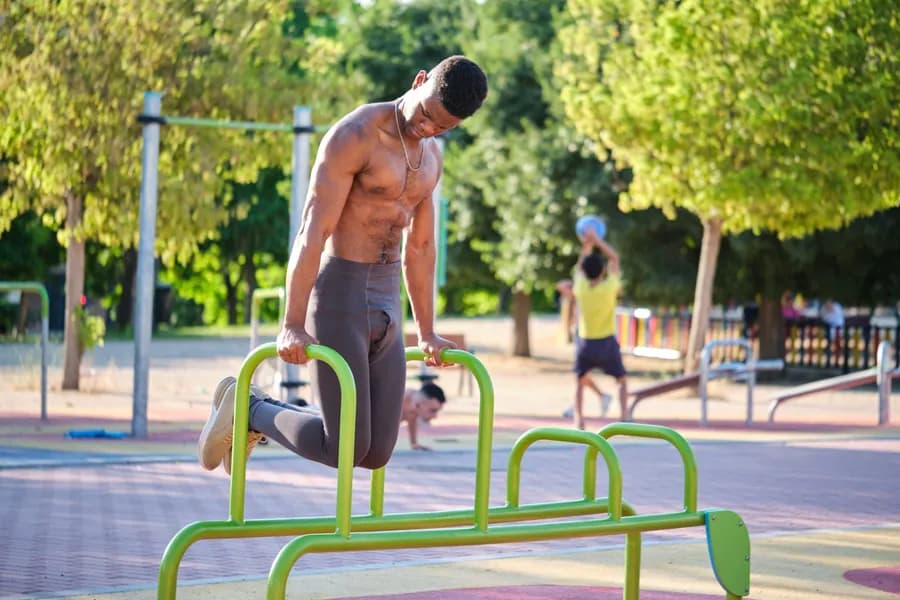
What is a Calisthenics Workout? the Complete Beginner's Guide
Bodyweight resistance training, rather than external weights or machines, develops strength, endurance, coordination, and body control. See the complete beginner's guide.