
How to Start Calisthenics at Home: Beginner’s Guide
Learn how to start calisthenics at home with no equipment. A beginner-friendly guide to build real strength through consistent daily practice.
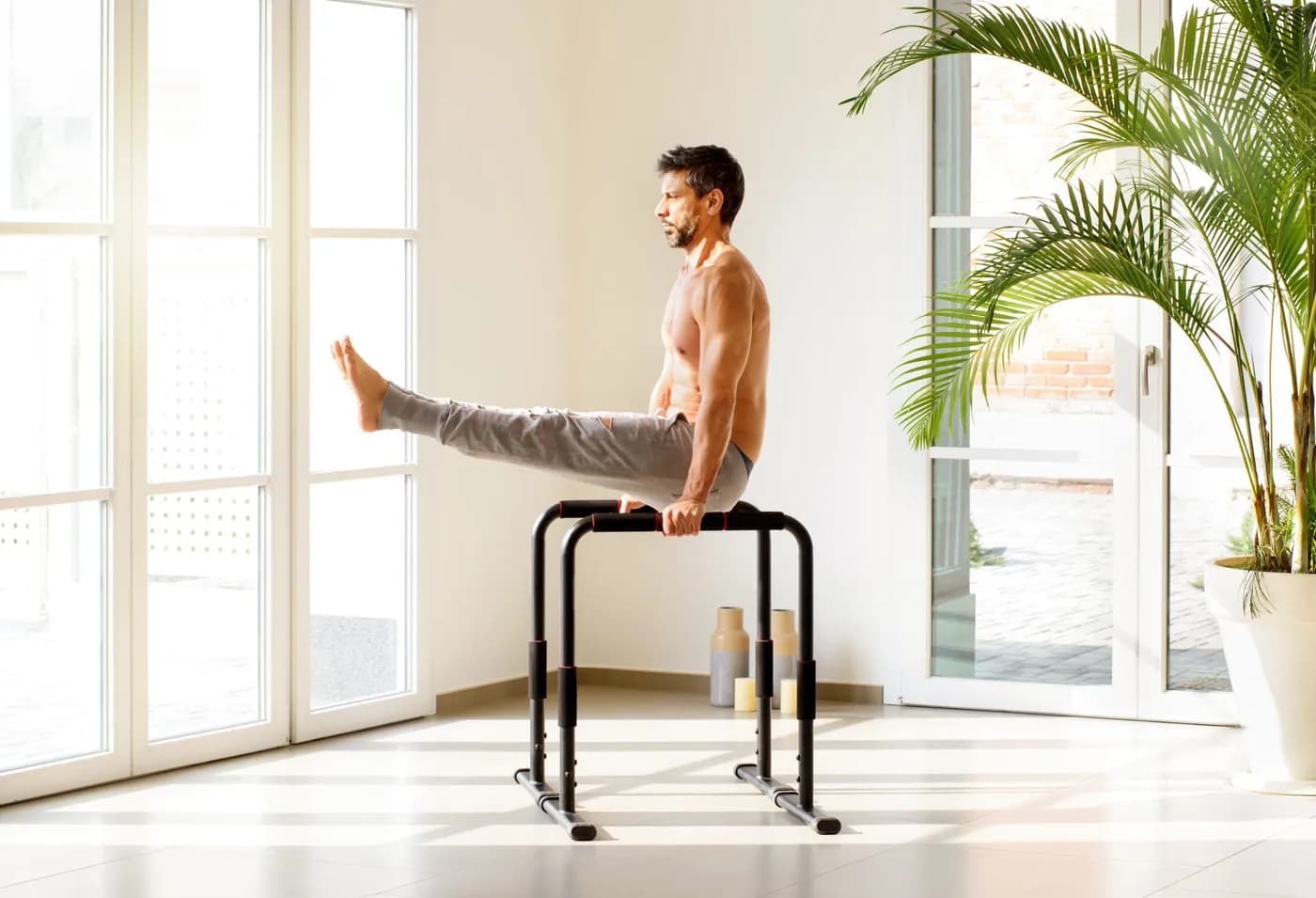
Key Takeaways
- Start with a mat-sized space, three sessions a week, and push-ups, squats, and planks.
- Bodyweight movements build strength that transfers to carrying groceries or climbing stairs.
- Beginners start with wall push-ups, while advanced athletes progress to archer push-ups.
- Tendons and joints adapt more slowly than muscles, so overloading them early risks injury.
- Compound bodyweight movements raise heart rate, supporting a calorie deficit over time.
- Being doable anywhere, anytime, with no setup is why calisthenics habits actually stick.
Calisthenics uses your own bodyweight to build strength, improve mobility, and develop muscle — no gym, no equipment, and no expensive membership required. If you want to know how to start calisthenics at home, the short answer is: clear a mat-sized space, pick three sessions a week, and start with push-ups, squats, and planks. Everything else builds from there.
Whether you’re a complete beginner or returning to fitness after a long break, this guide walks you through everything you need to get started safely and consistently.
6 Benefits of Calisthenics Training at Home
- Builds Functional Strength Calisthenics trains your body to move as a unit. Unlike isolated machine exercises, bodyweight movements like push-ups and squats build strength that directly transfers to everyday activities — carrying groceries, climbing stairs, or sitting at a desk with better posture.
- Requires Zero Equipment You don’t need dumbbells, a pull-up bar, or a gym membership to get started. Your bodyweight is enough to challenge your muscles progressively. This makes calisthenics one of the most accessible fitness disciplines for people training at home. If you want to explore how bodyweight work fits into a broader routine, best exercises for strength at home is a strong companion resource.
- Improves Mobility and Flexibility Calisthenics movements involve full ranges of motion. Over time, regular practice may gradually ease stiffness in your hips, shoulders, and spine — especially important if you spend long hours sitting at a desk.
- Supports Fat Loss Over Time Compound bodyweight movements raise your heart rate and engage multiple muscle groups simultaneously. With consistent practice, this supports a calorie deficit and may gradually help with managing body composition alongside a balanced diet.
- Scales to Your Level Every calisthenics exercise has an easier and a harder variation. Beginners start with wall push-ups; advanced athletes progress to archer push-ups. You’ll never outgrow the method — it grows with you.
- Builds Long-Term Consistency Because you can do it anywhere, anytime, with no setup required, calisthenics is one of the few fitness habits people actually stick with. And consistency — not intensity — is what produces real, lasting results.
How to Get Started with Calisthenics at Home
What You Need to Begin
The barrier to entry is remarkably low. All you need is a clear floor space roughly the size of a yoga mat, comfortable clothing, and about 20–30 minutes a day. No equipment is required to complete a solid beginner program. As you advance, a pull-up bar (optional) opens up more upper-body progressions, but it is not necessary at the start.
Setting Realistic Goals
Avoid the temptation to train every day at high intensity from week one. Your tendons and joints adapt more slowly than your muscles, and overloading them early is the most common cause of beginner burnout and injury. A sensible target: three sessions per week for the first month, with one rest day between sessions. Track your reps, not your results — the results follow consistency.
Start with the Basics
Your first two weeks should focus on learning movement patterns, not maxing out reps. Master the push-up, the squat, the plank, and the hollow body hold before adding volume. Perfect form at low reps is always more valuable than sloppy reps at high volume. To understand how structured home-based strength training is approached at every level, how to do strength training at home effectively covers the full picture.
Best Calisthenics Exercises for Beginners at Home
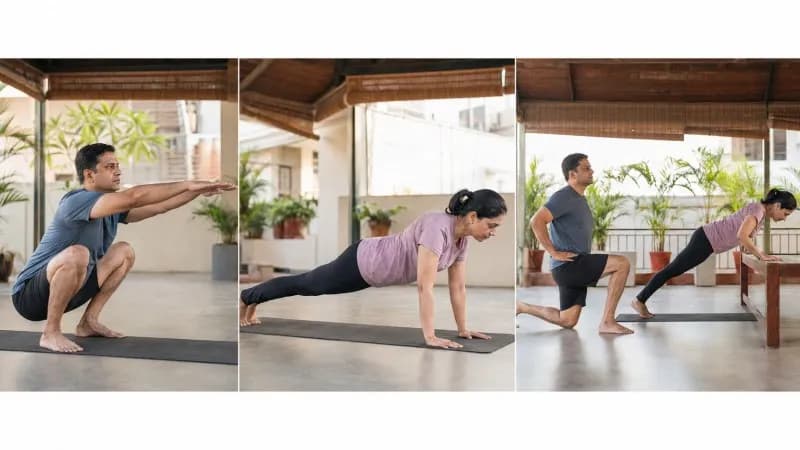
Push-Ups
The foundational upper-body exercise. Push-ups train your chest, shoulders, and triceps while engaging your core. Beginners should start with knee push-ups or wall push-ups and progress to full push-ups over 2–3 weeks. Aim for 3 sets of 8–10 reps with controlled form.
Bodyweight Squats
Squats are the cornerstone of lower-body calisthenics. They strengthen your quads, hamstrings, and glutes while improving hip mobility. Keep your chest tall, knees tracking over your toes, and lower until your thighs are parallel to the floor. Start with 3 sets of 12–15 reps.
Plank
The plank builds deep core stability — the foundation for every other calisthenics movement. Hold a straight-arm plank with your hips level and your glutes engaged. Begin with 3 holds of 20–30 seconds and build up to 60 seconds over four weeks.
Glute Bridges
Often overlooked, glute bridges activate the posterior chain — glutes, hamstrings, and lower back. Lying on your back with knees bent, drive your hips toward the ceiling and squeeze at the top. 3 sets of 15 reps. Essential for anyone who sits for long periods during the day.
Reverse Lunges
Lunges develop single-leg strength and balance, both critical for injury prevention. The reverse lunge (stepping backward) is gentler on the knees than a forward lunge, making it ideal for beginners. 3 sets of 10 reps per leg. These pair well with leg workouts at home for more complete lower-body development.
Tricep Dips (Using a Chair)
Place your hands on the edge of a sturdy chair, legs extended, and lower your body by bending your elbows to 90 degrees. This directly trains your triceps and is one of the few isolation-adjacent moves in beginner calisthenics. 3 sets of 8–12 reps.
Hollow Body Hold
Lying on your back, press your lower back into the floor and extend your arms overhead and legs straight at a low angle. Hold for 20–30 seconds. This move builds the core tension that underpins almost every advanced calisthenics skill — starting it early pays dividends later.
Common Mistakes to Avoid When Starting Calisthenics
- Poor Form Rushing through reps with incorrect alignment puts stress on the wrong structures. A poorly executed push-up with flared elbows, for example, taxes your shoulder joints rather than your chest. Always prioritize clean form over rep count — even if that means doing five slow, controlled reps instead of fifteen sloppy ones.
- Skipping the Warm-Up Cold muscles and joints move less efficiently and are more prone to strain. Spend five minutes before every session doing dynamic movements: arm circles, hip rotations, leg swings, and light jumping jacks. A proper warm-up is not optional — it is part of the training.
- Overtraining Without Recovery More sessions do not always mean faster progress. Muscle tissue repairs and grows during rest days. Training the same muscle groups daily without adequate recovery stalls progress and increases injury risk. Three to four sessions per week with rest days built in is more effective than seven consecutive days of training.
- Inconsistency This is the most common reason people don’t see results from calisthenics. Sporadic bursts of effort — working out intensely for two weeks then stopping — produce very little. The body adapts to repeated, regular stimulus. Showing up three times a week for three months will always outperform three intense weeks followed by silence.
Who Should Try Calisthenics at Home?
- Beginners Calisthenics is arguably the most beginner-friendly form of strength training. Because you control the difficulty through leverage and range of motion, you can always find a version of each exercise that matches your current level. There is no heavy barbell to manage and no risk of loading more weight than your body can handle. If you’re starting from scratch, a guided program designed for beginners makes the learning curve significantly more manageable.
- Women Calisthenics does not bulk you up — it builds lean, functional muscle. Many women find that bodyweight training gives them the toned, strong look they’re after without the intimidation of a weights-focused gym environment. It’s especially effective for developing core strength, glute activation, and upper-body endurance. Women looking for a structured approach will find that a program designed for women’s strength training adds the accountability that makes the difference between a two-week attempt and a lasting habit.
- Older Adults For adults over 40 or 50, calisthenics supports bone density, balance, and joint mobility — three areas that decline significantly with age and inactivity. Movements like squats, glute bridges, and planks are low-impact and can be scaled to any ability level. As always, consult your doctor before starting a new exercise program if you have existing health conditions.
- Working Professionals If you’re desk-bound for eight or more hours a day, calisthenics is particularly beneficial. Movements that open the hips, activate the glutes, and strengthen the upper back directly counteract the postural damage caused by prolonged sitting. A 25-minute session at home in the morning or evening fits into virtually any schedule — no commute to a gym required. For those managing fatigue from long work hours, understanding how to address fatigue effectively alongside your training can significantly improve how you feel day to day.
Build Strength with a Routine That Actually Works
Building real strength through calisthenics isn’t about doing random workouts you find online — it’s about following a structured progression, staying consistent, and getting guidance that keeps your form and motivation on track. That’s exactly what Habuild’s Strong Everyday program is built for.
What you get with Habuild’s Strong Everyday Program:
- Daily live guided strength and calisthenics sessions
- Beginner-to-advanced progression built into the program
- No equipment required — fully home-friendly workouts
- Expert guidance to help you maintain correct form from day one
- A community of members training alongside you every morning
Related reads: Home Calisthenics Routine: Build Strength Without Equipment · Beginner Home Workout Without Equipment: Everything You Need to Start
Bodyweight training rewards patience more than intensity — each rep you complete with control adds up faster than any single hard session ever could. Instead of piecing together routines from memory, a guided plan tells you exactly what to do next and keeps the difficulty moving in step with your progress. For beginners who want that kind of direction without needing a gym, Strong Everyday lays out a clear, progressive path from your very first rep.
Frequently Asked Questions
Related Articles
What is Calisthenics? Types, Exercises and Benefits Explained
From the Greek words for beautiful and strength, calisthenics uses only bodyweight to develop strength, flexibility, and physical capability. See the types, exercises, and benefits.
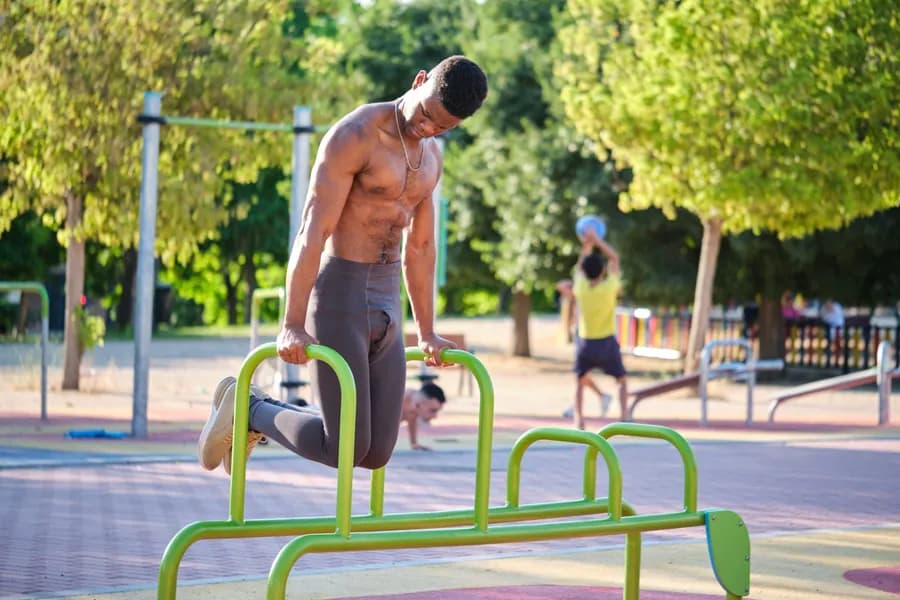
What is a Calisthenics Workout? the Complete Beginner's Guide
Bodyweight resistance training, rather than external weights or machines, develops strength, endurance, coordination, and body control. See the complete beginner's guide.
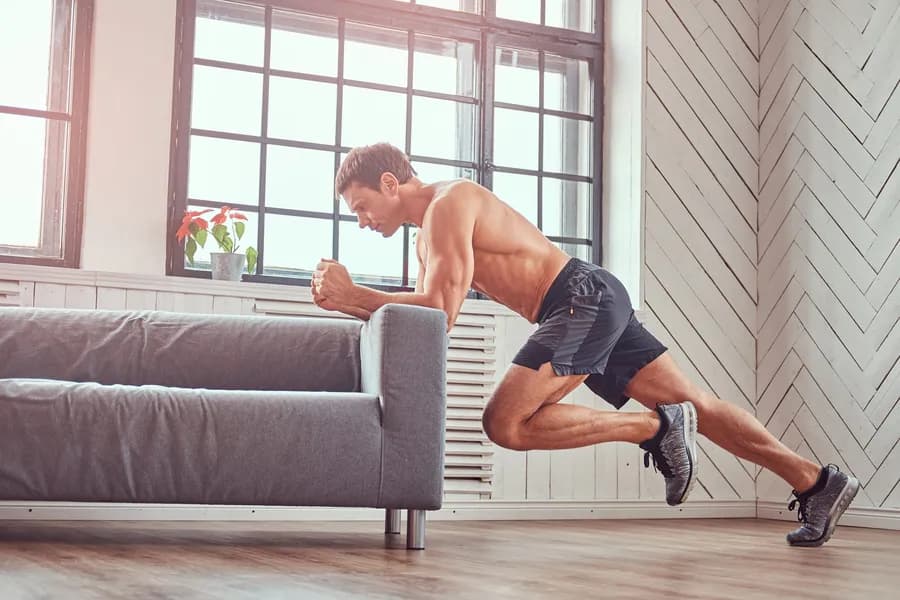
How to Build Body at Home: the Complete No-Equipment Muscle Building Guide
The best available workout is the one performed daily, not the theoretically best programme that requires a commute and a fee. See the complete no-equipment muscle building guide.
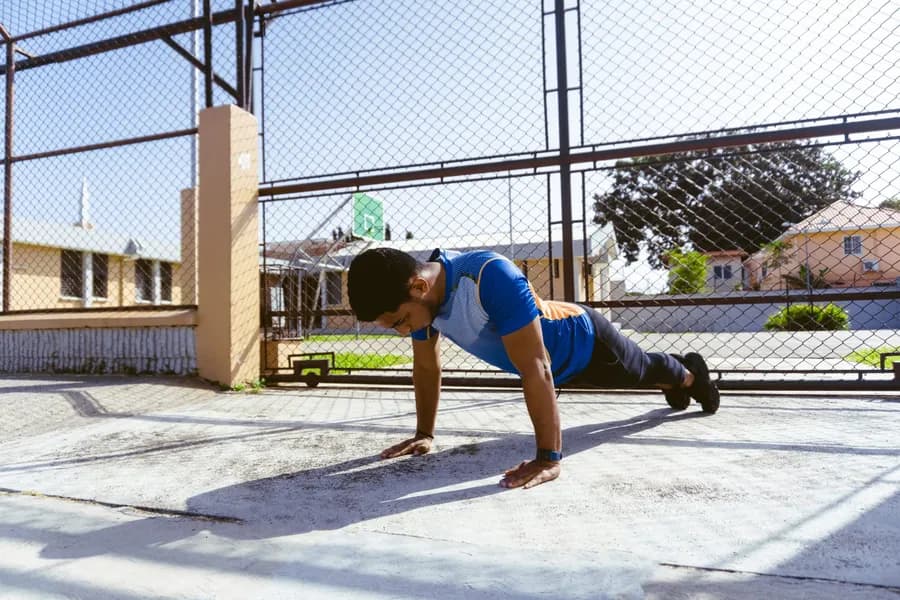
How to Do Push Ups: Step-by-Step Guide for All Levels
Done correctly, the push-up builds chest, shoulder, tricep, and core strength at once with no equipment — done incorrectly, it strains the wrists and neck. See every variation with precise form cues.
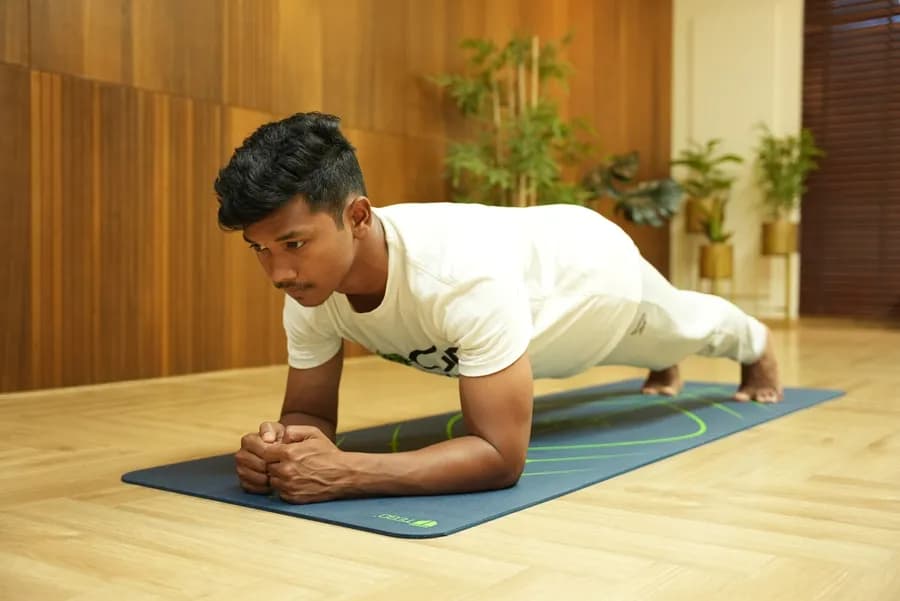
How to Do Planks Correctly — the Complete Form Guide and Common Mistakes That Sabotage Results
Sagging hips, lifted hips, locked elbows, and held breath are the common form errors that reduce or eliminate the core benefit while increasing injury risk. See the complete form guide.