
Glute Exercises for Women: Benefits, Best Moves & How to Get Started
Bridges, squats, and clamshells build lower-body strength and improve posture, using nothing more than bodyweight. See the best moves to get started.
Key Takeaways
- Glutes are the largest muscle group in the body, forming a stable base for the spine and hips.
- Underactive glutes let the knees cave inward during walking, running, or squatting.
- Single-leg moves like lunges and Bulgarian split squats improve balance independently per side.
- Glutes and the pelvic floor work closely together, especially relevant post-pregnancy.
- Foundational moves like bridges, squats, and clamshells need no equipment at all.
Glute exercises for women target the gluteus maximus, medius, and minimus to build lower-body strength, improve posture, and support functional movement. Foundational moves like bridges, squats, and clamshells require no equipment, making them ideal for home training at any level.
If you’ve been looking for the right glute exercises for women, you’re in the right place. Strong glutes aren’t just about appearance — they are the foundation of your lower body, supporting everything from posture and balance to daily movement and injury prevention. Whether you’re a complete beginner or getting back into a routine, this guide covers everything you need: why it matters, where to begin, and the exact exercises that deliver results over time.
10 Benefits of Glute Exercises for Women
- Builds a Stronger Lower Body Foundation Your glutes are the largest muscle group in your body. Strengthening them creates a stable base that supports your spine, hips, and knees — making every movement more efficient and safer.
- Improves Posture and Reduces Back Discomfort Weak glutes often lead to a tilted pelvis and increased strain on the lower back. Regular glute training helps activate and strengthen these muscles, which may gradually ease the tension that builds up from sitting for long hours.
- Supports Healthy Knee Alignment When the glutes are underactive, the knees tend to cave inward during movement. Strengthening the glute medius and maximus helps keep the knees properly tracked, reducing the risk of discomfort during walking, running, or squatting. You can explore more through dedicated glute strength training guidance.
- Enhances Athletic Performance and Stamina Whether you walk, run, cycle, or do any sport, glute strength directly impacts your power output and endurance. Stronger glutes allow you to push harder and recover faster.
- Supports Fat Loss and Body Recomposition Large muscle groups like the glutes burn more energy during and after training. Incorporating glute-focused strength work into your routine supports a more active metabolism over time.
- Reduces Risk of Hip and Pelvic Injuries Weak hips and glutes are a common underlying cause of many lower-body injuries. Training these muscles builds the protective strength needed for everyday functional movements.
- Improves Balance and Coordination Single-leg glute exercises like lunges and Bulgarian split squats train each side independently, which significantly improves your balance and coordination over time.
- Supports Pelvic Floor Health The glutes and pelvic floor work closely together. Strengthening your glutes can complement pelvic floor function, which matters especially for women post-pregnancy or with desk-heavy lifestyles.
- Boosts Confidence and Body Awareness Feeling strong in your lower body creates a tangible shift in how you carry yourself — more upright, more grounded, and more at ease with physical movement.
- Builds Long-Term Consistency Glute exercises are versatile, scalable, and can be done entirely at home without equipment. That makes them one of the most sustainable additions to any long-term fitness routine.
How to Get Started with Glute Exercises
What You Need to Begin
The good news: you don’t need a gym or any equipment to start building your glutes. A yoga mat, enough floor space to lie down, and comfortable clothes are all you need for most beginner exercises. Resistance bands can add challenge as you progress, but they are entirely optional at the start.
Setting Realistic Goals
Glute development is a gradual process. Most women begin noticing improved strength and muscle engagement within three to four weeks of consistent training. The key is to avoid overloading too early — start with bodyweight movements, focus on feeling the muscle contract, and build up volume over time. Two to three sessions per week is an excellent starting point.
Start with the Basics
Before adding resistance or complex movements, spend the first two weeks mastering the foundational exercises: glute bridges, bodyweight squats, and clamshells. These build the mind-muscle connection you’ll need for all more advanced work. If you’re new to structured training, strength training for beginners offers a comprehensive starting framework.
Best Glute Exercises for Women
Glute Bridge
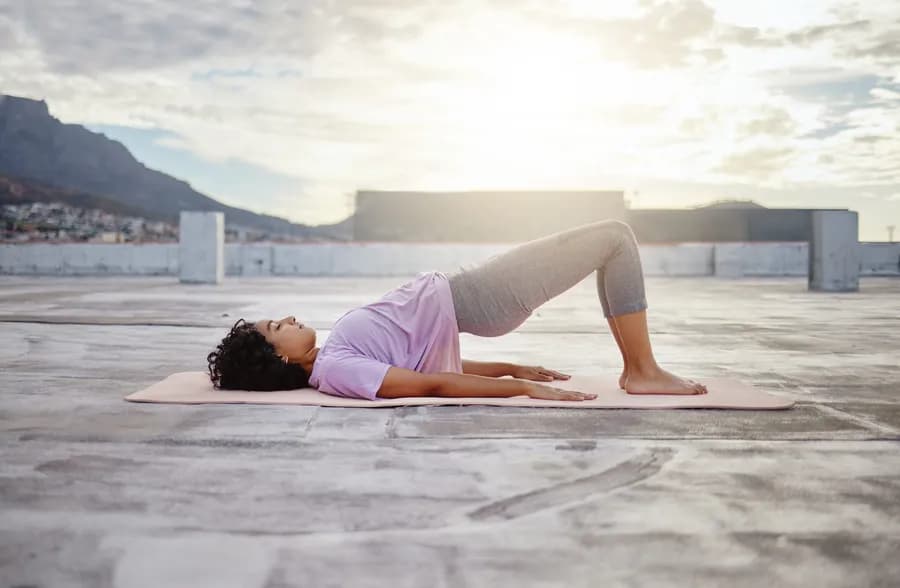
Lie on your back with knees bent and feet flat on the floor, hip-width apart. Press through your heels to lift your hips until your body forms a straight line from shoulders to knees. Squeeze your glutes at the top and hold for 2 seconds before lowering. This is the single most effective exercise for activating the glute maximus without any equipment. 3 sets of 15–20 reps.
Bodyweight Squat
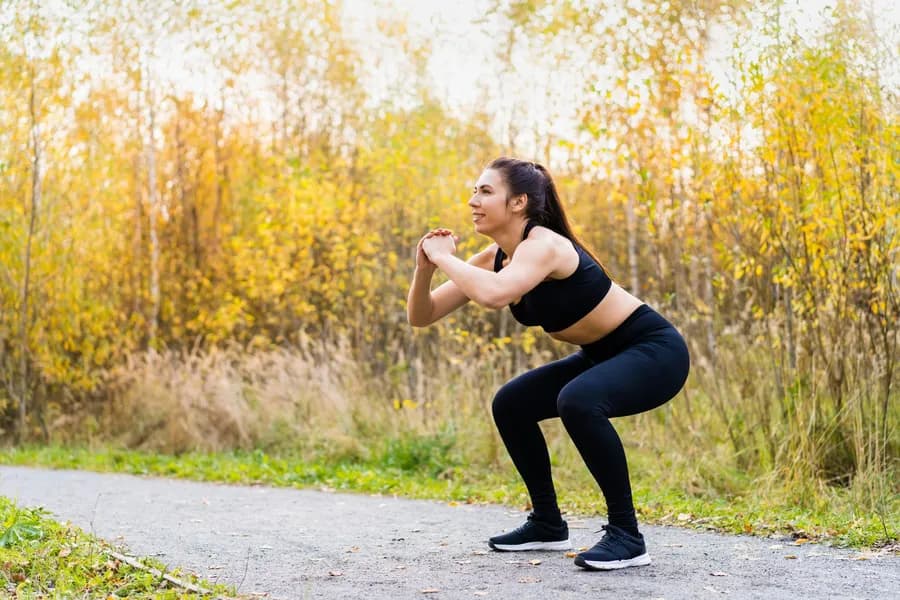
Stand with feet shoulder-width apart and toes slightly turned out. Lower your hips back and down as if sitting into a chair, keeping your chest upright and knees tracking over your toes. Push through your heels to return to standing. Squats recruit the glutes, quads, and hamstrings simultaneously. 3 sets of 12–15 reps.
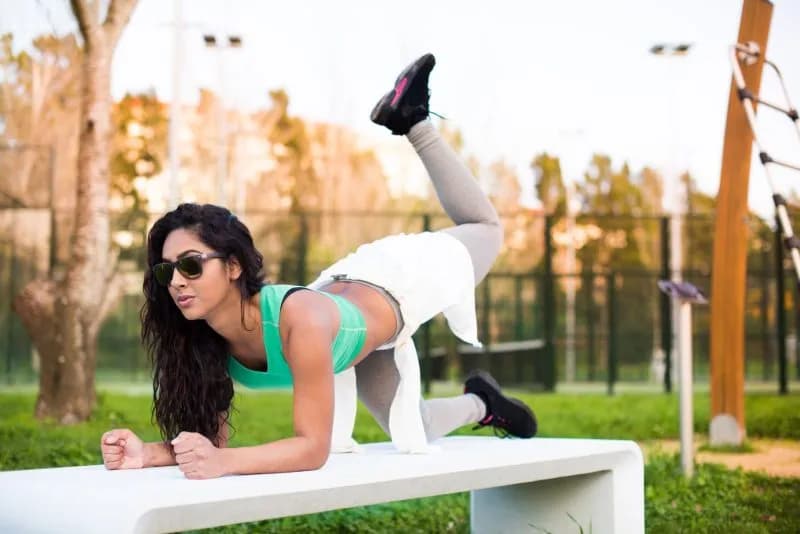
Donkey Kicks
Start on all fours with wrists under shoulders and knees under hips. Keeping your knee bent at 90 degrees, drive one heel straight up toward the ceiling until your thigh is parallel to the floor. Return slowly and repeat. This movement isolates the glute maximus with minimal joint stress. 3 sets of 12 reps per side.
Clamshell
Lie on your side with hips stacked and knees bent at 45 degrees. Keeping your feet together, rotate your top knee upward like a clamshell opening, then lower with control. This targets the glute medius — the muscle most responsible for hip stability and knee health. 3 sets of 15 reps per side.
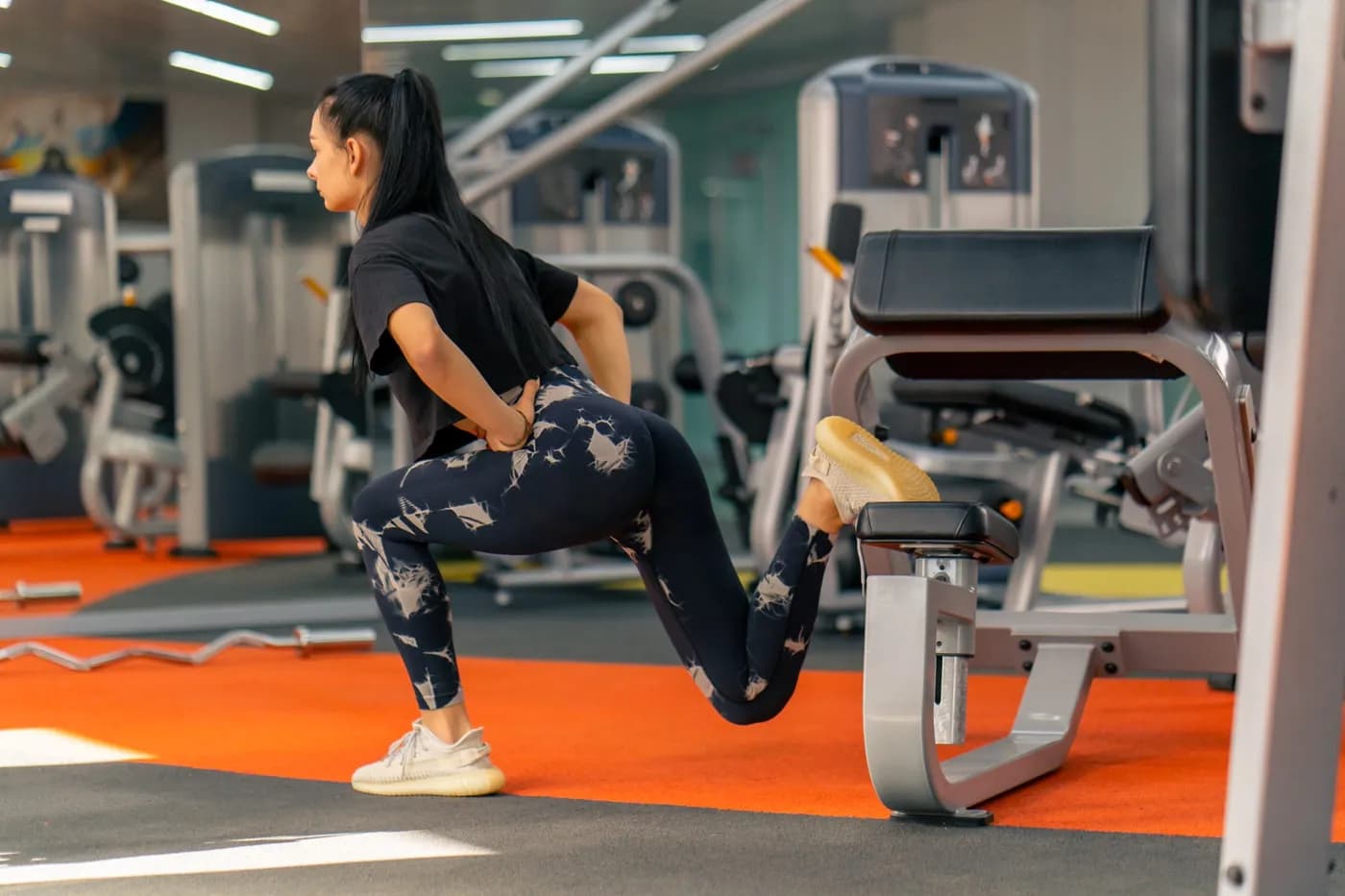
Reverse Lunge
Stand tall and step one foot directly backward, lowering your back knee toward the floor. Keep your front shin vertical and your torso upright. Push through your front heel to return to the starting position. Reverse lunges place more demand on the glutes than forward lunges and are gentler on the knees. 3 sets of 10 reps per leg.
Single-Leg Glute Bridge
Perform a standard glute bridge, but extend one leg straight out while lifting. This unilateral variation increases the load on each glute individually, addressing strength imbalances between sides. 3 sets of 10–12 reps per side.
Hip Thrust (Elevated Glute Bridge)
Place your upper back against a couch or bench, feet flat on the floor. Drive your hips upward by pressing through your heels, squeezing hard at the top. The elevated position increases the range of motion compared to a floor bridge, producing greater glute activation. 3 sets of 12–15 reps.
Common Mistakes to Avoid
- Poor Form Rushing through repetitions without engaging the glutes is the most common error. Many women use their lower back or quads to compensate for inactive glutes. Slow down, focus on the squeeze at the top of each rep, and you’ll get far better results from fewer reps done correctly.
- Skipping Warm-Up Cold, tight hip flexors can inhibit glute activation. Before any glute session, spend five minutes on hip circles, leg swings, and a few slow bodyweight squats to prime the muscles and joints for the work ahead.
- Overtraining Without Recovery Training your glutes every single day doesn’t accelerate progress — it delays it. Muscle grows during rest, not during the workout itself. Allow at least one rest day between glute-focused sessions, and treat soreness as a signal to recover rather than push through.
- Inconsistency The biggest reason women don’t see results from glute exercises isn’t the wrong exercises — it’s irregular practice. Showing up two to three times per week for eight to twelve weeks consistently will outperform any sporadic routine. Explore how structured strength training for women can help you build that consistency with expert guidance.
Who Should Try Glute Exercises?
- Beginners Glute exercises have one of the lowest barriers to entry in fitness. Every foundational movement — bridges, squats, clamshells — requires no equipment, no prior experience, and no gym. If you’re starting from zero, these are among the safest and most rewarding movements to begin with.
- Women A common concern is that strength training will create bulk. In practice, women have significantly lower testosterone levels than men, making it very difficult to develop large muscle mass from bodyweight or light resistance work. What you will develop is a toned, functional lower body and improved movement quality — without bulk.
- Older Adults Glute strength declines naturally with age, contributing to reduced balance, increased fall risk, and hip joint vulnerability. Gentle, low-impact glute exercises such as bridges and clamshells are well-tolerated by older adults and may gradually support mobility and stability over time. Always consult your doctor before beginning a new exercise programme if you have existing joint conditions.
- Working Professionals Prolonged sitting weakens the glutes over time — a pattern sometimes called “gluteal amnesia.” For desk workers, even a 20-minute glute-focused routine three times per week can make a meaningful difference in posture, energy levels, and lower back comfort throughout the workday.
Build Strength with a Routine That Actually Works
Building strong glutes isn’t about doing random workouts sporadically — it’s about consistent, structured practice with the right guidance. With expert-led sessions and a daily routine designed to progress with you, Habuild’s Strong Everyday program makes it possible to train effectively from home and see real, gradual improvement over time.
What You Get with Habuild’s Strong Everyday Program:
- Daily live guided strength sessions — including lower body and glute-focused routines
- Beginner to advanced progression so you’re never stuck at the same level
- No-equipment, home-friendly workouts that fit real schedules
- Expert guidance on form and technique — the single biggest factor in results
- A live community that keeps you accountable and motivated
Related reads: Chest Exercises for Women: Benefits, Best Moves & How to Get Started · Strength Training Exercises for Men: Benefits, Best Moves & How to Get Started
Bridges, squats, and clamshells are a solid starting point, but the strength gains that actually change how you move come from repeating and progressively challenging these moves over several weeks, not just a few sessions. A structured program can guide that progression instead of leaving you to guess when to add reps or resistance. Habuild’s Strong Everyday program walks you through exactly that kind of consistent, guided lower-body training.
Frequently Asked Questions
Related Articles
Chest Exercises for Women: Benefits, Best Moves & How to Get Started
A structured chest routine builds upper-body strength and improves posture without adding bulk — visible results within four to six weeks. See the best moves to start with.
Glute Exercises for Men: Build Strength, Power, and Stability
Hip thrusts, Romanian deadlifts, and glute bridges build lower-body power and support athletic performance — with results in six to twelve weeks. See why glutes matter for men’s training.
Hip Exercises for Pain: Best Moves to Feel Better at Home
Targeted hip movements strengthen the muscles around the joint and can meaningfully ease discomfort from bursitis, osteoarthritis, or impingement. See the best moves to try at home.
Pelvic Floor Exercises for Women: Benefits, Techniques & How to Get Started
Kegel contractions and other targeted movements strengthen the muscles supporting the bladder, bowel, and uterus — most women notice improved control within four to six weeks. See the techniques and how to start.
10 Benefits of Strength Training for Women
Resistance training builds lean muscle, supports fat loss, and improves bone density — all achievable from home with no equipment. See all 10 benefits.
Best Exercise Routine for Beginners
Squats, push-ups, lunges, and planks done three days a week, with progressive difficulty, need no gym or equipment. See the full beginner routine.