
How Many Reps to Build Muscle? The Complete Guide to Sets, Reps, and Progression
6 to 12 reps per set is the classic hypertrophy range, but sets, rest periods, and consistency matter just as much. See the full breakdown of reps, sets, and progression.

Key Takeaways
- 6 to 12 reps per set is the classic hypertrophy range for muscle growth.
- Heavier, lower-rep work (3-6 reps) builds strength that carries into daily movement.
- Muscle grows during recovery, not during the workout itself.
- Beginners often see best results with 3 sets of 8-12 reps, two to three times a week.
- Adding one more rep or set each week is a reliable way to progress gradually.
If you’ve ever wondered how many reps to build muscle, you’re not alone — it’s one of the most searched questions in fitness. The short answer: 6 to 12 reps per set is the classic hypertrophy range, but Rep-Based Muscle Training involves more than just counting reps. Sets, rest periods, exercise selection, and — most importantly — consistency all influence your results. This guide breaks it all down without the fluff, so you can train smarter from day one.
Key Benefits of Training in the Right Rep Range
- Stimulates Muscle Hypertrophy Training in the 6–12 rep range places your muscles under tension long enough to stimulate growth. This moderate-load zone activates both fast-twitch and slow-twitch muscle fibers, which together contribute to visible size and strength gains over time.
- Builds Functional Strength Heavier, lower-rep work (3–6 reps) builds the kind of strength that carries over into daily movement — lifting groceries, climbing stairs, playing with kids. Pairing this with hypertrophy training gives you muscle that actually performs.
- Supports a Faster Metabolism More lean muscle means your body burns more calories at rest. Consistent strength training — regardless of the exact rep count — gradually improves your metabolic rate, which supports healthy weight management over months of practice.
- Improves Bone Density Resistance training creates mechanical stress on bones, which signals them to become denser and stronger. This is especially valuable as you age, when bone loss can accelerate without regular load-bearing activity.
- Enhances Body Composition The right rep-and-set combination helps you build lean tissue while supporting gradual fat loss — a shift in body composition that often shows up in how your clothes fit before the scale even moves. If you’re curious about pairing this with weight-loss focused training, strength training for fat loss goes deeper into that approach.
How to Get Started with Rep-Based Muscle Training
What You Need to Begin
You don’t need a gym membership or a rack of dumbbells to start. Bodyweight exercises — push-ups, squats, lunges, planks — work through the same rep ranges as weighted movements. A yoga mat, some floor space, and a structured plan are enough to begin building muscle at home.
Setting Realistic Goals
New to strength training? If you’re wondering how many reps to build muscle, aim for 2–3 sessions per week and focus on gradual progression rather than doing more volume than your body can recover from. Aim for 2–3 sessions per week. Muscle doesn’t grow during the workout — it grows during recovery. Doing more than your body can handle too soon leads to soreness and burnout, not faster results. Gradual overload — adding one more rep or one extra set each week — is the most reliable way to progress with Rep-Based Muscle Training.
Start with the Basics
Before deciding how many reps to build muscle, master basic movement patterns: push, pull, hinge, squat, and carry. Beginners often see their best results with 3 sets of 8–12 reps per exercise, two to three times per week, using compound movements that work multiple muscle groups at once.
Best Exercises for Building Muscle — and the Right Rep Ranges
If you’re still unsure how many reps to build muscle, these foundational movements provide a practical starting point for applying different rep ranges. For each, the rep range is the starting point — not a ceiling.
Push-Ups
A classic horizontal push movement that builds chest, shoulders, and triceps. Aim for 3 sets of 8–15 reps. Once 15 reps feel easy, progress to archer push-ups or elevate your feet. What are strength training exercises — this resource explains how bodyweight moves like push-ups fit into a broader strength framework.
Squats
The single most effective lower-body movement. Bodyweight squats work well at 3 sets of 12–15 reps. Add tempo (slow down on the way down) to increase difficulty without adding load. For more targeted lower-body work, explore strength training for legs.
Lunges
Lunges train each leg independently, exposing and correcting imbalances. Perform 3 sets of 10–12 reps per leg. Walking lunges increase the cardiovascular demand; stationary lunges are better for focusing on quad and glute activation.
Plank
Planks build the deep core stability that supports every other movement. Hold for 20–45 seconds per set, 3–4 sets. Progress by adding shoulder taps, extending hold time, or transitioning to a side plank.
Dumbbell Rows (or Table Rows)
Pulling movements are often underrepresented in home workouts. Use a table or a pair of dumbbells for 3 sets of 8–12 rows. This builds the upper back and biceps, and directly counters the forward-rounded posture that comes from desk work.
Glute Bridges
Lying on your back, drive your hips toward the ceiling. 3 sets of 12–15 reps. This trains the glutes and hamstrings without loading the spine — ideal for beginners or anyone managing lower back discomfort.
Overhead Press (Bodyweight or Light Dumbbell)
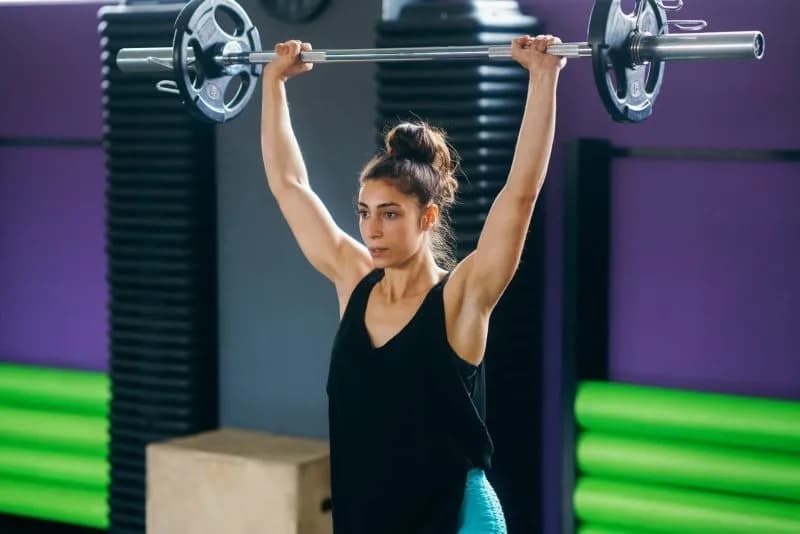
Wondering how many bench press sets to build muscle ? These exercises targets the deltoids and upper traps. 3 sets of 10–12 reps. Start with light weight or even just the movement pattern if you’re new to pressing overhead.
Common Mistakes to Avoid
- Poor Form Chasing higher rep counts or heavier weights while sacrificing technique is the fastest route to injury — and the slowest route to results. Quality reps always outperform sloppy volume. Record yourself occasionally to catch form breakdowns before they become habits.
- Skipping Warm-Up A 5–10 minute warm-up — light cardio, dynamic stretching, or mobility work — prepares your joints, raises muscle temperature, and meaningfully reduces injury risk. Cold muscles don’t perform well and take longer to recover.
- Overtraining More is not always better in strength training. Muscles need 48–72 hours to recover after a hard session. Training the same muscle group every day without rest doesn’t accelerate growth — it interrupts it. Rest days are part of the program, not a break from it.
- Inconsistency The biggest variable in Rep-Based Muscle Training isn’t finding a perfect rep range — it’s whether you show up week after week and progressively challenge your muscles. Two consistent sessions per week for six months will produce far better results than an intense month followed by two months off. Consistency is the non-negotiable.
Who Should Try Rep-Based Muscle Training?
- Beginners If you’ve never trained before, the 8–12 rep range is the most forgiving entry point. It’s heavy enough to build muscle but light enough to learn proper form. You don’t need equipment — just consistency and a solid plan. Strength training for beginners will give you a structured path forward.
- Women There’s a persistent myth that strength training makes women bulky. It doesn’t — it builds lean, defined muscle while supporting bone density, hormonal balance, and metabolic health. Women naturally have lower testosterone levels, which means the training process develops shape and tone rather than mass.
- Older Adults Muscle mass naturally declines after age 40. Resistance training — even at light loads and higher rep ranges (12–20 reps) — helps preserve muscle, improve balance, and maintain bone density. If you’re managing joint concerns or a health condition, consult your doctor before starting a new program. Beginners over 50 often do well starting with 2 sessions per week of low-impact, controlled-tempo movements.
- Working Professionals You don’t need an hour. A 20–30 minute full-body session — 3–4 exercises, 3 sets each, minimal rest — fits into a busy schedule and addresses two of the biggest desk-job problems: postural weakness and low energy. Training in the 10–12 rep range with compound movements gives you the most return on limited time.
Build Strength with a Routine That Actually Works
Building muscle isn’t about obsessing over how many reps to build muscle or finding a single perfect rep count — it’s about consistency, guided progression, and following a structured plan that adapts as you get stronger. With the right support, you can train effectively from home and see real progress over time.
What You Get with Habuild’s Strong Everyday Program:
- Daily live guided strength sessions — no guesswork on what to do
- Beginner-to-advanced progression built into the program
- No-equipment and home-friendly workouts
- Expert guidance to ensure correct form on every movement
- A community of members training alongside you — which makes staying consistent far easier
Start Your Strength Training Journey
Related reads: How Many Sets Per Muscle Group Per Week? A Complete Volume Guide · How Many Push-Ups per Day to Build Muscle: the Honest Answer
Knowing the ideal rep range only helps if you actually apply it, set after set, week after week — the number matters far less than the consistency behind it. A structured program removes that guesswork by planning your reps, sets, and progression for you rather than leaving it to memory. Habuild’s Strong Everyday program is built around exactly that kind of guided, progressive strength training, so you spend less time calculating and more time lifting.
Frequently Asked Questions
Related Articles

How Long Does It Take to Build Muscle?
Strength improvements show up in roughly four to eight weeks, with visible changes in muscle definition taking three to six months. See what actually determines your timeline.

Best Home Exercises for Muscle Gain
Push-ups, squats, planks, and rows can stimulate real muscle growth with controlled form and progressive tension over 8-12 weeks — no gym needed. See the full plan.

How to Build Chest Muscles at Home
A push-up progression — standard, wide-grip, incline, decline, and diamond variations — develops measurable pectoral strength within eight to twelve weeks. See the full plan.

How to Build Leg Muscles at Home
Squats, lunges, and glute bridges consistently train the quads, hamstrings, glutes, and calves — no gym or dumbbells needed. See the routine to build real leg strength.
Best Exercise Routine for Beginners
Squats, push-ups, lunges, and planks done three days a week, with progressive difficulty, need no gym or equipment. See the full beginner routine.