
How Long Does It Take to Build Muscle?
Strength improvements show up in roughly four to eight weeks, with visible changes in muscle definition taking three to six months. See what actually determines your timeline.

Key Takeaways
- The first month’s strength gains mostly come from nervous system efficiency, not new muscle.
- Untrained beginners can gain roughly 1-2 kg of lean muscle in their first three months.
- Intermediate lifters often add 0.5-1 kg of muscle a month once past the six-month mark.
- Women build muscle slightly slower due to lower testosterone, but on a similar timeline.
- Recovery and sleep quality become increasingly important as training progresses.
Building muscle takes roughly 4–8 weeks to notice strength improvements and 3–6 months for visible changes in muscle definition. The exact timeline depends on your training age, consistency, nutrition, and recovery — but beginners typically gain 1–2 kg of lean muscle in their first three months of structured training.
If you’ve recently started strength training or are thinking about it, one question comes up almost immediately: how long does it take to build muscle? The honest answer depends on several factors — your training age, nutrition, consistency, and recovery. But there are realistic benchmarks most people can expect, and this guide walks you through all of them clearly.
Building muscle isn’t a weekend project. It’s a gradual, measurable process — and understanding the actual timeline helps you stay committed instead of quitting too early because “nothing’s happening yet.”
How Fast Does It Take to Gain Muscle? A Realistic Timeline
Weeks 1–4: Neural Adaptations First
In the first month, most of the strength gains you notice aren’t from new muscle tissue — they come from your nervous system learning to recruit muscle fibers more efficiently. You’ll feel stronger, your coordination improves, and movements start to feel more natural. Visible muscle change is minimal at this stage, which is completely normal.
Months 1–3: First Real Muscle Growth
Between months one and three, beginner lifters typically see noticeable changes in muscle definition. Research suggests that untrained individuals can gain roughly 1–2 kg of lean muscle in their first three months of structured training, provided nutrition supports it. This is where consistency pays its first dividends.
Months 3–6: Steady Progress
By the six-month mark, progress becomes more visible. Intermediate lifters often report 0.5–1 kg of muscle gain per month under good conditions. Strength numbers climb steadily, and muscle definition becomes clearly noticeable to others. Recovery and sleep quality become increasingly important at this stage.
Beyond 6 Months: Diminishing Returns, Sustained Gains
After six months, the rate of muscle gain naturally slows — but it doesn’t stop. Advanced trainees gain more slowly but can still make meaningful progress over years of consistent training. The key differentiator at this level is programming quality and recovery management.
What About Women?
Women build muscle at a slightly slower rate than men due to lower testosterone levels, but the process and timeline are largely similar. Muscle definition becomes visible around the same 3–6 month window. You can explore more about strength training approaches designed for women to understand how to structure your program effectively.
How to Get Started with Building Muscle
What You Need to Begin
You don’t need a gym membership or heavy equipment to start building muscle. Bodyweight exercises — push-ups, squats, lunges, planks — are effective for beginners. As you progress, resistance bands or light dumbbells add variety and intensity. The most important “equipment” is actually a structured plan you follow consistently.
Setting Realistic Goals
Expecting visible muscle in two weeks leads to frustration. A more useful frame: aim to train 3–4 days per week for the next 90 days without skipping. Track strength gains (can you do more reps or more resistance than last week?) rather than just mirror results. Progress in performance often precedes visible change.
If you’re looking for a broader foundation, understanding how to gain muscle effectively — including the nutrition and recovery side — will significantly accelerate your results.
Start with the Basics
Beginners benefit most from compound movements that work multiple muscle groups simultaneously. Three sessions per week of full-body training outperforms split routines for muscle growth in untrained individuals. Add progressive overload — gradually increasing reps, sets, or resistance — as the primary driver of adaptation.
Best Exercises for Building Muscle

Squats
Squats are the single most effective lower-body movement for muscle development. They target the quadriceps, hamstrings, glutes, and core simultaneously. Aim for 3 sets of 10–15 reps. Progress by adding a dumbbell or moving to a single-leg variation once bodyweight feels easy.
Push-Ups
Push-ups build chest, shoulder, and tricep strength without any equipment. They’re endlessly scalable — from knee push-ups for beginners to archer and diamond variations for advanced trainees. 3 sets of 10–20 reps is a solid starting point.
Lunges
Lunges develop unilateral leg strength, improve balance, and target the glutes and quads effectively. Forward, reverse, and walking lunges each offer slightly different stimulus. 3 sets of 10 reps per leg works well for building lower-body muscle mass.
Plank
The plank builds foundational core strength that supports every other exercise. Unlike crunches, it engages the entire anterior chain — abs, obliques, lower back, and shoulders — in an isometric hold. Start at 20–30 seconds and build toward 60+ seconds over weeks.
Dumbbell Rows (or Resistance Band Rows)
Rows train the back muscles — lats, rhomboids, and rear deltoids — which are often underdeveloped in beginners. A strong back improves posture and supports heavier compound lifts. 3 sets of 10–12 reps with a controlled tempo builds muscle more effectively than rushing through reps.
Hip Bridges / Glute Bridges
Hip bridges isolate and strengthen the glutes and hamstrings with zero equipment needed. They’re particularly effective for those who sit for extended periods and have underactive glutes. 3 sets of 15–20 reps with a 2-second pause at the top maximises muscle engagement.
Pike Push-Ups / Overhead Press Variation
For shoulder development without weights, pike push-ups shift load onto the deltoids. As a bodyweight staple, they build pressing strength that translates directly to overhead strength. 3 sets of 8–12 reps progresses well over weeks of consistent practice.
Common Mistakes to Avoid When Trying to Build Muscle
- Poor Form Training with incorrect form reduces muscle activation and increases injury risk. A squat with caved knees or a rounded-back row isn’t training the muscles you intend — it’s loading the joints. Record yourself occasionally or work with a coach to audit your movement quality. Form always comes before load.
- Skipping Warm-Up A 5–10 minute warm-up — joint circles, light cardio, dynamic stretches — meaningfully improves muscle recruitment and range of motion during your session. People who skip warm-ups not only underperform in the workout, they also accumulate small injuries that compound over weeks into training interruptions.
- Overtraining Without Recovery Muscle grows during rest, not during the workout itself. Training the same muscle group every day without adequate recovery suppresses growth and leads to fatigue. Most beginners benefit from 48 hours of recovery between sessions that work the same muscle group. Sleep quality (7–9 hours) is non-negotiable for meaningful muscle gain.
- Inconsistency This is the single biggest reason people don’t see results. Doing 10 sessions in two weeks, then taking three weeks off, produces far less muscle than 3 sessions per week done steadily for 6 months. The biology of muscle growth rewards repetition and regularity more than intensity spikes. Building a daily habit — not just following a program — is what actually works long-term.
Who Should Try Strength Training for Muscle Building?
- Beginners Beginners have the highest muscle-building potential of any training group — a phenomenon sometimes called “newbie gains.” Almost any structured stimulus will produce a response in an untrained body. The barrier to entry is genuinely low: three bodyweight sessions per week is enough to start seeing measurable change within 6–8 weeks.
- Women A persistent myth holds that strength training will make women bulky. It won’t. Women lack the testosterone levels required for that kind of muscle mass, and building significant bulk takes years of dedicated, heavy training even for men. What strength training does for women is create a lean, defined physique — alongside real-world functional strength that improves quality of life.
- Older Adults After age 35, adults naturally begin losing muscle mass (sarcopenia) at roughly 3–8% per decade if inactive. Resistance training directly counteracts this process and helps maintain bone density, balance, and metabolic health. Older adults should begin with lower loads and prioritise form before intensity. Always consult a physician before beginning a new exercise routine if you have existing health conditions.
- Working Professionals Desk-based work causes postural imbalances — tight hip flexors, weak glutes, rounded shoulders — that strength training directly addresses. Even two to three 30-minute sessions per week, done consistently, produce measurable improvements in posture, energy levels, and body composition. A full body workout for strength is an ideal format for busy schedules.
Build Strength with a Routine That Actually Works
Building muscle isn’t about doing random workouts — it’s about consistency, guidance, and following a structured plan. With the right support, you can train effectively from home and see real progress over time. The gap most people face isn’t knowledge; it’s the daily habit of showing up.
What You Get with Habuild’s Strong Everyday Program:
- Daily live guided strength and yoga sessions
- Beginner to advanced progression built into the program
- No-equipment and home-friendly workouts throughout
- Expert guidance to support correct form and technique
- Community accountability to stay consistent week after week
Before committing, take a look at what strength training exercises actually involve — a useful overview of the fundamentals behind every session.
Start Your Strength Training Journey
Related reads: How to Build Muscle for Women: A Complete Strength Guide · What Is Mind Muscle Connection? How It Works and Why It Matters
The 4 to 8 week and 3 to 6 month timelines for building muscle only hold true if the training behind them stays consistent — sporadic workouts tend to reset that clock every time you restart. A guided program keeps your training age moving forward instead of beginning over each month. Habuild’s Strong Everyday program supports that steady progression, pairing structured strength training with the consistency muscle growth actually requires.
Frequently Asked Questions
Related Articles

How Many Reps to Build Muscle? The Complete Guide to Sets, Reps, and Progression
6 to 12 reps per set is the classic hypertrophy range, but sets, rest periods, and consistency matter just as much. See the full breakdown of reps, sets, and progression.
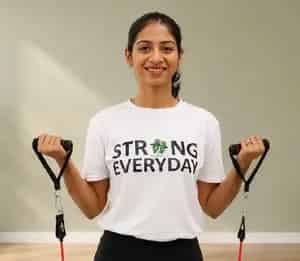

Best Home Exercises for Muscle Gain
Push-ups, squats, planks, and rows can stimulate real muscle growth with controlled form and progressive tension over 8-12 weeks — no gym needed. See the full plan.
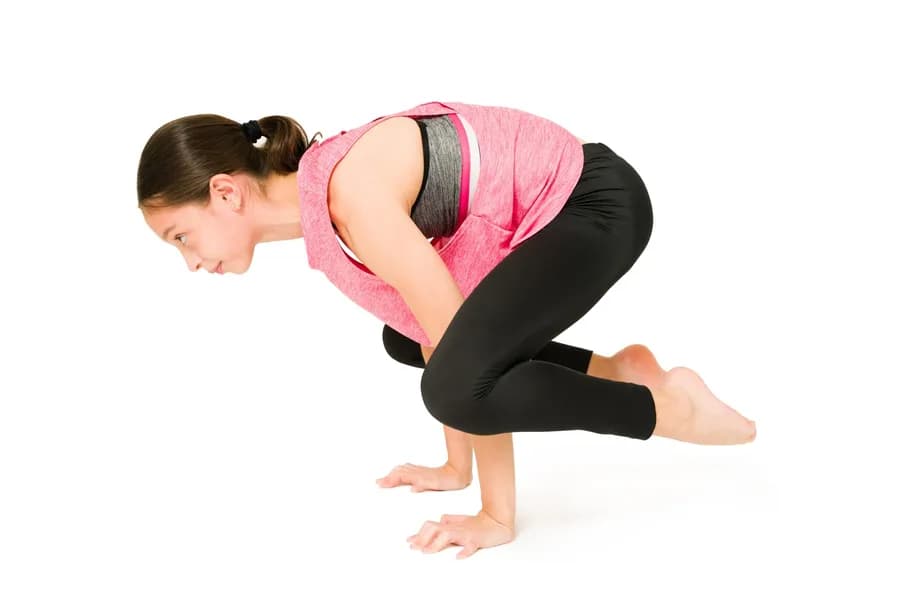
Best Exercise Routine for Beginners
Squats, push-ups, lunges, and planks done three days a week, with progressive difficulty, need no gym or equipment. See the full beginner routine.
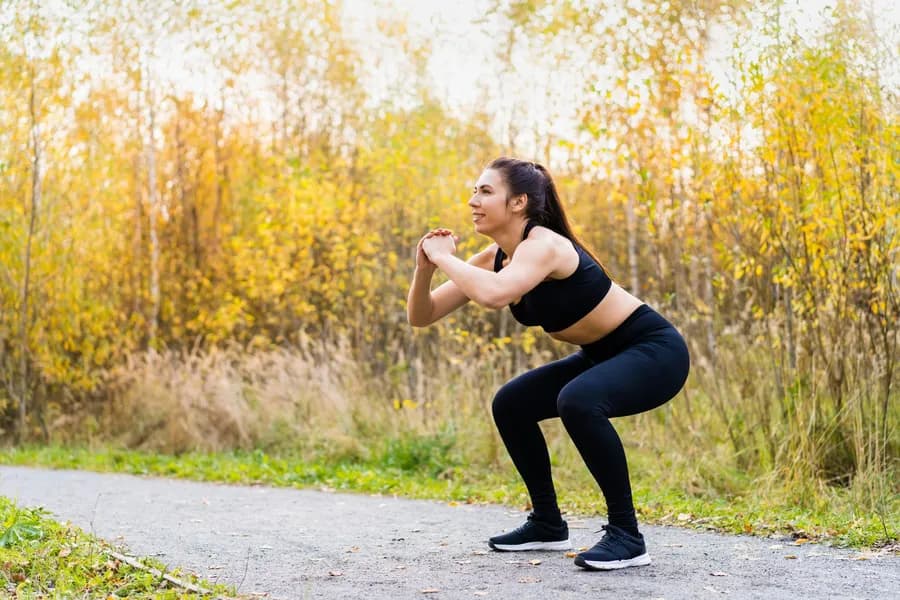
10 Benefits of Strength Training for Women
Resistance training builds lean muscle, supports fat loss, and improves bone density — all achievable from home with no equipment. See all 10 benefits.

How to Build Chest Muscles at Home
A push-up progression — standard, wide-grip, incline, decline, and diamond variations — develops measurable pectoral strength within eight to twelve weeks. See the full plan.

How to Build Leg Muscles at Home
Squats, lunges, and glute bridges consistently train the quads, hamstrings, glutes, and calves — no gym or dumbbells needed. See the routine to build real leg strength.