
How to Do Face Pulls: Form, Benefits & Muscles Worked
Learn how to do face pulls correctly for rear delts, posture & shoulder health. Step-by-step guide + common mistakes. Try Habuild free for ₹1.

Key Takeaways
- Anchor a rope or band at face height and pull toward the nose with elbows flared high.
- The rear delts are almost always undertrained compared to the front and side shoulder heads.
- The external rotation trains the infraspinatus and teres minor, two rotator cuff muscles.
- Acts as a crucial counterbalance if your training includes bench press or overhead press.
- Two to three sets of 12-15 reps, two to three times weekly, is an effective starting protocol.
- A resistance band looped around a door anchor works just as well as a cable machine.
Face pulls are a cable or resistance band exercise that targets the rear deltoids, rotator cuff, and upper back. To perform them correctly, anchor a rope or band at face height, pull toward your nose with elbows flared high, and rotate your wrists outward at end range. Two to three sets of 12–15 reps, two to three times weekly, is an effective starting protocol.
If you spend hours at a desk or have ever dealt with rounded shoulders, learning how to do face pulls correctly could be one of the most useful things you do for your upper body. Face pulls directly target muscles that most people chronically neglect. This guide breaks down proper technique, the best step-by-step cues, muscles worked, and the mistakes that silently sabotage your results.
5 Key Benefits of Face Pulls
- Builds Rear Deltoid Strength The rear delts are almost always undertrained compared to the front and side heads of the shoulder. Face pulls place direct, consistent tension on the posterior deltoid throughout the movement, gradually building thickness and roundness at the back of the shoulder.
- Improves Posture and Shoulder Alignment Regularly performing face pulls strengthens the muscles that pull your shoulder blades back and down. Over time, this supports better posture — especially if you sit for long hours — by counteracting the forward pull of the chest and anterior shoulder muscles.
- Supports Rotator Cuff Health The external rotation component of the face pull actively trains the infraspinatus and teres minor, two muscles of the rotator cuff. Strengthening these muscles may help reduce the risk of shoulder impingement and supports long-term joint health through consistent practice.
- Balances Push-to-Pull Ratio If your training includes bench press, push-ups, or overhead press, face pulls act as a crucial counterbalance. Adding them to your routine helps even out the load placed on the shoulder joint and reduces cumulative stress over time.
- Accessible for Most Fitness Levels Whether you use a cable machine or a simple resistance band anchored to a door, face pulls require minimal equipment and can be scaled easily from beginner to advanced levels. You can explore more approaches in this detailed guide on doing strength training at home without a gym setup.
How to Get Started with Face Pulls
What You Need to Begin
The most common setup is a cable machine with a rope attachment set at upper-chest to face height. Alternatively, a resistance band looped around a door anchor, squat rack upright, or sturdy pole works just as well. No other equipment is required — making this exercise accessible for home training.
Setting Realistic Goals
If you are new to face pulls, start with a very light load or low-resistance band. The goal in the first two to three weeks is to feel the rear delts and upper back working — not to move maximum weight. Most people find that once they establish the correct mind-muscle connection, progress comes quickly. Aim for two to three sessions per week as part of a broader upper-body routine.
Start with the Basics
Before adding weight, practice the pulling motion with just a band at low resistance. Stand with feet shoulder-width apart, grip the rope or band with an overhand hold, and practice pulling toward your face while keeping your elbows flared high. Getting comfortable with this pattern first makes it far easier to load the movement correctly later.
How to Perform Face Pulls: Step-by-Step
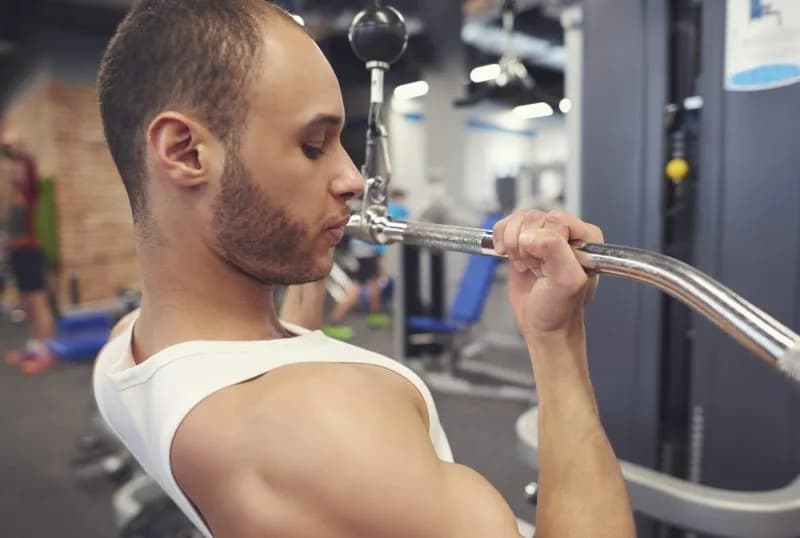
Step 1 — Set Up Your Anchor Point
Set a cable pulley or anchor a resistance band at approximately upper-chest to face height. Attach a rope handle if using a cable machine. Stand far enough back that the cable or band is under tension even at the starting position — roughly one to two arm lengths away from the anchor.
Step 2 — Grip and Stance
Grip the rope with an overhand grip, thumbs pointing toward you. Stand with feet shoulder-width apart or slightly staggered for stability. Keep a slight bend in your knees and brace your core. Avoid leaning back from the hips to generate momentum.
Step 3 — Initiate the Pull
Pull the rope directly toward your face, keeping your elbows flared high — at or above shoulder level throughout the movement. Your elbows should lead the pull, not your hands. This is the detail that makes face pulls effective specifically for rear delts rather than becoming a generic row.
Step 4 — External Rotation at the End Range
As the rope reaches your face, separate your hands slightly and rotate your wrists outward so your knuckles point toward the ceiling. Your upper arms should be roughly parallel to the floor and in line with your shoulders. Hold this contracted position for one to two seconds. This external rotation is what makes face pulls uniquely valuable for how to do face pulls for rear delts and rotator cuff activation.
Step 5 — Controlled Return
Slowly return the rope to the starting position over two to three seconds. Resist the urge to let the weight stack snap back. The eccentric phase — the return — is where a significant portion of the muscle-building stimulus occurs.
Recommended starting protocol: 3 sets × 12–15 reps, two to three times per week, with a load that allows full range of motion without breaking form.
Common Mistakes to Avoid
- Pulling Too Low If the anchor point is too low or you pull the rope toward your chest instead of your face, the exercise shifts from a rear delt movement into a generic row. Keep the anchor at face height and pull toward your nose or forehead — not your chin or neck.
- Skipping the External Rotation Many people pull the rope to their face but forget to rotate their wrists outward at the end of the movement. Without this step, you lose most of the rotator cuff benefit. The rotate-and-hold at end range is what separates a productive face pull from a mediocre one.
- Using Too Much Weight Ego-loading face pulls is one of the most common errors. Heavy weight forces you to recruit larger muscles — like the lats and traps — to compensate, taking tension off the rear delts entirely. Choose a weight where you can feel the rear delts working by rep 12, not rep 4.
Who Should Try Face Pulls?
- Beginners Face pulls are ideal for beginners because they use relatively light loads, require no complex coordination, and build foundational shoulder health from day one. Start with a resistance band at low tension and focus entirely on feeling the rear delt contract before progressing.
- Women Face pulls are particularly beneficial for women who want to improve shoulder definition and posture without adding bulk. The movement builds the small, stabilizing muscles around the shoulder joint — contributing to a more balanced, upright appearance. Pairing face pulls with guidance on reducing back fat through consistent training can further support upper-body goals.
- Older Adults For older adults, maintaining rotator cuff integrity and shoulder mobility is critical for everyday function — from lifting groceries to reaching overhead. Face pulls support these goals by strengthening the stabilizers around the joint. If you have an existing shoulder condition, consult your physiotherapist before adding new exercises.
- Working Professionals If your day involves several hours in front of a screen, your rear delts and upper back are almost certainly weak and overstretched. Face pulls take under 10 minutes to complete and directly counteract the muscular imbalances caused by prolonged desk posture. Exploring how to build overall body strength alongside face pulls can compound these posture and energy benefits further.
Build Strength with a Routine That Actually Works
Building shoulder health and rear delt strength is not about doing one perfect session — it is about showing up consistently with proper guidance. Face pulls, like most strength work, compound over weeks. The right structure makes that consistency far easier to maintain.
What You Get with Habuild's Strong Everyday Program:
- Daily live guided strength sessions with expert trainers
- Beginner-to-advanced progression so you never plateau
- No-equipment and home-friendly workout options
- Form corrections in real time to keep training safe
- A community of thousands training alongside you every morning
Start Your Strength Training Journey
For those working toward broader fitness goals alongside shoulder strength, this guide on losing belly fat through consistent training is a useful companion resource.
Related reads: Elevated Glute Bridge: Benefits, Form & Muscles Worked · How to Do Calf Raises: Benefits, Form & Exercises
Face pulls do a lot for posture and shoulder health, but that benefit compounds only when the movement is practiced regularly as part of a balanced routine, not squeezed in occasionally between other lifts. A structured plan makes sure postural work like this doesn't get skipped. Habuild's Strong Everyday program keeps exercises like face pulls in steady rotation, supporting shoulder health over the long run.
Frequently Asked Questions
Related Articles
How to Do Lat Pulldown: Form, Variations & Home Tips
Learn how to do lat pulldown correctly with step-by-step form, common mistakes, home alternatives, and variations for stronger, wider lats.

How to Build Arm Muscles: Exercises, Tips & Plan
Learn how to build arm muscles at home with the best exercises, beginner tips, and a structured plan. Start your 14-day free trial trial with Habuild today.
Pull Up Kaise Kare | Sahi Technique & Tips
Pull up kaise kare — beginners ke liye sahi technique, ghar par practice tips aur common galtiyan. Habuild ke saath daily strength training shuru karein.
How to Strengthen Forearms: Exercises & Tips
Learn how to strengthen forearms with the best exercises, beginner tips, and a structured plan. Start your strength journey for just ₹1.
Push Up Benefits for Men: Strength, Muscle & More
Discover the top push up benefits for men — from building muscle to boosting metabolism. Start a structured plan with Habuild with a 14-day free trial.