
How to Do Bicep Curls Correctly
Elbows pinned at your sides, palms facing up, a slow two-to-three-second lower, and a weight that challenges without momentum — that's the difference between building real arm strength and wasting reps. See the full technique.
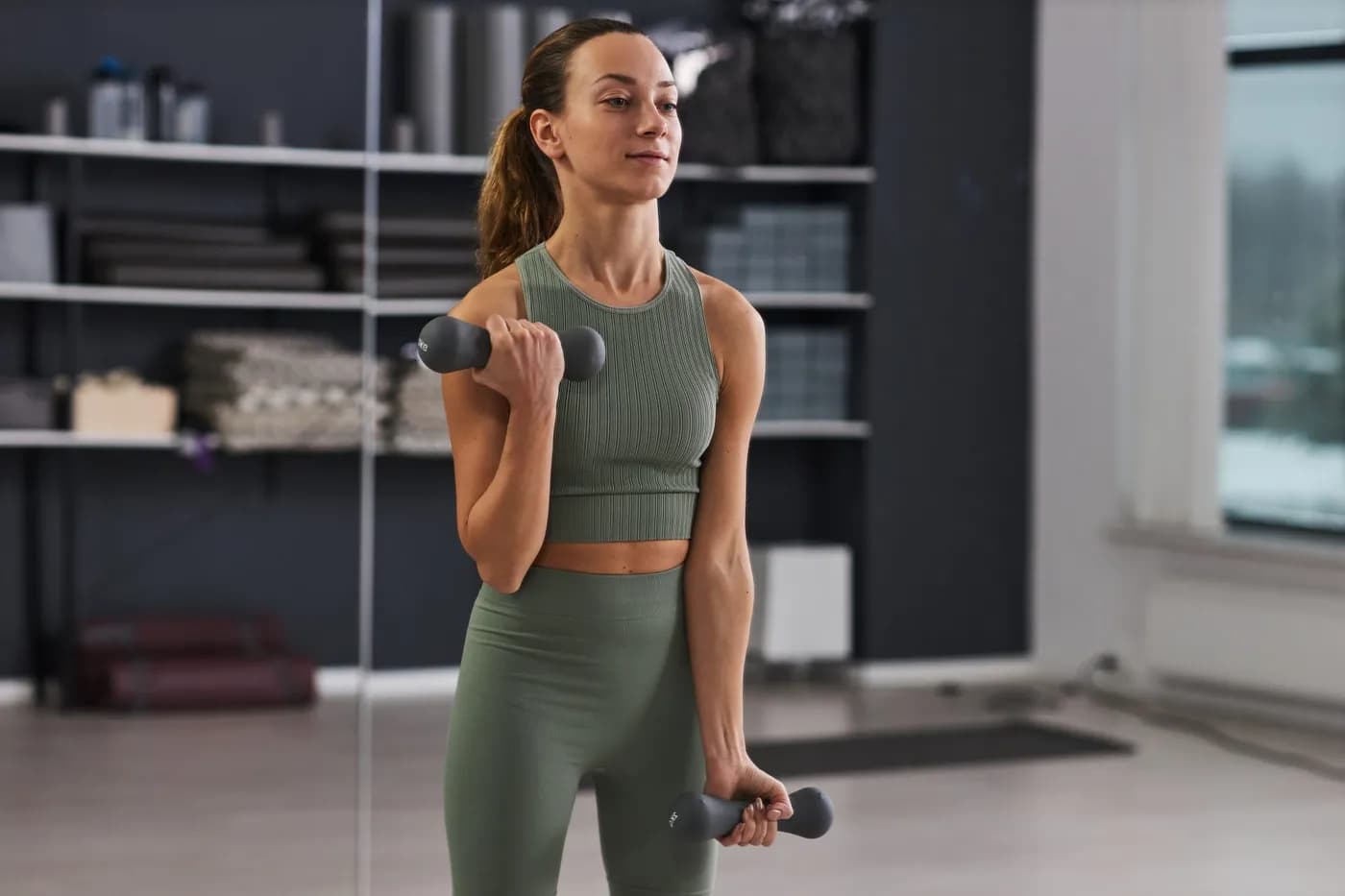
Key Takeaways
- Correct bicep curl form pins elbows at the sides with a slow two-to-three-second lower.
- Sloppy form shifts work to the shoulders and back, undermining actual bicep growth.
- A firm, neutral grip during curls gradually improves overall grip strength.
- Controlled, full-range reps protect elbow tendons from uneven loading over time.
- Keeping elbows pinned and core braced protects the lower back from compensatory strain.
- Slow, deliberate reps build the mind-muscle connection that improves every other lift.
Bicep curls, done correctly, build lean arm muscle by placing consistent tension on the biceps brachii through a controlled, full-range motion. The key elements are: elbows pinned at your sides, palms facing up, a slow two-to-three-second lower, and a weight that challenges you without forcing momentum or back-swing.
Knowing how to do bicep curls correctly is the difference between building strong, functional arms and wasting reps — or worse, picking up a wrist or shoulder injury along the way. Bicep curls are one of the most popular exercises in any strength training routine, yet they’re also among the most commonly performed with poor technique. Whether you’re just starting out or looking to refine your form, this guide walks you through everything you need to lift smarter, not just harder.
10 Benefits of Doing Bicep Curls Correctly
- Builds Lean Arm Muscle Performing curls with correct form places consistent tension directly on the biceps brachii. This targeted load is what drives muscle growth over time — sloppy form shifts the work to your shoulders and back, undermining the effort.
- Boosts Grip Strength Proper curl technique — keeping a firm, neutral grip throughout the movement — gradually improves your overall grip strength. This carries over to pulls, rows, and everyday lifting tasks.
- Improves Elbow Joint Health Controlled, full-range curls support the tendons and connective tissue around the elbow. Rushed or incomplete reps can load the joint unevenly and lead to chronic discomfort over months of training.
- Enhances Functional Pulling Strength Strong biceps make pulling motions — opening heavy doors, carrying groceries, lifting bags overhead — noticeably easier. Correct curl form builds this applied strength more effectively than ego-lifting with swinging momentum.
- Supports Fat Loss Through Muscle Density More lean arm muscle means a slightly higher resting metabolic rate. While curls alone won’t torch calories, they contribute to the overall muscle mass that supports a healthier body composition over time.
- Reduces Injury Risk Keeping your elbows pinned and your core braced during curls protects the lower back and rotator cuff from compensatory strain — a common source of pain when technique breaks down.
- Improves Posture Balanced arm and upper-back development — which includes bicep work done correctly — helps counteract the forward-rounding posture that comes from long hours at a desk or on a phone.
- Increases Mind-Muscle Connection Slow, deliberate reps with correct form train you to consciously feel the muscle contracting. This neuromuscular awareness improves results across every exercise in your program.
- Builds Visible Definition Over Time Consistent, well-executed curls gradually develop the shape and peak of the bicep — the kind of definition that shows up when body fat reduces through regular training and nutrition habits.
- Creates Consistent Training Habits Learning to do one exercise properly builds the discipline of focusing on quality over quantity — a mindset shift that improves every other movement in your routine. Structured training that emphasizes form from day one leads to far better long-term outcomes than self-taught gym sessions.
How to Get Started with Bicep Curls
What You Need to Begin
You don’t need a fully equipped gym to start. A pair of dumbbells at a weight that challenges you by rep 10–12 is enough. Resistance bands are a solid alternative — they create continuous tension throughout the movement, which makes them especially effective for beginners. A mirror or phone camera is optional but genuinely helpful for checking your form in real time.
Setting Realistic Goals
Expect to spend the first two to three weeks simply grooving the correct movement pattern at a manageable weight. Chasing heavier dumbbells too soon is the single biggest mistake new lifters make — it forces momentum and back-swing to take over, reducing bicep engagement significantly. Progress the weight only when you can complete every rep in a set with clean form from start to finish.
Start with the Basics
Begin with a standing dumbbell curl: feet hip-width apart, back straight, arms hanging naturally at your sides with palms facing forward. Curl both weights up to shoulder height by flexing at the elbow — keep your upper arms still throughout. Squeeze at the top for one count, then lower slowly over two to three seconds. Start with 3 sets of 10–12 reps at a weight where the last two reps feel genuinely challenging but your form stays clean. For a step-by-step visual breakdown, the standing dumbbell biceps curl guide is a great reference point.
Best Exercises for Bicep Strength and Arm Development
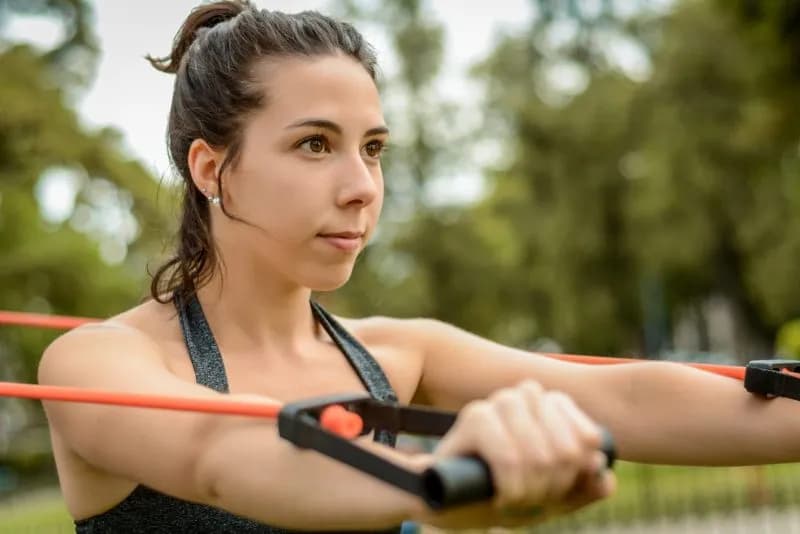
Curls come in several variations, each targeting the bicep and surrounding muscles from a slightly different angle. Rotating between them keeps training fresh and ensures more complete arm development.
Standard Dumbbell Bicep Curl
The foundational movement. Palms face up, elbows stay at your sides, and you control the weight both on the way up and on the way down. Perform 3 sets of 10–12 reps. This is the best starting point for anyone learning how to do arm curls correctly.
Hammer Curl
Rotate your grip so palms face inward (thumbs up) throughout the curl. This variation works the brachialis — the muscle underneath the bicep — which adds visible thickness to the upper arm. Perform 3 sets of 10–12 reps.
Concentration Curl
Seated, with your elbow braced against the inside of your thigh, curl a single dumbbell slowly. The supported position eliminates momentum almost entirely, making it one of the best isolation exercises for pure bicep development. Perform 3 sets of 10 reps per arm.
Incline Dumbbell Curl
Lie back on an incline bench (or a stack of cushions at home) with arms hanging behind your torso. This extended starting position places a greater stretch on the bicep, increasing the range of motion and the stimulus for growth. Perform 3 sets of 8–10 reps.
Resistance Band Curl
Stand on the centre of a resistance band and curl the handles up. Bands create peak tension at the top of the movement — the opposite of free weights — making them a useful complement to dumbbell curls. Perform 3 sets of 12–15 reps.
Barbell Curl
Using a straight or EZ bar allows you to load more weight than dumbbells, making it effective for building overall bicep mass. Keep your wrists neutral and resist the urge to lean back. Perform 3–4 sets of 8–10 reps.
Reverse Curl
Perform a standard curl with palms facing down. This targets the brachioradialis and the muscles of the forearm, building the kind of balanced arm strength that complements pure bicep work. Perform 3 sets of 10–12 reps.
Common Mistakes to Avoid When Doing Bicep Curls
- Poor Form — Swinging the Back The most common error is using momentum — swinging the torso backward to help get the weight up. This removes tension from the bicep and loads the lower back unnecessarily. If you’re swinging, the weight is too heavy. Drop down, tighten your core, and keep your upper body still throughout every rep.
- Skipping the Warm-Up Jumping straight into heavy curls with cold muscles and stiff elbow joints is a reliable path to tendon irritation. Spend five minutes on light cardio, then do one or two warm-up sets with a very light weight before working sets. This prepares the connective tissue and improves blood flow to the muscle.
- Overtraining the Biceps Because curls feel satisfying, many people hit them every day. The biceps are a relatively small muscle group and recover best with 48 hours of rest between direct sessions. Training them three times a week — embedded within a broader upper-body or full-body program — is sufficient for consistent progress.
- Inconsistency in Practice Doing a perfect set once a week achieves very little. Bicep development — like all strength adaptations — requires consistent weekly practice over months. Missing sessions frequently, or training sporadically, means the muscle never accumulates enough progressive stimulus to grow. Structure beats intensity every time. A well-designed workout plan for strength helps ensure your arm training is consistent and progresses at the right pace.
Who Should Try Bicep Curls?
- Beginners Curls are one of the most accessible strength exercises — they require minimal coordination, can be done at home with light dumbbells or bands, and produce noticeable results quickly when done consistently. Start with 2–3 kg dumbbells or a light resistance band and focus entirely on mastering the movement before adding load.
- Women There is a persistent myth that curl-based arm training will make women look bulky. In reality, women have significantly lower testosterone levels than men, which makes large muscle bulk physiologically unlikely without years of very specific, high-volume training. Regular bicep curls help women build toned, functional arms — and the strength benefits extend to everything from carrying children to improving posture. Female strength training that includes proper curl technique is one of the most effective investments for long-term physical capability.
- Older Adults Maintaining arm strength becomes increasingly important with age, supporting independence in daily tasks and reducing the risk of falls. Lighter dumbbells or resistance bands with higher reps work well for this group. As always, consult a healthcare professional before beginning a new exercise program if you have any pre-existing joint conditions.
- Working Professionals Desk work shortens the chest and weakens the upper back — bicep curls done as part of a balanced upper-body routine can contribute to better postural balance. A 20-minute arm session two to three times a week fits easily into a busy schedule and pays dividends in how your body feels through long work days.
Build Strength with a Routine That Actually Works
Building stronger arms isn’t about doing more curls — it’s about doing the right curls, consistently, with proper guidance. Random workouts plateau fast. What actually works is a structured program with expert coaching, progressive overload, and community accountability built in.
What you get with Habuild’s Strong Everyday program:
- Daily live guided strength sessions — including arm and upper-body training
- Beginner-to-advanced progression with proper form cues
- No-equipment and home-friendly workout options
- Expert guidance to ensure correct technique from day one
- A consistent community that keeps you showing up
If you’ve been wondering how to do bicep curls properly over a sustained period — with real feedback and a plan that builds week on week — this is what structured training looks like. Explore strength training for muscle strength to understand how curl work fits into a complete program.
Start Your Strength Training Journey
Related reads: Best Exercises for Biceps: Build Strength, Size and Consistency · How to Do Planks Correctly — the Complete Form Guide and Common Mistakes That Sabotage Results
Good curl form is only half the equation — the biceps grow when that controlled tension is repeated across a program that progresses the weight and volume over time, not just performed correctly once. A structured plan keeps that progression moving, pairing correct form with the consistency it needs to actually build size. Habuild’s Strong Everyday program folds exercises like the bicep curl into a complete, guided strength routine.
Frequently Asked Questions
Related Articles
Best Exercises for Biceps: Build Strength, Size and Consistency
Standing dumbbell curls, hammer curls, concentration curls, chin-ups, and resistance band curls target both heads of the bicep — most can be done with minimal or no equipment. See the full list.
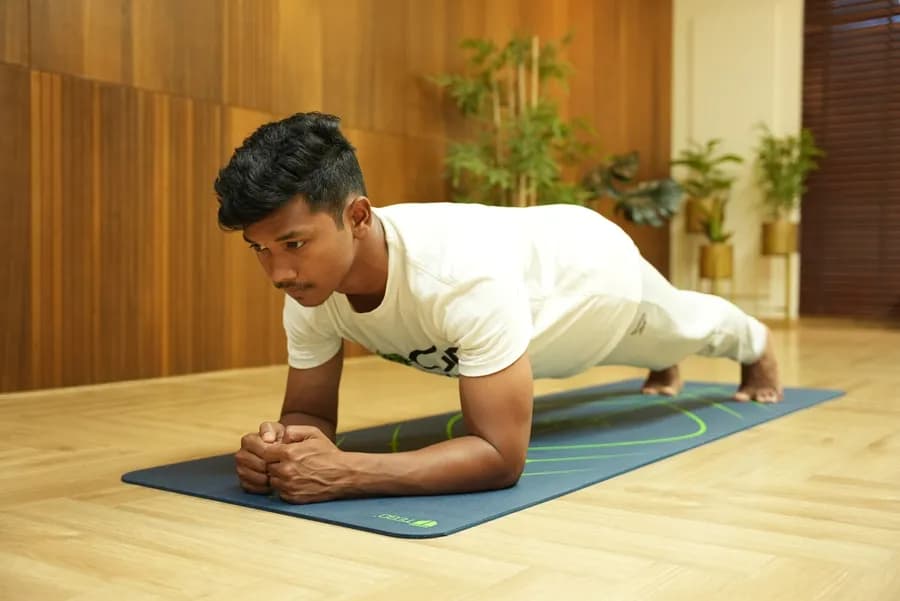
How to Do Planks Correctly — the Complete Form Guide and Common Mistakes That Sabotage Results
Sagging hips, lifted hips, locked elbows, and held breath are the common form errors that reduce or eliminate the core benefit while increasing injury risk. See the complete form guide.
Back Workout with Dumbbells: Exercises, Benefits & How to Get Started
Rows, deadlifts, and pullovers target the latissimus dorsi, rhomboids, trapezius, and erector spinae, with minimal equipment needed. See the benefits and best exercises.
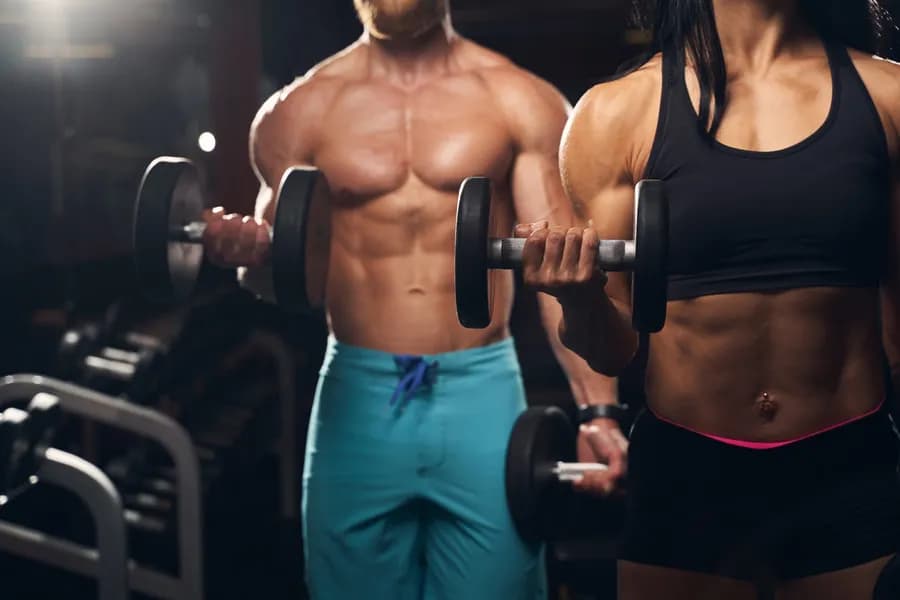
How to Build Upper Chest Muscles: Exercises, Tips & a Plan That Works
The upper chest responds to incline pressing and upward fly movements at 30-45 degree angles — producing visible fullness near the collarbone within 8-12 weeks. See the full plan.