
How to Build Upper Chest Muscles: Exercises, Tips & a Plan That Works
The upper chest responds to incline pressing and upward fly movements at 30-45 degree angles — producing visible fullness near the collarbone within 8-12 weeks. See the full plan.
Key Takeaways
- Clavicular head responds specifically to incline pressing and fly moves
- Train at 30-45 degree incline, 2-3 times weekly, for collarbone fullness
- Visible development typically takes 8-12 weeks of consistent training
- Most people only train flat bench, leaving the upper chest underdeveloped
- Upper chest works with front deltoid and rotator cuff to stabilize shoulder
- Only adjustable dumbbells and an incline surface are needed at home
The upper chest — specifically the clavicular head of the pectoralis major — responds to incline pressing and upward fly movements. Training it with the right angles (30–45 degrees), 2–3 times per week, produces visible fullness near the collarbone within 8–12 weeks of consistent, progressive effort.
If you want a fuller, more defined chest, knowing how to build upper chest muscles is the critical first step. Most people focus only on flat bench movements and wonder why the upper portion of their chest stays underdeveloped. This guide covers the right exercises, how to start at home, and the consistency habits that separate people who see results from those who don't.
6 Key Benefits of Upper Chest Training
- Builds a Fuller, More Balanced Chest A well-developed upper chest creates the visual fullness near the collarbone that flat pressing alone cannot produce. Training the clavicular head fills in the area most people neglect, giving the entire chest a three-dimensional shape rather than a flat, sunken look.
- Improves Shoulder Stability The upper chest works alongside the front deltoid and the rotator cuff. Regularly targeting this region with incline movements may gradually strengthen the shoulder girdle, supporting better joint stability and reducing discomfort from overhead activities over time.
- Boosts Overall Pressing Strength A stronger clavicular head contributes directly to your flat bench and overhead press numbers. When the upper chest is weak, other muscles compensate — often poorly. Addressing this imbalance through focused strength training for chest tends to improve total pressing output over time.
- Enhances Functional Strength Pushing objects overhead, carrying groceries, or lifting your child — all of these daily tasks involve the same muscle fibres you train when you work the upper chest. Building this region supports real-world movement patterns, not just gym aesthetics.
- Supports Consistent Posture Weak chest muscles — especially in the upper region — often correlate with rounded shoulders and a caved-in posture. Strengthening the upper pectorals, paired with appropriate back work, may gradually help you maintain a more upright, open posture throughout the day.
- Strengthens the Mind-Muscle Connection The upper chest is notoriously hard to "feel" for beginners. Deliberately training it sharpens your ability to consciously engage specific muscle fibres — a skill that carries over to every other compound and isolation movement you perform.
How to Get Started with Upper Chest Training
What You Need to Begin
You do not need a gym membership or a full rack of dumbbells to develop your upper chest at home. A pair of adjustable dumbbells, a sturdy incline surface, and your own bodyweight are enough to make real progress. Resistance bands add variety without requiring much space or budget as you advance.
Setting Realistic Goals
Visibly building upper chest muscles typically takes 8–12 weeks of consistent, progressive training for a beginner. Start with two to three dedicated sessions per week, focusing on proper form before increasing load. Consistency is the variable that matters most — not intensity.
Start with the Basics
Begin with incline push-ups to learn the pressing pattern with bodyweight before adding resistance. For upper chest emphasis, keep the incline at roughly 30 to 45 degrees for pressing movements. Once you can complete three sets of 15 clean reps, progress the load or angle. A structured upper body strength plan will help you move through these progressions systematically.
Best Exercises to Build Upper Chest Muscles
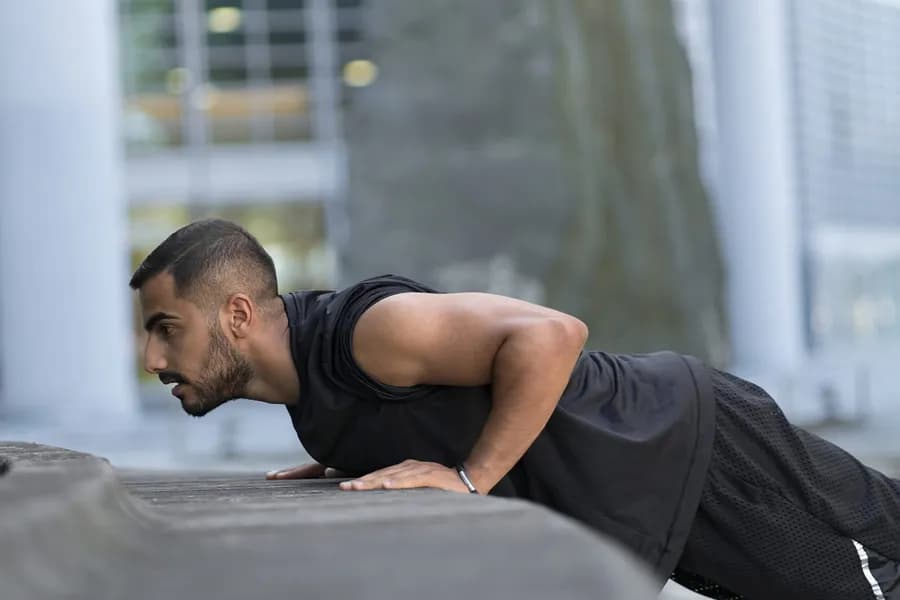
These seven movements are consistently the most effective for targeting the clavicular head of the pectoralis major. Include a mix in your weekly routine for balanced upper chest development.
Incline Dumbbell Press
Set a bench or inclined surface at 30–45 degrees. Press dumbbells upward and slightly inward, squeezing the upper chest at the top. This is the foundation movement for upper chest hypertrophy. Aim for 3–4 sets of 8–12 reps with a weight that challenges you in the final two reps without breaking form.
Incline Push-Up
Place hands on an elevated surface with fingers pointing forward. Lower your chest toward the surface and press back up, keeping elbows at roughly 45 degrees from your torso. The elevation shifts the angle to prioritise the upper pectorals. Do 3 sets of 12–15 reps with zero equipment.
Low-to-High Cable Fly (Band Version at Home)
Anchor a resistance band at ankle height. Hold one end in each hand and sweep your arms upward and across your chest — finishing with hands above shoulder height. This upward arc directly loads the clavicular head through a full range of motion. Do 3 sets of 12–15 reps per side.
Decline Push-Up
Place your feet on an elevated surface and your hands on the floor. This reverses the standard push-up angle, directing pressing force toward the upper chest. Keep your core braced and hips level. Start with 3 sets of 8–10 reps and build from there.
Incline Dumbbell Fly
Lying on an inclined surface, hold dumbbells above your chest with a slight elbow bend. Lower them in a wide arc until you feel a stretch across the upper chest, then bring them back together. Use a lighter weight than your press — this is an isolation movement. 3 sets of 12 reps works well.
Narrow-Grip Incline Push-Up
Same setup as a standard incline push-up, but with hands placed shoulder-width or slightly narrower. The narrower grip increases demand on the inner and upper chest fibres. 3 sets of 10–12 reps.
Dumbbell Pullover
Lie across a flat bench or on a mat, holding one dumbbell with both hands above your chest. Lower it in an arc behind your head until you feel a stretch through the chest and lats, then pull it back over. This engages the upper chest, serratus anterior, and lats simultaneously. 3 sets of 10 reps is a solid starting point.
Common Mistakes to Avoid
- Poor Form and Wrong Angle The most frequent mistake is using a bench angle that is too steep — typically 60–90 degrees — which shifts most of the load to the front deltoid rather than the upper chest. For genuine upper pec activation, keep your incline between 30 and 45 degrees and consciously think about pressing with your chest rather than your shoulders.
- Skipping the Warm-Up The shoulder joint is involved in every upper chest movement. Going straight to working sets without warming up increases the risk of shoulder impingement and rotator cuff strain. Spend five minutes on shoulder circles, band pull-aparts, and a few light sets of the primary exercise before loading up.
- Overtraining the Chest While Neglecting Recovery Training the upper chest every day does not speed up results — it slows them down. Muscle fibres repair and grow during rest. Two to three sessions per week with at least 48 hours between sessions is the evidence-backed sweet spot. If you are still sore going into a session, take another day of rest rather than pushing through with compromised form.
- Relying Only on One Movement Pattern Doing only incline dumbbell presses limits upper chest development. The clavicular head responds to a variety of angles and resistance curves. Combining pressing movements with fly variations and band exercises ensures you stimulate the muscle from multiple angles — which drives well-rounded growth over time.
Who Should Try Upper Chest Training?
- Beginners You do not need any prior lifting experience to start developing your upper chest. Bodyweight incline push-ups and resistance band movements provide enough stimulus for a beginner to build meaningful strength over the first few months. Consistency and a willingness to learn pressing mechanics are the only entry requirements.
- Women Upper chest training will not make you bulky. Women have significantly lower testosterone levels than men, which means the muscle-building response stays within a lean, toned range. What you will notice over time is a lifted, firmer appearance across the chest and improved posture. Many women find that female strength training that includes upper chest work meaningfully changes how they feel in their own body.
- Older Adults Chest pressing movements are among the most functional strength exercises available. For adults over 50 or 60, maintaining upper body pushing strength supports independent living. Start with incline wall push-ups or light dumbbells, prioritise form over load, and progress gradually. Always consult your doctor before starting a new exercise programme if you have a pre-existing condition.
- Working Professionals Long hours at a desk tighten the chest and round the shoulders forward. Upper chest training can be done in 20–30 minutes and may gradually ease postural discomfort that builds up from sitting all day. It is also one of the most time-efficient ways to build visible upper body strength without elaborate equipment.
Build Strength with a Routine That Actually Works
Building a defined upper chest is not about doing random workouts — it is about showing up consistently, following a structured progression, and getting expert guidance on form so you are not wasting effort on movements that do not target what you think they do. With the right support, you can train effectively from home and see real progress over time.
What You Get with Habuild's Strength Training Program:
- Daily live guided strength sessions with expert trainers
- Beginner to advanced progression built into the programme
- No-equipment and home-friendly workout options
- Real-time form correction so you are actually training the right muscles
- Community accountability so skipping becomes the harder choice
If you have been looking for a structured strength training program that removes the guesswork, this is a strong place to start.
Related reads: How to Strengthen Chest Muscles: Exercises, Tips & a Plan That Works · How to Build Arm Muscles: Exercises, Tips & Plan
The 8-to-12-week timeline mentioned here only holds if incline pressing at the right angle happens two to three times a week without interruption, which is harder to maintain solo than it sounds. A structured program keeps that frequency consistent, building upper chest work into a complete plan instead of an isolated goal. Habuild's Strong Everyday program provides that kind of guided, progressive strength training to help you get there.
Frequently Asked Questions
Related Articles
How to Do Bicep Curls Correctly
Elbows pinned at your sides, palms facing up, a slow two-to-three-second lower, and a weight that challenges without momentum — that's the difference between building real arm strength and wasting reps. See the full technique.
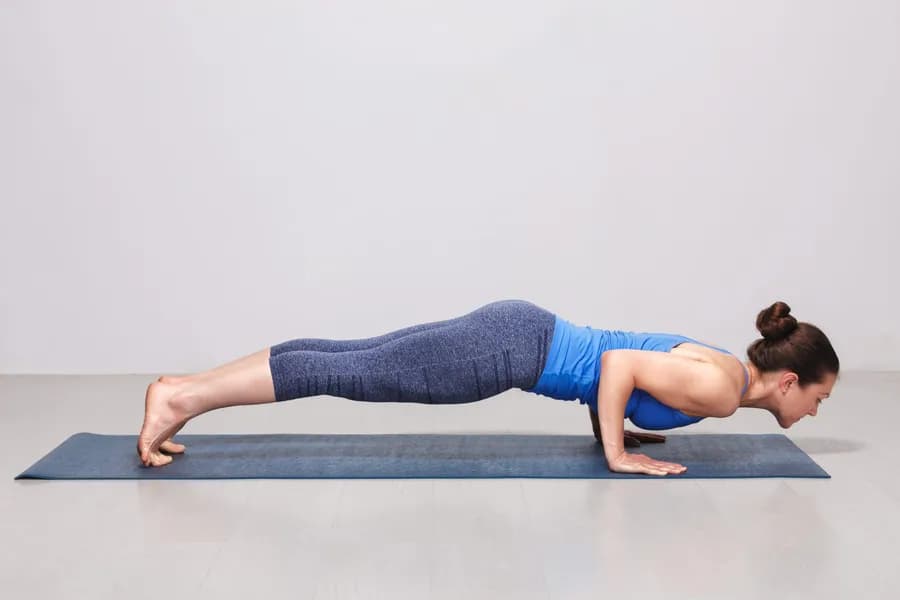
How to Fix Muscle Imbalances: A Practical Guide
When one side of the body is noticeably stronger or tighter than the other, targeted unilateral training can reduce injury risk and unlock strength progress bilateral exercises can't. See the practical guide.
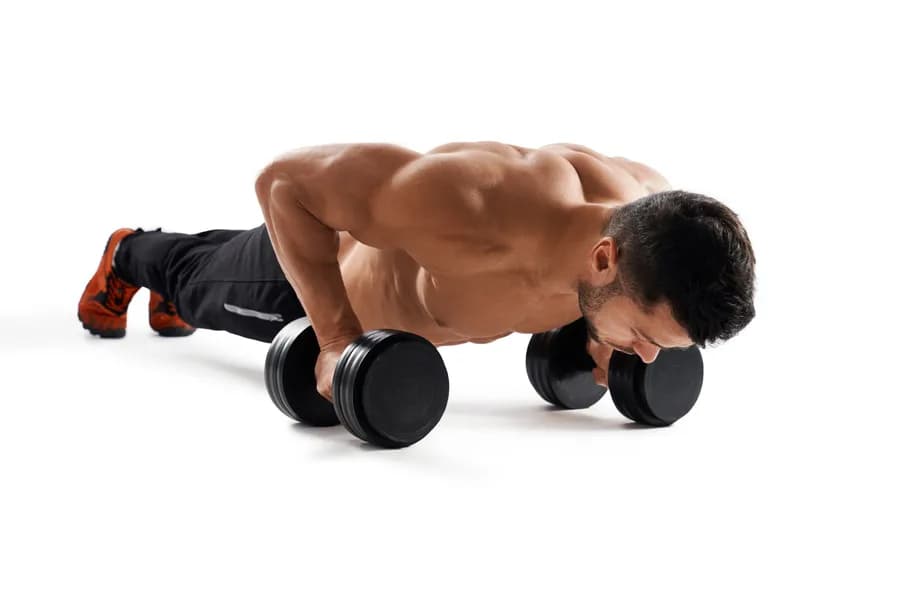
Exercises for Upper Crossed Syndrome: A Practical Guide to Correcting Posture and Rebuilding Strength
The chest, upper trapezius, and levator scapulae grow overactive and tight while the deep neck flexors and lower trapezius weaken — daily corrective exercises ease this over four to twelve weeks. See the full guide.
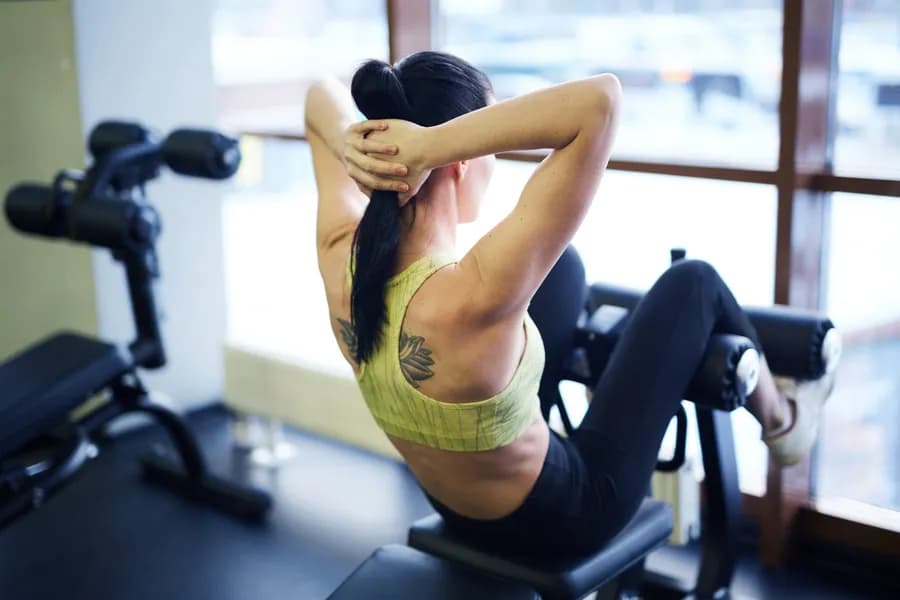
Back Workout with Dumbbells: Exercises, Benefits & How to Get Started
Rows, deadlifts, and pullovers target the latissimus dorsi, rhomboids, trapezius, and erector spinae, with minimal equipment needed. See the benefits and best exercises.
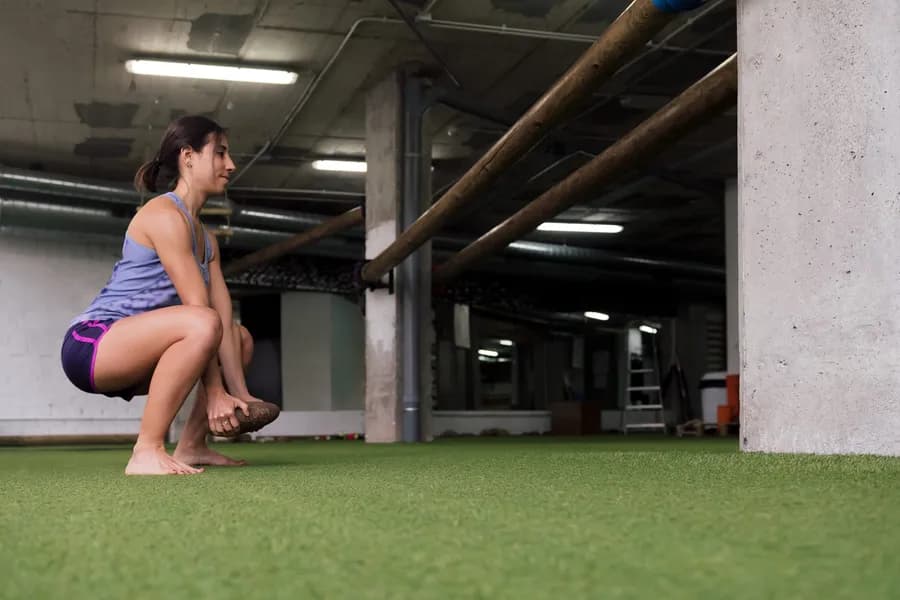
What Muscles Do Squats Work?
Squats recruit the quadriceps, glutes, hamstrings, hip flexors, core stabilisers, and calves simultaneously — the exact emphasis shifts with variation, stance, and depth. See the full muscular breakdown.