
How to Do Glute Bridge: Proper Form, Benefits & Variations
Learn how to do glute bridge with proper form, common mistakes, and beginner variations. Start your strength journey with Habuild with a 14-day free trial.

Key Takeaways
- Lie on your back and drive your hips toward the ceiling by pressing through the heels.
- Directly activates the gluteus maximus and hamstring group with zero equipment needed.
- Trains hip extension, a movement pattern most people lose from long hours of sitting.
- Holding the top position requires the core to stay braced throughout the rep.
- Weak glutes often force the lower back to compensate, contributing to chronic discomfort.
- Larger muscle groups like the glutes demand more energy when trained, aiding conditioning goals.
The glute bridge is a floor-based strength exercise where you lie on your back, bend your knees, and drive your hips toward the ceiling by pressing through your heels. It targets the gluteus maximus, hamstrings, and core — with zero equipment needed — making it one of the most accessible and effective lower-body moves for beginners and experienced trainees alike.
Learning how to do glute bridge correctly is one of the smartest moves you can make for lower body strength. It targets your glutes, hamstrings, and lower back — all at once — with zero equipment needed. Whether you’re a beginner training at home or someone looking to build a stronger posterior chain, the glute bridge is a foundational exercise that delivers real results when practiced consistently.
6 Benefits of the Glute Bridge
- Strengthens the Glutes and Hamstrings — The glute bridge directly activates the gluteus maximus and the hamstring group. Regular practice builds visible strength and muscle tone in the lower body, making everyday movements like climbing stairs and sitting down feel noticeably easier over time.
- Supports Lower Back Health — Weak glutes often force the lower back to compensate during movement, contributing to chronic discomfort. By strengthening the posterior chain through consistent glute bridge practice, you may gradually ease the strain your lower back experiences day to day. If you have an existing back condition, always consult your doctor before starting.
- Improves Hip Mobility and Stability — This exercise trains hip extension — a movement pattern most people lose from long hours of sitting. Better hip stability also supports your knees and ankles, reducing the risk of common injuries during other workouts or daily activity.
- Builds Core Engagement — Holding the top position of a glute bridge requires your core to stay braced. Over time, this trains deep abdominal stability that carries over into every other compound movement you perform.
- Requires No Equipment — You need a flat surface — that’s it. No gym, no weights, no machine. This makes the glute bridge one of the most accessible strength exercises you can do, whether you’re at home, traveling, or just starting out.
- Complements Fat Loss and Conditioning Goals — Larger muscle groups like the glutes demand more energy when trained. Incorporating glute bridges into a consistent strength routine supports your broader conditioning goals. If overall fat management is also on your mind, pairing this with a full-body approach is a smart strategy — see how structured training can support belly fat reduction over time.
How to Get Started with Glute Bridge Training
What You Need to Begin
All you need is a yoga mat or a firm, non-slip surface. No dumbbells, no resistance bands (though these can be added later for progression). This is genuinely one of the most beginner-friendly strength moves available.
Setting Realistic Goals
If you’re new to strength training, don’t expect overnight transformation. Aim to practice the glute bridge three to four times per week as part of a broader routine. Focus on feeling the right muscles activate rather than rushing through reps. Consistency over a few weeks will produce far better outcomes than sporadic intense sessions.
Start with the Basics
Begin with two to three sets of 10 to 12 repetitions, holding each rep at the top for one to two seconds. Once your form feels solid and the movement becomes easy, you can progress to single-leg variations or add a resistance band above the knees for extra challenge. For a broader home training framework, explore how to build a complete strength training routine at home.
How to Do Glute Bridge: Step-by-Step Technique
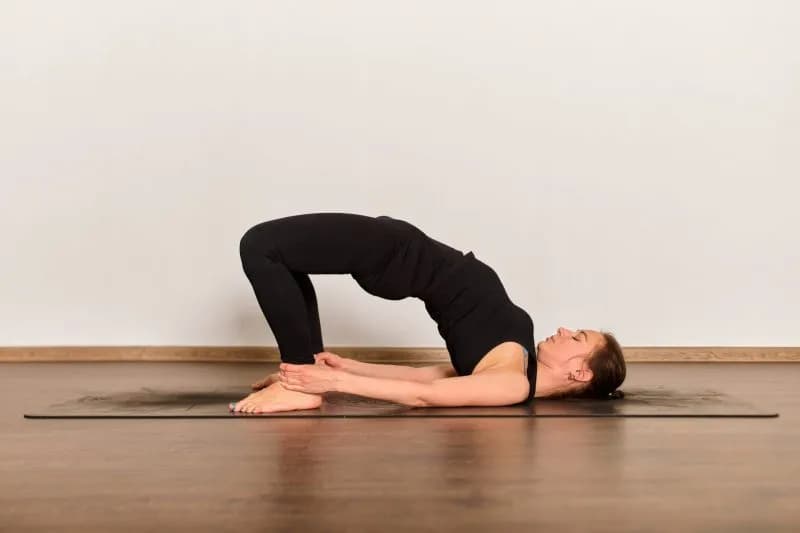
Standard Glute Bridge
Lie flat on your back with your knees bent and feet hip-width apart, flat on the floor. Your feet should be close enough that your fingertips can just graze your heels. Press your arms gently into the floor beside you for stability.
Engage your core, then press through your heels to lift your hips off the ground. Drive upward until your body forms a straight diagonal line from your shoulders to your knees. Squeeze your glutes firmly at the top. Hold for one to two seconds, then lower your hips slowly back to the floor without fully relaxing before the next rep.
Sets and reps: 3 sets × 12–15 reps. Rest 30–45 seconds between sets.
Single-Leg Glute Bridge (Hip Bridge Progression)
Set up in the same position as the standard bridge. Extend one leg straight out, keeping your thighs parallel. Drive through the heel of the planted foot to lift your hips. This variation eliminates the ability to compensate with the stronger side and significantly increases the demand on each glute independently.
Sets and reps: 3 sets × 8–10 reps per leg.
Elevated Glute Bridge
Place your feet on a low, stable surface — a couch edge, a step, or a sturdy chair. From this elevated position, perform the same hip drive upward. Elevation increases the range of motion your glutes travel through, making this a meaningful progression without any additional weight.
Sets and reps: 3 sets × 10–12 reps.
Banded Glute Bridge (Glute Raise Variation)
Loop a resistance band just above your knees. The band creates outward resistance, forcing your glutes to work harder to keep your knees tracking over your toes. This is one of the most effective glute activation techniques before compound lower body work like squats or lunges — for form guidance on the latter, see how to do lunges correctly.
Sets and reps: 3 sets × 12–15 reps.
Marching Glute Bridge
Lift into a standard bridge position and hold it. From there, alternate lifting each knee toward your chest in a slow, controlled march. Your hips must stay level throughout — any rotation signals your core isn’t braced tightly enough.
Sets and reps: 3 sets × 10 marches per side.
Common Mistakes to Avoid
- Poor Form at the Top — The most frequent error is hyperextending the lower back to get the hips higher. Your spine should remain neutral throughout the movement. If you feel the arch in your lower back exaggerating, lower the rep range and focus on squeezing your glutes to drive height — not pushing your stomach toward the ceiling.
- Skipping the Warm-Up — Jumping straight into glute bridges with cold hip flexors will limit your range of motion and reduce glute activation. Spend two to three minutes on hip circles, leg swings, or a light walk before your first set. A warm muscle contracts more fully and with better coordination.
- Feet Too Far Forward or Backward — Foot placement matters more than most people realize. If your feet are too far from your hips, you shift load to your hamstrings. Too close, and your calves take over. The correct position is where, at the top of the bridge, your shins are roughly vertical — check this against a mirror or record yourself until it becomes habitual.
- Rushing Through Reps — A fast, bouncy glute bridge removes time under tension — the key driver of strength and muscle development. Slow down the lowering phase to two counts. That controlled descent is where much of the training stimulus lives.
Who Should Try the Glute Bridge?
- Beginners — The glute bridge has virtually no barrier to entry. No equipment, no complex movement pattern, no prior strength base required. It’s an ideal starting point for anyone new to structured exercise — the standard variation alone will produce meaningful adaptation in the first few weeks.
- Women — Glute bridges are particularly popular among women because they target areas — glutes, inner thighs, hips — that are often undertrained. The common myth that strength exercises lead to bulkiness doesn’t hold up: glute bridge training builds lean, functional muscle that improves posture, reduces lower back discomfort, and supports long-term metabolic health.
- Older Adults — Hip extension strength is closely linked to balance and fall prevention in older adults. The glute bridge can be practiced safely on the floor with modifications and may help support hip joint stability and lower body mobility over time. Always check with a physician before beginning any new exercise program if you have existing hip, knee, or spinal concerns.
- Working Professionals — If you spend most of your day seated, your glutes are in a chronically lengthened, underactivated state — a condition sometimes called “gluteal amnesia.” A daily 10-minute glute bridge routine can help reactivate these muscles and may ease the postural strain that accumulates from desk work. Understanding how to build overall body strength progressively makes this even more effective as part of a broader routine.
Build Strength with a Routine That Actually Works
Building real lower body strength — the kind that carries over into daily life — isn’t about doing random exercises a few times a month. It comes from consistent, structured practice with proper guidance on form and progression. That’s exactly what Habuild’s Strong Everyday program is designed to deliver.
- Daily live guided strength sessions — train with a real instructor, not a pre-recorded video
- Beginner to advanced progression — your routine evolves as you grow stronger
- No equipment required — home-friendly workouts you can do on a mat
- Expert form coaching — so you train effectively and avoid injury
- Community support — stay consistent with people on the same journey
Related reads: Elevated Glute Bridge: Benefits, Form & Muscles Worked · What Is Glute Bridge Exercise: Benefits & How to Do It
The glute bridge is an easy entry point, but glutes only get stronger when the exercise keeps evolving — more reps, added resistance, harder variations — across a planned progression. Doing the same version indefinitely tends to plateau fast. Habuild’s Strong Everyday program maps out that progression, turning a beginner move into lasting glute strength.
Frequently Asked Questions
Related Articles
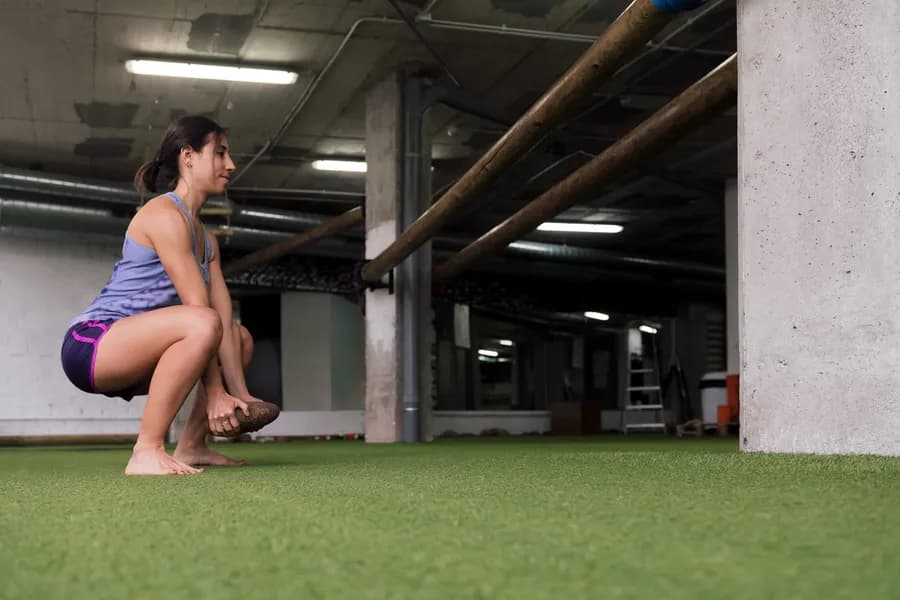
How to Do Squats Properly: Form, Benefits & Tips
Learn how to do squats properly with step-by-step guidance, common mistakes to avoid, and beginner tips. Start your strength journey with a 14-day free trial.
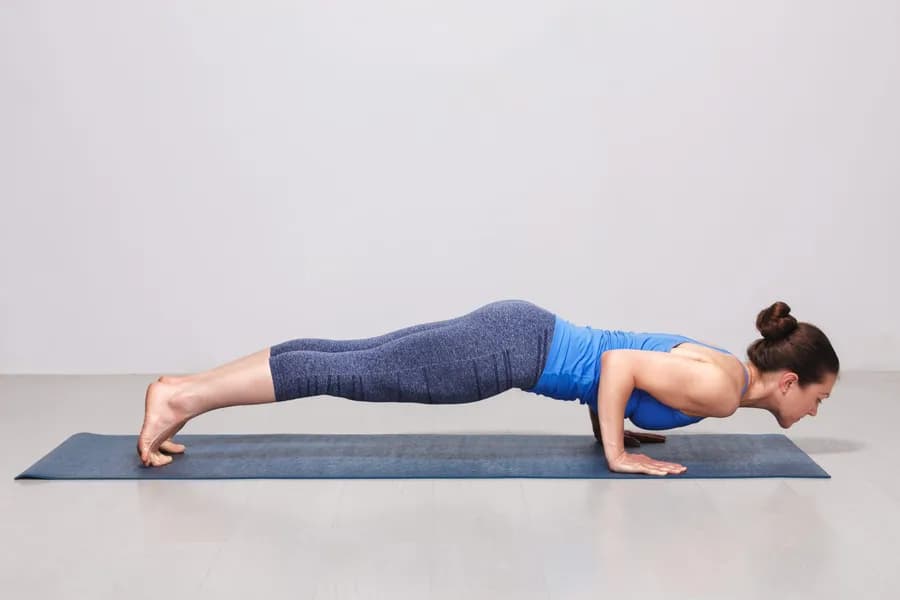
How to Strengthen Core Muscles: Exercises & Tips
Learn how to strengthen core muscles at home with expert exercises, beginner tips, and a structured routine. Start your free 7-day trial with Habuild today.
How to Do Leg Raises: Benefits, Form & Mistakes
Learn how to do leg raises correctly — benefits, best variations, common mistakes, and a beginner-friendly plan. Start your free trial with a 14-day free trial.
How to Do Bulgarian Split Squat — Form, Tips & Benefits
Learn how to do bulgarian split squat with correct form, common mistakes to avoid, and beginner-friendly variations. Start your free 7-day trial at 14-day free trial.
How to Strengthen Ankles: Exercises & Tips
Learn how to strengthen ankles with proven exercises, beginner tips, and a structured routine. Start your free 7-day trial with Habuild today.