
How to Do Squats Properly: Form, Benefits & Tips
Learn how to do squats properly with step-by-step guidance, common mistakes to avoid, and beginner tips. Start your strength journey with a 14-day free trial.
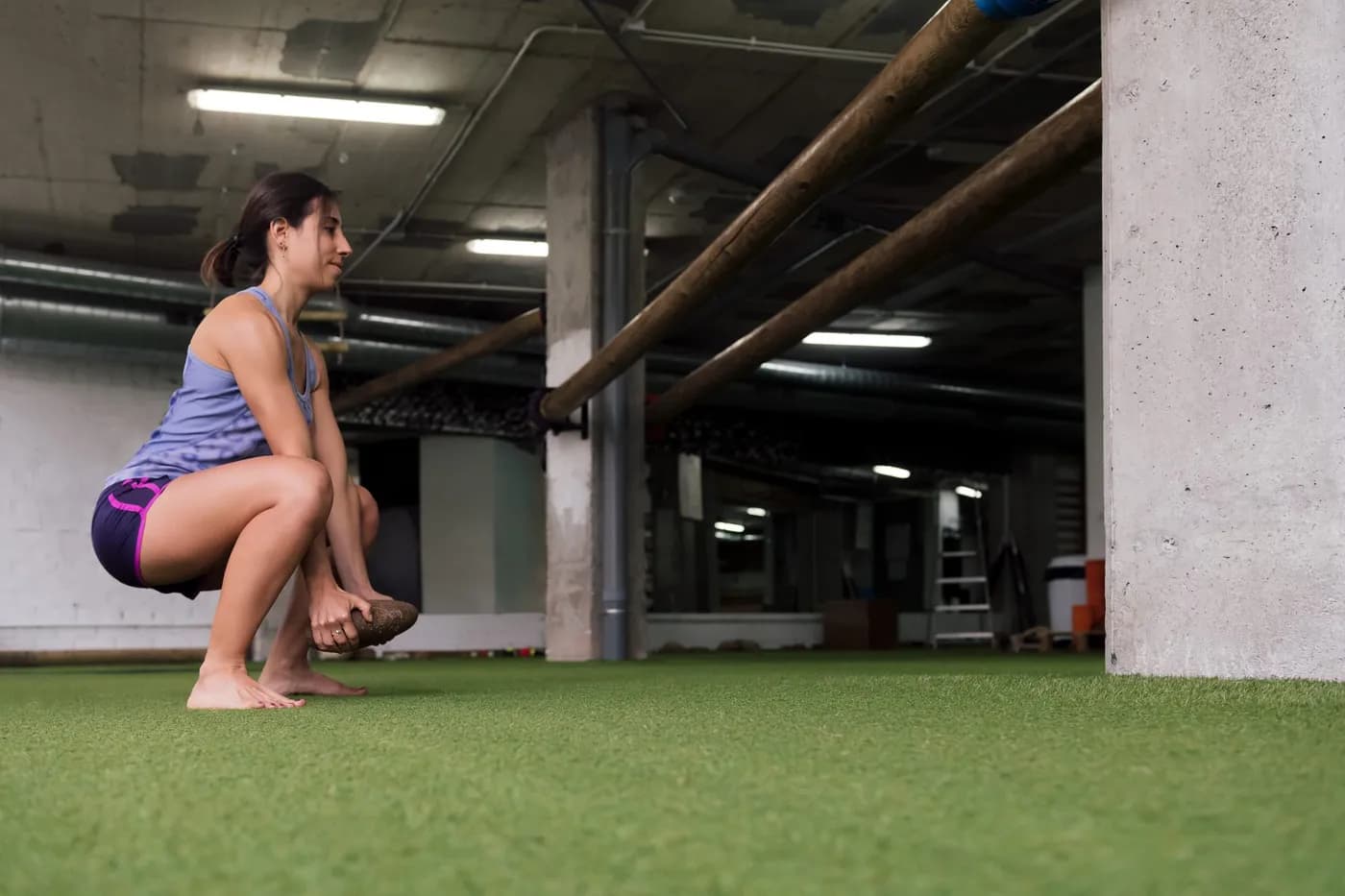
Key Takeaways
- Work the quads, hamstrings, glutes, and core simultaneously when done with correct form.
- Recruit so much muscle mass that heart rate and calorie burn rise during and after the session.
- Weight-bearing squats stimulate bone remodelling, supporting stronger bones over time.
- Train the body to maintain a neutral spine under load, improving proprioception.
- Done with full depth and a controlled descent, squats are among the top glute-activating exercises.
- Bodyweight squats are entirely equipment-free and can be performed anywhere.
Squats are one of the most effective lower-body strength movements you can learn. Done with correct form, they work your quads, hamstrings, glutes, and core simultaneously — making them essential for anyone looking to build strength, improve posture, or simply move better every day.
Knowing how to do squats properly protects your knees, improves your posture, and delivers far better results than going through the motions with poor technique. Whether you are a complete beginner or returning to training, this guide covers everything you need.
10 Benefits of Doing Squats the Right Way
- Builds Lower-Body Strength Squats activate multiple large muscle groups simultaneously — quads, hamstrings, and glutes — producing compound strength gains that carry over into everyday movement.
- Boosts Metabolism Because squats recruit so much muscle mass in one movement, they elevate your heart rate and increase calorie burn both during and after your session — a key benefit for anyone managing body composition.
- Improves Core Stability A properly braced squat demands active engagement from your entire core. Over time, this builds deep, functional core strength that protects your spine during daily activities like lifting, bending, and carrying.
- Supports Bone Density Weight-bearing movements like squats stimulate bone remodelling. Regular squatting with good form may gradually support stronger bones and reduce the risk of injury over time.
- Enhances Functional Strength Sitting down, standing up, climbing stairs, picking something off the floor — these are all squat patterns. Training the movement properly makes everyday life easier and reduces wear on your joints.
- Improves Posture and Balance Squats train your body to maintain a neutral spine under load, reinforcing good postural habits and improving proprioception — your sense of where your body is in space.
- Supports Fat Loss When Combined with Consistency Squats paired with a consistent training habit and sensible nutrition are among the most effective tools for body recomposition. Strength training for fat loss works best when compound movements like squats anchor the routine.
- Requires No Equipment Bodyweight squats are entirely equipment-free and can be performed anywhere. You can progress to loaded variations over time, but bodyweight form is where every strong squat begins.
- Activates the Glutes Effectively When done with full depth and a controlled descent, squats are one of the top glute-activating exercises available — important for hip stability and lower-back health.
- Builds Long-Term Consistency Because squats are accessible, scalable, and immediately rewarding in how they make your body feel, they are one of the easiest strength movements to build a daily habit around — and that habit is where results come from.
How to Get Started with Squats Properly
What You Need to Begin
You need nothing except a stable surface and enough space to stand with your feet shoulder-width apart. No weights, no bench, no gym membership. Comfortable flat-soled shoes or bare feet are ideal — avoid thick running shoes that tilt you forward. A pair of light dumbbells or a resistance band is more than enough when you are ready to progress.
Setting Realistic Goals
If you are new to squats, aim to do 3 sets of 10 bodyweight squats with clean form — not 100 reps of sloppy ones. Prioritise quality over quantity for the first two to three weeks. Once you can complete each set without form breaking down, progressively add volume or load. Avoid rushing into heavy weights before your movement pattern is solid.
Start with the Basics
Stand with feet shoulder-width apart, toes pointing slightly outward. Push your hips back and down as if sitting into a chair. Keep your chest tall, knees tracking over your toes, and heels firmly on the floor. Lower until your thighs are at least parallel to the ground, then drive through your heels to stand. For a broader foundation in home-based training, this guide on how to do strength training at home covers progressive approaches effectively.
Best Squat Variations and Exercises to Build on Your Form
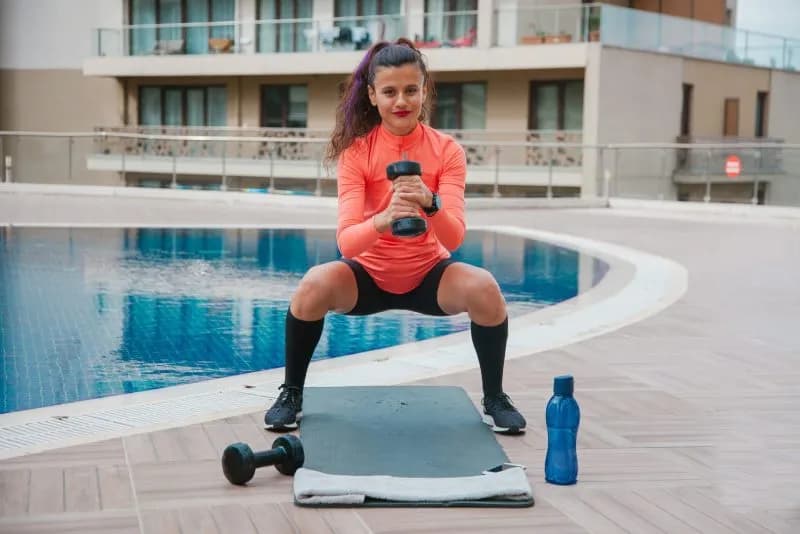
Bodyweight Squat
The foundational pattern. Focus entirely on form — neutral spine, knees tracking out, full depth. Perform 3 sets of 10–15 reps with a 2-second descent. Beginners must spend the most time here before progressing to any loaded variation.
Goblet Squat
Hold a dumbbell or water bottle at chest height with both hands. The front load naturally encourages an upright torso and counterbalances your weight, making it easier to hit depth cleanly. Excellent for beginners and for teaching proper knee tracking. Perform 3 sets of 10–12 reps.
Sumo Squat
Take a wider-than-shoulder stance with toes turned out at 45 degrees. This variation places greater emphasis on the inner thighs and glutes and tends to suit people with limited ankle mobility. Perform 3 sets of 12 reps.
Split Squat
Step one foot forward into a lunge position and lower your back knee toward the floor. This single-leg variation builds balance, addresses muscle imbalances, and increases glute activation significantly. Perform 3 sets of 8–10 reps per leg. The guide on how to do lunges correctly covers the mechanics of this movement in depth.
Jump Squat
Perform a standard squat descent, then explode upward into a jump, landing softly with bent knees. This plyometric variation builds power and elevates heart rate. Suitable once base strength is established. Perform 3 sets of 8 reps with full recovery between sets.
Squat to Chair
Place a sturdy chair behind you. Sit back and lightly touch the seat before standing back up. This removes fear of falling, helps beginners find the right depth, and builds confidence before moving to freestanding squats. Perform 3 sets of 10 reps.
Pulse Squat
Hold the bottom position of a squat and perform small pulses — moving just a few centimetres up and down — for 20–30 seconds. This extended time under tension increases muscle fatigue and metabolic demand without any equipment or added load.
Common Mistakes to Avoid When Squatting
- Poor Form: Knees Caving Inward Valgus collapse — where the knees buckle inward during the descent or drive — is the most common squat error and a leading cause of knee discomfort. It usually signals weak glutes or poor hip external rotation. Fix it by consciously pushing your knees outward throughout the entire movement. A resistance band placed just above the knees can help train this pattern.
- Skipping the Warm-Up Going straight into squats with cold muscles and stiff joints is a shortcut to discomfort and injury. Before your first set, spend 5 minutes on hip circles, leg swings, bodyweight glute bridges, and a few slow air squats to prime the nervous system and increase blood flow to the working muscles.
- Overtraining and Ignoring Recovery Doing squats every single day — especially with heavy loads — does not accelerate results; it slows them down. Muscles grow during recovery, not during the workout. For most people, 3–4 squat sessions per week with adequate rest is significantly more productive than daily grinding.
- Inconsistency: The Biggest Obstacle The most technically perfect squat routine, done once, produces zero lasting change. A moderate workout done consistently for 90 days will always outperform a perfect workout done sporadically. Building a daily movement habit is the true differentiator — and it is harder than most people expect without structure and accountability.
Who Should Try Squats?
- Beginners Squats are an ideal starting point for anyone new to exercise. They require zero equipment, can be modified easily, and produce visible results quickly. Starting with the chair-assisted variation removes anxiety around balance or depth and builds confidence within the first week.
- Women A common concern is that squats will make legs look bulky. This is a myth. Women have significantly lower testosterone levels than men, which means squat training produces lean, toned muscle definition rather than bulk. Squats are among the most effective exercises for the glutes, hips, and thighs.
- Older Adults Squats support joint mobility, balance, and bone density — all of which become increasingly important with age. Chair squats and wall squats are low-impact, safe starting points. If you have pre-existing knee, hip, or spinal conditions, consult your doctor or physiotherapist before beginning any new exercise programme.
- Working Professionals Sitting at a desk for 8+ hours shortens your hip flexors, weakens your glutes, and contributes to lower-back discomfort. A 10-minute squat routine can counteract the postural damage of prolonged sitting and fit into a lunch break or morning slot without requiring a gym. Understanding how consistent movement supports stress management is a useful complement to your training habit.
Build Strength with a Routine That Actually Works
Learning proper squat form is a great start. But form without a consistent, structured routine rarely produces lasting change. The missing piece for most people is not knowledge — it is the daily habit, the guided accountability, and a programme that progresses with you.
With Habuild’s Strong Everyday programme, you get:
- Daily live guided strength sessions — so you are never guessing what to do
- Beginner-to-advanced progression — form correction built into every session
- No-equipment, home-friendly workouts — no gym required
- Expert guidance on correct form — protecting your joints as you build strength
- Community support — the accountability layer that makes consistency sustainable
Related reads: How to Do Bulgarian Split Squat — Form, Tips & Benefits · How to Do Lat Pulldown: Form, Variations & Home Tips
Squatting with good form protects your joints, but strength itself builds through weeks of progressively harder squats within a structured plan, not through one well-executed set. That’s the difference between practicing a movement and actually training. Habuild’s Strong Everyday program takes squats like this and sequences them into a guided routine built for real progress.
Frequently Asked Questions
Related Articles
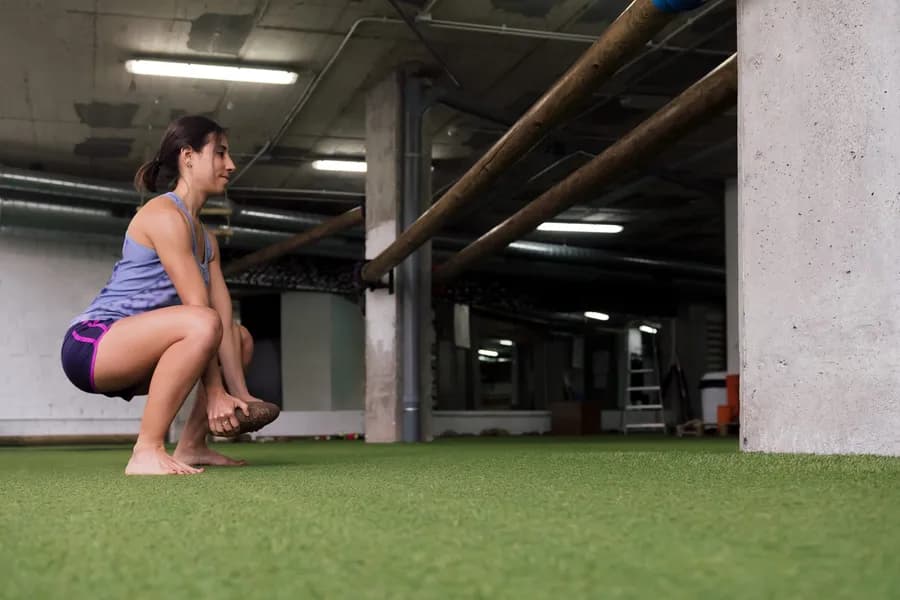
How to Do Bulgarian Split Squat — Form, Tips & Benefits
Learn how to do bulgarian split squat with correct form, common mistakes to avoid, and beginner-friendly variations. Start your free 7-day trial at 14-day free trial.
How to Strengthen Ankles: Exercises & Tips
Learn how to strengthen ankles with proven exercises, beginner tips, and a structured routine. Start your free 7-day trial with Habuild today.
How to Do Glute Bridge: Proper Form, Benefits & Variations
Learn how to do glute bridge with proper form, common mistakes, and beginner variations. Start your strength journey with Habuild with a 14-day free trial.
How to Do Calf Raises: Benefits, Form & Exercises
Learn how to do calf raises correctly at home — proper form, common mistakes, and beginner tips. Start your free 7-day trial with Habuild with a 14-day free trial.
How to Do Leg Raises: Benefits, Form & Mistakes
Learn how to do leg raises correctly — benefits, best variations, common mistakes, and a beginner-friendly plan. Start your free trial with a 14-day free trial.