
How to Do Leg Raises: Benefits, Form & Mistakes
Learn how to do leg raises correctly — benefits, best variations, common mistakes, and a beginner-friendly plan. Start your free trial with a 14-day free trial.
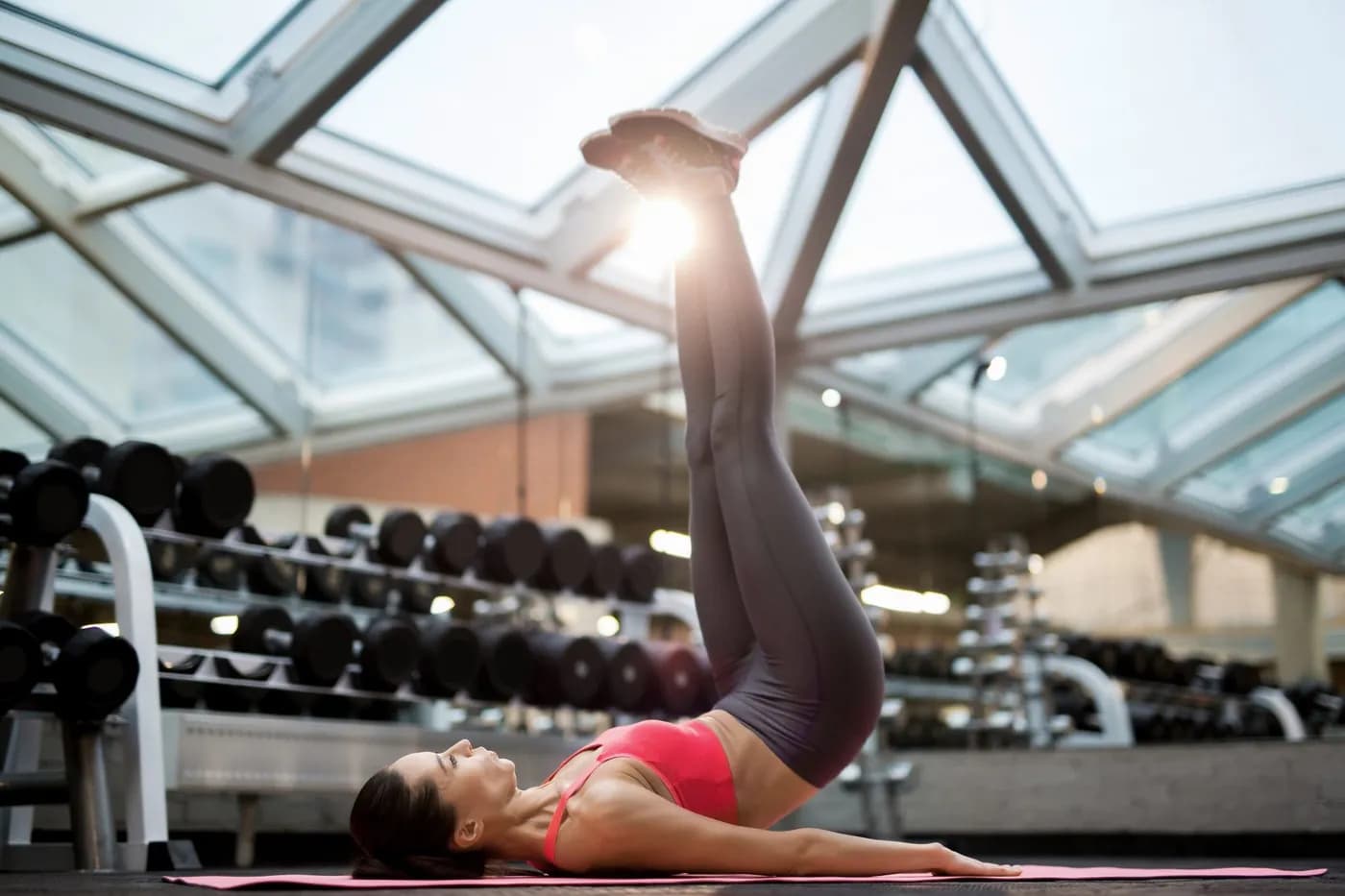
Key Takeaways
- Targets the lower abdominals, hip flexors, and stabilising muscles along the spine.
- One of the few exercises that directly challenges the lower portion of the rectus abdominis.
- Trains the transverse abdominis and multifidus to fire automatically, improving posture.
- Scales from bent-knee variations for beginners to weighted straight leg raises for experts.
- A folded towel under the lumbar spine helps in the early stages if lower-back discomfort occurs.
- Start with two to three sets of eight to ten reps, three days a week, prioritizing control.
Learning how to do leg raises correctly is one of the best investments you can make in your core training. This straightforward exercise — no equipment, no gym required — targets the lower abdominals, hip flexors, and stabilising muscles along your spine. Done consistently, it builds a strong, functional core that supports every other movement in your fitness routine. Whether you are a complete beginner or someone looking to sharpen your form, this guide covers everything you need to know.
7 Benefits of Leg Raises You Should Know
- Strengthens the Lower Abs — Leg raises are one of the few exercises that directly challenge the lower portion of the rectus abdominis — the area most people struggle to activate. Regular practice builds visible definition and functional strength in this region over time.
- Improves Hip Flexor Strength — Your hip flexors control how you walk, run, and climb stairs. Leg raises load these muscles through a full range of motion, gradually improving their strength and resilience. Stronger hip flexors also reduce the risk of lower-back strain during daily activities. If you want to complement this with better running performance, stronger hip flexors are a great foundation to build first.
- Builds Core Stability — Every rep of a leg raise demands that your torso stays braced and still. Over time, this teaches your deep stabilising muscles — the transverse abdominis and multifidus — to fire automatically, improving posture and balance throughout the day.
- Reduces Lower-Back Discomfort — A weak core is a leading contributor to lower-back pain. By strengthening the muscles that support your lumbar spine, leg raises may gradually ease discomfort and help you maintain better spinal alignment during extended sitting or standing.
- Supports Fat Loss When Combined with Cardio — While no single exercise targets fat in one area, leg raises contribute to overall calorie expenditure and muscle development. Pairing them with a consistent cardio and strength routine supports a body composition change over time. For a broader approach, see this guide on losing belly fat through structured training.
- Requires Zero Equipment — You need only a flat surface. This makes leg raises one of the most accessible core exercises available — perfect for home workouts at any hour.
- Adaptable for All Fitness Levels — From bent-knee variations for beginners to weighted straight leg raises for advanced trainees, this exercise scales easily. You can progress at your own pace without ever needing a machine.
How to Get Started with Leg Raises
What You Need to Begin
All you need is a yoga mat or a firm, flat surface. If you experience lower-back discomfort during floor work, a folded towel under your lumbar spine can help in the early stages. No dumbbells, no bench, and no gym membership required.
Setting Realistic Goals
Start with two to three sets of eight to ten reps, three days a week. Your first goal is not volume — it is control. A slow, deliberate rep with proper form is worth ten rushed, sloppy ones. Expect to feel your hip flexors more than your abs in the first week; this is normal. Core activation improves with consistency, not intensity.
Start with the Basics
Begin with the bent-knee leg raise before attempting the straight leg version. Lying flat, bring your knees to a 90-degree angle and slowly lower and raise them together. Once you can do three sets of twelve with complete control and a flat lower back, progress to the straight leg raise. The fundamentals of building strength from scratch are the same whether you are doing leg raises or any other movement — a solid guide on increasing overall body strength can help you build that broader foundation alongside your core work.
Best Leg Raise Exercises to Try
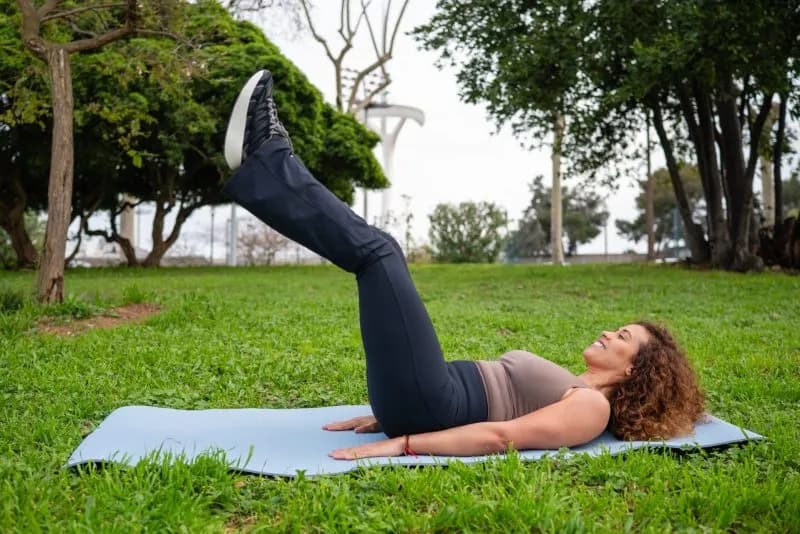
Flat Floor Leg Raise (Straight Leg Lift)
Lie on your back with legs fully extended and hands placed flat beside your hips or tucked slightly under your lower back. Keeping your legs together and knees locked, raise them to 90 degrees, then lower slowly without letting your heels touch the floor. This is the classic straight leg lift exercise and the benchmark for core strength assessment. 3 sets × 10–15 reps.
Bent-Knee Leg Raise
Identical starting position, but knees are bent at roughly 90 degrees throughout the movement. This variation reduces the lever arm, making it ideal for beginners or anyone building back-to-basics core strength. 3 sets × 12 reps.
Hanging Leg Raise
Grip a pull-up bar with both hands, let your body hang freely, then raise your legs to hip height (or higher as you progress). This is the most demanding variation — it trains the entire anterior chain simultaneously. 3 sets × 6–10 reps.
Scissor Leg Raise
Start in the standard lying position and raise both legs to 45 degrees. Alternate raising and lowering each leg in a scissoring motion without letting either foot rest on the floor. This adds an anti-rotation challenge. 3 sets × 20 alternating reps.
Side-Lying Leg Raise
Lying on your side with your body in a straight line, raise the top leg to about 45 degrees and lower it with control. This variation targets the hip abductors and outer glutes — often neglected but critical for knee health and lateral stability. 3 sets × 15 reps each side.
Flutter Kicks
From the flat floor position, raise both legs about 15 centimetres off the ground and alternate small, rapid kicks. Keep your lower back pressed firmly into the floor throughout. This is an excellent endurance variation for the lower abs and hip flexors. 3 sets × 20–30 seconds.
Weighted Leg Raise
Once you can perform three sets of fifteen clean reps with straight legs, add a light dumbbell gripped between your feet. Progress slowly — even half a kilogram dramatically increases the challenge. 3 sets × 8–10 reps.
Common Mistakes to Avoid
- Letting the Lower Back Arch — This is the most frequent error. When the hip flexors are weak or fatigued, the lower back arches away from the floor to compensate — shifting load onto the lumbar spine and away from the core. Press your lower back firmly into the mat before you lift, and stop the set if the arch returns. Using the bent-knee variation or reducing your range of motion is always smarter than pushing through poor form.
- Skipping the Warm-Up — Cold hip flexors and a stiff lumbar spine are an injury waiting to happen. Spend three to five minutes on dynamic warm-up movements — hip circles, glute bridges, and cat-cow stretches — before your first set. This meaningfully reduces the risk of strain.
- Using Momentum Instead of Muscle — Swinging the legs up quickly and dropping them fast bypasses the muscles you are trying to train. Aim for a two-second lift and a three-second descent. The eccentric (lowering) phase is where most of the real strength adaptation happens.
- Inconsistency — Many people do leg raises intensively for a week, then stop for two. Core strength responds to progressive, regular stimulus — not occasional bursts. Three consistent sessions per week for eight weeks will outperform daily sessions for ten days followed by a month off. Consistency is the variable that separates people who see results from those who do not.
Who Should Try Leg Raises?
- Beginners — The bent-knee variation requires no prior fitness experience and can be performed on any flat surface. If you are new to structured exercise, leg raises are one of the safest and most effective places to start building core awareness and strength.
- Women — Leg raises build lean, functional core strength without adding bulk. The concern that core training will make women look wider is a persistent myth — this exercise tones and stabilises rather than enlarges. Women who do leg raises regularly often report better posture, reduced bloating sensation, and improved comfort during daily movement.
- Older Adults — A strong core is one of the most protective factors against falls and lower-back injury as we age. Leg raises, especially the bent-knee variation, are low-impact and can be performed lying down, making them accessible regardless of mobility limitations. If you have a diagnosed spinal condition or recent surgery, please consult your doctor before starting.
- Working Professionals — Extended sitting compresses the hip flexors and weakens the lower abs — a combination that leads to the rounded-shoulder, forward-tilted posture that affects many desk workers. A ten-minute leg raise routine done at home before or after work directly counters these effects without requiring a commute to a gym.
Build Strength with a Routine That Actually Works
Building a strong core is not about doing the hardest exercise you can find — it is about doing the right exercises, correctly, every day. A structured programme with expert guidance makes the difference between progress and plateaus.
What you get with Habuild’s Strong Everyday programme:
- Daily live guided strength and yoga sessions
- Beginner-to-advanced progression built into the schedule
- No-equipment, home-friendly workouts including core-focused sessions
- Expert guidance to ensure correct form on every exercise
- Community support that keeps you consistent week after week
If you want to understand how to structure your strength work beyond core exercises, this resource on doing strength training at home covers the full picture.
Start Your Strength Training Journey
Related Articles
- How to Do Lunges — Proper Form and Variations
- How to Do Burpees — Step-by-Step Guide
- How to Reduce Thigh Fat Through Exercise
Related reads: How to Do Calf Raises: Benefits, Form & Exercises · What Is a Leg Press? Benefits, Form & Home Alternatives
Leg raises target the lower abs effectively, but like most core work, the gains show up gradually through repeated, well-paced sessions rather than a single well-executed set. Pairing this move with a structured routine keeps the challenge increasing instead of stalling. Habuild’s Strong Everyday program builds that kind of steady core progression into a guided daily plan.
Frequently Asked Questions
Related Articles
How to Strengthen Core Muscles: Exercises & Tips
Learn how to strengthen core muscles at home with expert exercises, beginner tips, and a structured routine. Start your free 7-day trial with Habuild today.
How to Do Crunches: Benefits, Techniques & Mistakes
Learn how to do crunches correctly — proper form, best variations, and common mistakes to avoid. Start building core strength today with expert guidance.
How to Do Glute Bridge: Proper Form, Benefits & Variations
Learn how to do glute bridge with proper form, common mistakes, and beginner variations. Start your strength journey with Habuild with a 14-day free trial.

How to Get Six Pack Abs: Exercises, Tips & Plan
Learn how to get six pack abs at home with the right exercises, diet tips, and a consistent routine. Start your 14-day free trial trial with Habuild today.
How to Do Squats Properly: Form, Benefits & Tips
Learn how to do squats properly with step-by-step guidance, common mistakes to avoid, and beginner tips. Start your strength journey with a 14-day free trial.