
Is Strength Training Good for Weight Loss?
Strength training raises your resting metabolic rate over time, not just calories burned during the session — building lean muscle and triggering an afterburn effect. See why the evidence says yes.
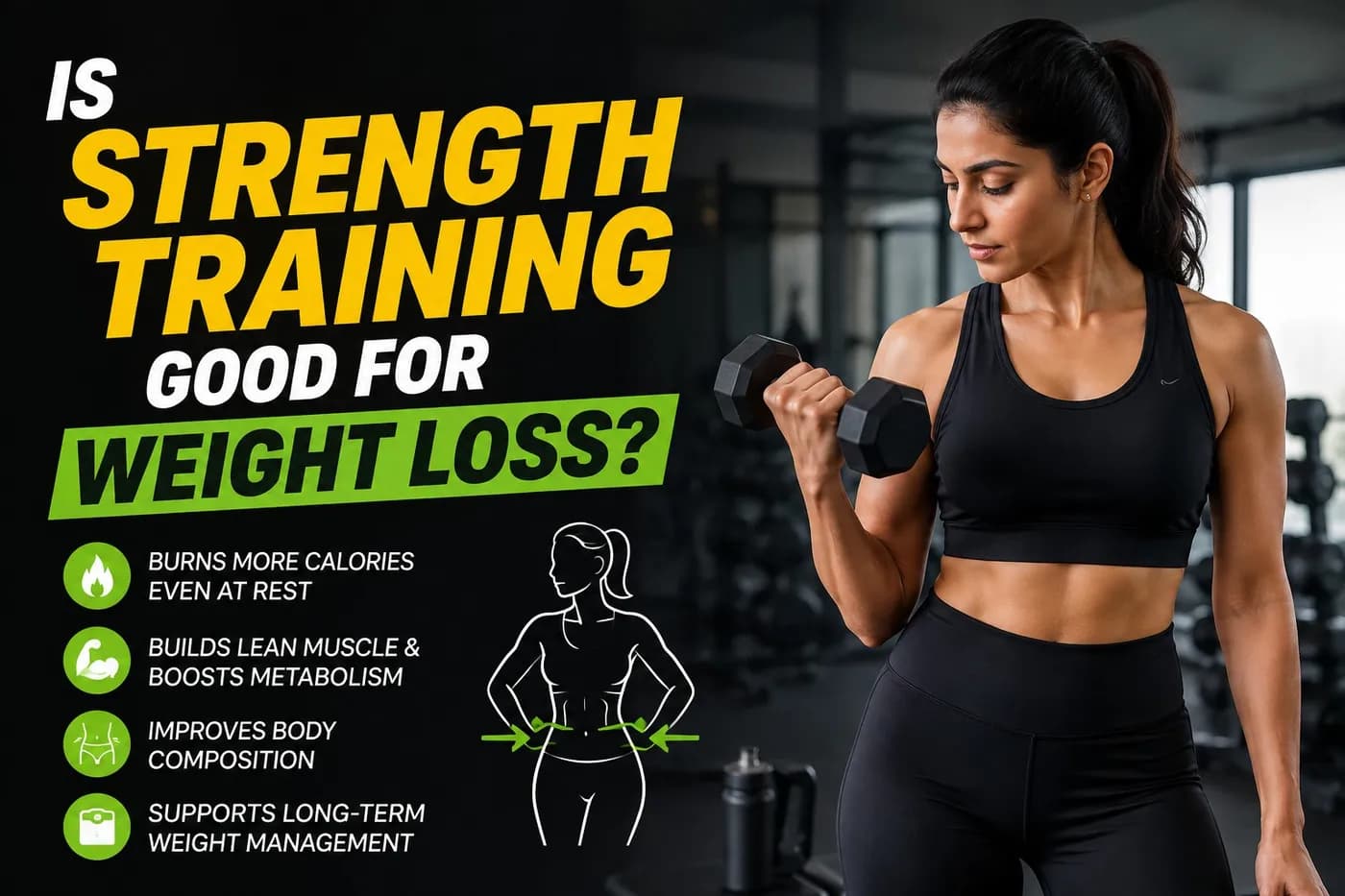
Key Takeaways
- Strength training raises resting metabolic rate, not just calories burned during the session.
- EPOC keeps the body consuming extra oxygen and calories for hours after training.
- Resistance training helps preserve lean mass during a deficit, so lost weight is mostly fat.
- Regular resistance work may improve insulin sensitivity and cortisol regulation.
- Bodyweight moves like squats and lunges are fully effective without any equipment.
- Building bone density and joint health are added benefits beyond fat loss itself.
Strength training is one of the most effective methods for sustainable weight loss — not just because it burns calories during a session, but because it raises your resting metabolic rate over time. By building lean muscle, improving insulin sensitivity, and triggering an afterburn effect, is strength training good for weight loss? The evidence consistently says yes.
If you’ve been wondering whether strength training is good for weight loss, the short answer is yes — and it works differently from cardio in ways that matter long-term. While running burns calories during the session, strength training reshapes your metabolism, helping your body burn more energy even at rest. This guide breaks down exactly how it works, which exercises to start with, and how to avoid the mistakes that slow most people down.
6 Ways Strength Training Supports Weight Loss
Builds Lean Muscle That Burns More Calories
Muscle tissue is metabolically active — it requires energy to maintain even when you’re not exercising. As you build lean muscle through consistent training, your resting metabolic rate gradually increases, which means your body burns more calories throughout the day.
Boosts Metabolism for Hours After Your Workout
Strength training creates an afterburn effect known as excess post-exercise oxygen consumption (EPOC). Your body continues to consume elevated oxygen — and therefore calories — for several hours after a session ends. This is something steady-state cardio rarely achieves at the same level.
Improves Bone Density and Joint Health
Beyond fat loss, regular resistance training gradually strengthens your bones and connective tissue. This becomes especially important for long-term health and makes it easier to stay active without injury as you age.
Enhances Functional Strength
Everyday tasks — carrying groceries, climbing stairs, maintaining good posture — become noticeably easier as your functional strength improves. A structured program that includes functional strength exercises develops the muscles you actually use daily.
Supports Gradual Fat Loss Without Muscle Loss
When people lose weight through diet alone or excessive cardio, they often lose muscle along with fat. Strength training helps preserve and build lean mass during a calorie deficit, so the weight you lose is more likely to come from fat stores.
Improves Insulin Sensitivity and Hormonal Balance
Consistent resistance training may gradually improve how your body processes glucose and regulates hormones like cortisol and insulin — both of which play a significant role in fat storage, particularly around the abdomen.
How to Get Started with Strength Training for Weight Loss
What You Need to Begin
You don’t need a gym membership or expensive equipment to start. Bodyweight exercises — squats, push-ups, planks, lunges — are fully effective when performed with correct form and progressive difficulty. A pair of light dumbbells or a resistance band adds variety over time, but neither is essential for your first few weeks.
Setting Realistic Goals
Sustainable fat loss through strength training takes time. Most people begin to notice improved energy and slight body composition changes within four to six weeks of consistent practice. Aiming for two to four sessions per week is a reasonable starting point — more than that without adequate recovery can slow progress rather than speed it up.
Start with the Basics
Focus on compound movements first — exercises that work multiple muscle groups simultaneously. Squats, hinges, presses, and rows form the foundation of any effective strength training program. Mastering these before adding complexity protects your joints and builds a strong base for progression.
Best Exercises for Strength Training for Weight Loss

Squats
Squats engage the quads, hamstrings, glutes, and core simultaneously. They’re one of the highest calorie-burning resistance exercises available. Aim for 3 sets of 10–15 repetitions, keeping your knees aligned over your toes and your back neutral throughout.
Push-Ups
Push-ups develop chest, shoulder, and tricep strength while also engaging your core and stabilisers. They require no equipment and scale easily — start on your knees if needed, and progress to standard form as strength builds. Try 3 sets of 8–12 reps.
Lunges
Forward and reverse lunges build single-leg strength, improve balance, and activate the glutes and thighs effectively. Add a dumbbell in each hand once bodyweight lunges feel comfortable. Perform 3 sets of 10 reps per leg.
Plank
The plank builds deep core stability — the foundation for every other exercise on this list. Hold for 20–60 seconds, focusing on a straight line from head to heels. Avoid letting your hips sag or rise.
Dumbbell Rows
Bent-over rows target the upper and mid-back, biceps, and rear shoulders. Strong back muscles improve posture and support fat loss by enabling you to perform heavier compound movements with better control. Do 3 sets of 10–12 reps per arm.
Glute Bridges
Lying flat with knees bent, press your hips toward the ceiling and hold at the top. This activates the glutes, lower back, and hamstrings — a pattern many people neglect, especially those who sit for most of the day. Try 3 sets of 15 reps.
Mountain Climbers
Mountain climbers combine core stability with cardiovascular demand, making them particularly useful for those prioritising fat loss. They can be included at the end of a session as a finisher. Aim for 30–45 seconds per set.
Common Mistakes to Avoid
- Poor Form Rushing through reps with compromised form shifts load to the wrong muscles and significantly increases injury risk. Slow down, especially during the lowering phase of each exercise. If you’re unsure about technique, working with a trainer or joining a guided program can make a meaningful difference early on.
- Skipping the Warm-Up A cold body is a stiff body. Spend five to ten minutes on light movement — arm circles, leg swings, bodyweight squats — before loading any exercise. Warm muscles respond better to training and are far less prone to strain.
- Overtraining More sessions don’t always mean faster results. Muscles grow and adapt during rest, not during the workout itself. Training the same muscle group on consecutive days without adequate recovery is one of the most common reasons people plateau or get injured in their first few months.
- Inconsistency The most effective strength training program is one you actually follow week after week. Sporadic sessions — three weeks on, two weeks off — rarely produce lasting changes in body composition. Building a consistent daily or weekly habit is where the real transformation happens. This is exactly why daily resistance training structured within a supported routine tends to outperform solo gym visits over time.
Who Should Try Strength Training for Weight Loss?
- Beginners If you’ve never lifted before, strength training is actually an ideal starting point. The beginner adaptation phase — where your nervous system learns to recruit muscles more efficiently — often produces rapid early improvements in strength and energy levels, even before significant visual changes occur. The barrier to entry is low: start with bodyweight, stay consistent, and progress gradually.
- Women A common concern is that strength training will make women look bulky. This is largely a myth. Women have significantly lower testosterone levels than men, which means building large amounts of muscle mass requires years of very specific training and nutrition. What strength training realistically does for most women is create a leaner, more defined appearance — along with stronger bones, better posture, and improved energy. Explore Habuild’s female strength training program designed specifically with this in mind.
- Older Adults Strength training becomes increasingly important after 40, when muscle mass naturally begins to decline at roughly 1–2% per year. Resistance exercise helps slow this process, supports bone density, and improves balance — all of which reduce the risk of falls and maintain independence. If you have any existing joint or health conditions, please consult your doctor before starting a new exercise program.
- Working Professionals Desk-bound work quietly creates postural imbalances — tight hip flexors, rounded shoulders, a weak core. Strength training directly addresses these patterns. Even two structured sessions per week, each lasting 30–40 minutes, can meaningfully reverse the effects of long sitting hours and support a healthier weight over time.
Build Strength with a Routine That Actually Works
Building strength isn’t about doing random workouts — it’s about consistency, guidance, and following a structured plan. With the right support, you can train effectively from home and see real progress over time.
What You Get with Habuild’s Strength Training Program:
- Daily live guided strength and yoga sessions
- Beginner to advanced progression built into the plan
- No-equipment and home-friendly workouts
- Expert guidance to ensure correct form from day one
- Community support to help you stay consistent week after week
If you’ve been asking whether weight training is good for weight loss, the most honest answer is: it depends on whether you actually stick with it. That’s what Habuild is built around — not just giving you exercises, but helping you show up every day.
Related reads: Does Strength Training Increase Weight? the Truth about the Scale · How to Tighten Loose Skin After Weight Loss
Raising your resting metabolic rate takes months of consistent resistance training, not a handful of sessions before motivation runs out — which is exactly where most home strength routines quietly stall. A guided program keeps the intensity and frequency on track so that metabolic shift actually has time to happen. Strong Everyday is built around this kind of structured, everyday strength training designed for lasting results.
Frequently Asked Questions
Related Articles

Strength Exercises for Weight Loss: Benefits, Best Moves & How to Start
Discover the best strength exercises for weight loss. Build lean muscle, boost metabolism, and start a beginner-friendly routine at home. Try Habuild for 14-day free trial.

Strength Training Calories Burned: How Much Does a Session Actually Burn?
Strength training burns fewer calories per session than cardio, but produces far greater long-term expenditure through the metabolic elevation it creates. See exactly how much a session burns.
Best Workout for Weight Loss at Home
Bodyweight strength exercises paired with cardio bursts, done consistently 4-5 days a week, need no gym, equipment, or commute. See the full workout.
How to Lose Fat While Gaining Muscle: A Complete Guide
Body recomposition is achievable with structured resistance training, adequate protein, and consistent effort — most beginners see visible changes within 8-12 weeks. See the complete guide.
What Is the Most Calorie Burning Activity? Top Picks
Discover what is the most calorie burning activity and which exercises burn the most calories. Start your 14-day free trial trial with Habuild today.