
Strength Training Calories Burned: How Much Does a Session Actually Burn?
Strength training burns fewer calories per session than cardio, but produces far greater long-term expenditure through the metabolic elevation it creates. See exactly how much a session burns.

Key Takeaways
- A 30-minute session burns roughly 200-240 calories for a 75kg person at moderate intensity.
- EPOC keeps metabolic rate elevated by 5-9% for up to 48 hours after a vigorous session.
- Each kilogram of added muscle burns 50-100 additional calories daily, even on rest days.
- A 2019 study equated 2kg of added muscle to the caloric burn of running 200km yearly.
- Burpees burn roughly 10 calories per minute, the highest among common strength exercises.
- Six months of consistent training can add 100-300 permanent daily calories burned at rest.
Strength training burns fewer calories per session than cardio — but produces far greater long-term caloric expenditure through the metabolic elevation it creates. Understanding exactly how many calories strength training burns, and why this understates its true fat-loss value, is essential for setting realistic expectations and designing a programme that produces lasting body composition change.
Does Strength Training Burn Calories? Here's How
Calories Burned During the Session
A 30-minute moderate-intensity strength training session burns approximately 180–250 calories for a 75kg person depending on exercise selection, intensity, and rest period duration. This is lower than a 30-minute run (300–400 calories) — but the comparison is incomplete because it ignores the post-session and long-term caloric impact of strength training.
A 75kg person burns approximately 200–240 calories in a 30-minute strength training session at moderate intensity — American Council on Exercise caloric expenditure data.
Calorie Burn after Strength Training — EPOC
EPOC (Excess Post-Exercise Oxygen Consumption) — the elevated metabolic rate that persists after exercise — is significantly higher and longer-lasting after strength training than after cardio. Following a vigorous strength session, metabolic rate remains elevated by 5–9% for up to 48 hours. This post-exercise caloric burn (50–150 additional calories per session) makes strength training's total caloric impact far closer to cardio than the in-session numbers suggest.
The Resting Metabolic Rate Effect — the True Long-Term Advantage
The most important caloric benefit of strength training is not what it burns during or after a session — it is what it burns permanently. Each kilogram of muscle added burns 50–100 additional calories per day at rest, every day, including rest days. After 6 months of consistent strength training producing 2–3kg of lean muscle, this translates to 100–300 additional daily calories burned permanently — the equivalent of a 20-minute run, every single day, without additional effort.
Research: Adding 2kg of lean muscle through strength training increases resting metabolic rate by 100–200 calories per day — the equivalent annual caloric expenditure of running 200km — Journal of Applied Physiology, 2019.
Best Calorie Burning Weight Lifting Exercises
Among strength exercises, compound movements that recruit multiple large muscle groups produce the highest in-session caloric burn: burpees (~10 cal/min), squat jumps (~8 cal/min), push-up circuits (~6 cal/min), and compound circuits averaging 7 cal/min. Isolation exercises (bicep curls, tricep kickbacks) burn a fraction of this.
How to Get Started with Strength Training for Calorie Burning
What You Need to Begin
No equipment required for calorie-burning bodyweight strength training. A yoga mat. The most calorie-intensive strength exercises (squats, burpees, push-ups, compound circuits) are all bodyweight-based and home-accessible.
Setting Realistic Goals
For fat loss: target 3–4 strength sessions per week combined with daily 30-minute brisk walking. This combination produces 35% more fat loss than cardio alone in research comparisons — strength elevates metabolism, walking creates caloric deficit.
Maximise Calorie Burn in Strength Sessions
Three variables maximise caloric expenditure in strength training: (1) compound exercises (squats, push-ups, burpees) burn 2–3× more calories per minute than isolation exercises; (2) shorter rest periods (45 seconds vs 2 minutes) increase metabolic demand significantly; (3) circuit training format converts strength training into concurrent cardiovascular and strength stimulus.
Best Calorie-Burning Strength Training Exercises

Burpee ~10 Cal/min · Highest Metabolic Cost Bodyweight Exercise
The highest-calorie-burning bodyweight exercise available. Each burpee engages every major muscle group in a push-up + squat + jump sequence. 10 rounds of 30s on/30s rest burns 80–100 calories in 10 minutes. Modify by stepping instead of jumping for beginners.
Squat Jump ~8 Cal/min · Legs + Cardiovascular
Bodyweight squat with an explosive jump at the top. Combines the hormonal strength-building stimulus of squatting with plyometric cardiovascular caloric expenditure. 3 sets × 15 burns significantly more calories than equivalent bodyweight squats.
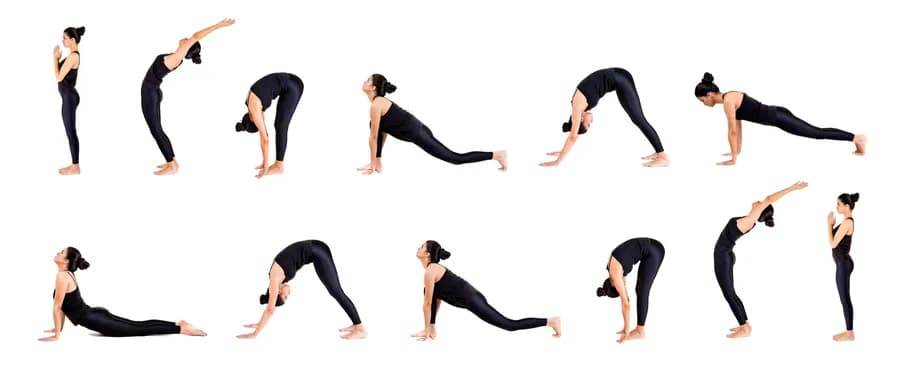
Push-Up to Downward Dog Circuit ~6 Cal/min · Upper Body + Core Continuous
Push-up from plank, then press into downward dog and return. Maintains elevated heart rate between strength repetitions — combining upper body strengthening with cardiovascular caloric expenditure in each set.
Squats ~5 Cal/min · Largest Muscle Groups · Maximum Hormonal Response
Standard bodyweight squat — the highest hormonal calorie-burning response of any bodyweight exercise through simultaneous activation of the body's largest muscle groups. Produces the greatest EPOC effect of any single movement.
Full Compound Circuit ~7 Cal/min Average · Best for Total Calorie Burn
5–6 compound exercises performed with 30-second rests between movements — squats, push-ups, rows, glute bridges, mountain climbers, planks. Circuit format converts individual strength exercises into a concurrent cardiovascular and strength session. The best calorie-burning weight lifting exercises format for home training without equipment.
Common Mistakes to Avoid
- Judging Strength Training Only by Session Calories — Comparing a 200-calorie strength session to a 350-calorie run ignores EPOC, resting metabolic rate elevation, and the 24–48 hour post-exercise metabolic benefit that makes strength training's total weekly caloric impact competitive with or superior to cardio for body composition. Fix: use the combination of cardio (direct caloric expenditure) and strength training (metabolic elevation) — research consistently shows this combination produces 35% more fat loss than cardio alone.
- Long Rest Periods between Sets — 3-minute rest periods reduce total session caloric expenditure by 40–50% compared to 60-second rests — without proportionally greater strength gains for most goals. Fix: for calorie-burning goals, keep rest periods to 45–60 seconds between sets — this maintains elevated heart rate and increases metabolic demand significantly without sacrificing the strengthening stimulus.
- Doing Only Isolation Exercises — Bicep curls and tricep kickbacks burn a fraction of the calories of compound movements because they recruit one or two small muscles rather than five or six large ones simultaneously. Fix: build every session around compound movements (squats, push-ups, rows, lunges, burpees) and add isolation work at the end if desired — the compound foundation maximises both caloric expenditure and hormonal muscle-building response.
Who Should Focus on Strength Training Calories?
- Those Wanting Fat Loss Without Muscle Loss — Strength training's unique ability to build muscle while in caloric deficit makes it the only exercise that simultaneously improves body composition in both directions — less fat, more muscle.
- Those Who Have Plateaued on Cardio-Only — The fat loss plateau on cardio-only programmes is caused by metabolic adaptation. Adding strength training raises resting metabolic rate and breaks the plateau through a completely different mechanism.
- Women — Strength training's long-term metabolic benefits are particularly important for women, where resting metabolic rate naturally declines with age. Building and maintaining lean muscle mass counteracts this decline permanently.
- Working Professionals — The post-session and resting metabolic rate benefits of strength training continue working throughout the workday — making it the highest total-calorie-impact exercise per session time invested.
The metabolic elevation this guide credits as strength training's real edge over cardio only shows up when sessions happen often enough to keep compounding — one occasional workout won't move your resting metabolism much. What actually shifts body composition over months is a schedule you keep, not a calendar with gaps in it. Strong Everyday is built around exactly that kind of sustained, structured training.
Frequently Asked Questions
Related Articles

How Many Jumping Jacks to Burn 500 Calories: the Honest Calculation
The number depends on body weight, exercise intensity, and metabolic efficiency in ways most online calculators ignore. See the weight-adjusted calculation.


Does Muscle Gain Increase Weight? What the Scale is Not Telling You
Muscle is roughly 18% denser than fat by volume, so a given weight of muscle takes up less space — the scale can rise, stay flat, or fall while the body visibly transforms. See what the scale isn't telling you.

What Are the Benefits of Strength Training? 7 Evidence-Based Benefits That Transform Health
Strength training reduces all-cause mortality risk, prevents age-related disability, and builds bone density across every age group and sex within 8-12 weeks. See all 7 evidence-based benefits.

How to Build Body at Home: the Complete No-Equipment Muscle Building Guide
The best available workout is the one performed daily, not the theoretically best programme that requires a commute and a fee. See the complete no-equipment muscle building guide.
Full Body Workout at Home Without Equipment: 30-Minute Daily Plan
This 30-minute daily plan covers all major muscle groups using bodyweight only, producing a complete training stimulus in the time most people spend commuting to a gym. See the full plan.