
What Are Kegel Exercises for Women
Learn what are kegel exercises for women, how to do them, key benefits, and who should start. Try Habuild's guided program with a 14-day free trial.
Key Takeaways
- Named after Dr. Arnold Kegel, targeting the internal muscles supporting bladder, uterus, and bowel.
- Support women at every life stage, from pregnancy through menopause and beyond.
- Pregnancy and delivery place significant strain that kegels help the pelvic floor rebuild after.
- A weakened pelvic floor can allow pelvic organs to shift downward, a risk kegels help reduce.
- Many women notice improved sensation and comfort during intimacy after weeks of practice.
- Take just a few minutes a day and require no equipment to begin.
Kegel exercises are gentle, targeted contractions of the pelvic floor muscles — the internal group supporting your bladder, uterus, and bowel. Named after Dr. Arnold Kegel, they require no equipment, take just minutes a day, and help women build foundational pelvic strength at any life stage — from pregnancy through menopause and beyond.
If you’ve ever wondered what are kegel exercises for women and whether they’re actually worth doing, you’re not alone. They require no equipment, take just a few minutes a day, and can make a meaningful difference in how your body feels and functions over time. Whether you’re postpartum, pregnant, or simply looking to build deeper core strength, kegels are a foundational practice worth adding to your routine.
6 Key Benefits of Kegel Exercises for Women
- Supports Bladder Control One of the most well-known benefits is improved bladder control. Women who practice kegels regularly often find it easier to manage urinary urgency and reduce involuntary leakage — especially during activities like sneezing, laughing, or jumping. Consistent practice supports the muscles that keep this in check, gradually building their endurance and responsiveness.
- Strengthens the Pelvic Floor After Childbirth Pregnancy and delivery place significant strain on the pelvic floor. Kegel exercises for pregnant women and new mothers are often the first recommended step toward rebuilding internal strength. Starting gently during or after pregnancy — with guidance — can support faster recovery and reduce discomfort in the weeks that follow.
- Improves Core Stability The pelvic floor is part of your deep core. When it’s strong, your overall posture, lower back support, and abdominal engagement all improve. Many women notice that their core feels more stable and connected once they begin a consistent kegel practice — especially when combined with broader strength training exercises that target the full body.
- Reduces Pelvic Organ Prolapse Risk A weakened pelvic floor can allow pelvic organs to shift downward over time. Regular kegel practice supports the structural integrity of the pelvic region, which may help reduce this risk when practiced consistently. This is particularly relevant for women who have given birth or are approaching menopause.
- Enhances Sexual Wellbeing Stronger pelvic floor muscles are associated with improved sensation and comfort during intimacy. Many women report gradual improvements in this area after several weeks of consistent practice — a quiet but meaningful benefit that often goes undiscussed.
- Supports Hormonal and Emotional Balance Mind-body practices that engage the core and breath — including kegels when done alongside yoga or movement — can support a calmer nervous system. Strengthening a part of the body that is often neglected builds a growing sense of bodily confidence and control.
How to Get Started with Kegel Exercises
What You Need to Begin
Absolutely nothing. Kegel exercises require no equipment, no gym, and no special clothing. You can do them lying down, sitting at your desk, or standing in the kitchen. The only requirement is knowing how to identify the right muscles — and then practicing consistently. Guided programs and expert instruction make a significant difference here.
Setting Realistic Goals
Expect gradual progress, not overnight results. Most women begin to notice a difference after four to eight weeks of regular practice — usually three to four sessions per day. Avoid overworking the pelvic floor; too much too soon can cause tightness and discomfort. Build up slowly, focus on control and release, and prioritize daily repetition over intensity. Exploring resistance-based exercises alongside kegels can help build a more complete pelvic and core foundation.
Start with the Basics
Begin by identifying your pelvic floor muscles — these are the ones you’d use to stop the flow of urine midstream. Once located, try this beginner sequence: contract gently for 3–5 seconds, then release fully for the same count. Repeat 10 times. As you grow stronger, increase the hold to 8–10 seconds. Always relax completely between contractions — the release is just as important as the squeeze.
Best Kegel Exercises for Women
Here are five foundational pelvic floor exercises to practice daily. Each targets the pelvic floor from a slightly different angle, making your practice more complete.
Standard Kegel Hold
The foundation of all pelvic floor training. Squeeze and lift the pelvic floor muscles, hold for 5–10 seconds, then release slowly. Do 10–15 repetitions per set, 3 sets daily. Focus on isolating the pelvic floor without tightening your glutes or abdomen.
Quick Flicks
Rapidly contract and release the pelvic floor muscles in quick succession — 1 second on, 1 second off. Do 10–20 repetitions. This trains the fast-twitch muscle fibers responsible for preventing leakage during sudden movements like sneezing or coughing.
Elevator Kegel
Imagine lifting the pelvic floor in stages — ground floor to first, first to second, and so on. Contract gradually in increments, pausing briefly at each level, then slowly release back down. 5–8 repetitions. This builds fine motor control of the pelvic floor.
Bridge with Kegel
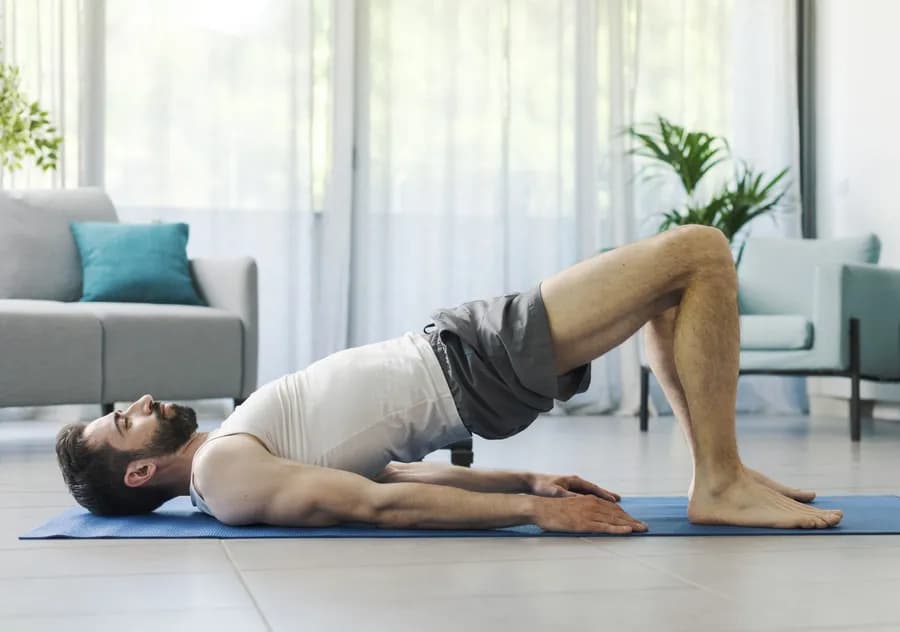
Lie on your back with knees bent. As you lift your hips into a glute bridge, simultaneously engage your pelvic floor. Hold for 3–5 seconds at the top, then lower and release. 10–12 repetitions. This integrates pelvic floor activation with glute and core strengthening. Women looking to build overall lower-body resilience may find exercises for bone strength a helpful complement to this routine.
Diaphragmatic Breathing with Kegel
Breathe in deeply, allowing your belly to expand. As you exhale, gently lift and contract the pelvic floor. This syncs pelvic floor engagement with the natural rhythm of your breath — which is how the body is designed to use these muscles. 8–10 breath cycles per session.
Common Mistakes to Avoid
- Poor Form — Squeezing the Wrong Muscles Many women mistakenly clench their glutes, inner thighs, or abdominal muscles instead of isolating the pelvic floor. This reduces effectiveness and can create compensatory tension elsewhere. Focus specifically on the sensation of lifting and drawing inward — not pushing outward or clenching broadly.
- Skipping the Release The relaxation phase is not optional — it is half the exercise. A pelvic floor that is constantly tight is as problematic as one that is too weak. After every contraction, release fully and allow the muscles to return to neutral before the next repetition.
- Overtraining More is not always better with the pelvic floor. Doing hundreds of kegels a day can lead to muscle fatigue, tension, and worsened symptoms. Three to four structured sets per day is sufficient for most women starting out. Progression should be gradual and guided.
- Inconsistency Perhaps the most common pitfall: doing kegels for three days, then forgetting for two weeks. Like any muscle training, pelvic floor strengthening requires consistent, repeated effort over time. Strength training for women that incorporates pelvic floor work within a structured daily practice makes this consistency far easier to maintain.
Who Should Try Kegel Exercises?
- Beginners You don’t need a fitness background to start kegels. They are among the most beginner-friendly exercises that exist — low impact, easy to learn, and immediately accessible. If you’ve never done intentional pelvic floor work before, this is an ideal place to begin your strength journey.
- Women Kegels are especially relevant for women at every life stage. The pelvic floor undergoes significant changes during menstruation, pregnancy, postpartum recovery, and menopause. Regular kegel practice is one of the most direct ways to support this often-overlooked muscle system throughout all of these transitions. Dedicated kegel-focused strength exercises can guide you through the right progression for each stage.
- Pregnant Women Kegel exercises for pregnant women are widely recommended by physiotherapists and OB-GYNs. They help the body cope with the increasing weight of the baby on the pelvic floor, may ease delivery, and support faster postpartum recovery. Always practice under guidance during pregnancy and consult your healthcare provider before starting.
- Working Professionals Long hours of sitting weaken the pelvic floor and compress the lumbar spine. Kegels are one of the few exercises you can do discreetly at your desk — without anyone knowing. Five minutes of structured pelvic floor work during your workday can meaningfully support posture and core endurance over time.
Build Strength with a Routine That Actually Works
Building pelvic floor and full-body strength isn’t about random workouts — it’s about consistency, guidance, and following a structured plan. With the right support, you can train effectively from home and see real progress over time.
What You Get with Habuild’s Strong Everyday Program:
- Daily live guided strength and yoga sessions
- Beginner to advanced progression
- No-equipment and home-friendly workouts
- Expert guidance to ensure correct form
- Community support to stay consistent
Start Your Strength Training Journey
Related reads: What Do Kegel Exercises Do? Benefits Explained · What Are Kegel Exercises for Men? Benefits & How to Do Them
The value of Kegel exercises shows up gradually, and only when they’re practiced regularly enough to actually strengthen the pelvic floor over time. Pairing that regularity with a broader guided fitness routine tends to keep both on track. Habuild’s Strong Everyday program can be that steady structure, helping you stay consistent with your training as a whole.
Frequently Asked Questions
Related Articles
What Do Kegel Exercises Do? Benefits Explained
Wondering what do Kegel exercises do? Discover their benefits for men and women, how to start, and build a consistent pelvic floor routine with Habuild.
What Are Kegel Exercises for Men? Benefits & How to Do Them
Discover what are kegel exercises for men, their key benefits, best exercises, and how to start. Try Habuild's guided program from just 14-day free trial.

What Are Kegel Exercises? Benefits, How To & Routine
Small, targeted contractions of the pelvic floor muscles support your bladder, bowel, and core with no equipment, no gym, no special setup needed. See the benefits and routine.
What Are Pelvic Exercises? Benefits, Moves & How to Start
Kegels, bridges, squats, and bird dogs strengthen the muscles supporting your bladder, bowels, lower back, and core in just 10 minutes daily. See the benefits, moves, and how to start.
Kegel Exercises for Men: Benefits, How-To & Routine
Simple, equipment-free contractions of the pelvic floor muscles support the bladder, bowel, and sexual function when practised for 2-3 short sessions daily. See the benefits, how-to, and routine.