
What Do Kegel Exercises Do for Men? Benefits & Guide
Discover what kegel exercises do for men — from pelvic floor strength to bladder control. Start your free 7-day trial with Habuild with a 14-day free trial.
Key Takeaways
- The pelvic floor wraps around the urethra and helps regulate urinary flow directly.
- Many men notice improved bladder control within 8-12 weeks of consistent practice.
- Plays a direct role in erectile function and ejaculatory control for sexual performance.
- Works alongside the diaphragm, transverse abdominis, and multifidus as part of the deep core.
- May help manage enlarged prostate symptoms like urgency and incomplete bladder emptying.
- A weak pelvic floor often contributes to poor posture and chronic lower back discomfort.
If you’ve been wondering what kegel exercises do for men, the short answer is: quite a lot more than most men expect. Kegel exercises target the pelvic floor muscles — a group of muscles that sit at the base of your pelvis and support your bladder, bowel, and sexual function. Regular kegel practice can gradually improve bladder control, strengthen core stability, and support sexual health when done consistently over time. This guide breaks down everything you need to know to get started.
7 Benefits of Kegel Exercises for Men
- Improved Bladder Control — The pelvic floor muscles wrap around the urethra and help regulate urinary flow. Strengthening them through kegel exercises may gradually ease issues like leaking urine after sneezing, laughing, or exercise. Many men notice an improvement in bladder control within 8–12 weeks of consistent practice.
- Reduced Risk of Urinary Incontinence — Urinary incontinence becomes more common as men age, particularly after prostate surgery. Kegel exercises are widely recommended by physiotherapists as a supportive tool to help manage this condition. Regular pelvic floor training can make a meaningful difference over time.
- Better Sexual Function — The pelvic floor plays a direct role in erectile function and ejaculatory control. Strengthening these muscles may support better erections and help men who experience premature ejaculation manage it with greater consistency. The connection between pelvic floor health and sexual performance is well supported by research.
- Stronger Core Stability — The pelvic floor is part of the deep core — it works alongside the diaphragm, transverse abdominis, and multifidus muscles. When your pelvic floor is strong, your overall core stability improves. This shows up in better posture, reduced lower back strain, and more efficient movement during daily activities and workouts.
- Supports Prostate Health — While kegels are not a treatment for prostate conditions, they are often recommended as a complementary practice alongside medical care. They may help manage symptoms of an enlarged prostate — such as urgency and incomplete bladder emptying — by giving you greater muscular control over the pelvic region.
- Improved Bowel Control — The same muscles that control urination also support bowel function. Men who experience urgency or mild bowel leakage may find that consistent kegel practice helps them regain a sense of control and confidence over time.
- Better Posture and Reduced Back Pain — A weak pelvic floor often contributes to poor posture and chronic lower back discomfort. Kegel exercises, when combined with broader strength training, help create a more stable foundation for the spine. Exploring strength training for back muscles alongside kegels can accelerate your progress.
How to Get Started with Kegel Exercises for Men
What You Need to Begin
Nothing. Kegel exercises require zero equipment and can be done anywhere — sitting at your desk, lying in bed, or standing in a queue. The only thing you need is the ability to locate and isolate your pelvic floor muscles, which takes a little practice at first.
To find the right muscles, try to stop urination midstream. The muscles you engage to do this are your pelvic floor muscles. Do not make a habit of stopping urination to practice — use this only as a one-time reference to identify the correct muscle group.
Setting Realistic Goals
Like any muscle group, the pelvic floor responds to progressive, consistent training — not cramming. Aim for three short sessions per day, each lasting around five minutes. Most men begin to notice improvements in 6–12 weeks. Avoid overdoing it; fatigued pelvic floor muscles can actually worsen symptoms temporarily.
Start with the Basics
Begin with a simple contract-and-release protocol:
- Breathe in to prepare.
- On the exhale, gently squeeze and lift the pelvic floor muscles — as if you're trying to stop the flow of urine.
- Hold for 3–5 seconds without holding your breath.
- Fully release for an equal count.
- Repeat 10–15 times per set.
Once this feels manageable, progress to longer holds (8–10 seconds) and add quick-flick contractions for speed and responsiveness. Pairing kegel work with a structured understanding of strength training exercises gives you guided progression and reduces the risk of incorrect technique.
Best Exercises to Pair with Kegels for Men
Kegels work best as part of a complete movement practice. These exercises complement pelvic floor training by building the surrounding muscle groups that support it.
Squats
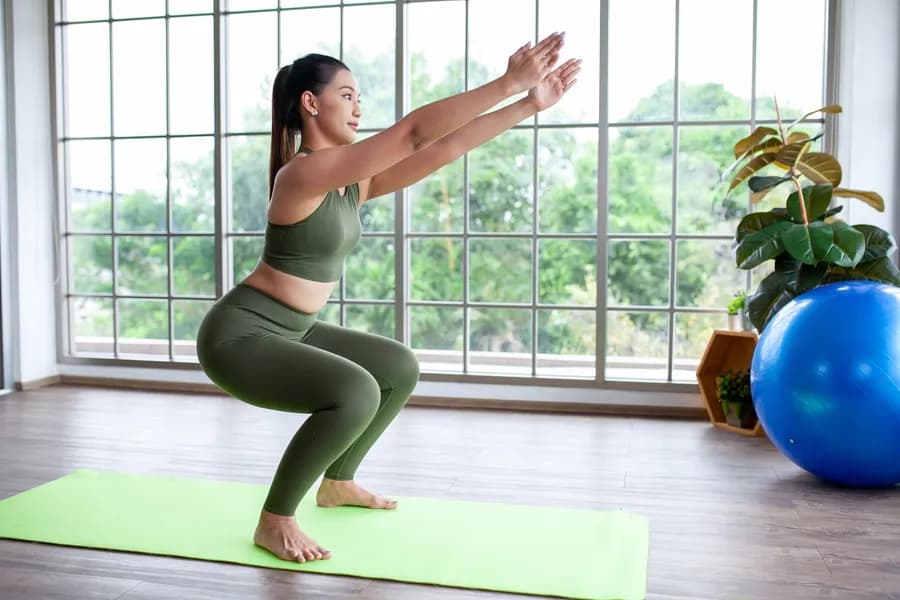
Squats engage the glutes, hamstrings, and deep core — all of which interact with the pelvic floor. Bodyweight squats are an excellent starting point. Focus on sitting back into your hips and keeping your knees tracking over your toes. 3 sets of 12–15 reps.
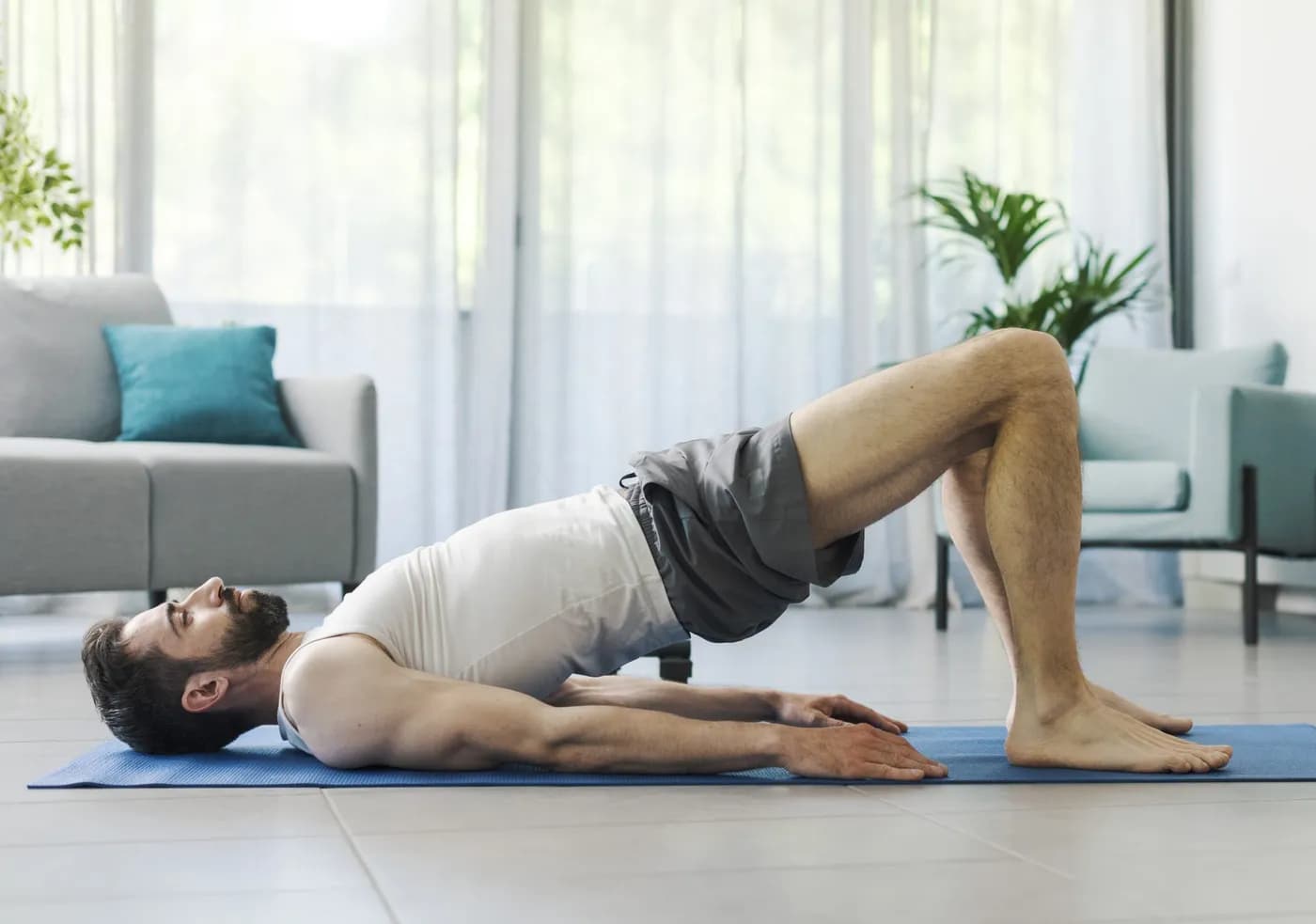
Glute Bridges
Lying on your back with knees bent, drive your hips toward the ceiling while squeezing your glutes at the top. This movement directly activates the pelvic floor and posterior chain. 3 sets of 15 reps, 2-second hold at the top.
Dead Bug
This anti-extension core exercise teaches your deep core — including the pelvic floor — to stabilize under load. Lying on your back, extend opposite arm and leg simultaneously while keeping your lower back flat on the floor. 3 sets of 10 reps per side.
Plank
The plank is one of the most efficient ways to build total core endurance. Hold a forearm plank with your hips level and spine neutral. Breathe normally — do not hold your breath. 3 sets of 20–40 second holds.
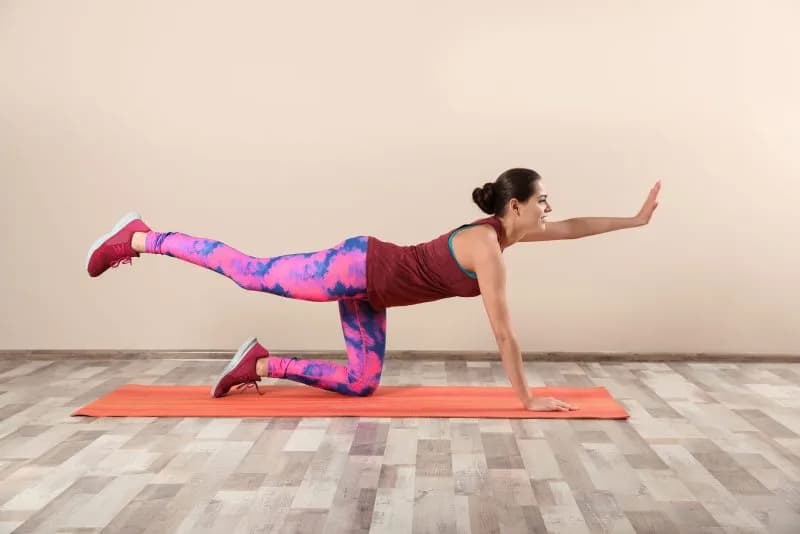
Bird Dog
From a quadruped position, extend one arm and the opposite leg while keeping your spine neutral and pelvis still. This trains spinal stability and pelvic control simultaneously — a perfect companion to kegel work. 3 sets of 10 reps per side.
Hip Hinge (Romanian Deadlift)
Using a resistance band or light dumbbells, hinge at the hips with a neutral spine to load the hamstrings and glutes. This builds posterior chain strength that directly supports pelvic floor function. 3 sets of 10–12 reps.
For men looking to build overall physical resilience alongside targeted pelvic work, strength training designed specifically for men is a logical next step.
Common Mistakes to Avoid
- Poor Form — Engaging the Wrong Muscles — Many men accidentally contract their glutes, thighs, or abdomen instead of isolating the pelvic floor. If you feel tension in your legs or buttocks, you're compensating. Return to basics: the contraction should feel internal and subtle, not muscular and visible on the outside.
- Skipping the Release Phase — A kegel is a contract-and-release exercise, not just a squeeze. Many men forget the release, which leads to a chronically tight pelvic floor — a condition that can actually worsen symptoms. Full relaxation between repetitions is as important as the contraction itself.
- Overtraining the Pelvic Floor — More is not better here. Doing kegels every hour throughout the day can cause fatigue and irritation. Three focused sessions per day with rest in between is more effective than constant low-level contraction.
- Inconsistency — This is the biggest barrier to results. Kegel exercises only work if you do them regularly over weeks and months — not just when you remember. Building them into an existing daily habit (morning routine, after brushing teeth, during a commute) dramatically improves adherence.
Who Should Try Kegel Exercises?
- Beginners — Kegel exercises are low-impact, require no equipment, and carry minimal injury risk — making them ideal for anyone starting a fitness journey. The learning curve is about awareness rather than strength, and most beginners pick it up within a few sessions.
- Women — Although this page focuses on men, kegel exercises are equally valuable for women — particularly those who have experienced childbirth, hormonal changes, or pelvic floor weakness. The principles and technique are largely the same.
- Older Adults — Pelvic floor function tends to decline with age, making kegels increasingly important for men over 50. Combined with general strength work, consistent pelvic floor training supports mobility and independence. Always consult your doctor if you have an existing prostate condition before starting. Guidance on strength training for seniors can complement your pelvic floor routine as part of a broader healthy ageing plan.
- Working Professionals — Long hours at a desk weaken the pelvic floor and compress the lumbar spine. Kegel exercises can be done silently during meetings, on calls, or at a workstation — making them one of the few fitness interventions that genuinely fit into a busy schedule. Paired with posture work, they address two of the most common desk-job complaints: bladder urgency and lower back discomfort.
Build Strength with a Routine That Actually Works
Building pelvic floor strength — and physical resilience overall — isn't about random exercises you found online. It's about consistency, correct technique, and following a structured progression that keeps you accountable every day.
What you get with Habuild's Strong Everyday Program:
- Daily live guided strength sessions including pelvic floor and core work
- Beginner to advanced progression — no experience required
- No-equipment and home-friendly formats
- Expert guidance to ensure correct form from day one
- A supportive community to keep you consistent week after week
Start Your Strength Training Journey
Related reads: What Are Kegel Exercises for Men? Benefits & How to Do Them · Kegel Exercises for Men: Benefits, How-To & Routine
Bladder control and pelvic floor strength improve with repetition, not with a single week of remembering to do the exercises. Building that repetition into a daily structure is what actually makes it stick long-term. Habuild's Strong Everyday gives your overall training that everyday rhythm, so consistency becomes the default rather than the exception.
Summed up simply, what are kegels for men: pelvic floor training for better bladder control and core support. What are the benefits of kegel exercises for men beyond that include better core stability during lifting and, for many, improved bladder control over time.
Frequently Asked Questions
Related Articles

What Are Kegel Exercises for Men? Benefits & How to Do Them
Discover what are kegel exercises for men, their key benefits, best exercises, and how to start. Try Habuild's guided program from just 14-day free trial.

What Do Kegel Exercises Do? Benefits Explained
Wondering what do Kegel exercises do? Discover their benefits for men and women, how to start, and build a consistent pelvic floor routine with Habuild.
Kegel Exercises for Men: Benefits, How-To & Routine
Simple, equipment-free contractions of the pelvic floor muscles support the bladder, bowel, and sexual function when practised for 2-3 short sessions daily. See the benefits, how-to, and routine.

What Are Kegel Exercises? Benefits, How To & Routine
Small, targeted contractions of the pelvic floor muscles support your bladder, bowel, and core with no equipment, no gym, no special setup needed. See the benefits and routine.
What Are Pelvic Exercises? Benefits, Moves & How to Start
Kegels, bridges, squats, and bird dogs strengthen the muscles supporting your bladder, bowels, lower back, and core in just 10 minutes daily. See the benefits, moves, and how to start.