
What Is Plyometric Training? Benefits, Exercises & Tips
Discover what is plyometric training, its key benefits, best exercises, and how to start. Try Habuild's guided strength program with a 14-day free trial.
Key Takeaways
- Rooted in the stretch-shortening cycle, where a muscle rapidly lengthens then immediately contracts.
- Generates maximum force in minimum time through fast-twitch muscle fibre recruitment.
- Creates significant metabolic demand, burning calories for hours after through EPOC.
- Impact-based movements stimulate bone-forming cells, supporting long-term skeletal health.
- Originally developed for elite athletes, now a staple in everyday fitness programs.
- The multi-joint, full-body nature builds strength that carries over into reacting on uneven terrain.
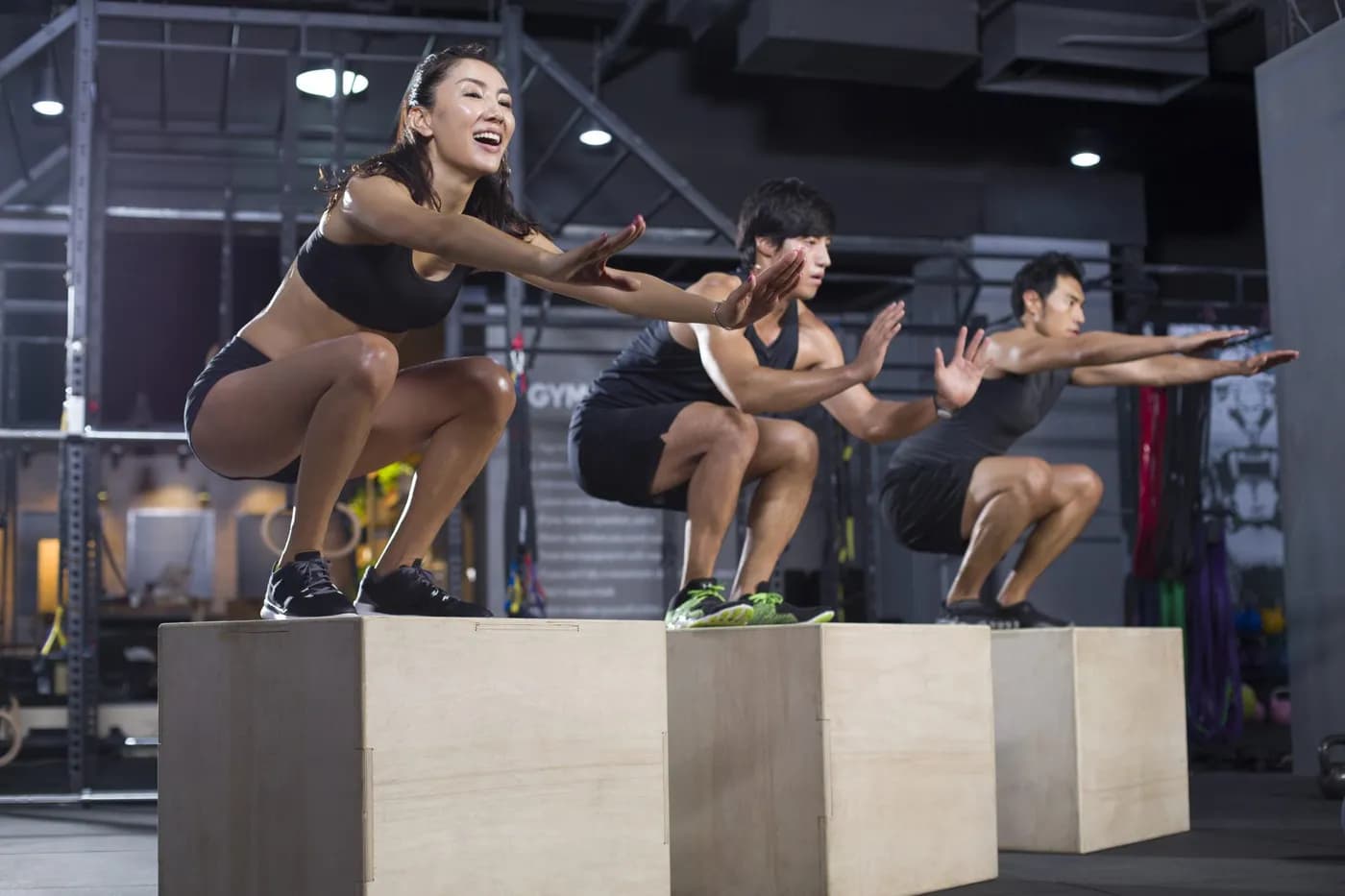
Plyometric training is a style of exercise that uses explosive, powerful movements — such as jumps, hops, and bounds — to build muscular strength, speed, and endurance simultaneously. Originally developed for elite athletes, it has become a staple in everyday fitness programs because it delivers full-body conditioning without requiring any equipment.
If you have ever wondered what is plyometric training and whether it belongs in your fitness routine, you are in the right place. Rooted in the stretch-shortening cycle — where a muscle rapidly lengthens and then immediately contracts — plyometrics generates maximum force in minimum time, making it one of the most efficient training methods available.
8 Key Benefits of Plyometric Training
- Builds Explosive Power Plyometric movements train your muscles to generate maximum force in minimum time. This fast-twitch muscle recruitment translates directly into stronger, more powerful movement — whether you are lifting, running, or climbing stairs.
- Boosts Cardiovascular Endurance Because plyometric exercises are high-intensity and rhythmic, they elevate your heart rate quickly and keep it there. This makes them highly effective for improving cardiovascular fitness alongside muscle strength.
- Supports Fat Loss Through Afterburn Explosive training creates a significant metabolic demand. Your body continues burning calories for hours after a plyometric session — a phenomenon known as excess post-exercise oxygen consumption (EPOC). If you want to understand how training affects your metabolism more broadly, strength training for metabolism offers a deeper look at this process.
- Improves Athletic Performance Plyometrics enhances speed, agility, and coordination. Athletes across sports — from basketball to cycling — use jump training to sharpen their performance. Those looking to complement sport-specific conditioning will find strength exercises designed for athletes particularly useful alongside plyometric work.
- Strengthens Bones and Joints Impact-based movements stimulate bone-forming cells, which may gradually support bone density with consistent practice. This makes plyometrics a valuable addition for anyone focused on long-term skeletal health.
- Enhances Functional Strength The multi-joint, full-body nature of plyometric exercises builds strength that carries over into real life — getting up from the floor, carrying groceries, reacting quickly to uneven terrain.
- No Equipment Required Most foundational plyometric workouts use only your bodyweight. This makes them accessible at home, in a park, or in any small space — no gym membership needed.
- Builds Mental Resilience Pushing through explosive, high-effort repetitions builds not just physical toughness but mental grit — the habit of doing the hard thing consistently, even when it feels uncomfortable.
How to Get Started with Plyometric Training
What You Need to Begin
You need a flat, non-slip surface, supportive footwear, and enough ceiling height to jump comfortably. A yoga mat works well for low-impact variations. No dumbbells, resistance bands, or machines are required for beginner plyometric workouts.
Setting Realistic Goals
Start with two sessions per week and allow at least one full rest day between plyometric workouts. Your nervous system and joints need time to recover from explosive training. Avoid the temptation to add volume too quickly — the goal in the first four weeks is to learn correct landing mechanics, not to maximize reps.
Understanding what strength training exercises involve will help you appreciate how plyometrics fits within a broader progressive training plan.
Start with the Basics
Beginners should start with low-impact variations — step jumps instead of full box jumps, slow hops instead of sprints. Master soft landings (knees slightly bent, weight through the midfoot) before increasing intensity. A structured program with daily guidance removes the guesswork and keeps your form safe from day one.
Best Plyometric Exercises to Know

These are the core movements that define what plyometric workouts look and feel like. Each one can be scaled for beginners or intensified for advanced practitioners.
Jump Squats
Start in a standard squat position, lower yourself until your thighs are parallel to the floor, then explode upward into a full jump. Land softly with bent knees and immediately lower into the next rep. Target: 3 sets of 10–12 reps.
Box Jumps (or Step-Up Jumps)
Using a sturdy elevated surface, jump up with both feet simultaneously and land quietly on top. Step down — do not jump down — between reps for beginners. Target: 3 sets of 8 reps.
Burpees
From standing, drop to a plank, perform an optional push-up, jump your feet forward, then explode into a vertical jump. Burpees build power, endurance, and core stability in a single movement. Target: 3 sets of 8–10 reps.
Lateral Bounds
Hop laterally from one foot to the other, landing on a single leg with a soft knee bend and a brief pause before bounding back. This trains single-leg power and hip stability. Target: 3 sets of 10 reps per side.
Tuck Jumps
Jump straight up and drive both knees toward your chest at the peak of the jump. Land softly and immediately repeat. Tuck jumps develop explosive hip flexor and quad power. Target: 2 sets of 8 reps.
Plyo Push-Ups
From a standard push-up position, lower your chest toward the floor and then push so forcefully that both hands leave the ground. This builds upper-body explosive strength. Target: 3 sets of 6–8 reps.
Skater Jumps
Leap sideways from one leg to the other in a skating motion, reaching your opposite hand toward the landing foot. Skater jumps improve lateral agility, balance, and hip strength simultaneously. Target: 3 sets of 12 reps per side.
Common Mistakes to Avoid in Plyometric Training
- Poor Landing Mechanics Landing with straight knees or collapsing inward at the hips places enormous stress on your joints. Always land with a soft bend at the knee and hip, feet shoulder-width apart, and weight distributed through the full foot — not just the heel or ball.
- Skipping the Warm-Up Plyometrics demands that your muscles and connective tissue are fully primed before explosive loading. Spend at least 8–10 minutes on dynamic movement — leg swings, hip circles, light jogging, and bodyweight squats — before your first jump.
- Overtraining More is not better with explosive training. Performing plyometric workouts daily, especially as a beginner, dramatically increases injury risk. Two to three sessions per week with adequate rest between them is the evidence-based sweet spot for adaptation without breakdown.
- Inconsistency Explosive power is a physical quality that requires repeated stimulus to develop. Doing one intense session and then disappearing for two weeks produces no lasting gains. Consistency — showing up regularly with structured guidance — is what separates those who see results from those who plateau. Building that habit is exactly what resistance training for strength programs are designed to support.
Who Should Try Plyometric Training?
- Beginners Plyometrics is absolutely accessible to beginners — with the right starting point. Low-impact variations like step jumps, slow lateral hops, and modified burpees build the neuromuscular foundation safely before progressing to full explosive movements. A guided program ensures you start at the right level.
- Women There is a persistent myth that explosive training leads to bulky legs or joints that cannot handle the load. Neither is true. Women who train with plyometrics consistently develop leaner muscle tone, stronger hips and glutes, and gradually improved bone density — without adding unwanted bulk.
- Older Adults Gentle, low-impact plyometric movements can support bone density, balance, and fall prevention in older adults. However, this group should begin with physician clearance and work with a qualified instructor. Impact intensity must be carefully managed and progressed gradually.
- Working Professionals Plyometric workouts are time-efficient by design. A focused 20–25 minute session delivers significant cardiovascular and strength benefits. For desk workers, explosive training also activates the posterior chain — the glutes, hamstrings, and back — that prolonged sitting slowly deactivates.
Build Strength with a Routine That Actually Works
Building real fitness — explosive power, functional strength, and lasting endurance — is not about doing random intense workouts. It is about following a structured, progressive plan with expert guidance that keeps your form correct and your motivation high, day after day.
If you are ready to move beyond guesswork, Habuild's Strong Everyday program gives you daily live guided sessions that combine strength training with explosive conditioning, all designed to work from home with no equipment required.
- Daily live guided strength and conditioning sessions
- Beginner to advanced progressive structure
- No equipment needed — fully home-friendly
- Expert coaches who correct form in real time
- A community that keeps you consistent
To understand how muscle training underpins this kind of program, this guide on muscle training explains the science behind building strength progressively.
Start Your Plyometric Training Journey
Related reads: What Is Functional Strength Training? Benefits, Exercises & Tips · What Is Hypertrophy Training? Benefits, Exercises & Tips
Plyometric training demands careful progression — jumping into high-intensity explosive movements without a structured build-up is how people get hurt rather than get stronger. A guided plan paces that intensity appropriately over time. Strong Everyday program layers this kind of explosive training into a broader, progressive structure, so your power builds safely rather than all at once.
At their core, what are plyometric exercises and what are plyometric workouts describe the same thing: explosive, jump-based movements that train power rather than raw strength alone.
Frequently Asked Questions
Related Articles

What Are Plyometric Exercises? Benefits & Best Moves
Explosive, jump-based moves like jump squats, box jumps, and clap push-ups train your muscles to produce maximum force in the shortest possible time. See the benefits and best moves.

What Are HIIT Exercises? Benefits, List & How to Start
HIIT alternates intense bursts of effort with brief recovery periods — burpees, squats, mountain climbers, and high knees in a 20-30 minute session. See the benefits, list, and how to start.

What Are Burpees Exercises? Benefits & How To Do Them
A squat, a plank, a push-up, and a vertical jump combine into one continuous movement that works nearly every major muscle group with zero equipment. See the benefits and how to do them.
What Are Circuit Exercises? Benefits & Workouts
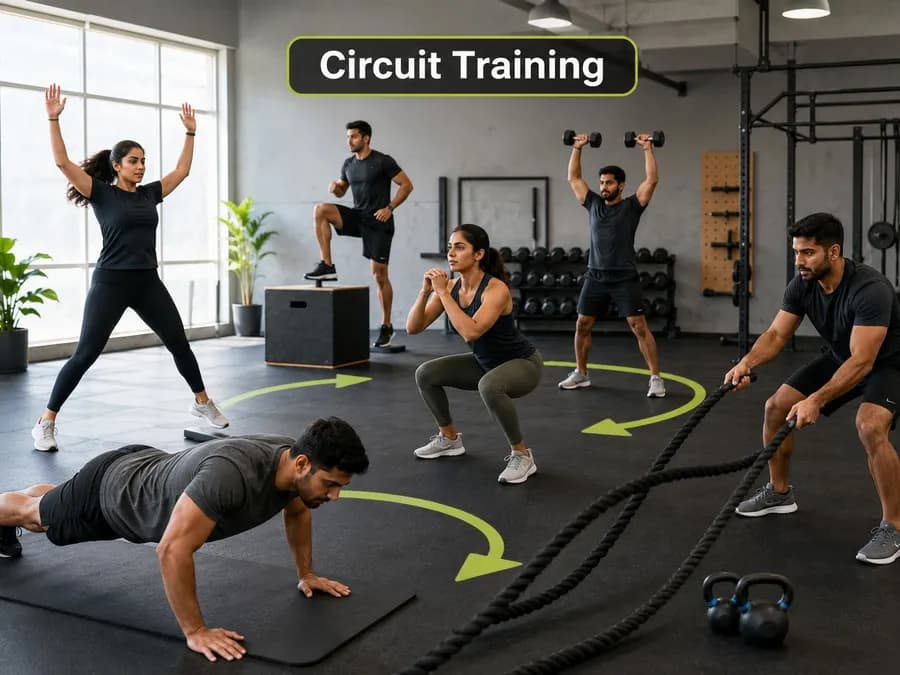
Performing 5 to 8 different moves back-to-back with minimal rest, then repeating the sequence, builds strength and raises your heart rate in one 20-30 minute session. See the benefits and workouts.
What Is Intense Exercise? Meaning, Examples & Benefits
Sprints, HIIT, heavy lifting, or explosive bodyweight work push your heart rate, breathing, and muscles significantly harder than light movement. See the meaning, examples, and benefits.