
What Are Plyometric Exercises? Benefits & Best Moves
Explosive, jump-based moves like jump squats, box jumps, and clap push-ups train your muscles to produce maximum force in the shortest possible time. See the benefits and best moves.
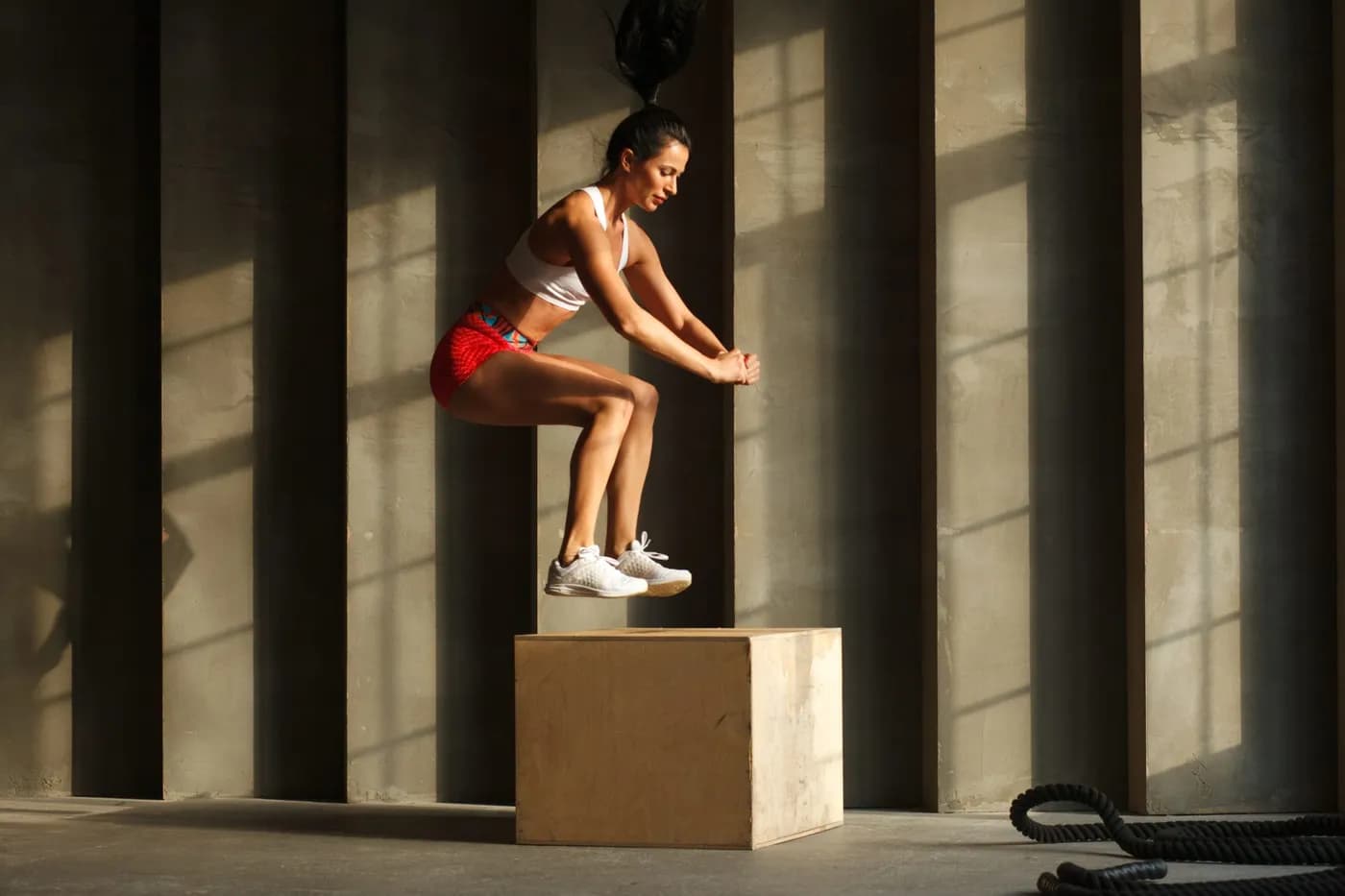
Key Takeaways
- Trains fast-twitch muscle fibres responsible for quick, forceful movements like jumping.
- Relies on the stretch-shortening cycle, where muscles rapidly lengthen then contract.
- Research shows it improves sprint times, jump height, and agility in athletes.
- The impact of jumping signals bones to grow denser and tendons to become more resilient.
- Beginners should start with just 2 sessions per week, 15-20 minutes, prioritising quality.
- Requires only a flat surface, supportive shoes, and roughly 4 by 4 feet of space.
Plyometric exercises are explosive, jump-based movements that train your muscles to produce maximum force in the shortest possible time. Examples include jump squats, box jumps, and clap push-ups. They build power, speed, and reactive strength by using the stretch-shortening cycle of your muscles.
If you have ever wondered what are plyometric exercises and why athletes swear by them, the answer is simple. Unlike slow, controlled lifts, plyometric training generates quick, powerful bursts of motion that translate into real-world athleticism and stronger functional fitness. Whether you are a runner trying to improve your stride, someone building leg strength at home, or just curious about a new way to train, this guide will help you understand the science, the benefits, and how to start safely.
Top Benefits of Plyometric Exercises
Plyometric training is one of the most efficient ways to build strength, power, and conditioning in less time. Here is what consistent practice can support.
- Builds Explosive Power Plyometrics train your fast-twitch muscle fibres, which are responsible for quick, forceful movements. Over time, this helps you jump higher, sprint faster, and react quicker — useful for sports and everyday tasks like climbing stairs or lifting heavy objects.
- Improves Athletic Performance Research consistently shows that adding plyometric drills to a routine can support better sprint times, jump height, and agility. This is why strength training for runners almost always includes plyometric work.
- Burns Calories Efficiently Because plyometric moves are high-intensity, they keep your heart rate elevated. A 20-minute session can rival a longer cardio workout for calorie burn, making it a smart option for fat loss when paired with consistent nutrition habits.
- Strengthens Bones and Joints The impact involved in jumping movements signals your bones to grow denser and your tendons to become more resilient. When done with correct form and gradual progression, plyometrics may help support long-term joint health.
- Enhances Coordination and Balance Every plyometric movement requires you to control your body in space — taking off, landing softly, and stabilising. This builds neuromuscular coordination, which carries over to balance, posture, and reduced fall risk as you age.
How to Get Started with Plyometric Training
Jumping into plyometrics without preparation is a common mistake. Here is how to begin the right way.
What You Need to Begin
The good news: most plyometric exercises require zero equipment. A flat surface, a pair of supportive shoes, and 4 by 4 feet of space is enough to start. Optional add-ons like a sturdy box, a step, or a yoga mat can expand your routine but are never mandatory for beginners.
Setting Realistic Goals
Plyometrics are intense. Beginners should start with just 2 sessions per week, lasting 15–20 minutes each, and focus on quality over quantity. The goal is not to do 100 jumps — it is to do 10 perfect ones. Build a foundation first, then layer on volume.
Start with the Basics
Before progressing to box jumps or depth drops, master simple ground-based movements: pogo hops, jumping jacks, and bodyweight squat jumps. Spend 2–3 weeks here. This base also pairs well with broader strength training exercises for a balanced routine.
Best Plyometric Exercises for Beginners
These six movements form a complete plyometric toolkit. Start with lower-impact options and progress gradually.
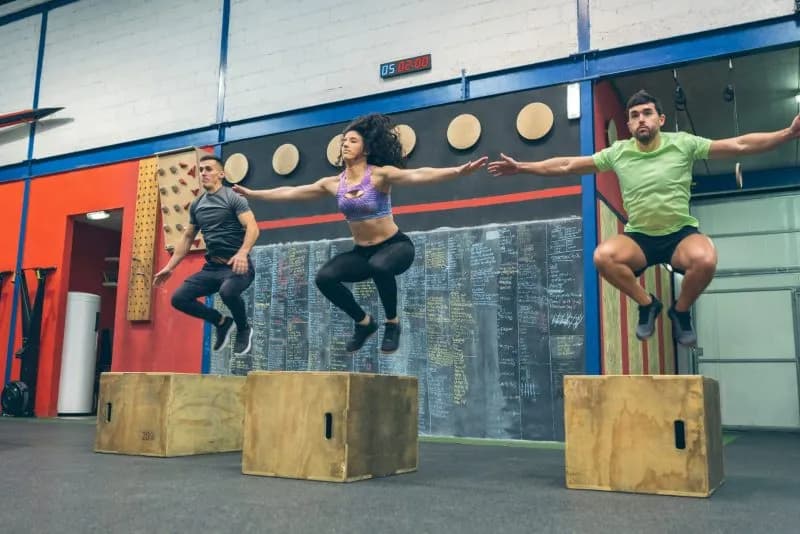
Jump Squats
Lower into a squat, then explode upward, extending your hips and knees fully. Land softly with bent knees. Do 3 sets of 8–10 reps. This is the foundation of lower-body plyometric power.
Box Jumps
Stand in front of a sturdy box or step (start at knee height or lower). Swing your arms, jump up, and land softly with both feet on top. Step down — do not jump down. Do 3 sets of 6–8 reps.
Broad Jumps
Stand with feet hip-width apart. Swing your arms back, then jump forward as far as possible, landing softly. Reset and repeat. Do 3 sets of 5 reps. Excellent for horizontal power.
Lateral Bounds
Push off one leg sideways, land on the opposite leg, and stick the landing for a second before bounding back. This builds single-leg stability and lateral power often missed in regular workouts.
Clap Push-Ups
An advanced upper-body plyometric. From a push-up position, lower down, then push up explosively so your hands leave the ground — clap quickly, then land softly. Beginners can start with explosive push-ups without the clap.
Tuck Jumps
Jump straight up and pull your knees toward your chest at peak height. Land softly and immediately go into the next rep. Do 3 sets of 6–8 reps. Demanding but excellent for vertical power.
Common Mistakes to Avoid
Plyometrics deliver results fast, but only when done correctly. Here are pitfalls to watch for.
- Poor Landing Form Landing with locked knees or on flat feet sends impact straight into your joints. Always land softly — toes first, then heels, with knees and hips slightly bent to absorb the force.
- Skipping Warm-Up Cold muscles cannot produce explosive force safely. Spend 5–10 minutes on dynamic warm-ups: leg swings, hip openers, and light bodyweight squats before any plyometric session.
- Overtraining Plyometrics are taxing on your nervous system and joints. Doing them daily leads to fatigue, poor form, and injury risk. Give yourself 48 hours between sessions for recovery.
- Inconsistency Two committed sessions a week for 8 weeks will outperform daily bursts followed by long breaks. Building a habit through consistent practice is where real progress lives, which is the same principle behind any solid strength training program.
Who Should Try Plyometric Exercises?
- Beginners Yes, beginners can absolutely start — with low-impact versions like step-ups, mini hops, and slow squat jumps. Build a base of general strength first, then progress.
- Women Plyometric training supports bone density, lean muscle, and metabolic health for women at every life stage. It will not make you bulky — it builds athletic, toned strength.
- Older Adults Modified plyometrics (like low-impact step-overs or seated medicine ball throws) may help older adults maintain power, balance, and bone health. Always consult your doctor first and progress slowly.
- Working Professionals Short on time? Plyometric workouts are perfect — a focused 20-minute session delivers strength, cardio, and conditioning in one. Ideal for busy mornings or quick evening routines.
Build Strength with a Routine That Actually Works
Building strength is not about doing random workouts you find online. It is about consistency, expert guidance, and following a structured plan that progresses safely. With the right support, you can train effectively from home and see real progress over time through a guided strength training approach.
What you get with Habuild's Strong Everyday Program:
- Daily live guided strength and yoga sessions
- Beginner to advanced progression you can follow at your pace
- No-equipment and home-friendly workouts
- Expert guidance to ensure correct form and prevent injury
- A supportive community that helps you stay consistent
If you want to explore broader fitness goals, you can also browse exercises for functional strength to build a complete movement foundation alongside your plyometric work.
Related reads: What Is Plyometric Training? Benefits, Exercises & Tips · What Are Strenuous Exercises? Meaning, Examples & Guide
Explosive movements like jump squats and box jumps demand good form and proper progression, since sloppy landings can undo the power they're meant to build. Rather than piecing together plyometric drills on your own, following a guided program helps you build that explosive strength safely and steadily. Habuild's Strong Everyday program structures this kind of progressive training into a routine you can actually stick with.
Frequently Asked Questions
Related Articles
What Is Plyometric Training? Benefits, Exercises & Tips
Discover what is plyometric training, its key benefits, best exercises, and how to start. Try Habuild's guided strength program with a 14-day free trial.

What Are HIIT Exercises? Benefits, List & How to Start
HIIT alternates intense bursts of effort with brief recovery periods — burpees, squats, mountain climbers, and high knees in a 20-30 minute session. See the benefits, list, and how to start.

What Are Burpees Exercises? Benefits & How To Do Them
A squat, a plank, a push-up, and a vertical jump combine into one continuous movement that works nearly every major muscle group with zero equipment. See the benefits and how to do them.
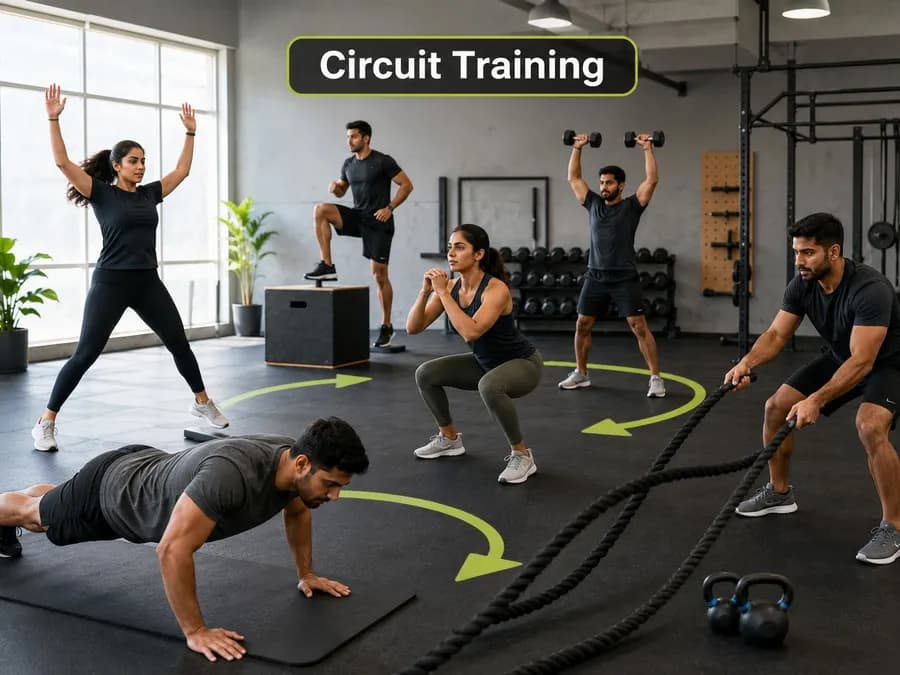
What Are Circuit Exercises? Benefits & Workouts
Performing 5 to 8 different moves back-to-back with minimal rest, then repeating the sequence, builds strength and raises your heart rate in one 20-30 minute session. See the benefits and workouts.
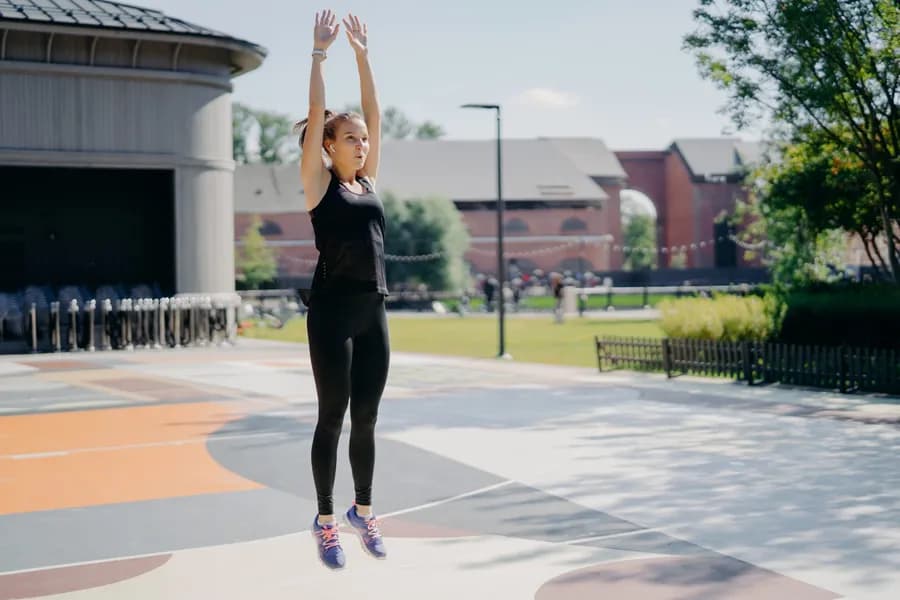
How Many Jumping Jacks to Burn 500 Calories: the Honest Calculation
The number depends on body weight, exercise intensity, and metabolic efficiency in ways most online calculators ignore. See the weight-adjusted calculation.