
What Are HIIT Exercises? Benefits, List & How to Start
HIIT alternates intense bursts of effort with brief recovery periods — burpees, squats, mountain climbers, and high knees in a 20-30 minute session. See the benefits, list, and how to start.

Key Takeaways
- A focused 20-25 minute session can match or exceed the calorie burn of a 45-minute jog.
- Triggers the afterburn effect, where the body keeps burning calories for hours post-workout.
- Consistent training can improve VO2 max, a key marker of cardiovascular fitness.
- A typical session includes burpees, squats, mountain climbers, and high knees.
- Bodyweight alone is plenty for the first 4-6 weeks before adding dumbbells or bands.
- Fits into a busy schedule since only a clear floor space and 20 minutes are needed.
HIIT exercises are short workouts that alternate intense bursts of effort with brief recovery periods. A typical HIIT session lasts 20–30 minutes and includes moves like burpees, squats, mountain climbers, and high knees — making it one of the most time-efficient ways to build stamina, support fat loss, and strengthen your heart.
If you have ever wondered what are HIIT exercises and why everyone from fitness coaches to busy professionals swears by them, you are in the right place. HIIT, or High-Intensity Interval Training, is a workout style where short bursts of all-out effort are followed by brief recovery periods. The result is a sweat-soaked, time-efficient session that builds stamina, supports fat loss, and strengthens your heart — often in under 30 minutes.
In this guide, you will get a clear definition, a practical HIIT exercises list, the right way to start, common mistakes to avoid, and a routine that actually fits into a real Indian schedule.
Top Benefits of HIIT Exercises
HIIT is not just another trend. The reason it keeps showing up in fitness conversations is because the benefits stack up — across fat loss, conditioning, and overall strength. Here are the biggest reasons people commit to HIIT workout exercises.
- Burns Calories in Less Time A focused 20–25 minute HIIT session can match or exceed the calorie burn of a 45-minute steady jog. The intensity drives your heart rate up quickly, which means more work done in less time.
- Boosts Metabolism After the Workout HIIT triggers what is known as the “afterburn effect.” Your body keeps burning calories for hours after the session ends as it works to recover. This makes HIIT cardio exercises valuable for anyone trying to manage body composition.
- Improves Cardiovascular Health Short bursts of intensity train your heart and lungs to handle stress better. Consistent HIIT training exercises can help improve VO2 max, which is a key marker of cardiovascular fitness.
- Builds Functional Strength Many HIIT moves use bodyweight or basic loading patterns — squats, lunges, push-ups — which build practical strength you actually use in daily life. Pairing HIIT with a structured strength training plan helps you build lean muscle alongside endurance.
- Fits Into a Busy Schedule You don’t need a gym, a long commute, or expensive equipment. A clear floor space and 20 minutes are enough. That’s why HIIT exercises at home have become so popular with working professionals and homemakers.
How to Get Started with HIIT Exercises
The key to making HIIT work for you is starting smart, not starting hard. Going all-out on day one is the fastest way to soreness, frustration, and quitting by week two.
What You Need to Begin
Almost nothing. A yoga mat, comfortable workout clothes, water, and a small timer or phone app. If you want to progress, a pair of light dumbbells and a resistance band help — but bodyweight alone is plenty for the first 4–6 weeks.
Setting Realistic Goals
Aim for 2–3 HIIT sessions a week, not daily. Your body needs recovery between high-intensity efforts. Pair it with walks, mobility work, or a gentle yoga flow on off-days. If you are completely new to working out, start with a beginner-friendly yoga for beginners routine for two weeks before introducing HIIT.
Start with the Basics
Use a 20 seconds work / 40 seconds rest format for your first two weeks. Once you can finish 8 rounds without losing form, move to 30/30. The goal is consistency and form first, intensity second.
Best HIIT Exercises List for Beginners and Beyond
Here is a practical HIIT exercises list you can mix and match into a 20-minute session. Pick 5 exercises, do each for 30 seconds with 30 seconds rest, and repeat the circuit twice.

Jumping Jacks
A classic full-body warm-up move that quickly raises your heart rate. Stand with feet together, jump while spreading legs and raising arms overhead, then return. Aim for steady rhythm rather than maximum speed.
Bodyweight Squats
Feet shoulder-width apart, lower your hips back and down like you are sitting into a chair, then drive up. Squats hit your legs and glutes — the largest muscle groups in your body — which makes them excellent for calorie burn.
Push-Ups
Start on your knees if needed. Keep your body in a straight line and lower your chest toward the floor. Push-ups build upper-body and core strength while keeping your heart rate elevated.
Mountain Climbers
Get into a plank position and drive your knees alternately toward your chest as fast as you can with good form. This move challenges your core and cardio simultaneously.
Burpees
From standing, drop into a squat, jump your feet back to a plank, do a push-up if you can, jump feet back in, and stand up with a small hop. Burpees are the king of HIIT exercises — and the hardest. Start with 4–5 and build up.
High Knees
Run in place, driving your knees toward your chest as high and fast as possible. Keep your core engaged and arms moving.
Plank to Shoulder Tap
Hold a strong plank and tap your opposite shoulder with each hand, one at a time. This builds core stability and anti-rotation strength, which complements core muscle exercises in any training plan.
Common Mistakes to Avoid with HIIT
HIIT is unforgiving when done wrong. Here are the mistakes that hold most people back.
- Poor Form Under Fatigue The moment your form breaks, the risk of injury jumps. Slow down, reset, and finish the rep clean. Quality beats quantity every single time.
- Skipping Warm-Up and Cool-Down Jumping into burpees with cold muscles is asking for a pulled hamstring. Spend 5 minutes warming up with light cardio and mobility, and 5 minutes cooling down with stretches.
- Doing HIIT Every Day More is not better. Daily HIIT leads to exhaustion, plateau, and burnout. Two to three sessions a week is the sweet spot for most people.
- Inconsistency Three intense workouts and then a two-week gap will not move the needle. The people who see real results are the ones who show up consistently for 8–12 weeks.
Who Should Try HIIT Exercises?
HIIT works for a wide range of people — but the entry point looks different for everyone.
- Beginners Start with low-impact versions: step-back instead of jump-back in burpees, marching instead of high knees. Two short sessions a week is enough to build your base.
- Women HIIT will not make you bulky. It supports lean muscle, hormonal balance, and bone density when combined with proper strength work. Many women pair it with female strength training for a complete routine.
- Older Adults Modified HIIT — using lower impact and longer rest — can support mobility, balance, and cardiovascular health. Please consult your doctor before starting any new high-intensity routine.
- Working Professionals If your calendar is packed back-to-back, HIIT is the most time-efficient workout you can do. A 20-minute session before your shower fits in almost any morning.
Build Strength with a Routine That Actually Works
Doing HIIT exercises randomly off YouTube can give you a sweat, but it rarely gives you progress. Real change happens when intensity meets structure — when each session builds on the last, your form is corrected in real time, and someone is there to keep you going on days you don’t feel like it.
That is what Habuild’s Strong Everyday program is built for.
What you get with Habuild’s Strong Everyday Program:
- Daily live guided strength and HIIT sessions
- Beginner to advanced progression so you are never lost or bored
- No-equipment and home-friendly workouts that fit Indian routines
- Expert guidance to ensure correct form and reduce injury risk
- A community of thousands who show up alongside you every morning
Start your strength training journey today.
Related reads: What Are Pelvic Exercises? Benefits, Moves & How to Start · HIIT Workout for Beginners: Benefits, Exercises, and How to Get Started
HIIT delivers results because of the intensity, but that intensity only pays off when sessions are programmed and progressed correctly rather than repeated at random. Guesswork around intervals, recovery time, and frequency is where most people plateau or burn out. A structured plan like Habuild’s Strong Everyday program takes that guesswork out with guided, progressive workouts built around your consistency.
Frequently Asked Questions
Related Articles

What Are Plyometric Exercises? Benefits & Best Moves
Explosive, jump-based moves like jump squats, box jumps, and clap push-ups train your muscles to produce maximum force in the shortest possible time. See the benefits and best moves.

What Are Burpees Exercises? Benefits & How To Do Them
A squat, a plank, a push-up, and a vertical jump combine into one continuous movement that works nearly every major muscle group with zero equipment. See the benefits and how to do them.
What Are Circuit Exercises? Benefits & Workouts
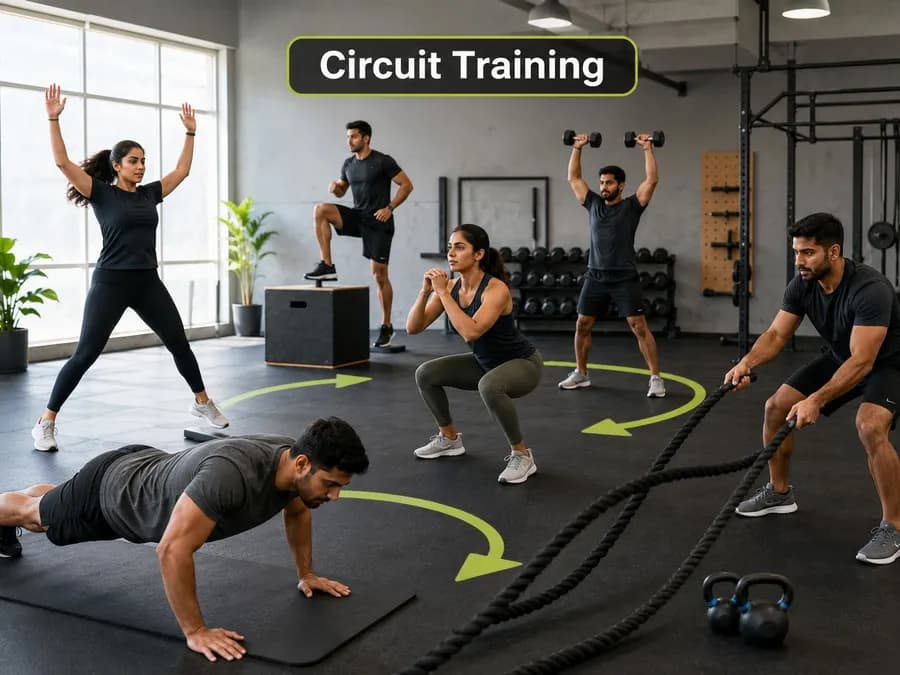
Performing 5 to 8 different moves back-to-back with minimal rest, then repeating the sequence, builds strength and raises your heart rate in one 20-30 minute session. See the benefits and workouts.

Which Exercise Is Best for Heart Health?
Discover which exercise is best for heart health — from yoga to strength training. Start a 14-day free trial trial with Habuild’s guided daily sessions today.

Strength Training Calories Burned: How Much Does a Session Actually Burn?
Strength training burns fewer calories per session than cardio, but produces far greater long-term expenditure through the metabolic elevation it creates. See exactly how much a session burns.