
What Muscles Do Push Ups Work?
Push ups engage the chest, triceps, front shoulders, core, and upper back stabilisers at once — a full-body compound movement requiring zero equipment. See the full breakdown.

Key Takeaways
- Engages the chest, triceps, shoulders, core, and even the serratus anterior in one movement.
- The core fires continuously to keep the body in a straight plank-like line.
- The often-overlooked serratus anterior helps keep shoulder blades flat against the back.
- Glutes and quads stay lightly engaged just to maintain a rigid body line.
- Requires zero equipment – just a flat surface and enough floor space.
If you’ve ever wondered what muscles do push ups work, you’re not alone. Push ups are one of the most effective bodyweight exercises ever developed — requiring zero equipment, zero commute, and yet engaging multiple major muscle groups at once. Whether you’re a complete beginner or someone returning to fitness after a break, understanding exactly how push ups work your body helps you train smarter and build consistency that actually sticks.
7 Key Muscles Push Ups Work
Chest (Pectoralis Major)
The pectoralis major is the primary muscle activated during a push up. As you lower your chest toward the floor and press back up, your chest muscles contract to drive the movement. Wide-grip variations place even more emphasis on this muscle group.
Triceps
Located at the back of the upper arm, the triceps are heavily engaged every time you extend your elbows during the upward phase of a push up. Narrow or diamond push ups shift even more load onto the triceps, making them an excellent tricep-strengthening tool.
Front Shoulders (Anterior Deltoid)
The anterior deltoid assists the chest and triceps in pressing your body away from the ground. It works in coordination with the chest throughout the full range of motion, contributing to shoulder strength and stability over time.
Core (Rectus Abdominis and Obliques)
Your core is not just a bystander during push ups. The abdominal muscles and obliques fire continuously to keep your body in a straight plank-like position, preventing your hips from sagging or rising. This makes push ups a compound core exercise as well.
Serratus Anterior
This often-overlooked muscle runs along the sides of your ribcage and is responsible for keeping your shoulder blades flat against your back. Push ups actively strengthen the serratus anterior, which supports healthier shoulder mechanics and better posture over time.
Back Muscles (Rhomboids and Trapezius)
While push ups are predominantly a pressing movement, the upper back muscles — particularly the rhomboids and lower trapezius — work as stabilisers to keep your spine aligned and your shoulder blades properly retracted through each repetition.
Glutes and Quads
Maintaining a rigid body line during a push up requires your glutes and quadriceps to stay lightly engaged. This makes the exercise genuinely full-body in nature, even though the upper body does most of the work. If you want to complement this with dedicated full body strength training, that is worth exploring alongside your push up routine.
How to Get Started with Push Ups
What You Need to Begin
Push ups require absolutely no equipment — just a flat surface and enough floor space to extend your body. A yoga mat adds comfort for your palms and wrists. That is genuinely all you need to start building upper body strength from home.
Setting Realistic Goals
Many beginners expect to do 20 push ups within the first week. A more sustainable approach is to focus on quality over quantity. Start with 5 clean reps rather than 15 sloppy ones. Progress gradually — add 2 to 3 reps per session as you get comfortable. Avoiding overtraining early on is what keeps you consistent for the long run.
Start with the Basics
If a full push up feels too demanding at first, begin with knee push ups or incline push ups with hands on a wall or raised surface. These beginner-friendly variations still activate the same push up muscle groups while reducing load. Once you can perform 3 sets of 10 knee push ups with good form, transitioning to full push ups becomes straightforward. Understanding what strength training exercises involve can help you structure your progression sensibly.
Best Push Up Variations and the Muscles They Work

Standard Push Up
Hands shoulder-width apart, body in a straight line from head to heels. This is the foundational movement. It evenly targets the chest, triceps, and front shoulders. Aim for 3 sets of 8 to 15 reps depending on your fitness level.
Wide-Grip Push Up
Hands placed wider than shoulder-width. This variation shifts the primary load onto the outer chest while reducing tricep involvement. It is excellent for building chest width and improving pressing strength. Try 3 sets of 10 reps.
Diamond (Narrow-Grip) Push Up
Hands close together forming a diamond shape beneath your chest. This dramatically increases tricep activation and also challenges the inner chest. It is one of the most effective no-equipment tricep exercises available. Aim for 3 sets of 6 to 12 reps.
Incline Push Up
Hands elevated on a bench, step, or stable chair. The incline reduces the percentage of body weight you press, making this ideal for beginners. It still activates the full push up muscle chain. Start with 3 sets of 12 to 15 reps.
Decline Push Up
Feet elevated on a chair or bed, hands on the floor. This shifts emphasis toward the upper chest and front shoulders, creating a pressing angle similar to an incline bench press. Best for intermediate to advanced practitioners — 3 sets of 8 to 12 reps.
Pike Push Up
Hips raised high in an inverted V position, lowering your head toward the floor. This variation places maximum load on the shoulders and is a stepping stone toward handstand push ups. Perform 3 sets of 8 to 10 reps.
Archer Push Up
One arm extends to the side while the other bends through the push up movement, alternating sides. This builds unilateral chest and shoulder strength while also challenging core stability. Suitable for intermediate practitioners — 3 sets of 5 to 8 per side.
Common Mistakes to Avoid
- Poor Form Flaring your elbows out at 90 degrees, allowing your hips to sag, or craning your neck forward are the most common form errors. Each of these reduces muscle activation and increases injury risk. Keep your elbows at roughly 45 degrees to your torso and maintain a neutral spine throughout. Good form on 5 reps is more productive than sloppy form on 20.
- Skipping the Warm-Up Jumping into push ups with cold muscles and stiff joints — especially in the wrists and shoulders — is a quick route to discomfort or minor injury. Spend 5 minutes warming up with wrist circles, arm swings, and shoulder rolls before your first set. A brief warm-up transforms how your joints and muscles respond to the load.
- Overtraining Doing push ups every single day without any recovery days can lead to accumulated fatigue in the chest, triceps, and shoulder tendons. Muscles grow and strengthen during rest, not during the workout itself. Training push ups 4 to 5 days per week with at least one or two rest days delivers better results than daily overexertion.
- Inconsistency The most common reason people do not see results from push ups is not the exercise — it is the habit gap. Doing 50 push ups one day and then nothing for two weeks yields far less than doing a modest 10 to 15 push ups five days a week. Consistency over intensity is the principle that drives real change in push up strength and muscle development.
Who Should Try Push Ups?
- Beginners Push ups are one of the most accessible entry points into strength training. The movement requires no equipment, no gym membership, and can be scaled with knee or incline variations. Any beginner who spends 10 minutes a day on a structured push up routine will notice meaningful improvements in upper body endurance within the first few weeks. Exploring strength training for beginners can help you build a complete foundation alongside push ups.
- Women There is a persistent myth that push ups will make women overly bulky. The reality is quite different. Women have lower testosterone levels, which makes it physiologically very difficult to build large muscle mass through bodyweight training alone. What push ups do offer women is improved upper body tone, better posture, stronger shoulders, and functional pressing strength — all without any need for weights or a gym.
- Older Adults Push ups can support bone density and functional upper body strength in older adults, which may gradually help with everyday activities like getting up from the floor or lifting objects. Incline and wall push ups are particularly suitable starting points. Older adults with existing health conditions should consult a physician before beginning any new exercise routine.
- Working Professionals Long hours at a desk create rounded shoulders, tight chest muscles, and weakened mid-back. Push ups — done even during a short break — engage the chest, shoulders, serratus anterior, and core in a way that may gradually ease postural tension over time. A quick set of 10 to 15 push ups mid-afternoon is a practical, time-efficient way for busy professionals to stay active throughout the week.
Build Strength with a Routine That Actually Works
Building strength is not about doing random workouts — it is about consistency, guidance, and following a structured plan. With the right support, you can train effectively from home and see real progress over time. Push ups are a brilliant starting point, but pairing them with a complete daily program is what creates lasting results.
What You Get with Habuild’s Strong Everyday Program:
- Daily live guided strength sessions covering push ups, planks, squats, and more
- Beginner to advanced progression — no experience needed
- No-equipment and home-friendly workouts
- Expert guidance to ensure correct form on every movement
- Community support to keep you consistent week after week
Start Your Strength Training Journey
If you want to understand why building this habit matters beyond the gym, this guide on why strength training is important covers the evidence in a practical, readable way.
Related reads: What Muscles Do Pull Ups Work? · What Muscles Do Squats Work?
A push up recruiting this many muscle groups at once is exactly why it rewards structured, progressive training rather than a handful of reps done occasionally. Full-body compound movements compound fastest when they’re part of a guided plan that builds on itself. Strong Everyday weaves foundational movements like this into a structured program designed to keep your strength climbing.
Frequently Asked Questions
Related Articles

What Muscles Do Pull Ups Work?
Pull ups activate multiple muscle groups at once in a single compound movement, making them a cornerstone of any serious strength routine. See the primary movers, benefits, and common mistakes.

What Muscles Do Deadlifts Work?
A deadlift recruits the hamstrings, glutes, spinal erectors, lats, traps, core, and forearms in a single pull — one of the most complete compound movements in strength training. See the full muscular breakdown.
How to Improve Bench Press Strength
Improving bench press strength takes progressive overload, consistent technique work, and targeted accessory exercises — not just more sets. See the key benefits, best exercises, and common mistakes.
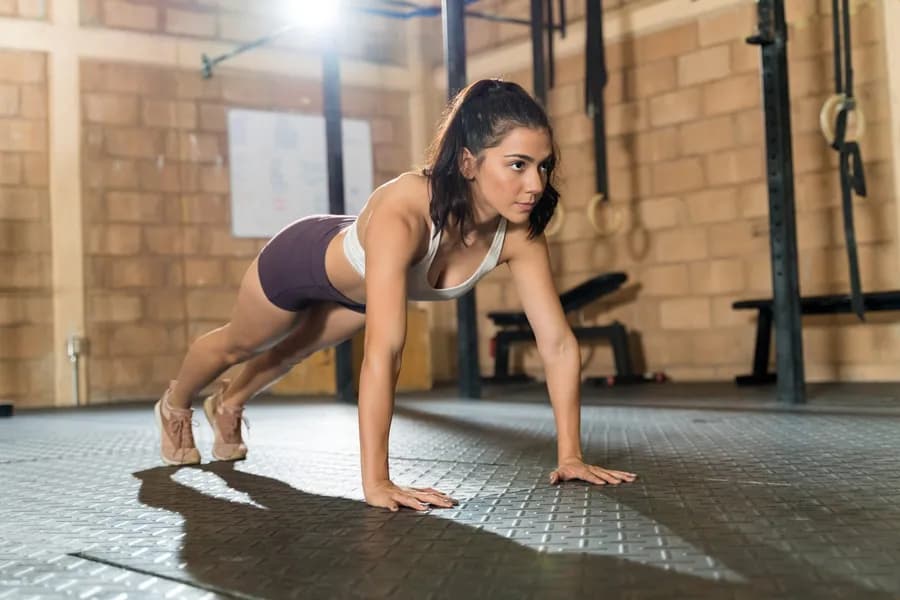
Beginner Bodyweight Exercises: Build Strength at Home Without Equipment
Bodyweight exercises are the most accessible way to start building real strength — no gym membership, no equipment, no experience required. See 8 key benefits and how to begin.
What Is Strength Training? Benefits, Exercises & How to Get Started
Strength training uses resistance — bodyweight, dumbbells, or bands — to challenge muscles and stimulate growth, building lean muscle and raising metabolism for all ages and experience levels. See the benefits and how to start.