
Which Exercise Is Good for Heart? Top Moves for Heart Health
Discover which exercise is good for heart health — from cardio to strength training. Build consistency with Habuild. Start your first 7 days with a 14-day free trial.

Key Takeaways
- Regular movement helps relax arterial walls, easing the workload placed on the heart.
- Complements care for diastolic dysfunction as a low-impact approach alongside cardiology guidance.
- Strength training and brisk aerobic activity together help balance HDL and LDL cholesterol.
- The heart adapts to demand over time, recovering faster after exertion with consistent training.
- Yoga and controlled breathwork activate the parasympathetic system, easing cortisol-driven strain.
- A target of 150 minutes of moderate movement weekly breaks down to 30 minutes, five days.
If you’ve ever asked which exercise is good for heart health, you’re already taking an important step. Regular physical activity is one of the most well-researched ways to support cardiovascular health — improving circulation, managing blood pressure, and helping the heart pump more efficiently over time.
Whether you’re managing fatigue, working to support healthy cholesterol levels, or simply want more energy through the day, the right exercise routine can make a meaningful difference when practiced consistently.
6 Benefits of Heart-Healthy Exercise
- Improves Cardiovascular Circulation Aerobic and strength-based movement encourages the heart to pump blood more efficiently. Over weeks of consistent practice, resting heart rate often decreases — a strong sign of improved cardiac function. Exploring exercises designed specifically for heart support can help you build a focused, purposeful routine around this goal.
- Supports Management of Blood Pressure Regular moderate exercise helps relax arterial walls and reduce the workload on your heart. This is especially relevant for people looking to address diastolic dysfunction — where consistent, low-impact movement is often recommended by cardiologists as a complementary approach alongside medical care.
- Helps Regulate Cholesterol Levels Exercise supports the balance between HDL and LDL cholesterol. Strength training and brisk aerobic activity together are among the most effective approaches for this. Pairing your routine with guidance on exercises for high cholesterol gives you a more targeted protocol for cardiovascular support.
- Builds Endurance and Stamina Over time, the heart adapts to exercise demand by becoming more efficient. Climbing stairs, walking longer distances, and recovering faster after exertion all improve with consistent aerobic and strength work.
- Reduces Stress on the Cardiovascular System Chronic stress places a measurable burden on heart health. Mind-body exercises — including yoga and controlled breathwork — activate the parasympathetic nervous system, helping lower cortisol and ease strain on the heart over time.
- Supports Healthy Weight Management Excess weight is a known cardiovascular risk factor. Regular exercise supports gradual weight management, which in turn reduces the demand placed on your heart during everyday activity.
How to Get Started with Heart-Healthy Exercise
What You Need to Begin
You don’t need a gym membership or expensive equipment to start. A yoga mat, comfortable clothes, and 30 minutes a day are enough to begin supporting your cardiovascular health. Many of the most effective heart-friendly exercises — brisk walking, bodyweight squats, and yoga — require nothing more than floor space.
Setting Realistic Goals
Aim for 150 minutes of moderate-intensity movement per week — roughly 30 minutes, five days a week. Avoid trying to do everything at once. Overtraining, especially when starting out, can cause strain rather than benefit. Focus on building a sustainable habit first, then gradually increase intensity over weeks.
Start with the Basics
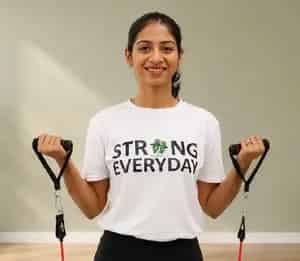
Beginners should prioritize low-impact, consistent movement over high-intensity sessions. Walking, gentle yoga flows, and bodyweight exercises are ideal starting points. A structured program with daily live guidance — like Habuild’s Strong Everyday sessions — removes the guesswork and helps you build the consistency that leads to real, gradual improvement.
Best Exercises for Heart Health
These are the exercises most consistently recommended for cardiovascular support, suitable for most fitness levels when performed with proper guidance.

Brisk Walking
One of the most accessible ways to support cardiovascular health with zero equipment. A 30-minute brisk walk five times a week elevates heart rate into the aerobic zone, steadily strengthening the heart muscle. Target: 30 minutes per session, 5 days a week.
Squats
Bodyweight squats engage large muscle groups — glutes, quads, hamstrings — which significantly elevates heart rate and improves circulation. They also build functional leg strength that supports everyday movement. Sets/reps: 3 sets of 12–15 reps.
Push-Ups
A compound upper-body exercise that simultaneously challenges the heart. Push-ups improve muscular endurance and cardiovascular output without any equipment. Sets/reps: 3 sets of 8–12 reps, progressing gradually over time.
Mountain Climbers
This dynamic full-body movement elevates heart rate quickly and builds core stability. It’s particularly effective for improving cardiovascular endurance within short sessions. Sets/reps: 3 rounds of 30 seconds with 15 seconds rest.
Yoga (Pranayama and Asanas)
Yoga combines breathwork and movement, directly supporting heart rate variability and stress reduction. Practices like Surya Namaskar provide a cardiovascular challenge while also building flexibility and calm. Yoga for heart health is structured at Habuild to support consistent daily practice with expert guidance.
Plank
The plank builds core and shoulder strength while maintaining a steady cardiovascular demand. Holding correct form challenges endurance without high joint impact. Duration: 3 holds of 20–40 seconds, building toward 60 seconds over time.
Step-Ups
Using a step or low platform, this exercise mimics stair climbing and is excellent for elevating heart rate with low joint stress. Sets/reps: 3 sets of 10 reps per leg.
Common Mistakes to Avoid
- Poor Form Incorrect form during squats, push-ups, or planks places unnecessary strain on joints and limits cardiovascular benefit. Starting with live guided sessions — where a trainer corrects your alignment in real time — makes a significant difference over self-directed workouts.
- Skipping Warm-Up Jumping into vigorous movement without warming up increases the risk of cardiac strain, especially for those managing heart conditions. A 5–10 minute gentle warm-up — light walking, arm circles, and gentle stretches — prepares the heart and arteries for increased demand.
- Overtraining More is not always better. Exercising beyond your current capacity without adequate rest can elevate stress hormones and cause inflammation — both counterproductive for heart health. Rest days and progressive overload are equally essential. If you are managing heart failure or diastolic dysfunction, always exercise within limits advised by your doctor.
- Inconsistency Sporadic exercise provides minimal cardiovascular benefit. The heart adapts through repeated, consistent stimulus over weeks and months — not through occasional intense sessions. Anchoring your week with endurance-focused exercises can help create the steady rhythm your heart responds best to.
Who Should Try Heart-Healthy Exercise?
- Beginners If you’ve been sedentary or are just starting out, heart-healthy exercise is one of the most impactful changes you can make. Begin with 20–30 minutes of walking or gentle yoga daily and build from there. The entry barrier is low — your body responds positively even to small, consistent efforts.
- Women Cardiovascular disease is among the leading health risks for women globally, yet it is often underdiagnosed. Strength training and aerobic exercise together support heart health without adding bulk. Regular movement also helps manage hormonal fluctuations that affect blood pressure and circulation.
- Older Adults For adults over 50, heart-healthy exercise is especially valuable for managing blood pressure, improving mobility, and maintaining independence. Low-impact options like yoga, walking, and bodyweight exercises are safe and effective starting points. If you have an existing heart condition, it is worth understanding how yoga-based approaches can complement your care plan for heart blockage management. Always consult your doctor before beginning a new exercise program.
- Working Professionals Desk-bound routines, long commutes, and chronic stress all elevate cardiovascular risk. Even 30 minutes of structured daily movement — accessible through a live online class — can meaningfully counteract these effects. It also improves posture, energy levels, and mental clarity throughout the workday.
Build Strength with a Routine That Actually Works
Building heart health isn’t about doing random workouts — it’s about consistency, expert guidance, and following a structured plan your body can adapt to over time. With the right support, you can train effectively from home and see real, gradual improvement in how your heart and body feel day to day.
What You Get with Habuild’s Strong Everyday Program:
- Daily live guided strength and yoga sessions
- Beginner-to-advanced progression designed for sustainable results
- No-equipment and home-friendly workouts
- Expert guidance to ensure correct form and safe exertion levels
- A community that keeps you accountable and consistent
Start Your Heart-Healthy Exercise Journey
Related reads: Which Exercise Is Best for Heart Health? · Which Exercise Is Best for Abs? Top Moves Ranked
Heart health improves with movement that’s repeated over weeks and months, not with any one type of cardio or strength session done in isolation. What matters most is finding a routine you’ll actually keep showing up for. Strong Everyday supports that consistency with guided daily sessions designed to keep your heart-supportive training on track.
For people managing more specific conditions, the best exercise for diastolic dysfunction is usually the same low-impact, consistent movement discussed above, and the safest exercise for heart failure follows the same principle — gentle, guided, and cleared with a cardiologist first.
Frequently Asked Questions
Related Articles

Which Exercise Is Best for Heart Health?
Discover which exercise is best for heart health — from yoga to strength training. Start a 14-day free trial trial with Habuild’s guided daily sessions today.
What Is the Most Calorie Burning Activity? Top Picks
Discover what is the most calorie burning activity and which exercises burn the most calories. Start your 14-day free trial trial with Habuild today.

What Are HIIT Exercises? Benefits, List & How to Start
HIIT alternates intense bursts of effort with brief recovery periods — burpees, squats, mountain climbers, and high knees in a 20-30 minute session. See the benefits, list, and how to start.

How Many Jumping Jacks to Burn 500 Calories: the Honest Calculation
The number depends on body weight, exercise intensity, and metabolic efficiency in ways most online calculators ignore. See the weight-adjusted calculation.

Strength Training Calories Burned: How Much Does a Session Actually Burn?
Strength training burns fewer calories per session than cardio, but produces far greater long-term expenditure through the metabolic elevation it creates. See exactly how much a session burns.