
Chair Yoga Poses: Complete Guide for All Ages and Abilities
Using a chair for support makes the full therapeutic benefits of yoga accessible to older adults, desk workers, and anyone who finds floor-based practice
Key Takeaways
- Delivers the same flexibility, strength, breath, and mindfulness benefits as floor-based yoga.
- Serves wheelchair users, post-surgical recovery patients, and desk workers equally well.
- Advanced chair poses challenge the shoulder girdle and balance differently than floor poses.
- Not a compromised substitute – many practitioners keep it as their primary lifelong practice.
- The chair’s stability support lets limited-balance practitioners engage safely and comfortably.
- Many beginners progress from chair yoga to floor-based practice over subsequent months.
What Are Chair Yoga Poses?
Chair yoga poses are yoga asanas performed either seated on a chair or using a chair as a support for standing poses — making the physical benefits of flexibility, strength, balance and breath work accessible without the need to lower to or rise from the floor. The chair provides the stability support that allows practitioners with limited balance, lower limb conditions, post-surgical recovery requirements or significant inflexibility to engage with yoga’s physical and breath practices from a safe and comfortable position.
Chair yoga is not simply a reduced version of standard yoga — it is a complete adaptive yoga practice with its own specific poses, sequences and progressions. Beginner chair yoga poses are the accessible entry; advanced chair yoga poses challenge the shoulder girdle, hip flexibility and balance in ways that differ from floor-based advanced poses rather than simply replicating them from a different height. Many practitioners who begin with chair yoga progress to floor-based practice over months; others maintain chair yoga as their primary practice indefinitely and reap the full available yoga health benefits.
Benefits of Chair Yoga Poses
- Accessible to Every Age and Ability Level The primary benefit of chair yoga exercise: it is the only available yoga approach that is genuinely accessible to practitioners with significant physical limitations — from wheelchair users to post-surgical recovery patients to office workers who cannot access a yoga mat during the working day. Research confirms that chair yoga produces significant flexibility, strength, pain reduction and psychological wellbeing improvements in populations for whom standard yoga is inaccessible.
- Reduces Chronic Pain and Improves Mobility Chair yoga poses specifically address the neck, shoulder, back and hip pain that prolonged sitting produces — the chair yoga exercise that counteracts the postural and flexibility consequences of desk work within the desk environment itself. Many practitioners report significant pain reduction from daily chair yoga exercise performed at the desk during work hours.
- Improves Upper Body Flexibility and Strength Advanced chair yoga poses for the shoulder girdle — chair-supported arm raises, seated lateral stretches, chair-based shoulder opening — produce significant upper body flexibility and strength improvements that are particularly valuable for practitioners with lower limb limitations who cannot load the upper body through floor-based balances.
- Supports Mental Wellbeing and Stress Reduction The breathing practices, mindfulness and gentle movement of chair yoga produce the cortisol reduction, GABA upregulation and parasympathetic activation that standard yoga provides — accessible from an office chair during the working day for the stress management that working hours specifically require.
Research documents chair yoga producing significant improvements in flexibility, functional strength, pain reduction and psychological wellbeing in older adult and rehabilitation populations — establishing it as a genuinely effective rather than merely accessible yoga approach.
Best Chair Yoga Poses — Beginner to Advanced
Seated Mountain Pose (Chair Tadasana) — Foundation
Sit at the edge of the chair with feet flat on the floor hip-width apart, spine elongated, shoulders relaxed, hands on thighs. The alignment reference for all seated chair yoga poses — establishing the upright spinal position before any movement. Hold 5 breaths. See also: yoga-for-wellness
Seated Cat-Cow — Spinal Mobility (Beginner)
From seated Mountain, hands on knees — inhale and arch the back (Cow), exhale and round the back (Cat). The foundational chair yoga exercise for spinal mobility, disc hydration and the back pain relief that desk workers most immediately require. 10 rounds. See also: yoga-for-knee-joint-pain
Seated Spinal Twist (Chair Ardha Matsyendrasana) — Beginner-Intermediate
Sitting sideways on the chair, hands holding the back of the chair, twisting the torso toward the chair back. The most important chair yoga exercise for thoracic spinal rotation — accessible to all seated practitioners. Hold 60 seconds each side.
Warrior I with Chair Support (Chair Virabhadrasana I) — Standing Chair Yoga
Standing behind the chair with both hands on the chair back, stepping into a lunge and raising the arms overhead — the standing chair yoga pose that develops hip flexor and quadriceps strength with full balance support. Among the best beginner chair yoga poses for developing lower body strength. 30-60 seconds each side. See also: yoga-for-beginners
Chair Pigeon Pose — Advanced Hip Opening
Seated, placing one ankle on the opposite knee with the shin parallel to the floor — the chair version of Pigeon Pose that develops hip external rotation while seated. Among the most effective advanced chair yoga poses for the hip opening that desk workers most need. Hold 2-3 minutes each side. See also: seated-yoga-poses
Chair Warrior III (Chair Virabhadrasana III) — Advanced Balance
Holding the chair back, hinging forward from the hips and extending one leg behind — the advanced chair yoga balance pose that develops the posterior chain strength and single-leg balance challenge of standard Warrior III with the safety of chair support. See also: surya-namaskara
Common Mistakes in Chair Yoga Poses
- Sitting Back in the Chair Rather Than at the Edge Sitting fully back with the lumbar supported reduces the available spinal mobility and engagement that chair yoga exercise is designed to produce. Correction: sit at the front third of the chair seat for all chair yoga poses to allow the full spinal movement that the practice requires.
- Slumping During Seated Poses Chair yoga’s accessibility can inadvertently reduce the alignment attention that floor yoga’s physical challenge enforces. Correction: re-establish seated Mountain Pose alignment before every new pose in a chair yoga sequence — the upright spine is the prerequisite for every chair yoga benefit.
- Breathing Shallowly During Resting Poses The therapeutic benefit of chair yoga’s breathing exercises specifically requires deep diaphragmatic breath that shallow chest breathing cannot produce. Correction: explicitly cue belly-to-side-to-back 360-degree breathing at the opening of every chair yoga session.
Who Should Practise Chair Yoga?
- Older Adults and Those with Physical Limitations Chair yoga poses provide the full yoga therapeutic benefit for practitioners for whom floor-based yoga is currently inaccessible — the most important available yoga adaptation for the widest population of practitioners who would otherwise be excluded from yoga’s health benefits.
- Is Chair Yoga Good for Beginners? Yes — beginner chair yoga poses are among the most accessible available yoga starting points. Habuild’s sessions include chair yoga modifications in every session, making participation accessible from the very first day regardless of physical capacity.
- Office Workers — Desk Yoga During Working Hours Chair yoga exercise performed at the desk during breaks or between meetings — seated Cat-Cow, desk-seated spinal twist, seated shoulder opening — is among the most practical available daily wellness interventions for the desk worker whose posture, neck tension and lower back are most immediately affected by their working environment.
650,000+ people building better habits every morning every morning Live daily sessions · Real-time corrections · Cancel anytime
Chair yoga proves that accessibility and consistency matter more than intensity — a gentle seated routine practised daily tends to do more for mobility and comfort than an occasional ambitious floor session that gets skipped when the body isn’t up for it. For older adults, office workers, or anyone easing back into movement, that daily rhythm is what keeps progress steady. Habuild’s Yoga Everyday program can be adapted to this kind of accessible daily practice, meeting you wherever your body is on a given day.
Frequently Asked Questions
Related Articles
Vajrasana: How to Do It Benefits and Precautions
Practice vajrasana pose with Habuild. Try vajrasana to ease digestion, reduce back pain, and calm your mind. Ideal for all levels. Start your session today!
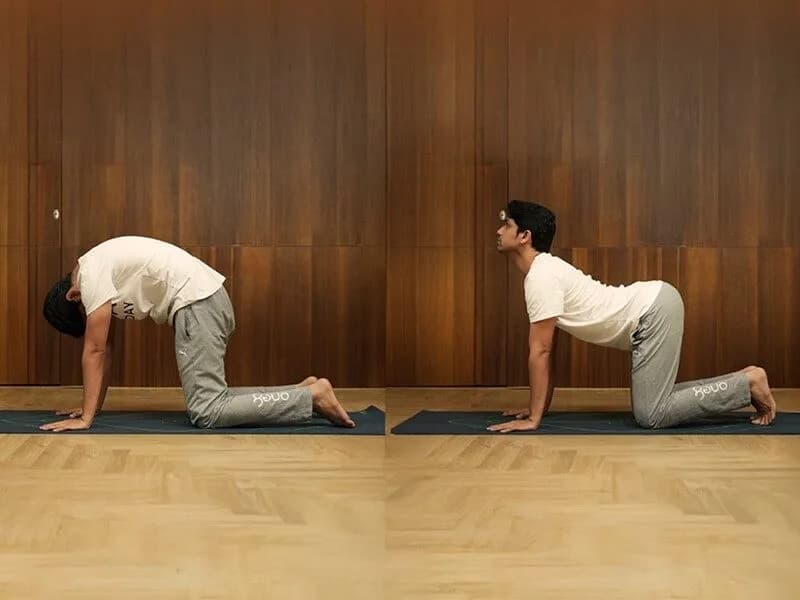
Chakravakasana (Ruddy Goose Pose): Steps, Benefits and Precautions
This four-point kneeling anti-rotation exercise builds lumbar stability and shoulder alignment, named after the ruddy shelduck of Hindu mythology. See the steps, benefits, and precautions.
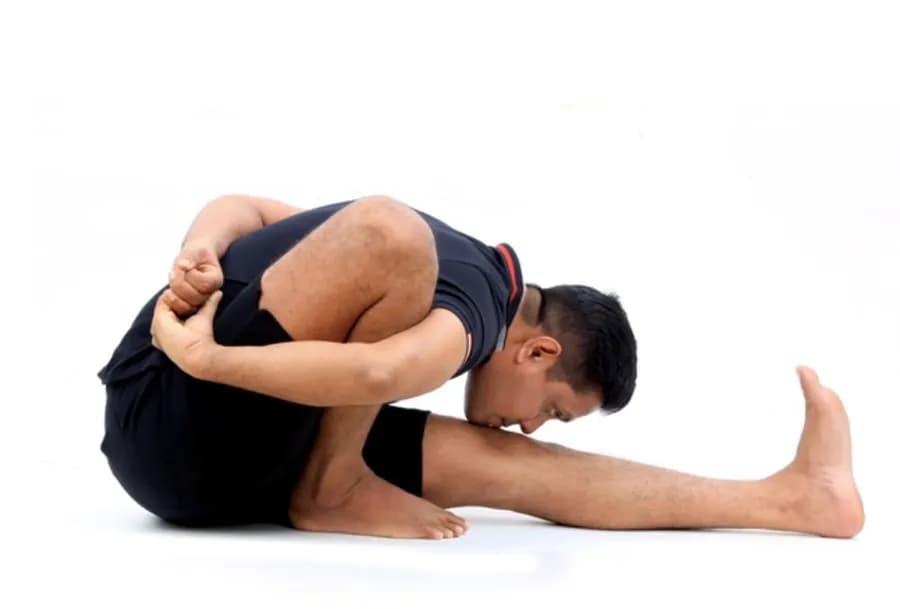
Marichyasana a (Sage Marichi’s Pose a): Steps, Benefits and Precautions
The first of four Marichi poses, this seated forward fold with one knee bent and an arm wrapped behind the back establishes the base that the more complex C and D variations build upon. See the steps, benefits, and precautions.