
Yoga Asanas for Knee Pain: Best Poses, Benefits & How to Get Started
Specific postures strengthen the muscles surrounding the knee joint and improve flexibility, helping manage discomfort gradually through consistent practice. See the best poses and benefits.

Key Takeaways
- Targets the quadriceps, hamstrings, and calves that distribute load away from the knee joint.
- Cartilage relies on joint fluid movement, not blood supply, to stay nourished.
- Knee problems rarely exist in isolation – tight hips or ankles often add extra knee stress.
- A mild stretch sensation is fine; discomfort that feels wrong is a signal to back off.
- Aim for 4-5 sessions a week of 20-30 minutes for gradual, consistent improvement.
Yoga asanas for knee pain are specific postures that strengthen the muscles surrounding the knee joint, improve flexibility, and support better alignment — helping you manage discomfort gradually through consistent daily practice.
If knee discomfort is slowing you down, yoga asanas for knee pain offer a gentle, structured way to support joint health. Rather than pushing through pain or giving up movement altogether, specific yoga poses can gradually build the strength and flexibility your knees need — when practiced regularly under proper guidance.
6 Key Benefits of Yoga Asanas for Knee Pain Management
- Strengthens the Muscles Around the Knee Weak quadriceps, hamstrings, and calf muscles place extra load on the knee joint. Yoga poses that target these muscle groups help distribute that load more evenly, which may gradually ease the strain you feel during daily activities.
- Improves Joint Flexibility Stiffness in the knee often comes from tight surrounding tissues. Regular practice of gentle yoga asanas for knee joint pain may progressively improve range of motion, making everyday movement feel less restricted over time.
- Supports Cartilage Health Through Circulation Cartilage has limited blood supply and relies on joint fluid movement to stay nourished. Slow, controlled yoga movements support this circulation, which complements the long-term care of the joint.
- Reduces Compensatory Tension in the Hips and Ankles Knee problems rarely exist in isolation. When hips or ankles are tight or weak, the knee absorbs extra stress. Yoga asanas for knee strengthening often address these connected areas simultaneously.
- Builds Body Awareness and Alignment One of yoga’s underrated benefits is proprioception — the sense of where your body is in space. Better alignment awareness means fewer accidental movements that aggravate the knee.
- Supports Stress Reduction That Affects Pain Perception Chronic pain has a strong psychological component. The breathwork and mindfulness embedded in yoga practice may help you manage how you experience and respond to discomfort over time. You can explore how yoga for knee pain works as a complementary approach alongside other care.
How to Get Started with Yoga Asanas for Knee Pain
What You Need to Begin
You need very little to start. A yoga mat or a folded blanket for cushioning, comfortable clothing, and access to a guided session are enough. No special equipment is required — many effective yoga asanas for knee joint pain can be done entirely at home. If your floor is hard, a folded towel under the knee adds protection during kneeling poses.
Setting Realistic Goals
Improvement through yoga is gradual, not instant. Aim for 4–5 sessions per week of 20–30 minutes each. Consistency over weeks matters far more than intensity in a single session. Avoid pushing into sharp pain — a mild stretch sensation is acceptable, but discomfort that feels wrong should signal you to back off or adjust alignment.
Start with the Basics
Before attempting any standing balancing pose, spend the first week on seated and supine asanas. Poses done on the floor allow you to build strength without load-bearing pressure on the knee. As your muscles strengthen and flexibility improves, you can gradually progress to standing poses with support from a wall or chair. If you are entirely new to the practice, yoga for beginners provides a solid foundation to build on safely.
Best Yoga Asanas for Knee Pain and Strengthening
Virasana (Hero Pose)
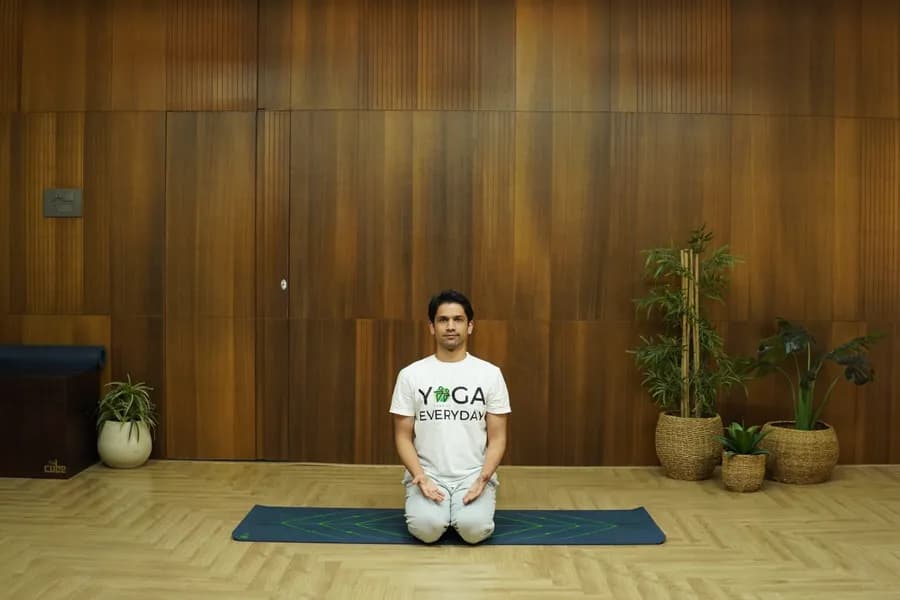
Kneel on the mat and sit between or on your heels, keeping your spine tall. This pose gently opens the knee joint and stretches the quadriceps. Hold for 30–60 seconds. If sitting fully between heels is uncomfortable, place a folded blanket under your seat. Avoid forcing the knees into a position that causes sharp discomfort.
Sets/Duration: 2–3 holds of 30–60 seconds each.
Setu Bandhasana (Bridge Pose)
Lie on your back with knees bent and feet flat on the floor, hip-width apart. Press through your feet to lift your hips, engaging your glutes and hamstrings. This is one of the most effective yoga asanas for knee strengthening because it builds the posterior chain without compressing the knee joint. Explore the full benefits of bridge pose for additional context.
Sets/Reps: 3 sets of 10 repetitions, holding the top for 3–5 seconds each.
Uttanasana (Standing Forward Fold) with Soft Knees
Stand with feet hip-width apart and fold forward from the hips, keeping a gentle bend in the knees. This stretches the hamstrings without placing compressive force on the knee. Tight hamstrings are a common contributor to knee strain, so releasing them regularly supports overall joint health.
Duration: Hold for 30–45 seconds, 2–3 repetitions.
Baddha Konasana (Butterfly Pose)
Sit with the soles of your feet together and knees falling outward. This pose addresses inner thigh tightness and hip rotation — both of which affect knee alignment during walking and standing. Gently press your knees toward the floor without forcing them. The butterfly pose guide covers alignment points worth reviewing before you begin.
Duration: 45–90 seconds, 2 repetitions.
Virabhadrasana I (Warrior I) — Wall-Supported
Step one foot forward into a lunge with the knee tracking directly over the ankle — never caving inward. Use a wall for balance initially. Warrior I builds quad and hip strength that directly supports the knee. Keep the front knee at approximately 90 degrees and avoid letting it drift past the toes.
Sets/Reps: 2 sets of 8–10 seconds each side.
Pawanmuktasana (Wind-Relieving Pose)
Lie on your back and draw one knee gently to the chest, holding below the knee (not on the joint). This releases tension in the lower back and hip flexors that often travels down to the knee. It is a safe daily practice pose even on high-discomfort days. Discover more in the full Pawanmuktasana overview.
Duration: 30–45 seconds per side, 2 repetitions.
Tadasana (Mountain Pose)
Stand with feet together, knees slightly soft, weight evenly distributed. This foundational pose trains correct alignment and activates the muscles around the knee without any dynamic load. Spending 60 seconds in Tadasana with focused attention on knee alignment builds the neuromuscular awareness that protects the joint in all other activities.
Duration: 60–90 seconds, 2–3 repetitions.
Common Mistakes to Avoid
- Poor Form During Lunge-Based Poses The most frequent error is allowing the front knee to cave inward (valgus collapse) during Warrior or lunge poses. This places significant shear force on the knee joint. Always ensure the knee tracks over the second toe, and reduce your range of motion if alignment is compromised.
- Skipping the Warm-Up Jumping into deep stretches on a cold joint increases injury risk. Spend 5 minutes on gentle ankle circles, seated leg swings, and slow hip circles before beginning yoga asanas for knee pain. A warm joint responds better to stretching and is less vulnerable to strain.
- Overtraining or Practicing Through Acute Pain If your knee is swollen, hot to the touch, or acutely inflamed, rest is the appropriate response — not more movement. Yoga supports gradual recovery during sub-acute and chronic phases, but it is not a substitute for medical evaluation. This practice complements your existing care — it is not a replacement for professional advice.
- Inconsistency Between Sessions Practicing intensely twice a week and skipping the rest delivers far less benefit than shorter, consistent daily sessions. The muscles supporting the knee respond to frequency and regularity. Three to five 20-minute sessions per week will produce noticeably better results than two long irregular ones.
Who Should Try Yoga Asanas for Knee Pain?
- Beginners You do not need any prior yoga experience. The poses outlined here are accessible to first-time practitioners. Starting slowly with floor-based poses means there is very low risk of overloading the knee, and progress comes naturally as your body adapts over the first few weeks.
- Women Women are statistically more likely to experience knee issues due to differences in hip-to-knee alignment (the Q-angle). Yoga asanas for knee joint pain are particularly valuable here because they simultaneously address hip mobility and inner thigh strength — two areas that directly affect knee tracking in women.
- Older Adults Age-related changes in cartilage, muscle mass, and balance all converge at the knee. Gentle yoga practice may help support joint health, maintain mobility, and reduce the risk of falls through improved balance and leg strength. Always consult your doctor before starting if you have an existing knee condition, recent surgery, or osteoporosis.
- Working Professionals Long hours of sitting tighten the hip flexors and weaken the glutes, which over time places excess load on the knees. Even a 20-minute morning yoga session targeting these areas can meaningfully reduce the cumulative strain that desk work creates. Poses like Bridge and Butterfly are well-suited to short, time-efficient practice sessions.
Build Strength with a Routine That Actually Works
Managing knee discomfort through yoga isn’t about doing one perfect session — it’s about building a daily habit with the right guidance and structure. With consistent support, you can practice effectively from home and notice gradual improvement over time.
What You Get with Habuild’s Yoga Everyday Program:
- Daily live guided yoga sessions with expert instruction
- Beginner-to-intermediate progression designed for sustainable practice
- No equipment needed — fully home-friendly
- Real-time guidance to ensure correct alignment and form
- A consistent community that helps you show up every day
Knee discomfort tends to ease gradually as the surrounding muscles strengthen and alignment improves — something that follows from returning to these poses day after day, not from an occasional stretch when the pain flares up. Consistency also makes it easier to notice what’s actually helping versus what needs modifying. If you want that structure built in for you, Habuild’s Yoga Everyday program offers daily guided sessions that adapt as your knees get stronger.
Frequently Asked Questions
Related Articles

Yoga Asanas for Heart Health: Benefits, Poses & Routine
Specific postures combined with breathwork and relaxation may help manage blood pressure, reduce stress on the heart, and improve circulation — alongside medical care, not instead of it.

Vajrasana: How to Do It Benefits and Precautions
Practice vajrasana pose with Habuild. Try vajrasana to ease digestion, reduce back pain, and calm your mind. Ideal for all levels. Start your session today!
Utkatasana (Chair Pose): Steps Strength and Stamina Benefits
Practice utkatasana with Habuild. Try the utkatasana pose to strengthen your legs, build core power, and boost overall body endurance. Start your yoga session!