
Dwi Pada Viparita Dandasana (Two-Legged Inverted Staff Pose): Steps, Benefits & Precautions
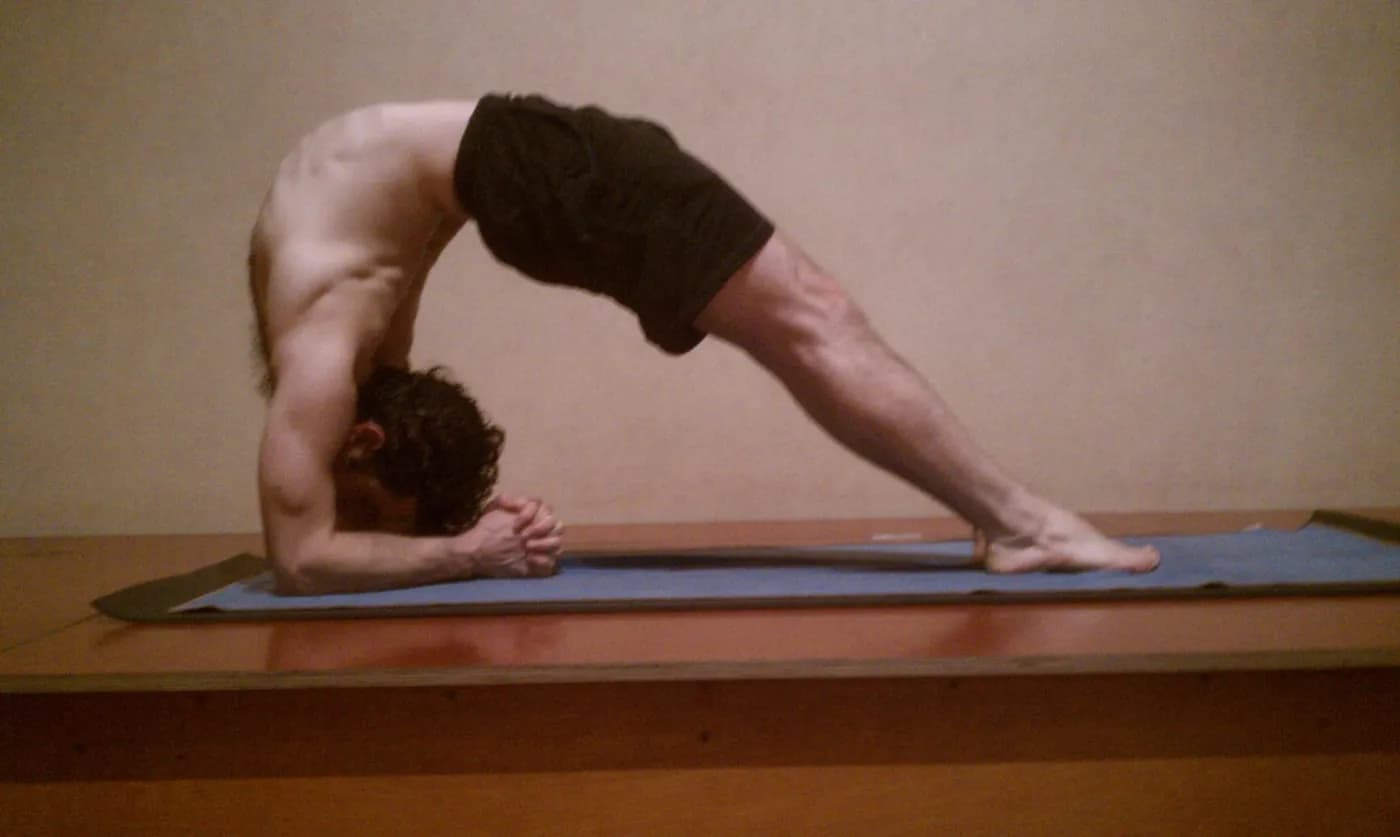
Entering from Wheel Pose, the body transitions to support on the forearms with the head touching the floor, creating a deep backbend. See the steps,
Key Takeaways
- Popularised by B.K.S. Iyengar in Light on Yoga as one of classical Iyengar’s peak backbends.
- Entered from Wheel Pose, transitioning to forearm support with the head touching the floor.
- Its name reverses Dandasana, the upright seated staff pose, into a deep backward arch instead.
- Reserved for practitioners with an already-established Wheel Pose foundation, often years in.
- Produces some of the deepest spinal extension available anywhere in classical yoga practice.
- Expands the ribcage in ways few other poses replicate, directly supporting lung capacity.
What is Dwi Pada Viparita Dandasana?
Dwi Pada Viparita Dandasana derives from five Sanskrit words: ‘dwi’ meaning two, ‘pada’ meaning leg or foot, ‘viparita’ meaning inverted or reversed, ‘danda’ meaning staff, and ‘asana’ meaning pose — together translating to “the two-legged inverted staff pose.” Pronounced dvee-PAH-dah vi-pa-REE-tah dahn-DAH-suh-nuh, the pose is also known in English as Two-Legged Inverted Staff Pose. Visually, the practitioner enters from a wheel pose (Urdhva Dhanurasana) and transitions to support the body on the forearms with the head touching the floor — creating a deep backbend with both legs extended on the floor and the body forming an arched inverted staff shape.
The pose was popularised by B.K.S. Iyengar in his foundational text Light on Yoga and is considered one of the most demanding and therapeutic backbends in classical Iyengar tradition. The “inverted staff” name comes from the body shape — the staff (dandasana) refers to the seated upright pose, and “inverted” reverses this into a deep backward arch. The traditional symbolism connects to the idea of complete inversion of the spinal pattern — moving from forward-flexion (the dominant modern posture) into deep backward extension. The pose is considered a peak backbend in classical practice.
In the broader yoga system, Dwi Pada Viparita Dandasana belongs to the family of advanced backbends — alongside Urdhva Dhanurasana (Wheel Pose), Kapotasana (Pigeon King Pose), and other deep backward arches. It is most commonly practised in advanced Iyengar progression sequences as a peak pose, requiring substantial spinal flexibility, shoulder mobility, and arm strength. Most teachers reserve Dwi Pada Viparita Dandasana for practitioners with established Wheel Pose (Urdhva Dhanurasana) foundation — typically requiring years of consistent backbend practice.
Dwi Pada Viparita Dandasana Benefits
Physical Benefits
Benefit 1: Deep Spinal Extension and Backbend Capacity
Dwi Pada Viparita Dandasana produces some of the deepest spinal extension available in classical yoga — addressing the chronic forward-rounded posture that prolonged sitting produces. Daily practice progressively restores spinal extension range over months. Members focused on broader spinal health often pair their work with ouryoga for spinal cord programme to develop the comprehensive spinal mobility advanced backbends require.
Benefit 2: Opens the Chest and Improves Lung Capacity
The deep chest opening of the pose expands the ribcage in ways few other poses replicate — increasing lung capacity, supporting respiratory function, and addressing the chronic chest restriction that modern lifestyles produce. Members focused on broader breath work often pair their practice with ouryoga for breathing programme.
Benefit 3: Stretches the Hip Flexors and Front Body
The combination of deep backbend and extended legs lengthens the hip flexors, abdominals, and front body fascia thoroughly — addressing the chronic shortening that prolonged sitting produces.
Mental and Emotional Benefits
Benefit 4: Builds Confidence and Embodied Power
The combination of deep backbend, inversion, and arm support produces measurable shifts in self-perception — the felt sense of supporting the inverted body in deep backward arch carries into daily life as embodied confidence.
Benefit 5: Activates Energy and Combats Lethargy
Backbends in classical yoga tradition are considered energising rather than calming — the deep chest opening and inversion combination produces a measurable lift in energy and mood. Members managing concurrent back stiffness often pair their work with ouryoga for back pain programme.
Benefit 6: Develops Concentration and Mental Discipline
The complex coordination of the pose — multiple body segments working in precise alignment under load — demands and develops sustained concentration that translates to other challenging asana and to focus-demanding tasks in daily life. Members focused on broader flexibility often pair their training with ouryoga for flexibility programme.
How to Do Dwi Pada Viparita Dandasana — Step-by-Step Instructions
Key Principles
Three foundational principles must be in place: established Urdhva Dhanurasana (Wheel Pose) hold of 30+ seconds, comfortable forearm balance preparation, and shoulder/chest opening from Sirsasana (Headstand) practice. The pose should not be attempted without a qualified instructor present for first attempts.
Step 1: Starting Position (Urdhva Dhanurasana / Wheel Pose)
Begin in Wheel Pose with the body fully arched backward, hands and feet on the floor, head suspended above the ground. Establish stability with three steady breaths.
Step 2: Lower the Crown of the Head to the Floor
Slowly bend the elbows to lower the crown of the head to the floor — maintaining the deep arch in the spine. The forearms become parallel to each other with elbows bent.
Step 3: Place Forearms Flat on the Floor
Lower the forearms flat to the floor on either side of the head — creating the supported forearm balance foundation. Interlace the fingers behind the head if comfortable.
Step 4: Walk the Feet Forward to Extend the Legs
Slowly walk the feet forward to straighten the legs. The body forms a deep arched shape with the head supported by the arms, the legs extended forward, and the spine in deep extension.
Step 5: Final Position and Hold
In the final position, the body forms an inverted staff shape — deeply arched spine, extended legs, supported head, and forearms providing stability. Hold for 5–15 breaths in early practice, building to 30 seconds over months. Breathe steadily throughout.
Step 6: How to Come Out of Dwi Pada Viparita Dandasana
Walk the feet back toward the head, slowly press the head off the floor to return to Wheel Pose. From Wheel, slowly lower the back to the floor and rest in Apanasana (Knees-to-Chest Pose) as a counter-pose for several breaths. Always exit slowly and rest deeply.
Breathing in Dwi Pada Viparita Dandasana
The breath in this deep backbend follows a steady pattern — long slow inhales expanding the chest, equally long slow exhales releasing tension. The compressed lower back position can make breathing challenging — prioritise smooth steady breath; if breath becomes ragged, exit immediately.
Preparatory Poses Before Dwi Pada Viparita Dandasana
Preparation requires substantial backbend foundation — these prerequisites must be established before the pose is attempted.
Urdhva Dhanurasana (Wheel Pose)
The direct foundation pose — must be held comfortably for 30+ seconds before progressing.
Sirsasana (Headstand)
Builds the headstand foundation that the inverted head position requires.
Bhujangasana (Cobra Pose)
Builds foundational backbend capacity.
Setu Bandha Sarvangasana (Bridge Pose)
Builds the lower back and glute strength that backbends require.
Variations of Dwi Pada Viparita Dandasana
Variation 1: Wall-Supported Dwi Pada Viparita Dandasana
Difficulty: Intermediate-Advanced Performed with the back near a wall — the wall provides safety during the backbend and reduces the falling risk. The destination intermediate variation for those building toward unsupported practice.
Variation 2: Standard Dwi Pada Viparita Dandasana
Difficulty: Advanced The classical version described in this guide — full backbend with extended legs. The destination practice for serious yoga students.
Variation 3: Eka Pada Viparita Dandasana (One-Legged Version)
Difficulty: Advanced+
A variation where one leg lifts off the floor while the other remains extended — adds significant difficulty by removing one base of support.
Variation 4: Restorative Backbend with Bolster
Difficulty: All Levels with Props A restorative version performed over a yoga bolster — provides the chest opening and gentle backbend benefits without the demanding forearm balance. Members focused on broader flexibility often pair their work with our yoga for flexibility programme.
Common Mistakes to Avoid in Dwi Pada Viparita Dandasana
- Mistake 1: Attempting Without Established Wheel Pose The most damaging mistake. Attempting Dwi Pada Viparita Dandasana without comfortable Wheel Pose foundation risks acute spinal injury. Correction: build Wheel Pose to comfortable 30-second hold before progressing.
- Mistake 2: Compressing the Lower Back Practitioners often initiate the backbend from the lumbar spine — compressing the lower back dangerously. Correction: distribute the arch evenly across the entire spine; lengthen before bending; lead with the chest, not the lower back.
- Mistake 3: Holding the Breath During the Pose The compressed chest and abdomen position makes breathing feel difficult — many practitioners hold breath. Correction: prioritise steady smooth breathing; if breath becomes ragged, exit immediately.
- Mistake 4: Practising Without Spotter or Wall on Early Attempts Solo unsupported practice on first attempts risks falling and injury. Correction: practise with wall support and ideally with a qualified instructor present for the first 20+ attempts.
- Mistake 5: Skipping the Counter-Pose The intense backbend leaves the spine in extreme extension — without counter-pose, the spine remains in this stress pattern. Correction: always follow with Apanasana (Knees-to-Chest), gentle forward folds, or Balasana (Child’s Pose).
Who Should Practise Dwi Pada Viparita Dandasana?
- Advanced Practitioners with Established Wheel Pose The audience that benefits most. Practitioners with comfortable Wheel Pose hold and established backbend foundation find Dwi Pada Viparita Dandasana a rewarding peak backbend. Members focused on broader spinal mobility often pair their work with ouryoga for spinal cord programme.
- Is Dwi Pada Viparita Dandasana Good for Beginners? No — this is an advanced pose requiring multiple foundational backbends to be established first. Beginners should focus on Bhujangasana, Setu Bandha, and simple backbends for the first 1–2 years.
- Working Professionals with Chronic Posture Issues For experienced practitioners managing chronic forward-rounded posture from desk work, Dwi Pada Viparita Dandasana provides therapeutic deep backbend that few other poses can replicate. Members focused on broader breath capacity often pair their training with ouryoga for breathing programme.
- Practitioners Building Toward Advanced Backbend Programmes For those preparing for Iyengar advanced certifications or other intensive backbend traditions, Dwi Pada Viparita Dandasana is part of the standard advanced repertoire. Members managing concurrent back concerns often pair their work with ouryoga for back pain programme.
As an advanced backbend, Dwi Pada Viparita Dandasana rewards patience more than ambition — the chest opening and spinal extension it offers build gradually as your body adapts, session after session, rather than by pushing deeper on day one. Progressing into it slowly, within a well-sequenced daily practice rather than in isolation, is the safer and more sustainable route. Habuild’s Yoga Everyday program can help you build toward poses like this with proper preparation.
Frequently Asked Questions
Related Articles
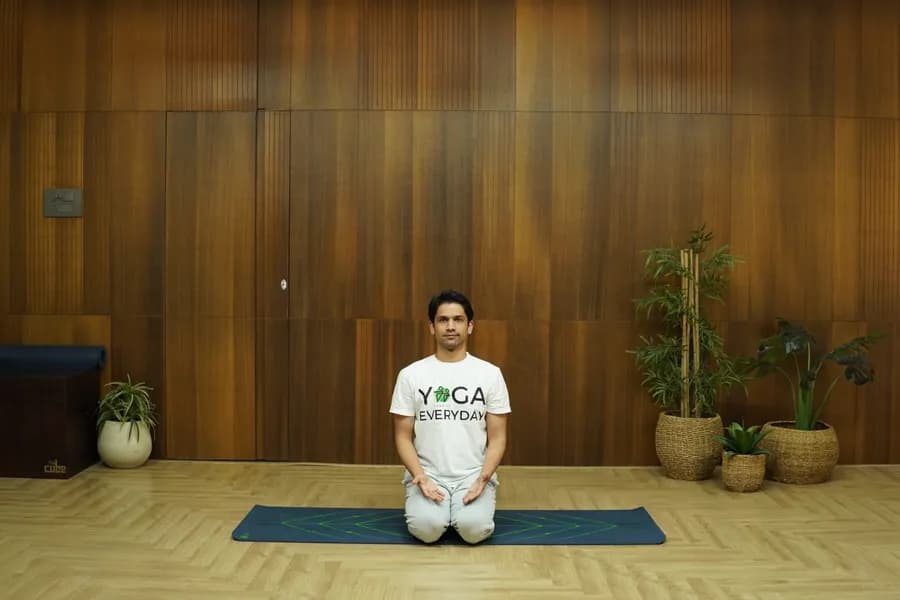
Vajrasana: How to Do It Benefits and Precautions
Practice vajrasana pose with Habuild. Try vajrasana to ease digestion, reduce back pain, and calm your mind. Ideal for all levels. Start your session today!

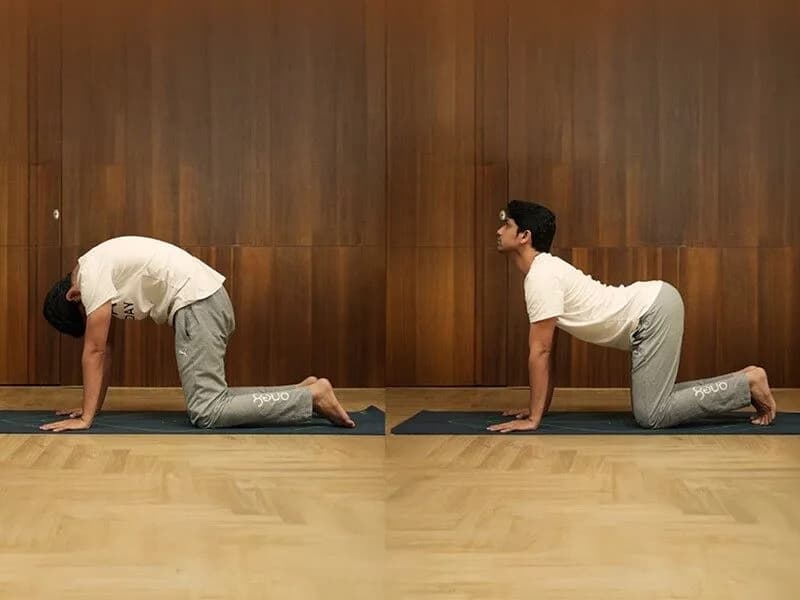
Chakravakasana (Ruddy Goose Pose): Steps, Benefits and Precautions
This four-point kneeling anti-rotation exercise builds lumbar stability and shoulder alignment, named after the ruddy shelduck of Hindu mythology. See the steps, benefits, and precautions.
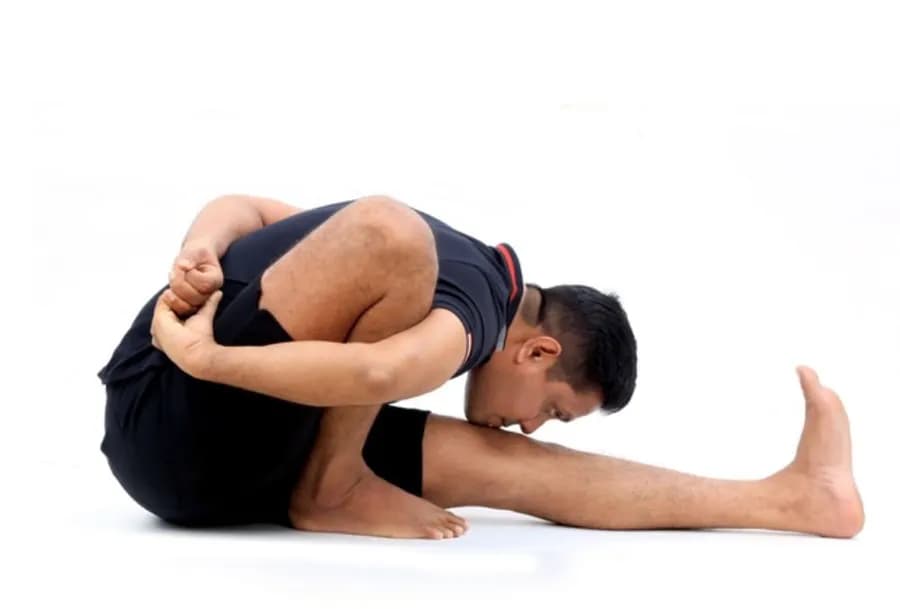
Marichyasana a (Sage Marichi’s Pose a): Steps, Benefits and Precautions
The first of four Marichi poses, this seated forward fold with one knee bent and an arm wrapped behind the back establishes the base that the more complex C and D variations build upon. See the steps, benefits, and precautions.