
Gyan Mudra: How to Do It and Its Benefits for Focus and Memory
Practice Gyan Mudra with Habuild. Follow the wisdom hand gesture steps to improve focus, reduce anxiety, and enhance your meditation practice. Start today!
Key Takeaways
- Palms face downward specifically, the detail distinguishing it from palms-up Chin Mudra.
- Is the hand position of seated Buddha statues and Hindu deities in meditation worldwide.
- Taught from a practitioner’s very first class as the foundational pranayama hand gesture.
- Associated specifically with enhanced cerebral blood flow during sustained meditation.
- The settling effect on agitated mental states is described as occurring within minutes.
- Makes it the standard accompaniment for practices requiring concentration, including study.
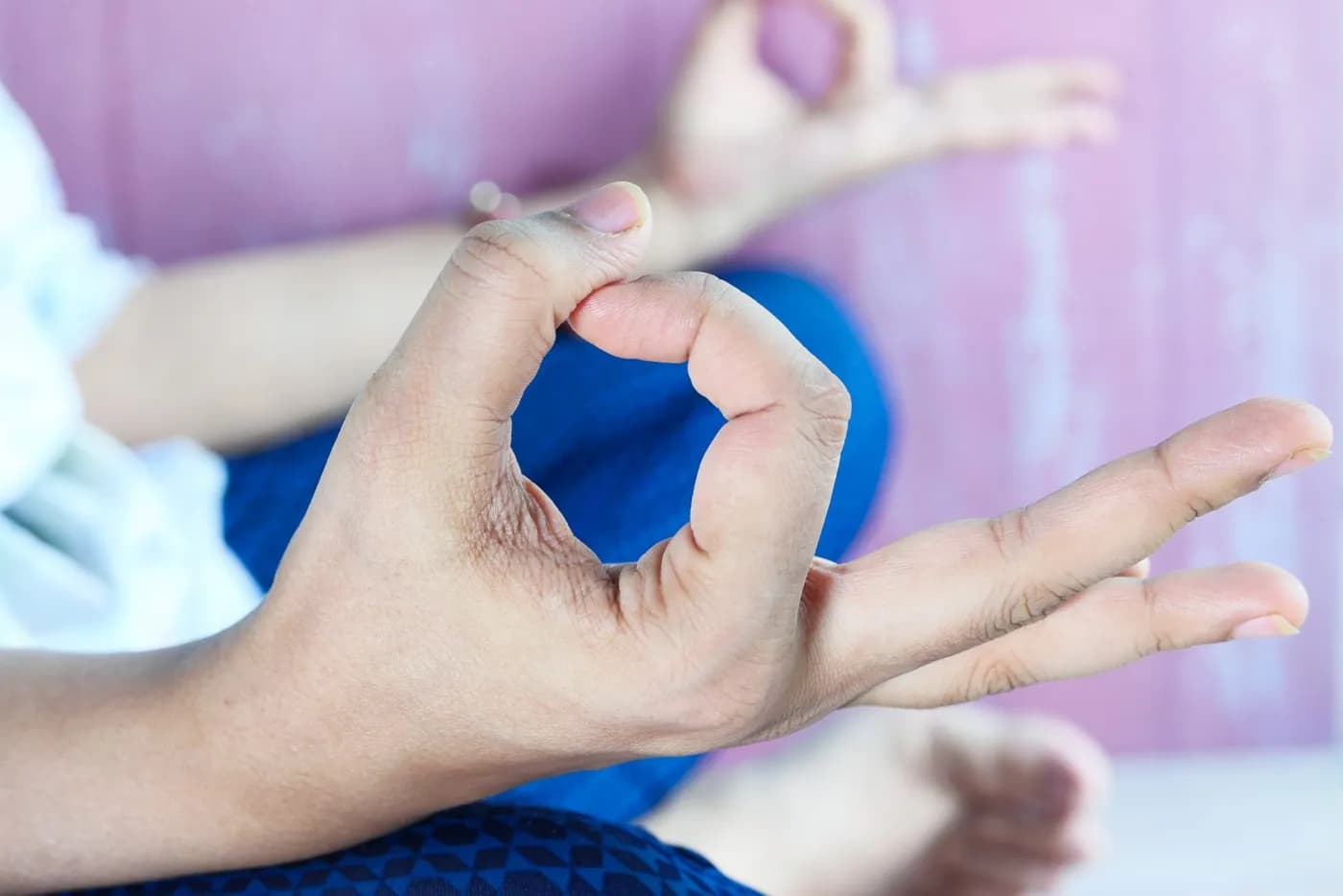
Gyan Mudra is a yogic hand gesture where the tip of the index finger meets the tip of the thumb, forming a circle, while the remaining three fingers extend — palms facing downward. The universal gesture of knowledge and wisdom, it calms the mind, sharpens focus, enhances neural function, reduces anxiety, and is the most widely used meditation and pranayama hand position.
What is Gyan Mudra?
Gyan Mudra — the Wisdom or Knowledge Gesture — derives from Sanskrit: Gyan or Jnana (knowledge, wisdom, consciousness) and Mudra (seal or gesture). The index finger (representing individual awareness, air element) touches the tip of the thumb (representing universal consciousness, fire element) — symbolising the yogic goal of uniting individual awareness with universal consciousness.
Gyan Mudra is the most universally recognised mudra in yoga — the hand position of seated Buddha statues, Hindu deities in meditation, and virtually every depiction of a practitioner in pranayama or dhyana. Its ubiquity reflects its fundamental importance: it is the gesture that connects individual human awareness with the broader field of consciousness that meditation aims to contact.
At Habuild, Gyan Mudra is the standard hand position for all seated pranayama and meditation practices — taught from the very first class as the foundational gesture that anchors and deepens every breath and mindfulness session.
Benefits
Physical Benefits
- Activates Neural Function and Enhances Cognitive Performance The air-fire connection of Gyan Mudra — index finger (air/Vayu) touching thumb (fire/Agni) — is associated with stimulating neural activity, improving synaptic function, enhancing memory, and producing the cognitive clarity that optimal air-fire balance supports. Practitioners consistently report improved mental alertness and sharper cognitive processing.
- Supports Brain Health Through Regular Meditative Practice Consistent use of Gyan Mudra during meditation is associated with enhanced cerebral blood flow, reduced cortisol, and the measurable neural health improvements that sustained meditation practice produces.
Mental Benefits
- Calms Anxiety and Settles the Mind Gyan Mudra is one of the most reliable immediate interventions for anxious, restless, or scattered mental states. The gesture’s grounding of individual awareness in the connection with universal consciousness produces a settling of the mind’s agitated surface activity within minutes.
- Sharpens Focus and Improves Concentration The air-fire balance specifically enhances directed, sustained attention — making Gyan Mudra the ideal accompaniment for all practices requiring concentration, from pranayama to study and analytical work.
- Supports Meditation and Spiritual Practice The symbolism of individual consciousness touching universal consciousness makes Gyan Mudra the most direct gesture for the meditative intention of dissolving the sense of separation that all meditation practices point toward.
How to Practise — Step-by-Step Instructions
Key Principles
Key Principles Three principles: tip-to-tip contact — the tip of the index finger touches the tip of the thumb with a light, effortless touch; the remaining fingers extend gently — not rigidly locked; and the hands rest with a completely light, effortless quality — no muscular holding required. Gyan Mudra should feel as natural as resting.
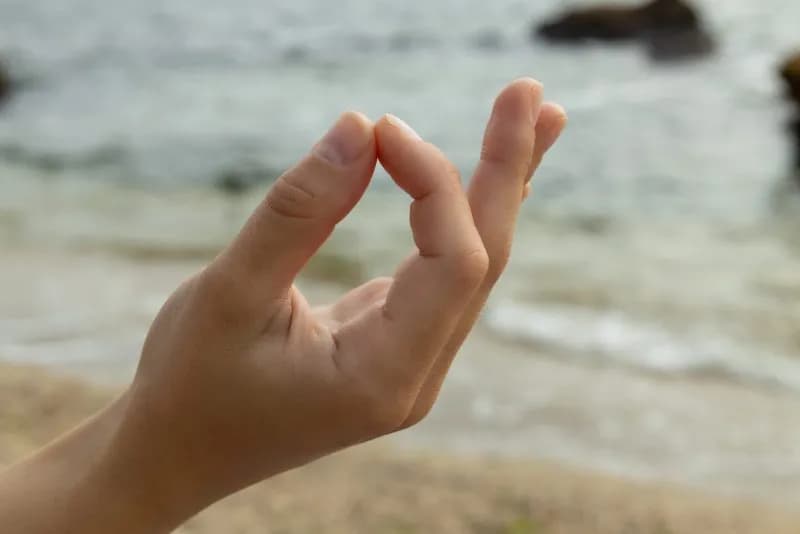
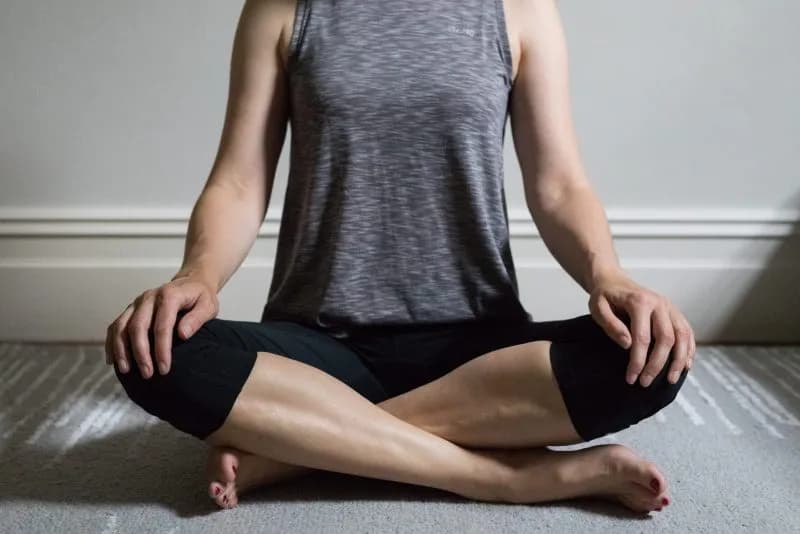
- Step 1: Seated Starting Position Sit in Sukhasana, Padmasana, or Vajrasana — spine tall and erect. Rest both hands on the knees with palms facing downward (this palm-down orientation distinguishes Gyan Mudra from Chin Mudra).
- Step 2: Index Tip to Thumb Tip Bring the tip of the index finger of each hand to touch the tip of the thumb — forming a light, effortless O-shape. The contact is the lightest possible touch.
- Step 3: Extend the Remaining Fingers Allow the remaining three fingers — middle, ring, and little — to extend gently and naturally. Neither stiffly straight nor curled inward — simply at ease.
- Step 4: Rest Completely on the Knees Allow the complete weight of the hands to rest on the knees — no muscular holding required. The mudra should require zero effort to maintain.
- Step 5: Close the Eyes and Breathe Close the eyes softly and breathe naturally — or begin the specific pranayama practice that the session requires. Gyan Mudra accompanies rather than dictates the breath.
- Step 6: Hold for the Duration of the Session Maintain Gyan Mudra throughout the complete pranayama or meditation session — releasing only when transitioning out of formal practice.
Breathing
Gyan Mudra does not prescribe a specific breath — it accompanies and deepens whatever breath practice the session requires. During pranayama, it supports the structured breath. During meditation, it supports the natural, spontaneously settling breath. The mudra is the vessel; the breath is its content.
Preparatory Practices
These practices create the ideal conditions before the mudra session.
- Complete physical asana session — The physical practice releases body tension before Gyan Mudra’s meditative application.
- Kapalbhati (3-5 minutes) — Clears the energy channels before the sustained concentration of Gyan Mudra meditation.
- Spinal lengthening in the seated posture — Actively re-establishing the tall, erect spine before the mudra session ensures the prana channels are open.
Variations
- Variation 1: Gyan Mudra with Palms Down — Standard Grounding Form Palms resting downward on the knees — more grounding, earth-connecting quality. The most common form for meditation and the standard practice at Habuild.
- Variation 2: Chin Mudra with Palms Up — Receptive Form The same index-to-thumb contact with palms facing upward — more receptive and open quality. Used specifically in practices emphasising openness to universal energy rather than grounding. Both are valid forms of the same fundamental gesture.
- Variation 3: Gyan Mudra Combined with Khechari Mudra — Advanced Gyan Mudra in the hands simultaneously with Khechari Mudra (tongue to soft palate) — the two gestures together directing prana through both the hand circuit and the internal palate circuit for comprehensive pranic sealing during advanced meditation.
Common Mistakes to Avoid
- Gripping Rather Than Resting the Contact Applying muscular effort to hold the index-thumb circle creates sympathetic tension that completely counteracts the parasympathetic, concentrating quality of the mudra. The contact should be the lightest possible touch — barely perceptible.
- Neglecting the Mudra During Pranayama Gyan Mudra should be maintained consistently throughout every pranayama session — not formed at the beginning and then forgotten. Re-establish the contact awareness periodically throughout the session.
- Confusing with Chin Mudra Gyan Mudra is palms-down (grounding); Chin Mudra is palms-up (receptive). Both use the same finger placement. Understanding the distinction and consciously choosing based on the session’s intention is the mark of mature mudra practice.
Who Should Practise?
- All Practitioners — The Universal Meditation Gesture Gyan Mudra is the most universally appropriate mudra — recommended for every practitioner at every level in every seated practice. No contraindications, no prerequisites, and an immediate enhancement of every meditation and pranayama session it accompanies.
- Students and Knowledge Workers Seeking Cognitive Enhancement The air-fire balance and neural activation of Gyan Mudra make it specifically valuable during study, analysis, and all knowledge work requiring sustained mental clarity and focused attention.
- Is Gyan Mudra Good for Beginners? Yes — Gyan Mudra is often the first mudra taught to beginners because it is the simplest and most immediately applicable. Establishing it as the automatic hand position for every meditation and pranayama session is the single most foundational mudra habit to develop.
Make Gyan Mudra a Part of Your Daily Practice
Gyan Mudra is the yoga tradition’s most universal and timeless gesture — its index-to-thumb circle connecting individual human awareness with the field of universal consciousness in a single, effortless, endlessly deep gesture.
Whether you are using Gyan Mudra as your default meditation hand position, your pranayama anchor, or your moment-to-moment anxiety management practice, its daily consistent use develops the settled, alert, present-moment awareness that is yoga’s most transformative mental quality.
The most effective way to learn Gyan Mudra in context — integrated into a complete pranayama and meditation curriculum from the very first session — is under live expert guidance with Habuild.
Start your 14 day free yoga journey with Habuild, today!
Related reads: Hakini Mudra: How to Practice and Its Benefits for Memory and Focus · Mudra for Concentration (Gyan Mudra): Steps, Benefits and Practice
Holding Gyan Mudra for a few minutes while your mind wanders back to your to-do list won’t do much for focus — it’s the daily repetition, ideally paired with seated stillness, that trains attention over weeks. Anxiety eases the same way: gradually, through a nervous system that’s practiced calming down. Pairing this mudra with guided sessions from Habuild’s Yoga Everyday program gives it the consistent context it needs to actually shift how your mind settles.
Frequently Asked Questions
Related Articles
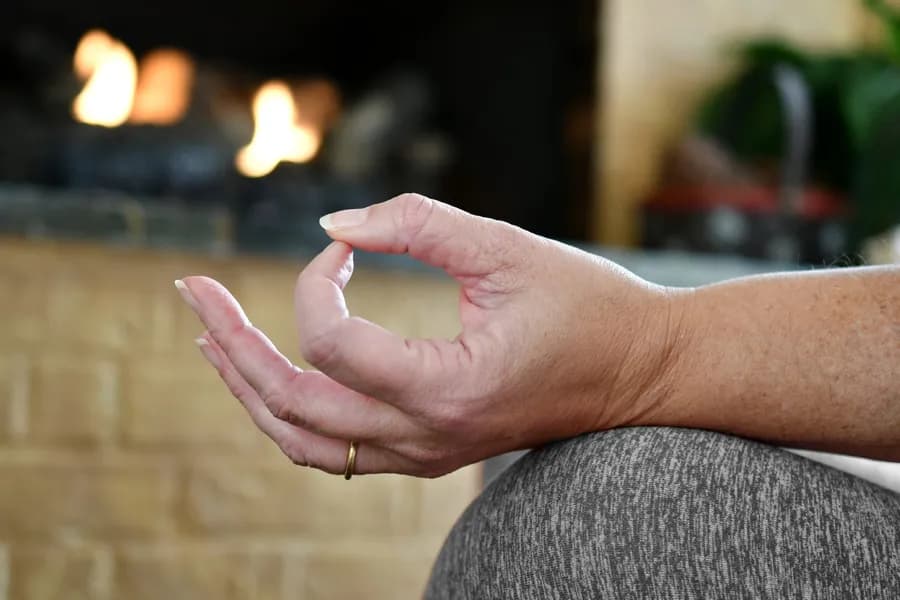
Chin Mudra: How to Practice and Its Benefits for Calm and Clarity
Practice Chin Mudra with Habuild. Follow the consciousness hand gesture steps to calm the mind, improve focus, and deepen your pranayama practice. Start today!

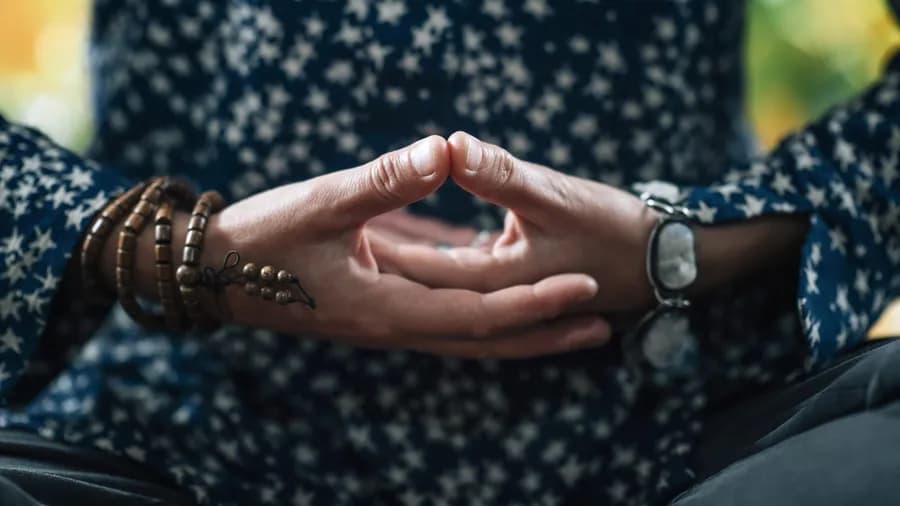
Dhyana Mudra: How to Practice and Its Benefits for Meditation
Practice Dhyana Mudra with Habuild. Follow the meditation hand gesture steps to calm the mind, deepen concentration, and support your daily practice. Start!
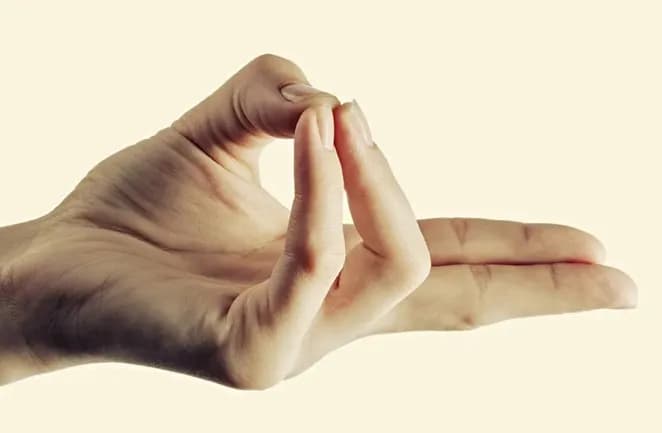
Prana Mudra: How to Practice and Its Life Energy Benefits
Practice Prana Mudra with Habuild. Follow the life force hand gesture steps to boost energy, strengthen immunity, and improve your eye health. Start today!