
Dhyana Mudra: How to Practice and Its Benefits for Meditation
Practice Dhyana Mudra with Habuild. Follow the meditation hand gesture steps to calm the mind, deepen concentration, and support your daily practice. Start!
Key Takeaways
- The right hand rests on top of the left, both palms up, thumb tips lightly touching in an oval.
- Called the most recognisable mudra in the world across virtually every meditative culture.
- Taught as the specific closing gesture of every complete Habuild yoga session.
- The touching thumbs are said to form a closed prana circuit rather than dissipating energy.
- Represents complete surrender into meditation, unlike the more alert Gyan and Chin Mudras.
- Associated with measurable reductions in cortisol, heart rate, and blood pressure while seated.
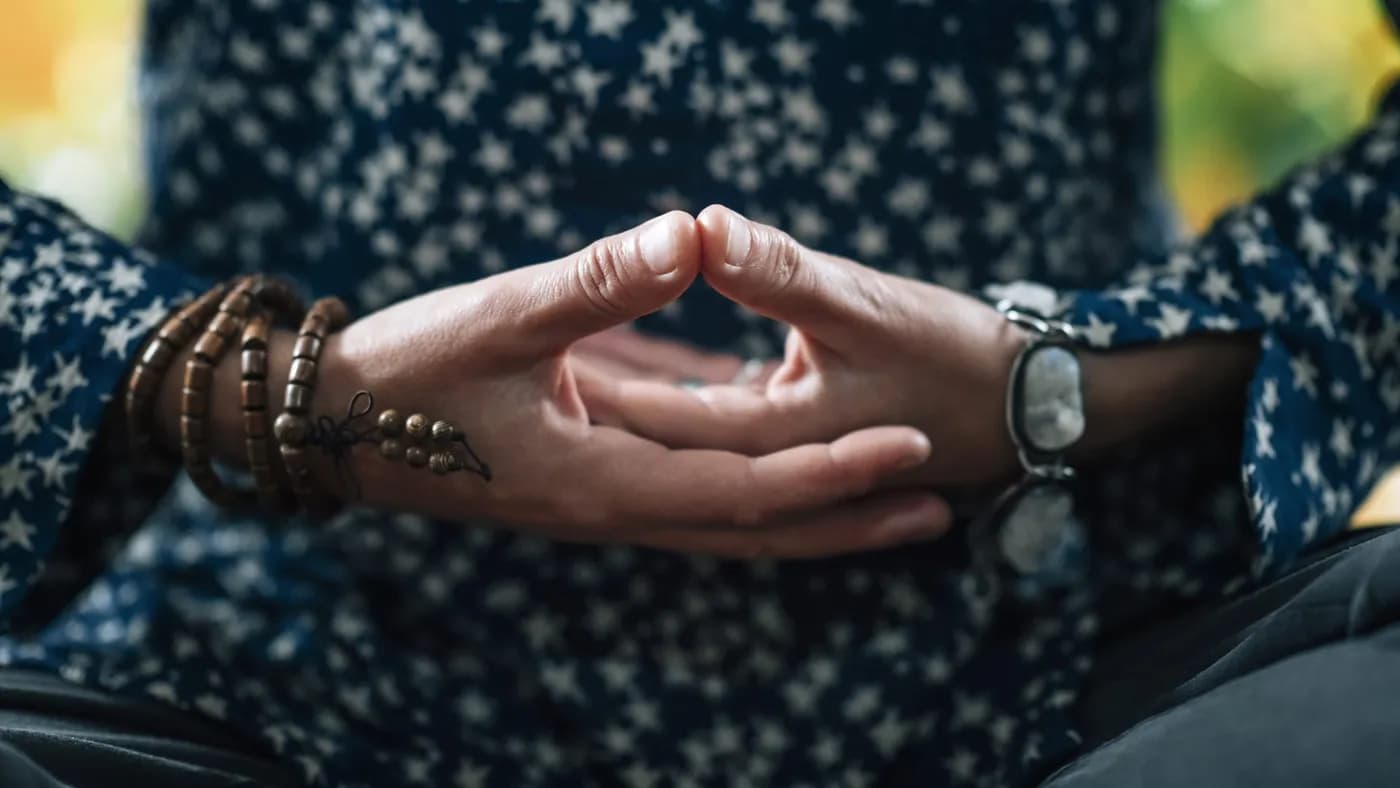
Dhyana Mudra is the universal gesture of deep meditation — both hands resting in the lap with the right hand on the left, palms upward, thumbs lightly touching to form an oval. The most recognisable mudra in the world, it cultivates deep parasympathetic activation, the meditative state of effortless absorption, and the equanimity that is yoga’s most transformative psychological outcome.
What is Dhyana Mudra?
Dhyana Mudra — the Meditation Gesture — derives from Sanskrit: Dhyana meaning meditation, contemplation, or absorbed awareness, and Mudra meaning seal or gesture. Both hands rest in the lap — the right hand placed on top of the left, both palms facing upward — with the tips of both thumbs lightly touching and forming an oval that rests at the level of the navel or slightly below.
Dhyana Mudra is the universal gesture of deep meditation — the most recognisable mudra in the world, appearing in every culture that has developed a meditative tradition. It is the hand position of the seated Buddha, of Hindu sages in Samadhi, and of meditators across all traditions. Unlike the more alert, individualised gestures of Gyan and Chin Mudra, Dhyana Mudra is the gesture of complete surrender into the meditative state — the hands resting together in the lap, attention released from all effort, awareness settling into the still, open, infinite quality of dhyana itself.
At Habuild, Dhyana Mudra is the closing gesture of every complete yoga session — the hands settling into the meditation posture as the practice transitions from pranayama into seated silence, connecting the physical and breath dimensions of yoga with their meditative culmination.
Dhyana Mudra Benefits
Physical Benefits
- Produces the Deepest Available Parasympathetic Activation The completely surrendered, resting-hands position of Dhyana Mudra — combined with the inward attention it cultivates — produces the deepest parasympathetic nervous system activation available through yoga practice. This physiological depth of rest produces measurable reductions in cortisol, heart rate, and blood pressure during extended sitting, and activates the cellular repair and regenerative functions that the sympathetically-dominant waking state consistently suppresses.
- Creates a Closed Prana Circuit Through the Oval The oval formed by the thumbs touching creates a closed energy circuit — the prana circulating within the hands and through the body rather than dissipating outward. This closed circuit is specifically beneficial for the conservation and inward deepening of vital energy that advanced meditation requires.
Mental and Emotional Benefits
- Cultivates the Deepest Quality of Meditative Absorption Dhyana Mudra is specifically designed for the deepest states of meditation — the gesture of surrender that allows the practitioner to release the effort of concentration (dharana) and settle into the effortless absorbed awareness of dhyana itself. The hands resting together in the lap are the physical expression of this release of effort into effortless presence.
- Develops Equanimity, Non-Reactivity, and Psychological Balance The complete stillness and non-grasping quality of Dhyana Mudra — hands resting, nothing held, nothing rejected — cultivates the psychological equanimity and non-reactivity that is meditation’s most transformative outcome. This equanimity develops progressively with daily practice and transfers from formal sitting into the emotional resilience and composed responsiveness of daily life.
How to Do Dhyana Mudra — Step-by-Step Instructions
Key Principles
Two principles govern Dhyana Mudra: complete effortlessness — the hands rest in the lap with no muscular holding, no tension, and no effort whatsoever; and the thumbs touch lightly — not pressing, just the lightest possible contact that creates the energy circuit without any muscular engagement.
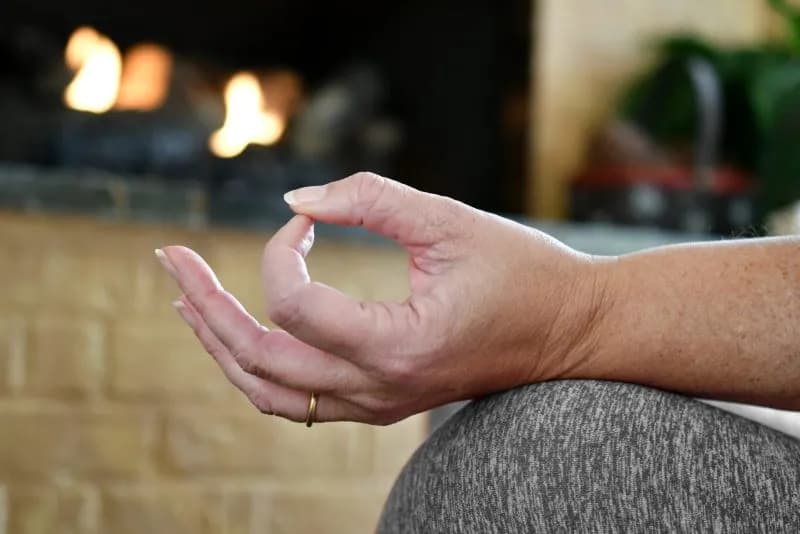
- Step 1: Seated Starting Position Sit in Sukhasana, Padmasana, or Vajrasana — spine naturally erect. Allow the pranayama or physical practice to settle before transitioning to the deep meditative stillness of Dhyana Mudra.
- Step 2: Bring Both Hands to the Lap Bring both hands to the lap — palms facing upward — and allow them to rest completely into the lap with no muscular support required.
- Step 3: Right Hand on Top of Left Place the right hand on top of the left — right palm resting in the bowl of the left palm. Both palms face upward. Allow both hands to settle completely without any holding.
- Step 4: Thumbs Touch Lightly to Form the Oval Bring the tips of both thumbs to touch very lightly — the lightest possible contact — forming a gentle oval shape. The oval rests at the level of the navel or slightly below.
- Step 5: Close the Eyes and Release All Effort Close the eyes. Release every remaining trace of effort — physical, mental, and intentional. Allow the awareness to settle inward into the stillness that the gesture invites.
- Step 6: Hold for the Full Session Duration Hold for the full duration of the meditation session — from five minutes for beginners to the complete session duration for advanced practitioners. There is no time limit; the longer the effortless hold, the deeper the meditative state.
Breathing in Dhyana Mudra
Dhyana Mudra does not prescribe a specific breath pattern — the breath in deep meditation naturally becomes slower, finer, and more subtle as the meditative absorption deepens. Allow the breath to become completely natural and spontaneous — directing no specific attention to it, simply allowing the awareness to observe it from a distance as it refines itself.
Preparatory Practices Before Dhyana Mudra
These practices create the internal conditions that make the deep surrender of Dhyana Mudra accessible.
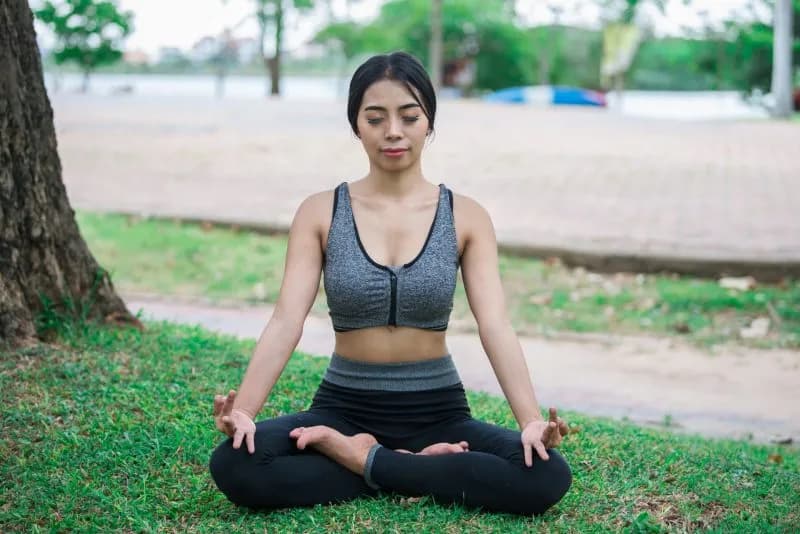
- Complete physical yoga session — The body’s restlessness and physical holding patterns are released through the asana practice before the meditative stillness of Dhyana Mudra is sustainable.
- Pranayama (Nadi Shodhana or Kapalbhati followed by natural breath) — The energetic activation and channel balancing of pranayama prepares the subtle body for deep meditation.
- Gyan or Chin Mudra with concentration (5-10 minutes) — The focused alert quality of the concentration mudras precedes the effortless surrender of Dhyana Mudra.
Variations of Dhyana Mudra
- Variation 1: Standard Dhyana Mudra — Universal Form Right hand on left, both palms up, thumbs lightly touching — the standard form as described in the step-by-step instructions and the most universally recognised meditation gesture across all traditions.
- Variation 2: Cosmic Mudra — Zen Contemplation Form In the Zen tradition, the oval is formed more deliberately — the thumbs held at a consistent height while the hands are slightly raised from the lap in a more deliberate formation. The contemplation of the oval as a symbol of the cosmos is a specific meditative instruction accompanying this variation.
- Variation 3: Dhyana Mudra with Half-Open Eyes — Alert Meditation In Tibetan and Zen meditation traditions, Dhyana Mudra is practised with eyes slightly open — half-lidded, gaze soft and downward at forty-five degrees. This variation prevents sleep during extended meditation and trains the alert-yet-relaxed awareness that advanced practitioners develop as their primary meditative stance.
Common Mistakes to Avoid in Dhyana Mudra
- Allowing the Hands to Fall Apart The most common error in extended Dhyana Mudra holds — as attention deepens inward, physical awareness of the hand position fades and the thumbs drift apart, breaking the closed energy circuit. Maintain a small sustained awareness of the very light thumb contact throughout the session.
- Tensing the Hands or Shoulders to Hold the Formation The hands should rest in the lap with no muscular effort — held up by the lap itself, not by arm or shoulder muscles. Any muscular holding creates tension that enters the nervous system and reduces the depth of the parasympathetic activation.
- Expecting Dramatic Immediate Results Dhyana Mudra’s depth reveals itself gradually through consistent daily practice. The quality of surrender and effortless absorption that the gesture is designed to support is a capacity that develops over weeks and months of daily practice — not in the first session. Consistent daily use is the only pathway to the depths the gesture makes available.
Who Should Practise Dhyana Mudra?
- All Practitioners — The Universal Closing Practice Dhyana Mudra is the natural culmination of every yoga session — appropriate for every practitioner at every level. Even a five-minute Dhyana Mudra at the end of a physical practice provides the transition from external movement to internal stillness that completes the full arc of yoga practice.
- Those Developing a Daily Meditation Practice Dhyana Mudra provides the correct hand position, symbolic orientation, and physical support for meditative posture that all beginning meditators benefit from establishing correctly from their very first session.
- Is Dhyana Mudra Good for Beginners? Yes — Dhyana Mudra has no contraindications and no prerequisites. It is the most universally accessible yogic practice. The only learning is the progressive development of the capacity to release effort and surrender into stillness — which is available to every practitioner from the first session.
Make Dhyana Mudra a Part of Your Daily Practice
Dhyana Mudra is the gesture that unifies all of yoga’s dimensions — physical, breath, and contemplative — into a single complete expression. Its effortless, surrendered quality is both the most accessible and the deepest practice in the entire yoga system: accessible because it requires nothing, deep because what it offers is yoga’s ultimate destination.
Whether you are closing a five-minute morning breathing practice or a ninety-minute complete session, Dhyana Mudra’s invitation is always the same — rest in the still, open, effortless awareness that is the ground of all practice.
The most effective way to learn Dhyana Mudra in context — within a complete pranayama and meditation curriculum that builds toward the effortless absorption the gesture supports — is under live expert guidance with Habuild.
Start your 14 day free yoga journey with Habuild, today!
Related reads: Yoni Mudra: What It Is How to Practice and Its Benefits for Calm · Khechari Mudra: What It Is How to Practice and Its Longevity Benefits
Dhyana Mudra is really a meditation posture cue more than a standalone technique, so its effect on calm and concentration depends almost entirely on how often you sit with it. Ten minutes today won’t train a settled mind the way ten minutes daily, for weeks, will. That’s the kind of rhythm Habuild’s Yoga Everyday program is built to support, with guided daily sessions that make the practice easier to sustain.
Frequently Asked Questions
Related Articles
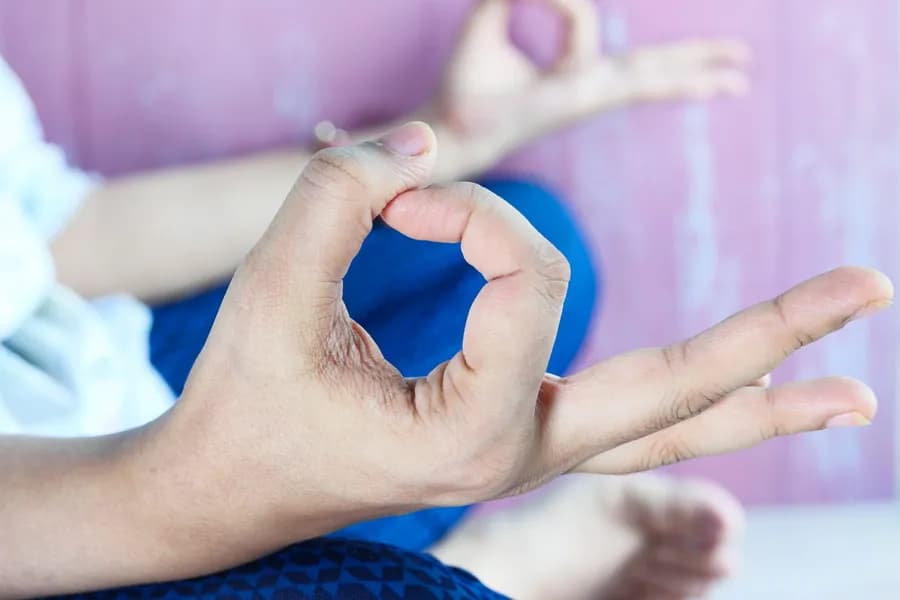
Chin Mudra: How to Practice and Its Benefits for Calm and Clarity
Practice Chin Mudra with Habuild. Follow the consciousness hand gesture steps to calm the mind, improve focus, and deepen your pranayama practice. Start today!
Gyan Mudra: How to Do It and Its Benefits for Focus and Memory
Practice Gyan Mudra with Habuild. Follow the wisdom hand gesture steps to improve focus, reduce anxiety, and enhance your meditation practice. Start today!
Khechari Mudra: What It Is How to Practice and Its Longevity Benefits
Practice Khechari Mudra with Habuild. Follow the tongue lock steps to stimulate energy flow, reduce hunger, and deepen your meditation practice. Start today!