
Chin Mudra: How to Practice and Its Benefits for Calm and Clarity
Practice Chin Mudra with Habuild. Follow the consciousness hand gesture steps to calm the mind, improve focus, and deepen your pranayama practice. Start today!
Key Takeaways
- Uses the identical finger placement as Gyan Mudra but with palms facing upward instead.
- Palms-up orientation is said to emphasise receptivity, opposite Gyan Mudra’s grounding.
- The upward palm position physiologically opens the anterior chest for fuller inhalation.
- Specifically taught as the standard hand position for all pranayama practice at Habuild.
- Shifts practitioners from closed, defensive mental states toward open receptive calm.
- Symbolises the union of individual and universal consciousness, same as Gyan Mudra’s aim.
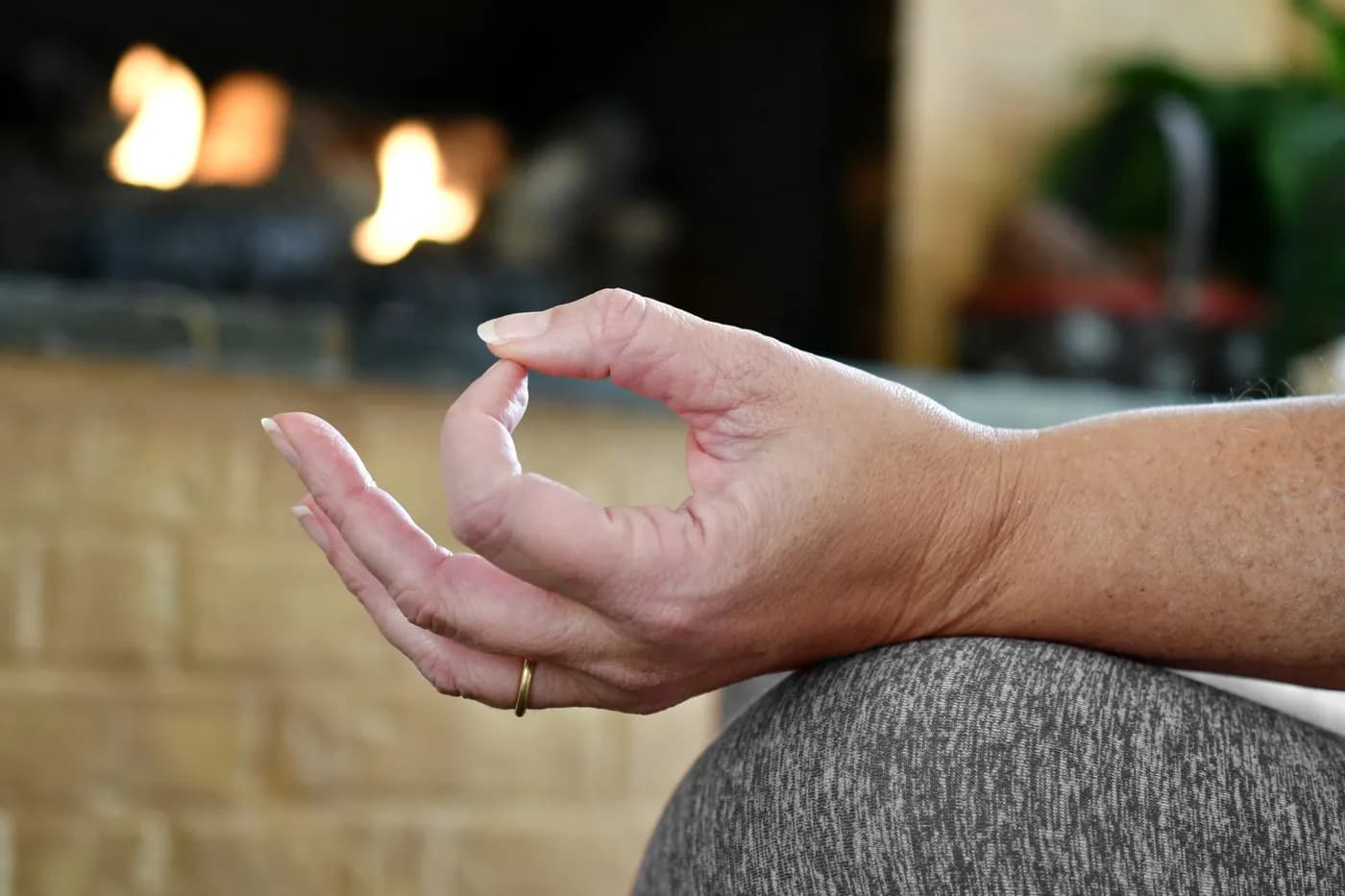
Chin Mudra is a yogic hand gesture where the tip of the index finger touches the tip of the thumb with palms facing upward, while the remaining three fingers remain extended. The classic pranayama and meditation hand position, it connects individual awareness with universal consciousness, calms anxiety, enhances neural function, and opens the practitioner to receptive, expansive awareness.
What is Chin Mudra?
Chin Mudra — the Consciousness Gesture — derives from Sanskrit: Chin or Chit (consciousness, awareness) and Mudra (seal or gesture). The index finger (representing individual or limited consciousness) touches the tip of the thumb (representing universal or supreme consciousness) — symbolising the yogic goal of uniting individual and universal awareness.
Chin Mudra uses the identical finger placement as Gyan Mudra — index fingertip to thumb tip, remaining three fingers extended. The distinction is in the hand orientation: Chin Mudra rests with palms facing upward, emphasising receptivity and openness; Gyan Mudra rests with palms facing downward, emphasising grounding. Both are essential gesture forms used throughout yoga’s complete pranayama and meditation curriculum.
At Habuild, Chin Mudra is the standard hand position taught for all pranayama practice — its palms-up orientation specifically supporting the expansive, receptive quality of the inhalation that all pranayama practice cultivates.
Benefits
Physical Benefits
- Enhances Neural Function and Cognitive Clarity The air-fire connection of Chin Mudra is associated with enhanced neural activity, improved synaptic function, and the cognitive clarity that optimal air-fire balance produces. The receptive, open palm orientation specifically supports the expansive quality of clear thinking.
- Supports Pranayama Through Receptive Chest Opening The palms-up orientation has a direct physiological effect of opening the anterior chest and supporting full costal inhalation — making it the ideal hand position for all pranayama practice where the quality of the inhalation is the primary therapeutic focus.
Mental Benefits
- Connects Individual Awareness with Universal Consciousness The symbolic and experiential connection of the individual finger with the thumb in Chin Mudra creates the gesture of yogic union — the practical, embodied expression of yoga’s central goal of dissolving the separation between individual and universal awareness.
- Calms Anxiety and Cultivates Open Receptivity The palms-up, open orientation of Chin Mudra reduces defensive, contracted mental states. Practitioners consistently report a shift from anxious, closed mental states to open, receptive, calm awareness within minutes of establishing the gesture.
- Deepens Meditation Through Consciousness-Gesture Alignment Holding the individual-touches-universal formation during meditation supports the meditative intention with physical gesture — the body’s position amplifying the mind’s intention toward the dissolution of separate awareness.
How to Practise — Step-by-Step Instructions
Key Principles
Key Principles Three principles: tip-to-tip contact — index fingertip meets thumb tip with a light, effortless touch; palms face upward — the single distinguishing feature from Gyan Mudra; and the remaining fingers extend gently — not rigidly stiff or curled.
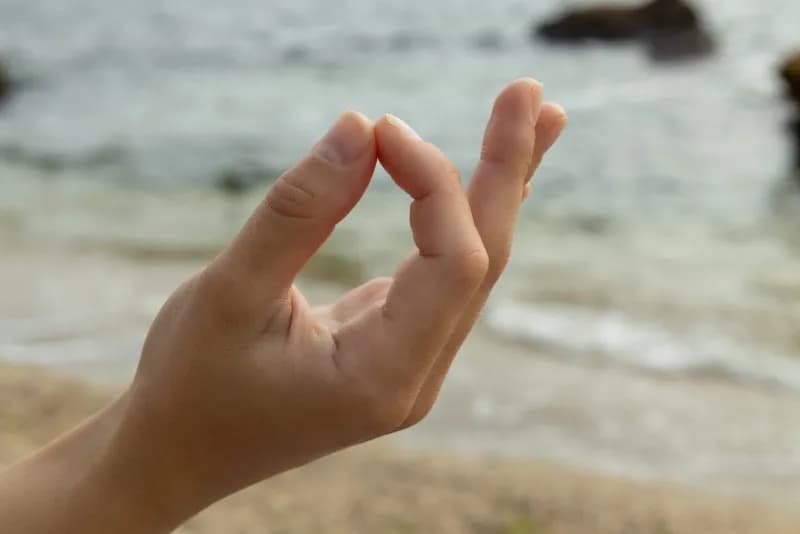
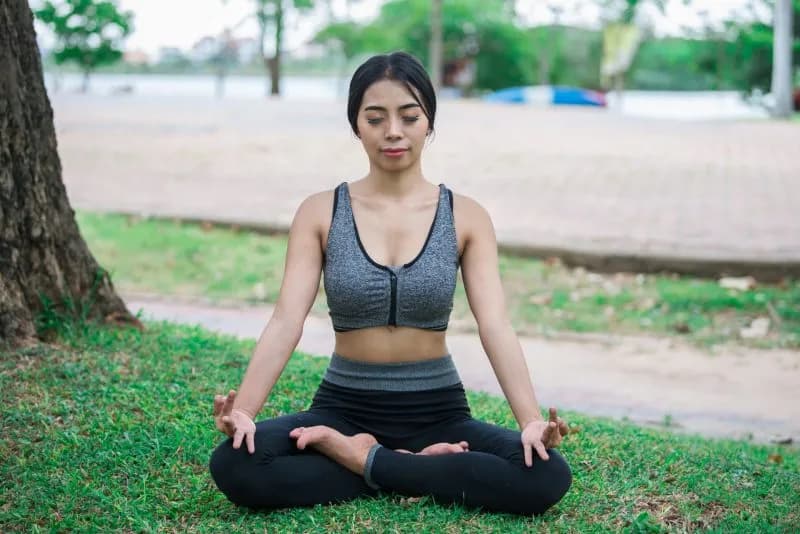
Step by Step Step 1: Seated Starting Position Sit in Sukhasana, Padmasana, or Vajrasana — spine erect. Rest both hands on the knees with palms facing upward — this palm orientation is the defining feature that distinguishes Chin Mudra from Gyan Mudra.
Step 2: Index Tip to Thumb Tip Bring the tip of the index finger of each hand to touch the tip of the thumb — the same O-circle as Gyan Mudra but with palms facing upward.
Step 3: Extend the Remaining Fingers Allow the remaining three fingers to extend gently and naturally — neither stiffly straight nor curled inward.
Step 4: Rest Completely on the Knees Allow the complete weight of the hands to rest on the knees with palms up — no muscular holding required. The gesture is completely effortless.
Step 5: Begin the Pranayama or Meditation Practice Close the eyes softly and begin the pranayama or meditation session. Chin Mudra accompanies whatever breath practice follows — supporting and deepening rather than directing it.
Step 6: Maintain Throughout the Session Maintain Chin Mudra throughout the complete pranayama or meditation session — its receptive, open quality supporting the expanding awareness of the complete practice.
Breathing
Chin Mudra is specifically paired with pranayama practice — particularly Nadi Shodhana and Kapalbhati — as the standard hand position that supports the expansive, receptive quality of pranayama inhalation. The palms-up orientation directly supports full costal and diaphragmatic breathing.
Preparatory Practices
These practices create the ideal conditions before the mudra session.
- Physical yoga session — Releasing body tension before the pranayama session that Chin Mudra will anchor.
- Conscious spinal lengthening in seated position — Establishing the tall, erect posture that allows the Chin Mudra’s receptive quality to be fully expressed.
- Three natural settling breaths — Allowing the breath to slow and deepen before forming the mudra and beginning formal pranayama.
Variations
- Variation 1: Chin Mudra in Pranayama — Standard Daily Form Palms up, index to thumb, maintained throughout every pranayama session — Kapalbhati, Nadi Shodhana, Bhramari. The universal pranayama hand position.
- Variation 2: Chin Mudra in Deep Meditation Sustained Chin Mudra for twenty to forty-five minutes of seated meditation — the receptive, open quality of palms-up specifically supporting the effortless, surrendered awareness of deep meditation.
- Variation 3: Chin Mudra with Bhramari — Expanded Resonance Chin Mudra maintained during Bhramari (Humming Bee Breath) — the open, receptive gesture amplifying the parasympathetic effect of the humming exhalation and expanding the quality of receptive awareness.
Common Mistakes to Avoid
- Palms Facing Down Instead of Up Using palms-down orientation makes it Gyan Mudra — the grounding form. Both are valid; the distinction matters when a specific session calls for the receptive, open quality of Chin Mudra specifically. Develop the awareness to choose consciously.
- Gripping the Contact Applying muscular effort to hold the index-thumb circle creates the same sympathetic tension as in Gyan Mudra. The touch is the lightest possible contact — effortless and barely perceptible.
- Using Chin Mudra When Grounding Is Needed When the session requires grounding rather than receptivity — particularly for practitioners with high Vata and tendency toward spaciness — Gyan Mudra (palms down) is more appropriate than Chin Mudra. Understanding which quality the session requires is mature mudra awareness.
Who Should Practise?
- All Pranayama Practitioners Chin Mudra is the universal pranayama hand position — appropriate for every practitioner at every level, and the hand position that should become as natural as the seated posture itself in all formal breath practice.
- Those Seeking Meditative Openness and Consciousness Expansion The palms-up, open orientation is specifically beneficial for practitioners who find meditation contracted or effortful — the physical openness of the gesture supporting the mental openness and receptivity that deep meditation requires.
- Is Chin Mudra Good for Beginners? Yes — Chin Mudra is often taught in the first yoga class alongside Gyan Mudra. Its physical formation is identical to Gyan Mudra with the single distinction of palm orientation — making it immediately accessible to all beginners.
Make Chin Mudra a Part of Your Daily Practice
Chin Mudra is the yoga tradition’s most receptive and expansive hand gesture — its palms-up, consciousness-connecting formation opening the practitioner to the universal awareness that all meditation and pranayama practices cultivate.
Whether you are using Chin Mudra as the standard pranayama hand position, the receptive meditation gesture, or the conscious cultivation of the individual-universal connection that yoga’s philosophy describes, daily use deepens both the technical practice and the experiential understanding.
The most effective way to learn Chin Mudra in its complete pranayama and meditation curriculum context — and to understand the subtle difference from Gyan Mudra — is under live expert guidance with Habuild.
Start your 14 day free yoga journey with Habuild, today!
Related reads: Yoni Mudra: What It Is How to Practice and Its Benefits for Calm · Brahma Mudra: How to Practice and Its Benefits for Voice and Neck
Chin Mudra works quietly in the background of a pranayama practice, and its calming effect on the mind tends to show up only after it becomes a regular part of your sitting — not from one isolated session. Think of it less as a quick fix and more as a small anchor you return to daily. Habuild’s Yoga Everyday program can help you build that daily rhythm around breathwork and mudra together.
Frequently Asked Questions
Related Articles
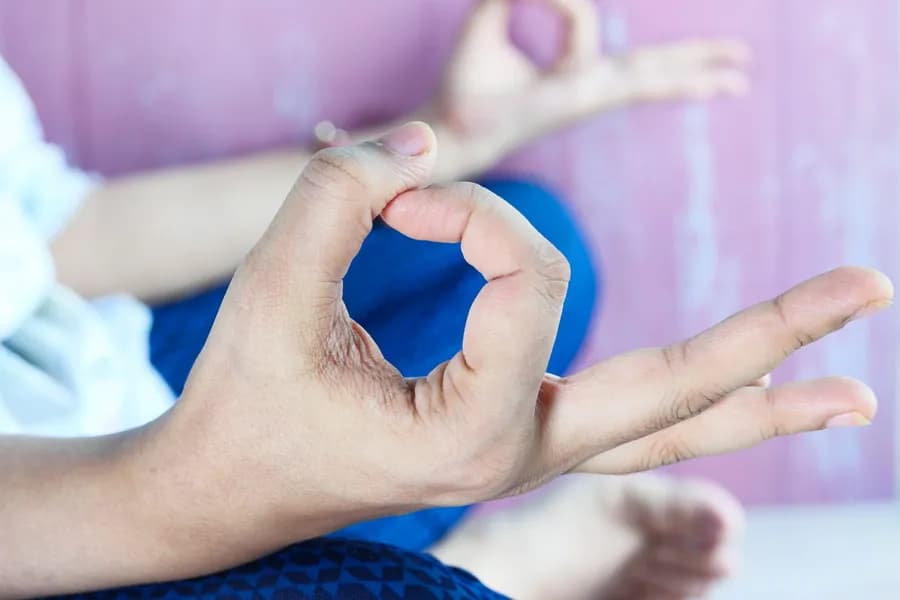
Gyan Mudra: How to Do It and Its Benefits for Focus and Memory
Practice Gyan Mudra with Habuild. Follow the wisdom hand gesture steps to improve focus, reduce anxiety, and enhance your meditation practice. Start today!

Dhyana Mudra: How to Practice and Its Benefits for Meditation
Practice Dhyana Mudra with Habuild. Follow the meditation hand gesture steps to calm the mind, deepen concentration, and support your daily practice. Start!
Prana Mudra: How to Practice and Its Life Energy Benefits
Practice Prana Mudra with Habuild. Follow the life force hand gesture steps to boost energy, strengthen immunity, and improve your eye health. Start today!