
Kandharasana (Shoulder Pose): Steps, Benefits and Precautions
Closely related to Bridge Pose, this variation grips the ankles for a deeper shoulder depression and more complete anterior chest opening than the free-arm version. See the steps, benefits, and precautions.
Key Takeaways
- Distinguished from standard Bridge Pose by gripping the ankles, deepening shoulder depression.
- Documented in Bihar School texts as a core therapeutic pose for thyroid and reproductive health.
- Combines Bridge Pose’s glute activation with deeper anterior chest and cervical opening.
- The floor support of the supine position makes it more accessible than standing backbends.
- Directly stimulates the thyroid and parathyroid through combined shoulder and neck loading.
- Strengthens the exact posterior chain weakness that drives most mechanical lower back pain.
What is Kandharasana?
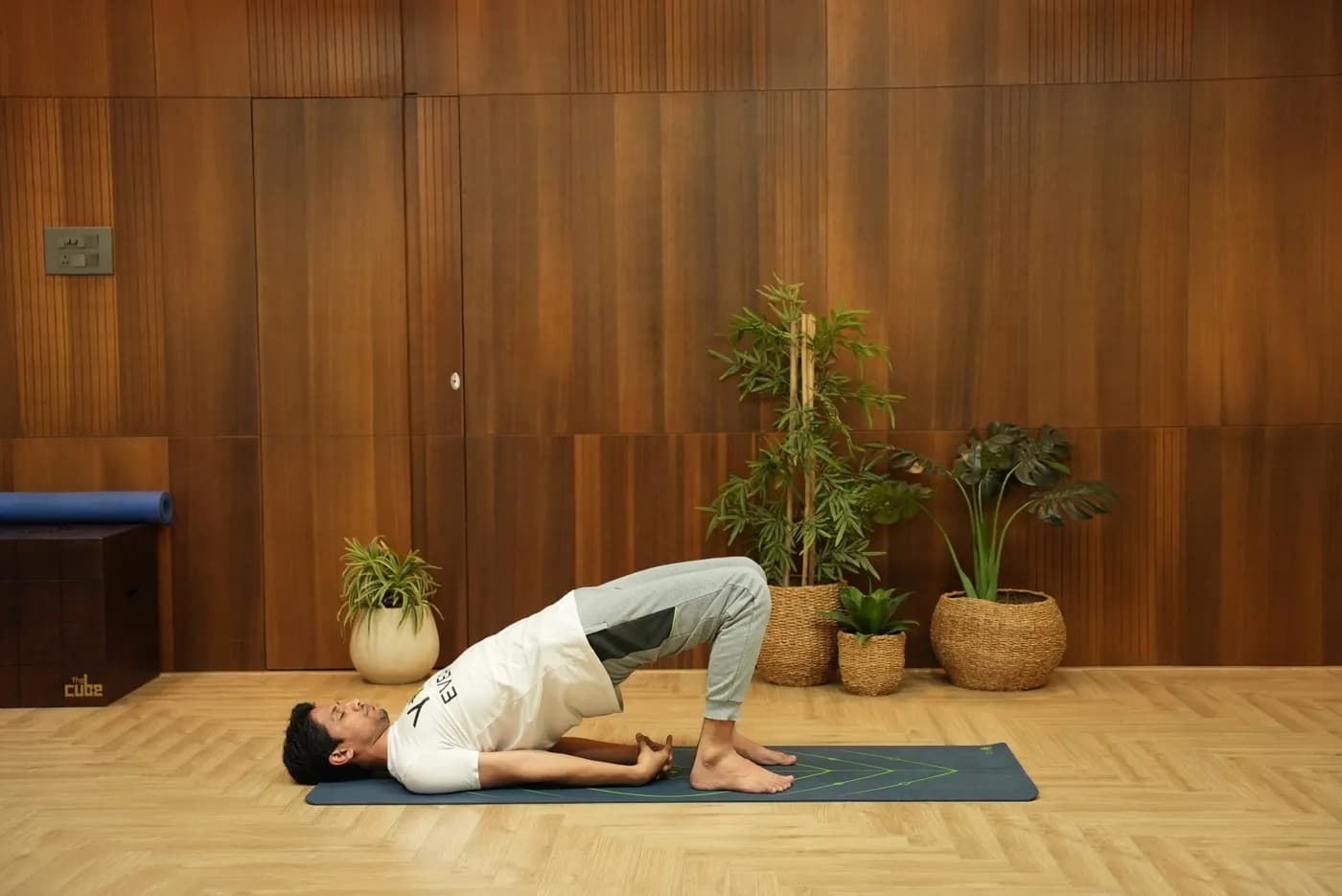
Kandharasana — pronounced kan-dah-RAH-sah-nah — derives from the Sanskrit kandha (shoulder or neck) and asana (pose). The English name is Shoulder Pose, reflecting the pose’s primary weight-bearing point on the shoulders and upper back in the supine bridge position. Kandharasana is closely related to Setu Bandha Sarvangasana (Bridge Pose) but is typically distinguished by the hand grip on the ankles — a modification that allows a deeper shoulder depression and more complete anterior chest opening than the free-arm bridge version.
Kandharasana — the Shoulder Pose, distinct from Setu Bandhasana though sharing a similar bridge position — is one of the most therapeutically prescribed supine backbends in the classical yoga tradition, specifically recommended for thyroid regulation, reproductive health and lower back strengthening. This complete guide covers kandharasana benefits, the precise technique that distinguishes it from standard Bridge Pose, and every modification for beginners through advanced practitioners.
Kandharasana belongs to the supine backbend category — one of the most accessible available categories for beginners because the floor supports much of the body weight, reducing the strength and flexibility requirements that standing backbends demand. The pose combines the hip extension and glute activation of Bridge Pose with the shoulder and chest opening produced by the arm position, and the anterior cervical stretch created by the neck’s gentle extension against the floor. This combination of effects makes kandharasana benefits particularly comprehensive for both structural health and energetic practice.
In the traditional yoga system, Kandharasana is valued for its direct stimulation of the thyroid and parathyroid glands through the combined shoulder and cervical region loading, its reproductive organ support through pelvic floor and hip extension, and its posterior chain strengthening. It appears in Bihar School of Yoga texts as one of the core therapeutic asanas for reproductive health, thyroid function and lower back strength — making its kandharasana benefits span a wider therapeutic range than its accessible appearance suggests.
Kandharasana Benefits
- Physical Benefit 1: Strengthens the Posterior Chain — Glutes, Hamstrings and Lower Back The hip extension of Kandharasana activates the gluteus maximus, hamstrings and erector spinae in the functional extension pattern that produces the posterior chain strength most relevant for lower back health. Kandharasana benefits for lower back pain are among the most clinically significant of any accessible supine yoga pose — the posterior chain strengthening directly addresses the weakness that drives most mechanical lower back pain.
- Physical Benefit 2: Opens the Anterior Chest and Shoulder Complex The ankle grip in Kandharasana draws the shoulders together and down, producing one of the deepest available anterior chest and shoulder capsule stretches in a supported position. The Shoulder Pose name directly references this shoulder depression benefit — the kandharasana benefits for forward-rounded posture correction and anterior shoulder restriction include the progressive opening that consistent practice produces over weeks.
- Physical Benefit 3: Stimulates the Thyroid and Reproductive Organs The combined loading on the cervical and shoulder region in Kandharasana is attributed in classical yoga to direct thyroid and parathyroid gland stimulation through increased localised blood flow. Simultaneously, the pelvic elevation and hip extension position stimulates blood flow to the reproductive and pelvic organs — making the kandharasana benefits for hormonal and reproductive health among the most distinctively described in traditional texts.
- Mental and Emotional Benefit 4: Cultivates Courage and Heart Opening Backbends in yoga are consistently associated with the anahata (heart chakra) — the energetic centre that emotional vulnerability and courage reflect. Kandharasana’s chest-opening quality cultivates the psychological openness that forward-rounded protective posture physically expresses its opposite of. Consistent Shoulder Pose practice develops the emotional expansiveness and courage that its physical heart-opening posture symbolises.
- Mental and Emotional Benefit 5: Energising and Mood-Elevating Effects The anterior chain opening and increased thoracic blood flow of Kandharasana produce the energising, mood-elevating effects consistently attributed to backbend practice — the physiological correlates of confident, expansive posture that research documents include elevated mood, reduced cortisol and increased alertness. The kandharasana benefits for energy and mood make it a particularly effective morning practice pose.
Kandharasana activates the gluteus maximus, hamstrings and erector spinae through sustained hip extension — producing the posterior chain strength whose deficiency underlies the majority of lower back pain presentations in sedentary adults.
The shoulder-grounded bridge position of Kandharasana opens the anterior chest through a supported thoracic extension that produces greater anterior opening than conventional Bridge Pose — directly counteracting thoracic kyphosis and forward shoulder roll.
The chin-tuck position in Kandharasana produces the Jalandhara-like compression and release of the thyroid gland that classical yoga prescribes for hormonal regulation — making it one of the few poses prescribed specifically for thyroid and reproductive health.
Supine backbends with the chest elevated produce the measurable sympathetic activation and heart-region expansion that yoga associates with courage-building — research confirms backbend practice produces the highest post-session confidence ratings of any yoga pose category.
The anterior chest opening and adrenal stimulation of Kandharasana produce a controlled energising effect — the physiological arousal of supported backbend practice producing the mood elevation that practitioners describe as one of the most consistently felt pose-specific benefits.
How to Do Kandharasana — Step-by-Step Instructions
Key Principles
Kandharasana should produce comfortable posterior chain activation and anterior chest opening — not lower back compression. If lower back pain occurs, reduce the hip lift height or revert to the free-arm Bridge Pose until posterior chain strength develops. The neck should remain in a natural, gentle extension — not forced or strained.
Step 1: Starting Position — Supine with Knees Bent
Lie on the back with knees bent, feet flat on the floor hip-width apart and approximately a forearm’s length from the buttocks. Arms rest alongside the body, palms facing down. Take 3 breaths here, feeling the natural weight of the back on the floor and the grounding of the feet.
Step 2: Reach for the Ankles
Keeping the back on the floor, reach the hands back to hold the ankles — wrapping the fingers around the outer ankle bones. This ankle grip is what distinguishes Kandharasana from standard Bridge Pose and produces the deeper shoulder depression. If ankles are not accessible, keep the arms alongside the body (standard Bridge) and approach ankle-hold as a progressive goal.
Step 3: Ground the Shoulders and Upper Arms
Before lifting, press the shoulders and upper arms firmly into the floor — feeling the shoulder blades draw toward the spine. This pre-activation of the shoulder girdle depression is the foundational action that gives Kandharasana its Shoulder Pose quality and protects the cervical spine during the lift.
Step 4: Inhale and Lift the Hips
On an inhalation, press through the feet and lift the hips toward the ceiling — engaging the gluteus maximus and hamstrings as the primary movers. The hips rise until the thighs are approximately parallel to the floor or slightly above. The ankle grip assists by drawing the chest open and the shoulders more deeply into the floor.
Step 5: Final Position and Hold
In the full Kandharasana, the hips are elevated, the chest is open, the shoulders are pressed firmly into the floor, the ankle grip maintains the shoulder depression, and the gaze is at the ceiling. Hold for 5-10 slow breaths with steady posterior chain engagement throughout. Feel the chest broadening with each inhalation.
Step 6: How to Come Out of Kandharasana
On an exhalation, slowly lower the hips one vertebra at a time — from the thoracic down to the sacrum — until the back is fully on the floor. Release the ankle grip and allow the arms to rest alongside the body. Rest in the supine position for 5 breaths before moving to the next pose or repeating.
Breathing in Kandharasana
Inhale to lift into Kandharasana — the breath expanding the chest as the pose creates the space for it. Breathe slowly and fully throughout the hold, feeling the ribs and sternum lift and broaden with each inhalation. Exhale to lower. The breath cycle and the hip movement are perfectly synchronised.
Preparatory Poses Before Kandharasana
- Bitilasana-Marjaryasana (Cat-Cow) — warms the spinal extensors and establishes the breath-movement coordination before the more demanding Bridge lift.
- Supta Baddha Konasana (Reclined Bound Angle) — opens the hips and inner thighs before the hip extension demand.
- Shalabhasana (Locust Pose) — activates the gluteus maximus and posterior chain in preparation for the hip extension of Kandharasana.
- Simple Bridge (free arms) — the preparatory version that develops the posterior chain strength before adding the ankle grip.
Variations of Kandharasana
Variation 1: Free-Arm Bridge (Beginner)
Standard Setu Bandha Sarvangasana with arms alongside the body — the preparatory version that develops posterior chain strength and spinal extension before the ankle-grip kandharasana depth is accessible. Difficulty: Beginner
Variation 2: Kandharasana with Interlaced Fingers (Intermediate)
Instead of ankle hold, interlace the fingers beneath the pelvis with arms extended along the floor — an intermediate shoulder-depression variation that creates more spinal extension than free-arm Bridge without requiring ankle flexibility. Difficulty: Intermediate
Variation 3: One-Leg Extended Kandharasana (Advanced)
From the full Kandharasana position, extend one leg toward the ceiling while maintaining the opposite foot on the floor — adding single-leg demand that maximises the posterior chain and core challenge. Difficulty: Advanced
Common Mistakes to Avoid in Kandharasana
- Mistake 1: Knee Falling Outward or Inward The knees should remain hip-width throughout Kandharasana — falling outward reduces glute activation and falling inward stresses the medial knee. Maintain the knee tracking over the second toe throughout the hold.
- Mistake 2: Neck Strain from Forced Cervical Extension The neck should remain in a natural, comfortable extension — not forced. If neck discomfort occurs, place a folded blanket under the upper back to reduce cervical extension demand.
- Mistake 3: Using the Lower Back Instead of the Glutes to Maintain Height If the glutes are insufficiently engaged, the lower back compensates by hyperextending — creating compression rather than the therapeutic extension Kandharasana intends. Maintain active glute contraction throughout the hold to ensure the posterior chain, not the lumbar spine, is the primary working structure.
- Mistake 4: Gripping Toes Instead of Ankles Gripping the toes rather than the ankles creates tibial rotation stress and reduces the shoulder-depression benefit of the grip. Hold the outer ankle firmly for the authentic Kandharasana shoulder opening.
Who Should Practise Kandharasana?
- Those Managing Lower Back Pain Kandharasana is among the most specifically recommended poses for lower back pain management — the posterior chain strengthening and anterior hip flexor lengthening directly address the structural imbalances that drive most mechanical back pain. Always begin with the free-arm version if back pain is present.
- Women Seeking Reproductive and Hormonal Health Benefits The pelvic elevation and organ stimulation of Kandharasana are specifically recommended in yoga therapy for reproductive health, menstrual regulation and the pelvic floor strengthening that women’s health specifically requires.
- Is Kandharasana Good for Beginners? Yes — the free-arm Bridge variation makes Kandharasana accessible from day one. The ankle-grip progression follows naturally as posterior chain strength and shoulder mobility develop. Habuild’s live instruction ensures correct knee and hip alignment from the first session.
- Working Professionals Seeking Postural Restoration The anterior chest opening and posterior chain activation of Kandharasana directly counteract the forward-rounded, anterior-dominant posture of desk work — making it among the most therapeutically relevant available poses for working professionals managing the physical consequences of sedentary work.
Kandharasana’s bridge-like lift asks the spine to extend a little further each time, and that flexibility tends to build cumulatively through regular practice rather than in a single backbend. Returning to it as part of a daily routine is what keeps the spine supple rather than letting stiffness creep back in. Habuild’s Yoga Everyday program weaves backbends like this into structured, guided daily sessions.
Frequently Asked Questions
Related Articles
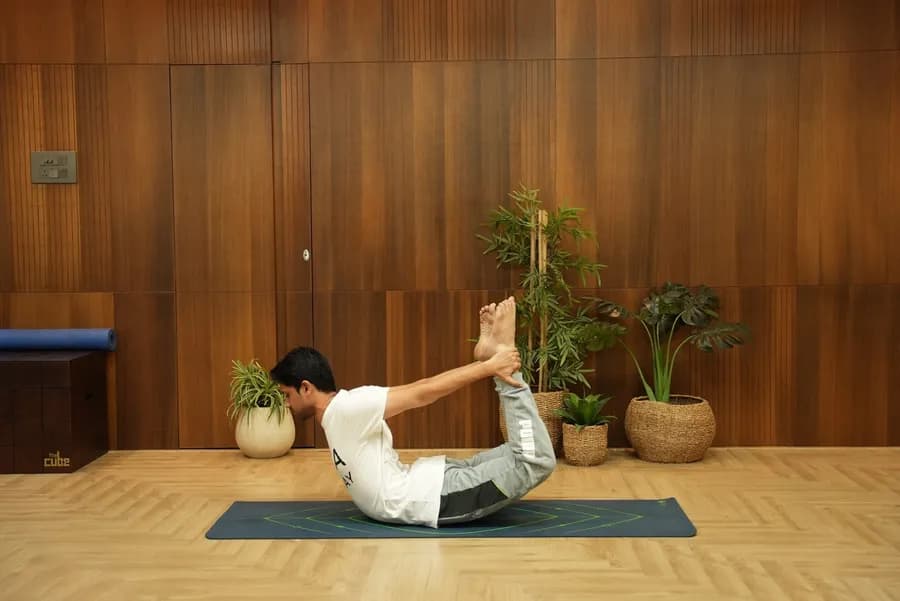
Dhanurasana (Bow Pose): Steps Back Flexibility and Digestive Benefits
Practice Dhanurasana pose with Habuild. Follow the bow pose steps to strengthen your spine, open your chest, and improve full-body flexibility. Start today!

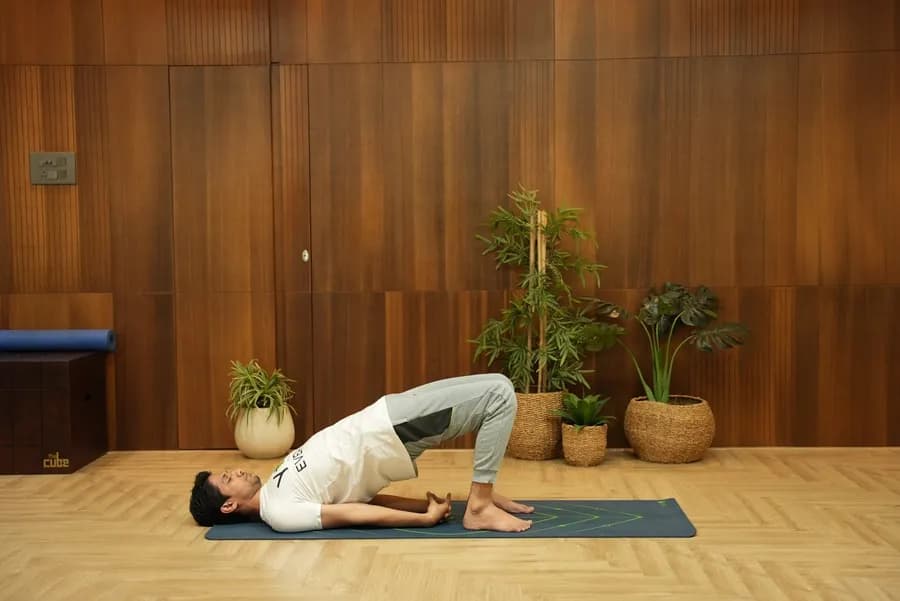
Setu Bandha Sarvangasana: Steps Benefits and Modifications
Practice Setu Bandha Sarvangasana with Habuild. Follow the bridge pose steps to strengthen your back, support thyroid health, and improve sleep. Start today!
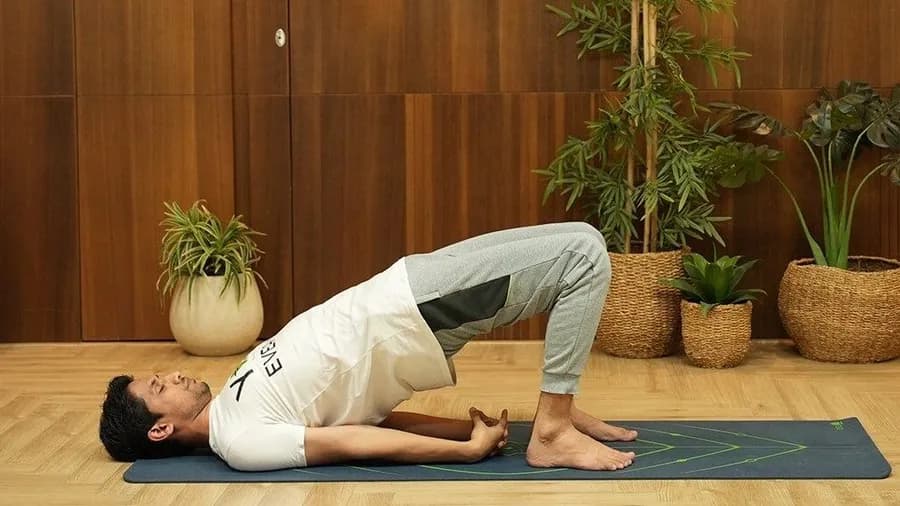
Setu Bandhasana (Bridge Pose): Steps Benefits and Modifications
Try setu bandhasana with Habuild. Master the setu bandhasana bridge pose to strengthen your spine, open the chest, and reduce stress. Start your session now!