
Marjariasana Benefits: Steps, Variations & Precautions
Discover marjariasana benefits for spine, stress, and digestion. Learn step-by-step instructions, variations, and who should practise it. Start for ₹1.
Key Takeaways
- On the exhale, the spine rounds toward the ceiling while the chin drops to the chest.
- Almost always paired with Bitilasana (Cow Pose) to form the classic Cat-Cow spinal flow.
- Classified as a dynamic warm-up rather than a static hold, accessible at every level.
- Gently flexes and extends every vertebra from the tailbone to the neck, lubricating the discs.
- Each spinal flexion compresses and decompresses the abdominal cavity like a rhythmic massage.
- Releases chronic tension held at the base of the skull and across the upper trapezius.
What is Marjariasana?
Marjariasana comes from the Sanskrit word Marjari, meaning “cat,” and asana, meaning “posture.” In English it is commonly called Cat Pose or Cat Stretch, pronounced mar-jar-ee-AH-sah-nah. The pose captures the natural, fluid spinal stretch that a cat performs when it wakes up — arching the back skyward and then releasing it downward in a smooth, rhythmic motion.
The marjariasana benefits extend well beyond spinal flexibility, touching breath and focus too.
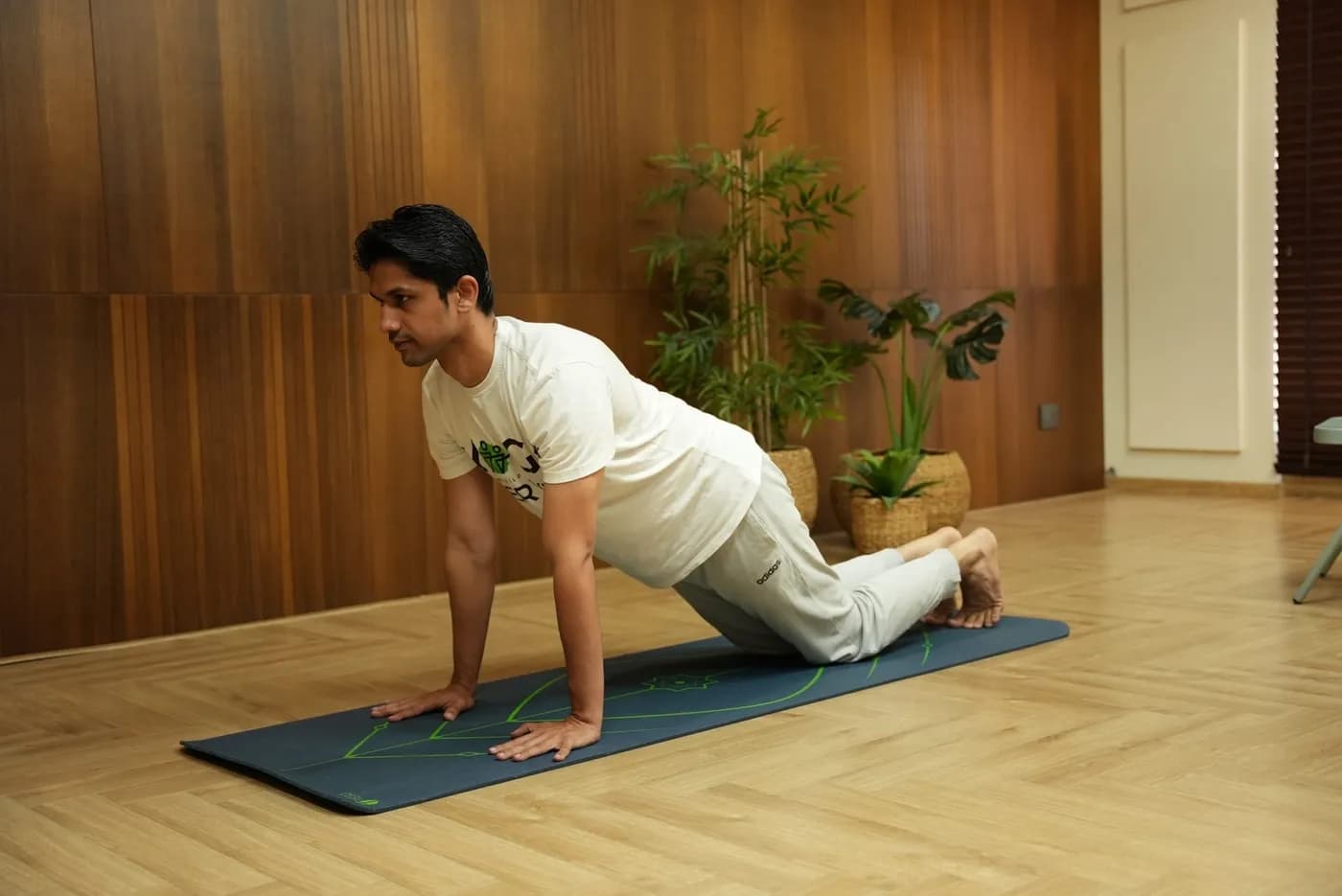
Visually, the practitioner begins in a tabletop position on all fours, with the wrists directly beneath the shoulders and the knees beneath the hips. On an exhale, the spine rounds toward the ceiling, the chin drops to the chest, and the tailbone tucks under. It is almost always paired with Bitilasana (Cow Pose) to form the classic Cat-Cow spinal flow, one of the foundational movement sequences in Hatha yoga.
Traditionally, Marjariasana is valued not just for its physical effects but for its symbolic resonance — the cat’s spine is revered in yogic tradition as the archetype of supple, effortless strength. Within the broader yoga system, this asana is classified as a dynamic warm-up and therapeutic pose rather than a static hold, making it uniquely accessible to practitioners of every level, from absolute beginners to advanced students.
Here’s a closer look at the marjariasana benefits, split into physical and mental effects.
Marjariasana Benefits
The physical side of marjariasana benefits shows up fastest, often within the first few sessions.
Physical Benefits
- Benefit 1: Strengthens and Mobilises the Spine Marjariasana yoga gently flexes and extends every vertebra from the tailbone to the neck, lubricating the intervertebral discs and maintaining healthy spinal curvature. Over time, regular practice builds the small stabilising muscles along the spine that protect against injury and poor posture. If you spend long hours at a desk, this is one of the most direct ways to counteract the stiffness that accumulates through the day.
- Benefit 2: Improves Flexibility in the Hips, Shoulders, and Neck The coordinated movement of Cat Pose draws gentle traction through the hip flexors, opens the shoulder girdle, and releases chronic tension held at the base of the skull and across the upper trapezius. Practising Marjariasana daily as part of a morning routine gradually increases the usable range of motion across all three areas without any aggressive stretching. This is particularly helpful for people who experience tightness after prolonged sitting or driving.
- Benefit 3: Stimulates Digestion and Massages Abdominal Organs Each spinal flexion in Marjariasana gently compresses and then decompresses the abdominal cavity, acting like a rhythmic massage for the intestines, liver, and kidneys. This internal stimulation supports digestive motility and may gradually ease mild bloating, sluggishness after meals, and irregular bowel patterns when practised consistently. If you are looking for a natural complement to a yoga routine designed to support digestion, Cat Pose is an excellent starting point.
Mental and Emotional Benefits
- Benefit 4: Calms the Nervous System and Helps Manage Stress The slow, breath-linked movement of Marjariasana activates the parasympathetic nervous system — the body’s rest-and-recover mode. Coordinating each spinal wave with a deliberate inhale or exhale slows the heart rate, quiets mental chatter, and brings the practitioner into a present-moment focus within just a few repetitions. For anyone navigating a high-pressure lifestyle, this pose supports the management of stress and delivers a measurable sense of calm in under two minutes.
- Benefit 5: Improves Body Awareness and Reduces Tension-Related Fatigue Moving mindfully through marjariasana steps trains the practitioner to notice where tension is being held in the body — the jaw, the upper back, the hips — and consciously release it. This heightened proprioception carries over into everyday movement, reducing the habitual bracing and holding patterns that cause chronic fatigue. Many members report feeling noticeably lighter and more energised after even a short Cat Pose practice first thing in the morning.
The mental marjariasana benefits are just as significant, easing tension and calming the mind. Once you understand the marjariasana benefits, the next step is learning safe alignment.
How to Do Marjariasana — Step-by-Step Instructions
Key Principles
Marjariasana is a movement-based pose, not a static hold. Every repetition should be breath-led: the exhale drives the arch, the inhale drives the release. Move slowly enough that you can feel each segment of the spine participating. Keep the weight evenly distributed across both palms and both knees throughout. Never force the range — let gravity and breath do the work.
Step 1: Starting Position
Come onto your hands and knees in a tabletop position. Place your wrists directly below your shoulders and your knees directly below your hips, hip-width apart. Spread your fingers wide and press all four corners of each palm firmly into the mat. Let the spine rest in a neutral position — neither arched nor rounded — with the crown of the head and the tailbone at roughly the same height. Take one full breath here to settle.
Step 2: Engage the Core
On your next inhale, draw the lower belly gently upward — not a forceful suck-in, but a soft lift. This mild core engagement protects the lumbar spine during the movement and ensures the stretch travels evenly through the entire vertebral column rather than collapsing into the lower back. Keep the shoulders rolling back and away from the ears before you begin the spinal movement.
Step 3: Exhale and Round the Spine (Cat)
As you exhale, press the floor away with your palms and round the entire spine toward the ceiling — starting at the tailbone, which tucks under, moving through the mid-back, and finishing at the neck, where the chin drops toward the chest. Imagine a thread pulling the centre of your back toward the sky. Hold for one to two seconds at the peak of the arch so you can fully feel the stretch across the thoracic spine and the release through the lumbar region.
Step 4: Inhale and Release to Neutral (or Cow)
As you inhale, slowly reverse the movement — the tailbone lifts first, the mid-back releases, and finally the head rises so the gaze comes slightly forward (but not straining the neck backward). This is either a return to neutral or the beginning of Bitilasana (Cow Pose), depending on whether you are practising Cat alone or in the Cat-Cow flow. The chest opens and the belly descends gently toward the mat.
Step 5: Final Position and Hold
After completing 5–10 fluid rounds of this breath-linked movement, pause at the rounded Cat position for three to five full breaths on a final exhale. Use this held phase to breathe into the upper back — feel the ribcage expand posteriorly with each inhale while maintaining the spinal arch. You should feel a broad, even stretch across the entire thoracic spine without any sharp or pinching sensations.
Step 6: How to Come Out of Marjariasana
To exit, on an inhale slowly return the spine to neutral tabletop — neither arched nor rounded. Do not jerk or collapse. From neutral, you can either transition into Balasana (Child’s Pose) by sitting the hips back toward the heels, or simply remain in tabletop and take two quiet breaths before moving on. Always end with a moment of stillness so the nervous system can register the shift.
Breathing in Marjariasana
Breath is the engine of this pose. Exhale to round — the exhalation naturally contracts the abdominal muscles and supports the spinal flexion. Inhale to release — the inhalation expands the ribcage and lifts the spine back to neutral or extension. Never hold the breath during either phase. If you find yourself gasping or rushing, slow the movement down until breath and movement are perfectly synchronised. Aim for a 4-count exhale and a 4-count inhale per cycle.
Preparatory Poses Before Marjariasana
Warming up the relevant muscle groups makes marjariasana procedure safer and more effective, especially for beginners or those with stiff spines. Try the following before your Cat Pose practice:
- Balasana (Child’s Pose) — gently opens the hips and lower back, releasing the lumbar region before spinal movement begins.
- Adho Mukha Svanasana (Downward-Facing Dog) — warms up the shoulders, hamstrings, and the entire posterior chain that supports tabletop alignment.
- Setu Bandhasana (Bridge Pose) — activates the glutes and spinal extensors, preparing the back muscles for the dynamic loading of Cat Pose.
- Wrist circles and wrist stretches — essential before bearing weight on the palms, particularly for desk workers whose wrists may be fatigued.
Variations of Marjariasana
Variation 1: Ardha Marjariasana (Half Cat Pose)
Difficulty: Beginner
In the half version, only the upper spine moves while the lower back remains relatively neutral. Instead of curling from the tailbone, the practitioner focuses the flexion above the lumbar spine — rounding the thoracic and cervical vertebrae while keeping the lower back stable. This variation is ideal for people with lower back sensitivity or those who are just beginning to develop spinal awareness, as it removes the risk of over-tucking the pelvis.
Variation 2: Marjariasana with Extended Arm and Leg (Bird-Dog Cat)
Difficulty: Intermediate
From the rounded Cat position, extend the opposite arm and leg — right arm forward, left leg back — while still maintaining the spinal curve. This variation introduces balance and anti-rotation challenges, significantly strengthening the core stabilisers, glutes, and shoulder girdle. It is particularly effective for those who want to build functional core strength alongside the flexibility benefits of the standard pose.
Variation 3: Seated Marjariasana (Chair Cat Pose)
Difficulty: Beginner / Adaptive
For individuals who cannot bear weight on the wrists or knees, Marjariasana can be adapted to a seated position. Sit at the edge of a chair, place the hands on the knees, and on the exhale round the spine forward — drawing the navel in and dropping the chin. On the inhale, lift the chest and gently arch. This seated version preserves all the spinal mobility and breathing benefits of the floor version and is excellent for office workers or elderly practitioners.
Variation 4: Dynamic Cat-Cow Flow (Chakravakasana)
Difficulty: Beginner to Intermediate
The most commonly practised marjariasana variation pairs Cat directly with Cow Pose in a continuous, breath-led flow. The spine moves through its full sagittal range — flexion and extension — with every breath cycle, creating a gentle spinal “pump” that is deeply therapeutic. Practised for 10–15 rounds, this flow warms the entire spine, settles the nervous system, and is an ideal opener for any longer yoga practice.
Common Mistakes to Avoid in Marjariasana
- 1. Collapsing the Lower Back Instead of Rounding from the Tailbone The mistake: The pelvis stays neutral while only the upper back rounds, leaving the lumbar spine unprotected and un-mobilised.
- 2. Bearing All Weight on the Wrist Heel The mistake: The fingers lift off the mat, dumping all the compressive force onto the heel of the wrist — a common cause of wrist discomfort.
- 3. Forcing the Chin to the Chest The mistake: The chin is pressed hard into the sternum, compressing the cervical spine rather than gently lengthening it.
- 4. Rushing the Movement and Losing the Breath Connection The mistake: Moving too quickly turns Marjariasana into a mechanical exercise rather than a breath-led practice, losing most of its nervous system and mobility benefits.
- 5. Letting the Elbows Bend or Flare The mistake: The elbows bend during the spinal rounding, reducing the stabilising effect of the arm line and shifting excessive load to the shoulder joint.
- 6. Ignoring the Knee Position The mistake: The knees drift inward or outward from hip-width alignment, which destabilises the pelvis and prevents the spinal movement from travelling evenly.
The fix: Initiate every Cat exhale by tucking the tailbone first — feel the pelvis tilt posteriorly before anything else moves. The upper back responds last, not first.
The fix: Press actively through the fingertips and the pads beneath each knuckle. Distribute weight across the entire palm. If wrist pain persists, use fists or forearm support.
The fix: Let the head drop naturally as a result of the spinal rounding, rather than forcing it down. There should be a sense of length in the back of the neck, not compression.
The fix: Slow down to match the natural length of your breath. If you are completing a full round in under 3 seconds, you are moving too fast.
The fix: Keep the arms fully extended and the elbows gently micro-bent (not locked) throughout. Engage the triceps lightly to maintain a stable arm structure.
The fix: Before each session, visually check that both knees are directly below the hip bones and parallel. Place a folded blanket beneath the knees if there is any discomfort on the mat.
Who Should Practise Marjariasana?
- Those with Back Pain or Postural Stiffness Marjariasana is one of the most recommended poses for people dealing with chronic lower back stiffness or postural imbalances from desk work. The gentle, rhythmic spinal flexion and extension helps maintain disc health, mobilises the facet joints, and re-educates the back muscles to move freely rather than brace against pain. It supports the management of mild back discomfort through consistent practice — and pairs naturally with a broader yoga approach for back pain relief. It is not a substitute for medical care, but a meaningful daily complement to it.
- Is Marjariasana Good for Beginners? Absolutely. Marjariasana is one of the most beginner-friendly poses in the entire yoga system. It requires no prior flexibility, no balance challenge, and no weight-bearing on the feet. The movement is intuitive, the breath cues are easy to follow, and modifications are simple to apply. Most new practitioners feel the benefit within their very first session — a signal that the body is responding positively to the spinal movement. Starting with just five rounds a day is enough to build the awareness and mobility needed for more advanced practices.
- Working Professionals and Those with Sedentary Lifestyles If you spend more than six hours a day seated — at a desk, in a car, or on a sofa — your spine is likely spending most of its time in a single, compressed position. Marjariasana directly counteracts this by restoring the full range of spinal movement that sitting suppresses. Even a two-minute Cat Pose break mid-morning can meaningfully reduce accumulated tension across the neck, shoulders, and lower back by the end of the day.
- Intermediate Practitioners Wanting to Deepen Spinal Awareness For those with an existing yoga practice, Marjariasana offers a valuable opportunity to refine segmental spinal control — the ability to isolate and move individual vertebral segments rather than the spine as a single rigid unit. This granular body awareness is the foundation for more advanced backbends, forward folds, and twists. Practising slowly with eyes closed, focusing on which part of the spine moves first and which moves last, is a powerful and often under-utilised training tool.
Make Marjariasana a Part of Your Life
Marjariasana is a deceptively simple pose with a remarkably broad range of benefits — from spinal mobility and digestive support to stress reduction and improved body awareness. It suits complete beginners, people managing back discomfort, working professionals, and experienced practitioners alike, making it one of the most versatile asanas in the yoga repertoire.
Whether you are a first-time yoga student or someone returning after a long break, Marjariasana is accessible from day one. With the seated adaptation, the beginner-friendly half variation, and the guidance of a live instructor who can offer real-time corrections, there is no reason to hold back or wait until you feel “ready enough.”
Ready to Start Your Yoga Training Journey?
Frequently Asked Questions
Related Articles

Health Benefits of Yoga
Unlike single-modality exercise — running for cardio, weights for muscle, stretching for flexibility — yoga delivers measurable improvements across all these domains at once. See the full range of benefits.
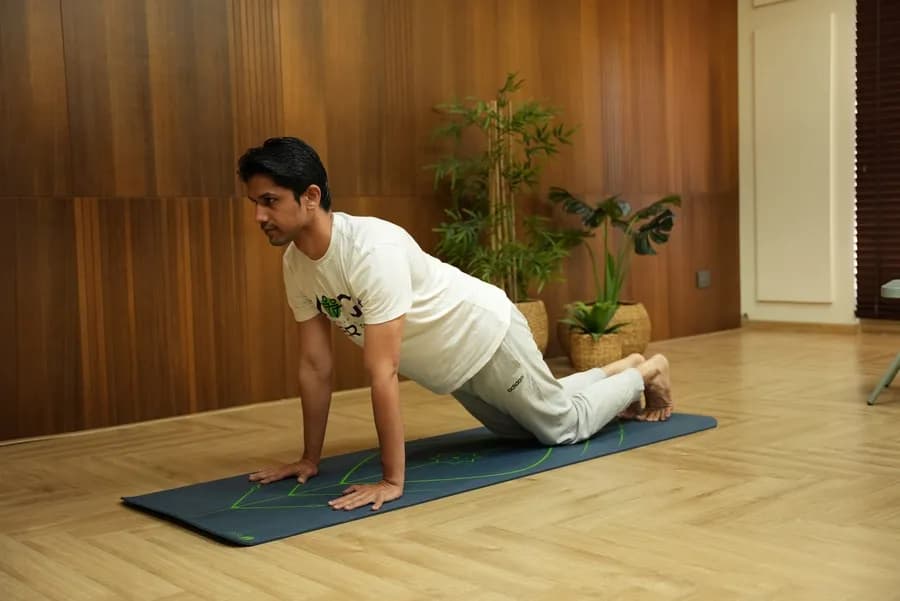
Marjariasana (Cat Cow Pose): Steps and Spine Flexibility Benefits
Practice Marjariasana with Habuild. Follow the cat-cow pose steps to improve spinal flexibility, relieve back pain, and boost digestion daily. Start today!
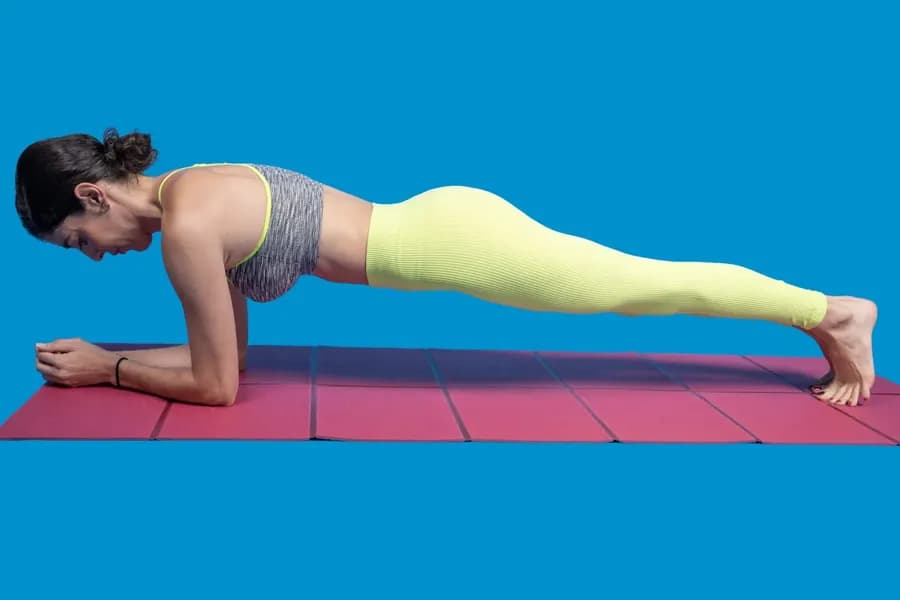
Marjaryasana–Bitilasana — The Cat–Cow Pose
Marjaryasana–Bitilasana, commonly known as Cat–Cow Pose, is a gentle, dynamic flow between two postures that warms up the body and brings flexibility to the entire spine.
