
Parsvottanasana Benefits: Steps, Variations & Precautions
The Intense Side Stretch lengthens the hamstrings, opens the chest, and stabilises the hips bilaterally in a classical standing forward bend.
Key Takeaways
- Its Sanskrit name combines roots meaning side, intense, and stretch.
- Informally called Pyramid Pose for the sharp triangular silhouette it forms from the side.
- Arms are classically held in reverse namaste, palms pressed together behind the back.
- Appears in the Ashtanga Yoga Primary Series and B.K.S. Iyengar’s foundational texts.
- Builds bilateral balance since each staggered leg receives individual stretching attention.
- The back foot’s outer edge presses firmly into the mat as an anchor throughout the fold.
Parsvottanasana, the Intense Side Stretch Pose, is a classical standing forward bend that lengthens the hamstrings, opens the chest, stabilises the hips bilaterally, and calms the nervous system. Accessible to beginners with blocks and rewarding for intermediate practitioners refining alignment, its benefits compound with consistent daily practice.
What is Parsvottanasana?
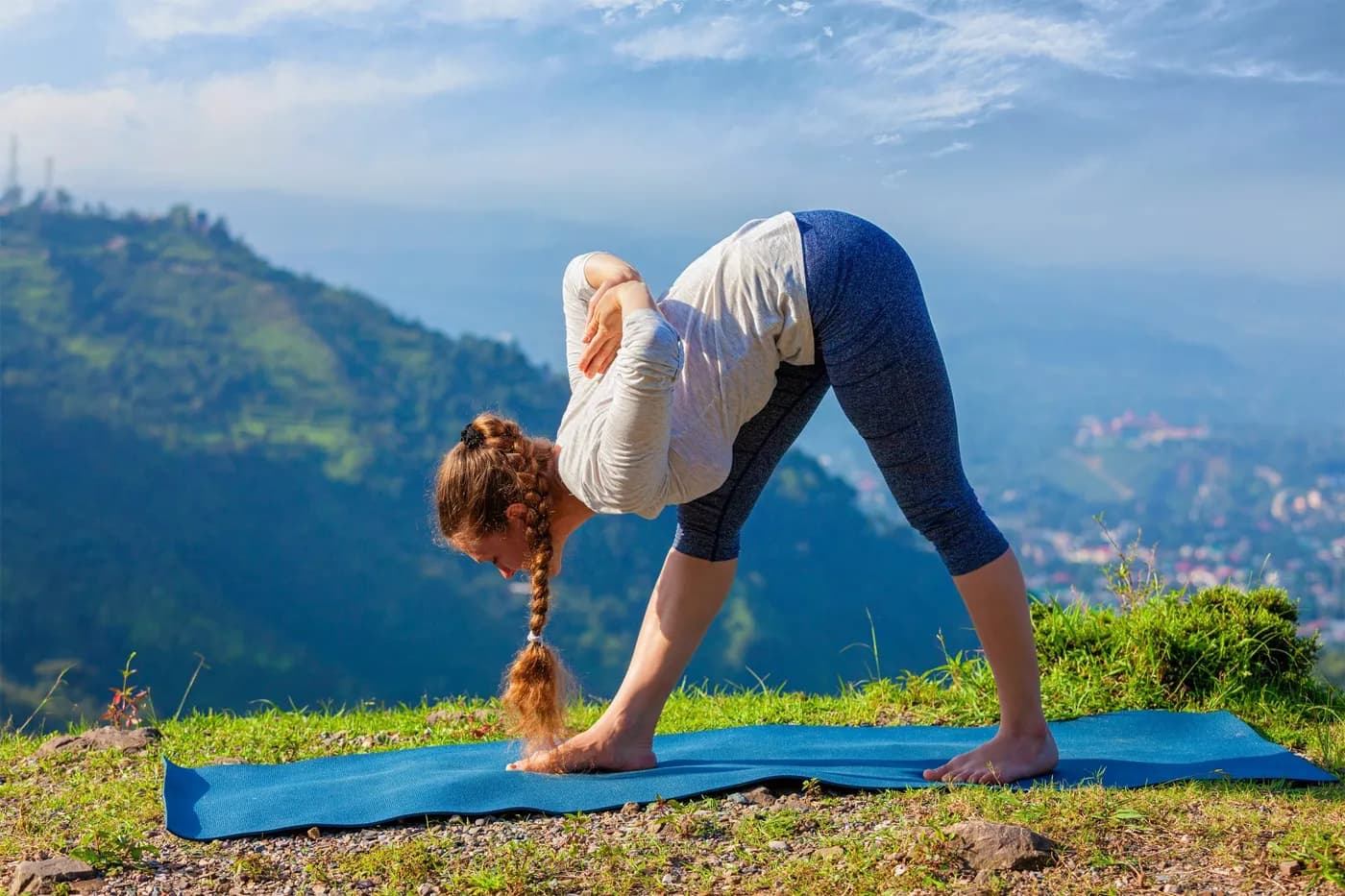
Parsvottanasana (pronounced parsh-voh-tahn-AH-sah-nah) is a classical standing forward-bend asana whose Sanskrit name combines three roots: parsva (side), ut (intense), and tan (to stretch). In English it is widely known as the Intense Side Stretch Pose or, informally, the Pyramid Pose — a name inspired by the sharp triangular silhouette the body forms when viewed from the side. The full parsvottanasana benefits become accessible only when the correct foundation is understood from the outset.
Visually, the pose resembles a deliberate bow over one extended leg: the feet are staggered, the hips square to the front, and the torso folds forward until the chest approaches the thigh. Arms are classically held in reverse namaste — palms pressed together behind the back — though blocks or an opposite-elbow hold work equally well for those building up. The resulting shape — straight back leg, deeply folded torso, grounded feet — is precisely where the pyramid analogy originates.
Within the broader yoga system, Parsvottanasana belongs to the family of asymmetrical standing poses that build bilateral balance, deep posterior-chain flexibility, and spinal awareness simultaneously. It appears in the Ashtanga Yoga Primary Series and is referenced in B.K.S. Iyengar’s foundational texts as a pose that simultaneously demands and develops hamstring length, hip mobility, and spinal extension. Traditionally, the deep bow of the torso carries a quality of deliberate humility combined with the physical steadiness of a fully grounded stance.
Parsvottanasana Benefits
Physical Benefits
Benefit 1: Lengthens the Hamstrings and Calves Progressively
Parsvottanasana places a sustained, low-force stretch along the entire back of the front leg — from the sitting bone down through the hamstrings and into the calf. Because the hips stay squared and the spine extends before it folds, the stretch is far more targeted than in a general forward bend. Practised consistently, this is one of the most meaningful parsvottanasana benefits for people who carry persistent posterior-chain tightness from long hours of sitting.
Benefit 2: Improves Spinal Mobility and Postural Alignment
The pose demands a long, neutral spine before any downward movement occurs — which trains the practitioner to distinguish between genuine spinal extension and a simple collapse forward. Over time this builds the postural awareness that gradually reduces the rounded-shoulder, forward-head posture common in desk workers. The reverse namaste arm position further opens the chest and draws the shoulder blades toward each other, counteracting upper-back rounding.
Benefit 3: Strengthens Hip Stabilisers and the Standing Leg
While the pose is celebrated for its stretch, the back leg and both hips work actively throughout the hold. The glutes, hip abductors, and outer hip of the back leg all engage to keep the pelvis level and squared. This bilateral hip stability — one side opening while the other braces — supports better gait, balance, and injury resilience in everyday movement. Explore how yoga asanas as a category train these stabilising muscle groups together.
Benefit 4: Stimulates Abdominal Organs and Supports Digestion
The forward fold compresses the abdomen against the front thigh in a gentle, rhythmic way with each breath. This mild compression is thought to stimulate the digestive organs — the liver, spleen, and intestines — and may support more comfortable digestion when practised regularly as part of a consistent morning routine. Pairing Parsvottanasana with poses specifically targeting the gut, such as those covered in a structured yoga for digestion practice, amplifies this effect.
Mental and Emotional Benefits
Benefit 5: Calms the Nervous System and Supports Stress Management
The forward-folding nature of Parsvottanasana naturally shifts the body toward a parasympathetic state. As the head drops below the heart, heart rate tends to slow and the breath deepens. This makes the pose a practical tool within any yoga practice aimed at managing stress — particularly when held for several steady breaths rather than rushed through as a transitional shape.
Benefit 6: Builds Single-Pointed Focus and Patience
Maintaining a level pelvis, squared hips, and an extending spine all at once requires continuous internal attention — the pose does not allow the mind to wander easily. Any loss of focus shows up immediately as a collapsing hip or a bent knee. The quality of absorbed, patient attention that Parsvottanasana demands on the mat tends to carry over into everyday life, gradually improving the practitioner's capacity for sustained concentration.
How to Do Parsvottanasana — Step-by-Step Instructions
Key Principles
Before moving through the steps, keep three principles in mind: (1) hips square before you fold — do not let the back hip swing forward; (2) spine long before it tips — lead with the chest, not the head; and (3) back foot firmly planted — the outer edge of the back foot presses into the mat for the full duration of the pose. These three cues govern every transition below.
Step 1: Starting Position
Stand in Tadasana at the top of your mat. Feet are together, spine tall, shoulders relaxed. Take a few steady breaths here to bring awareness to the body before moving. Feel the four corners of both feet pressing evenly into the floor.
Step 2: Step the Feet Apart
Step your right foot back approximately 90–100 cm, turning it out at roughly 45–60 degrees. Your left foot remains pointing straight forward. Press the outer edge of your back foot firmly into the mat — this is your anchor for the entire pose. Both feet should be on the same width line rather than on a tightrope, which helps keep the hips square.
Step 3: Square the Hips and Form Reverse Namaste
Draw the right hip forward and the left hip back until both hip points face the front of the mat evenly. Simultaneously, bring both arms behind you and press the palms together in reverse prayer — fingers pointing upward between the shoulder blades. If the wrists are tight, hold opposite elbows instead. Feel the chest open and the shoulder blades gently draw together.
Step 4: Inhale and Extend the Spine
On an inhale, lift through the crown of the head, lengthen the sides of the waist, and draw the lower ribs in and up. You may feel a mild lift across the chest and a gentle opening along the front of the spine. This extension moment is crucial — it sets the spine up to fold with length rather than collapsing under load.
Step 5: Final Position and Hold
On an exhale, hinge at the hips and fold the torso forward and down over the front left leg. Lead with the chest — keep the spine long as it tips forward. Allow the torso to descend as far as your hamstring flexibility permits without rounding the lower back. If you can, bring the chest toward the shin or rest the forehead on the shin. Hold here for 5–8 steady breaths, keeping both legs straight and the hips level throughout.
Step 6: How to Come Out of Parsvottanasana
On an inhale, press firmly into both feet and lead with the chest to rise back to an upright position — do not push up with the back rounding. Once upright, release the reverse namaste, step the back foot forward to meet the front, and return to Tadasana. Pause for two breaths, then repeat on the other side with the left foot stepping back.
Breathing in Parsvottanasana
The breath pattern follows the principle common to most standing forward bends: inhale to lengthen (Step 4), exhale to fold (Step 5). Once in the final shape, breathe smoothly and evenly — each inhale creates a little more length through the spine, each exhale allows the torso to settle slightly deeper over the front leg. Avoid holding the breath in the fold, as this creates unnecessary tension in the hamstrings and lower back.
Preparatory Poses Before Parsvottanasana
These four poses warm up the muscle groups most active in Parsvottanasana — hamstrings, hip flexors, calves, and the thoracic spine. Spend 4–6 breaths in each before attempting the main pose.
- Uttanasana (Standing Forward Fold) — Opens the hamstrings symmetrically before asking them to work asymmetrically in the full pose.
- Virabhadrasana I (Warrior I) — Warms up the hip flexors and trains the action of squaring the hips over a staggered stance, which is the same base position as Parsvottanasana.
- Adho Mukha Svanasana (Downward-Facing Dog) — Lengthens the calves and hamstrings while building shoulder stability needed for the reverse namaste arm position.
- Gomukhasana arms (seated) — Prepares the shoulder joints and wrists for the reverse namaste grip. Working the arms separately here prevents strain in the full pose.
Variations of Parsvottanasana
Variation 1: Hands on Blocks (Beginner-Friendly)
Difficulty: Beginner. Place two yoga blocks — one on either side of the front foot — at their highest height. Instead of reverse namaste, rest the fingertips or palms on the blocks as you fold forward. This variation allows you to maintain a long, extended spine even with limited hamstring flexibility, making the core parsvottanasana benefits accessible from the very first session.
Variation 2: Ardha Parsvottanasana (Half Version)
Difficulty: Beginner to Intermediate. Rather than folding until the torso is parallel to the floor or beyond, bring the torso only halfway down — roughly at a 45-degree angle — with the spine fully extended. Hold here for your full breath count. This half version is especially useful for those with tighter hamstrings or recent lower-back discomfort, as it maintains spinal length without the depth that can provoke rounding.
Variation 3: Parsva Uttanasana with Arm Extension (Intermediate)
Difficulty: Intermediate. Instead of reverse namaste, extend both arms alongside the ears as you fold forward, reaching the fingertips toward the front foot or the floor. This intensifies the stretch along the side body and intercostal muscles, and suits practitioners who have shoulder mobility restrictions that prevent reverse namaste but still want the full depth of the forward fold.
Variation 4: Deep Fold with Chin to Shin (Advanced)
Difficulty: Advanced. With fully straight legs, squared hips, and a long spine, fold deeply enough to rest the chin on the shin of the front leg and wrap the hands around the back of the ankle or heel. This requires considerable hamstring and hip-flexor length. Only attempt this variation once the intermediate form feels stable and effortless over several weeks of consistent practice.
Common Mistakes to Avoid in Parsvottanasana
- Letting the Back Hip Swing Forward
The most common error. When the back hip drifts toward the front, the pelvis rotates and the stretch shifts away from the hamstrings into the lower back. Correction: Before folding, actively draw the back hip forward and the front hip back until both hip points are level and face the front edge of the mat.
- Bending the Front Knee
Practitioners with tight hamstrings often bend the front knee to bring the torso closer to the leg. This reduces the stretch and places uneven load on the knee joint. Correction: Use blocks under the hands or practise the half-fold variation to maintain a straight front leg throughout.
- Rounding the Lower Back to Create Depth
Folding from the lower spine instead of the hip joint gives the impression of going deeper but removes the hamstring stretch entirely and compresses the lumbar discs. Correction: Prioritise spinal length over depth. If you cannot fold without rounding, stop at the halfway point.
- Lifting the Back Heel
When the back heel rises off the floor, stability is lost and weight shifts unevenly onto the front foot. Correction: Press the outer edge of the back foot actively into the mat throughout the pose. A slightly wider angle of the back foot (closer to 60 degrees) makes it easier to keep the heel grounded.
- Forcing Reverse Namaste Prematurely
Jamming the palms together behind the back when the shoulders or wrists are not ready strains both joints. Correction: Hold opposite elbows behind the back or use the blocks variation until the shoulder and wrist joints have warmed up through consistent preparatory work.
- Looking Up During the Fold
Cranking the neck upward while the torso folds forward compresses the cervical vertebrae. Correction: Keep the gaze soft and directed toward the front shin or foot. Let the back of the neck remain long as a natural extension of the spine.
Who Should Practise Parsvottanasana?
Those with Lower Back Stiffness or Poor Posture
If your day involves long hours at a desk, Parsvottanasana may gradually ease the stiffness that accumulates along the posterior chain and in the lower spine through consistent, mindful practice. The pose trains hip-hinge mechanics that, over time, support better posture in sitting and standing. Always use blocks if there is active lower-back discomfort and avoid the full fold until the spine feels comfortable in the preparatory extension.
Those with Tight Hamstrings or Hip Inflexibility
Parsvottanasana is one of the most focused hamstring-lengthening poses in the standing sequence — more targeted than a symmetrical forward fold because one leg works at a time. Practitioners dealing with persistent hamstring tightness may notice a gradual change in how the back of the leg feels during everyday movement after 3–4 weeks of regular practice. Understanding the full picture of yoga for flexibility helps set realistic, sustainable expectations.
Is Parsvottanasana Good for Beginners?
Yes — with appropriate modifications. Complete beginners should place blocks under their hands and practise the half-fold until hamstring flexibility develops enough to keep the spine long in a deeper position. The reverse namaste arm position can be replaced with opposite-elbow holds. Under live guidance, where a teacher can observe alignment in real time, even first-week practitioners can begin to access the pose safely and confidently.
Working Professionals and Those Managing Stress
The forward-fold element of Parsvottanasana has a naturally calming quality — the parasympathetic shift that a supported forward bend initiates makes this pose a practical tool for those managing high workloads or persistent mental fatigue. Incorporated into a daily morning practice alongside structured yoga for beginners routines, it supports both physical opening and a moment of deliberate stillness before the day begins.
Make Parsvottanasana a Part of Your Life
Parsvottanasana — the Intense Side Stretch or Pyramid Pose — is a standing forward bend that systematically lengthens the hamstrings, opens the chest, stabilises the hips, and builds the quiet mental focus that carries over into everyday life. It suits beginners working with props, intermediates refining alignment, and regular practitioners deepening a core standing-sequence pose.
Whether you are a complete beginner using blocks, someone managing back or hip stiffness, or an experienced practitioner working toward the deep fold, the right guidance removes the guesswork. Modifications exist for every starting point, and real-time feedback from a teacher who can see your body is what distinguishes a pose that feels safe and effective from one that quietly reinforces the wrong pattern.
Frequently Asked Questions
Related Articles
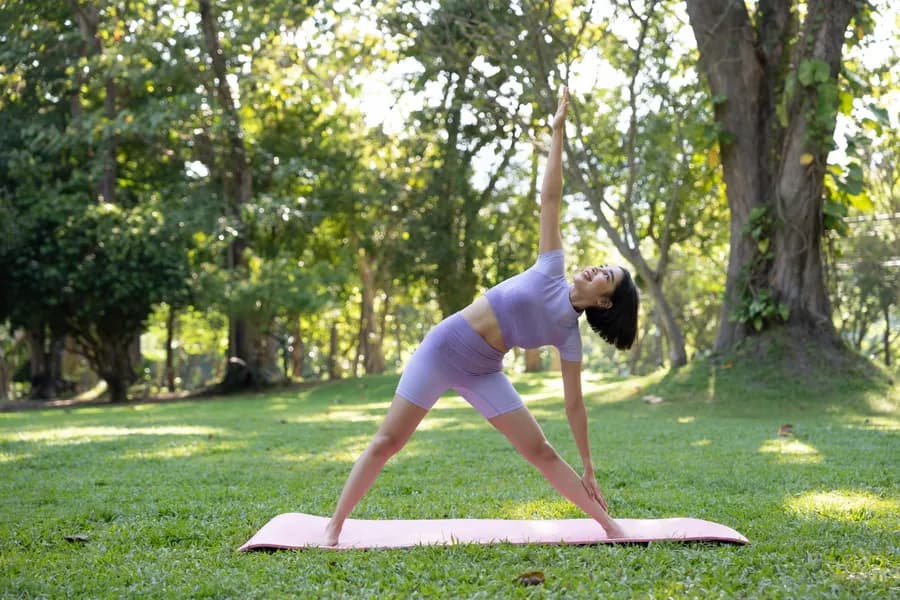
Trikonasana Benefits: Steps, Procedure & Precautions
Triangle Pose works the body from foot to fingertip in one of the safest standing postures for beginners to learn. See the steps, benefits, and

20 Benefits of Yoga
Yoga acts simultaneously on the musculoskeletal system through asana, the autonomic nervous system through pranayama and meditation, and the endocrine system through parasympathetic activation. See all 20 benefits.
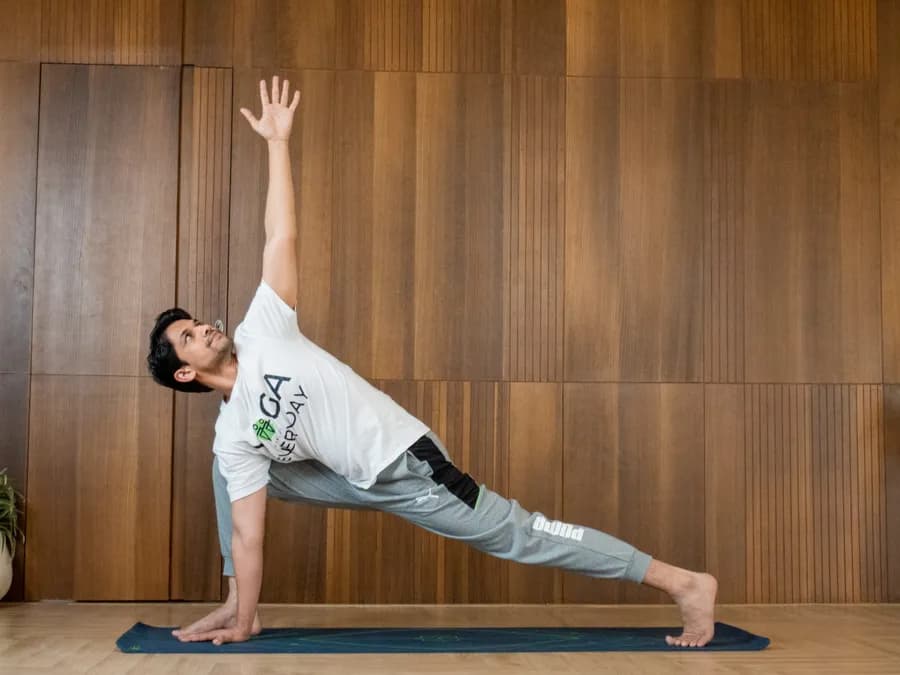
Utthita Parsvakonasana: Steps Strength Benefits and Alignment
Practice Utthita Parsvakonasana with Habuild. Follow the extended side angle steps to strengthen your legs, open your hips, and boost flexibility. Start today!