
Utthita Parsvakonasana: Steps Strength Benefits and Alignment
Practice Utthita Parsvakonasana with Habuild. Follow the extended side angle steps to strengthen your legs, open your hips, and boost flexibility. Start today!
Key Takeaways
- Always entered directly from Virabhadrasana II as its natural progression in sequence.
- Inner obliques compress on the bent-knee side while outer obliques stretch on the other.
- Held for 5-10 breaths, a duration specifically named as genuinely demanding to sustain.
- Names three alignment principles – unbroken diagonal, knee tracking, and forward-facing chest.
- Stretches the hip flexor of the back leg while opening the groin of the front leg.
- One of the most metabolically effective standing postures for functional strength and stamina.
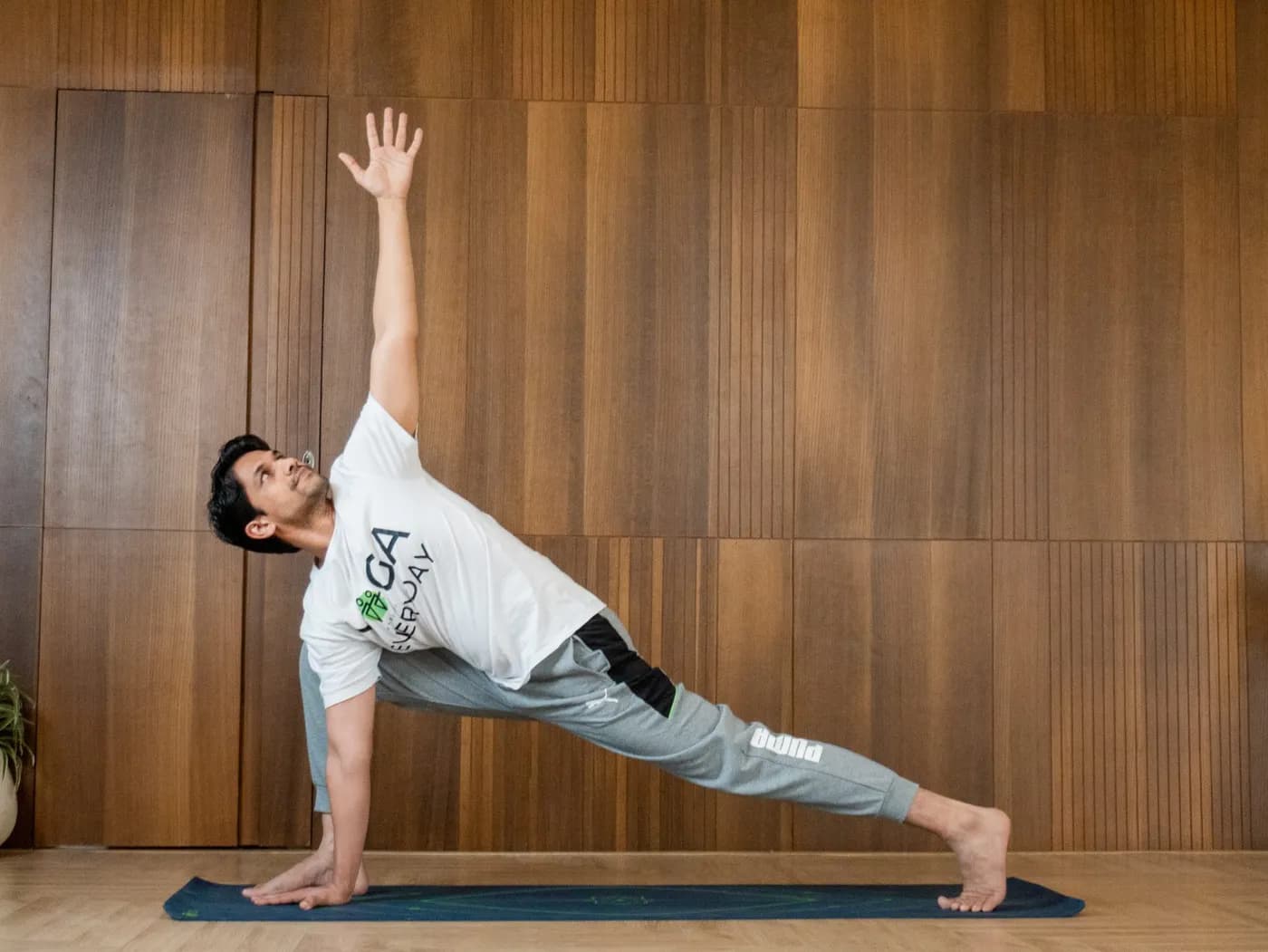
Utthita Parsvakonasana, or Extended Side Angle Pose, creates a long lateral diagonal line stretching the intercostals, obliques, and groin while building lower-body strength, toning the waist, and opening the hips. It supports spinal lateral mobility and supports weight management. Suitable for all fitness levels with modifications.
What is Utthita Parsvakonasana?
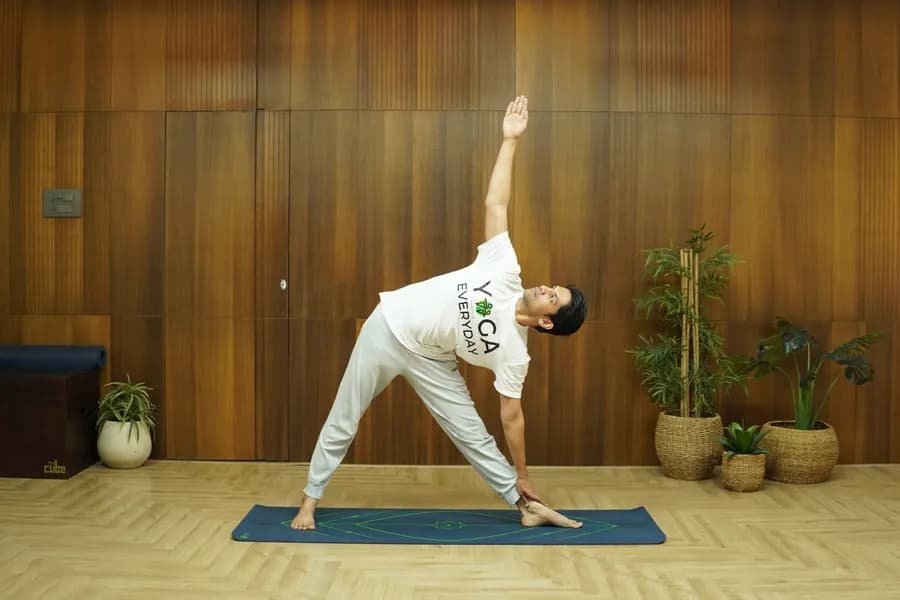
Utthita Parsvakonasana — known in English as Extended Side Angle Pose — derives from Sanskrit: Utthita (extended or stretched), Parsva (side or flank), Kona (angle), and Asana (posture). From a wide-legged stance with the front knee bent, the lower hand reaches toward the floor and the upper arm extends overhead — creating a continuous diagonal line from the back foot to the extended fingertips.
Utthita Parsvakonasana is one of yoga's most comprehensive standing postures — simultaneously a standing strength exercise, a deep lateral body stretch, a hip opener, and a cardiovascular challenge.
At Habuild, Utthita Parsvakonasana is taught as a key component of the standing sequence — always following Virabhadrasana II as the natural progression, with the lateral extension deepening the Warrior II stance.
Benefits
Physical Benefits
- Develops Full-Body Strength and Endurance The loaded lateral stance simultaneously works the quadriceps, glutes, hip abductors, lateral core, and shoulder stabilisers — one of the most metabolically effective standing postures for functional strength and body composition.
- Stretches the Lateral Body, Groin, and Intercostal Muscles The extended lateral line provides one of the deepest lateral body stretches in yoga — lengthening the obliques, intercostals, quadratus lumborum, and lateral hip muscles in a sustained, loaded position.
- Tones the Waist and Supports Abdominal Health The sustained lateral oblique engagement — inner obliques compressing on the bent-knee side, outer obliques stretching on the extended side — directly tones the waist over consistent practice.
- Opens the Hips and Improves Groin Flexibility The wide-legged bent-knee stance opens the groin and inner thigh of the front leg while stretching the hip flexor of the back leg — bilateral hip work that progressive yoga postures depend upon.
Mental Benefits
- Builds Focused Determination Utthita Parsvakonasana held for 5–10 breaths is genuinely demanding — maintaining the full extension and the breath through this discomfort builds the focused determination that yoga systematically develops.
How to Do Utthita Parsvakonasana — Step-by-Step Instructions
Key Principles
Key Principles Three alignment principles: the extended lateral line from back heel to fingertips is one unbroken diagonal; the front knee tracks over the second toe — never collapsing inward; and the chest faces forward or upward — never toward the floor.
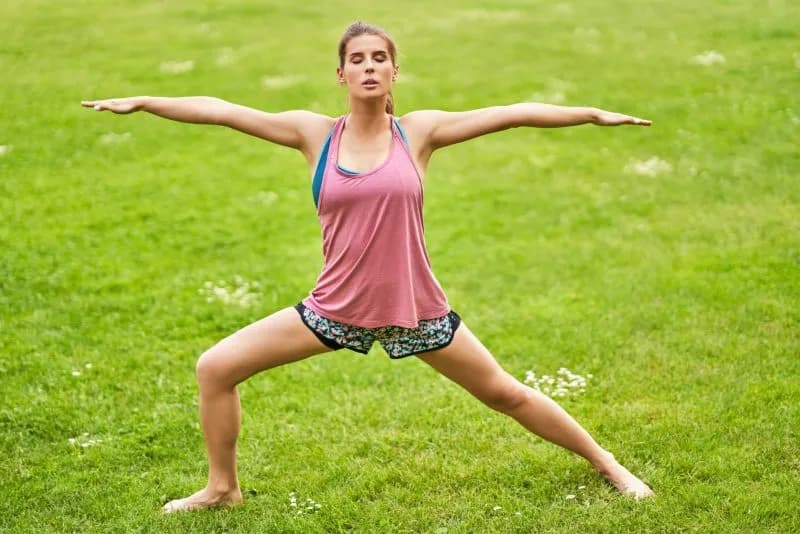
Utthita Parsvakonasana — Step by Step Step 1: Starting in Virabhadrasana II Begin in Virabhadrasana II — right foot forward, left foot turned in, arms extending laterally at shoulder height. This is the standard entry into Utthita Parsvakonasana.
Step 2: Lower the Right Forearm or Hand On the exhale, bring the right forearm to rest on the right thigh (beginner), or the right hand to a block outside the right foot, or flat on the floor.
Step 3: Extend the Left Arm Overhead Extend the left arm directly overhead — reaching past the left ear in a diagonal line from the back heel to the fingertips.
Step 4: Rotate the Chest Open Turn the chest toward the ceiling — not toward the floor. The entire body from the left heel to the left fingertips forms one unbroken lateral diagonal.
Step 5: Breathe Into the Upper Ribcage Hold for 5–8 breath cycles, breathing into the expanded upper (left) ribcage on each inhale. Each inhale creates more space in the lateral body.
Step 6: Rise and Repeat Other Side Inhale to rise back to Virabhadrasana II. Reverse the foot position and repeat on the left side.
Breathing
Breathing into the upper (extended) intercostal space on the inhale creates the progressive lateral opening. Each inhale expands the upper ribcage laterally; each exhale settles the body more deeply into the stance without losing the extended line.
Preparatory Poses
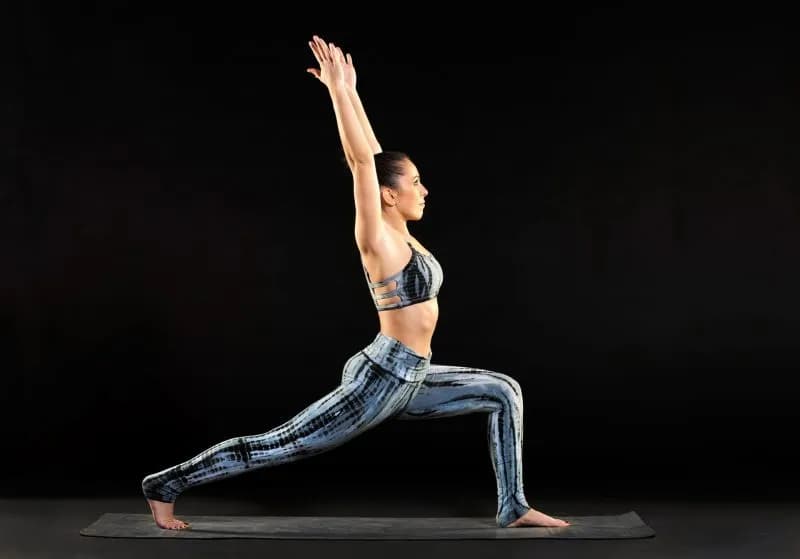
- Virabhadrasana II (5-8 breaths) — The direct entry — establishes the wide-legged bent-knee stance before the lateral extension.
- Trikonasana (Triangle Pose) — The straight-leg companion — warms the hamstrings and lateral body before the bent-knee expression.
- Prasarita Padottanasana — Warms the inner thighs and wide-legged awareness.
Variations
- Variation 1: Forearm on Thigh — Most Accessible Right forearm resting on right thigh — reduces the lateral tilt required and allows focus on front knee alignment and upper arm reach.
- Variation 2: Hand on Block — Intermediate A block at the appropriate height outside the front foot — allows the full lateral line without requiring the hamstring and hip flexibility for hand-to-floor contact.
- Variation 3: Full Expression with Bind — Advanced The lower arm wraps under the front thigh while the upper arm wraps behind the back — hands clasping. Adds a deep shoulder and chest opener to the lateral stance.
Common Mistakes to Avoid
- Chest Facing the Floor Rather Than the Ceiling The most visually obvious error. The chest must rotate open toward the ceiling — not fall toward the floor — to develop the spinal rotation and lateral body opening the pose is designed to create.
- Front Knee Collapsing Inward The front knee must track actively over the second or third toe throughout the hold. Knee collapse concentrates medial knee strain and reduces the hip abductor engagement.
- Body Weight in the Lower Hand The lower hand is a balance guide only — not a weight-bearing support. Significant body weight in the lower hand bypasses the lateral core engagement.
Who Should Practise?
- Those Seeking Lateral Body Flexibility and Strength Utthita Parsvakonasana fills the lateral body opening gap that most yoga sequences leave — providing the intercostal, oblique, and lateral hip flexibility that balances forward-bending dominant practice.
- Athletes Needing Lateral Strength and Stability Tennis players, footballers, swimmers, and any athlete requiring lateral force production benefit from the lateral standing strength and hip stability Utthita Parsvakonasana develops.
- Is Utthita Parsvakonasana Good for Beginners? Yes — the forearm-on-thigh modification is accessible from early in yoga practice and immediately delivers the full lateral stretch, hip opening, and lower body strength benefits.
Make Utthita Parsvakonasana a Part of Your Practice
Utthita Parsvakonasana is the yoga tradition's most comprehensive lateral standing posture — its diagonal line from back heel to fingertips delivering lateral body flexibility, lower-body strength, hip opening, and waist toning in a single sustained standing expression.
Whether working with the forearm modification, developing the block-supported hand position, or refining the full floor expression, consistent daily practice delivers progressive and meaningful benefits at every stage.
The most effective way to learn Utthita Parsvakonasana correctly — with front knee tracking, chest rotation, and lateral line instruction — is under live expert guidance with Habuild.
Start your 14 day free yoga journey with Habuild, today!
Related reads: Parivrtta Parsvakonasana: Steps Twisting Benefits and Alignment · Parsvakonasana (Side Angle Pose): Steps and Full Body Benefits
Extended Side Angle Pose stretches and strengthens in equal measure, but that combination of open hips and stronger legs only compounds when the pose is revisited regularly rather than practiced in isolation. Add it to a structured sequence and the flexibility gains tend to stick around much longer. Habuild's Yoga Everyday program includes poses like this within a guided daily routine built for steady, lasting progress.
Frequently Asked Questions
Related Articles
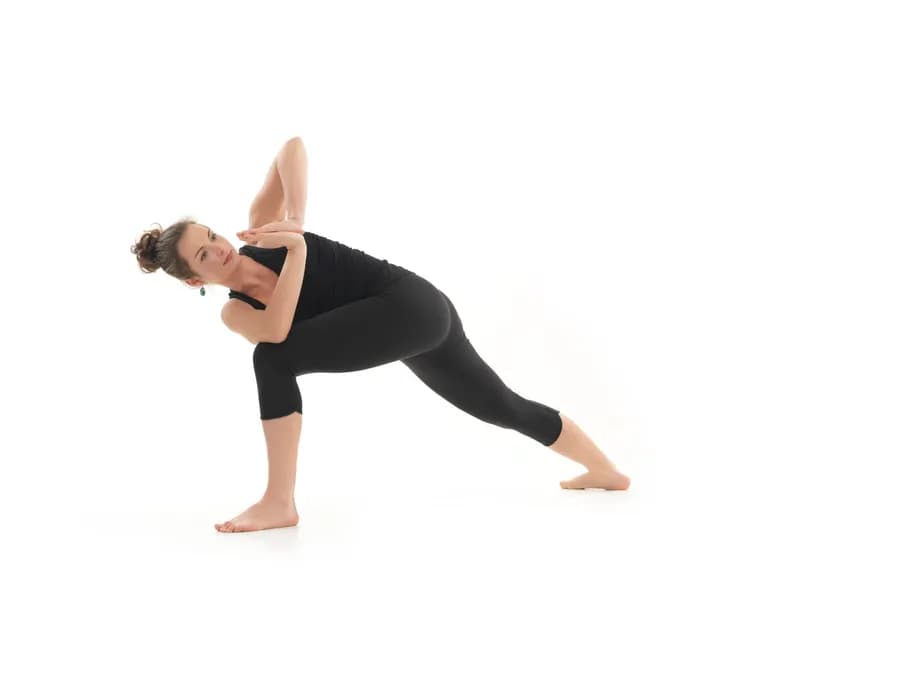
Parivrtta Parsvakonasana: Steps Twisting Benefits and Alignment
Practice Parivrtta Parsvakonasana with Habuild. Follow the revolved side angle steps to strengthen your legs, improve digestion, and boost flexibility. Start!
Trikonasana: Triangle Yoga Pose, Steps & Benefits
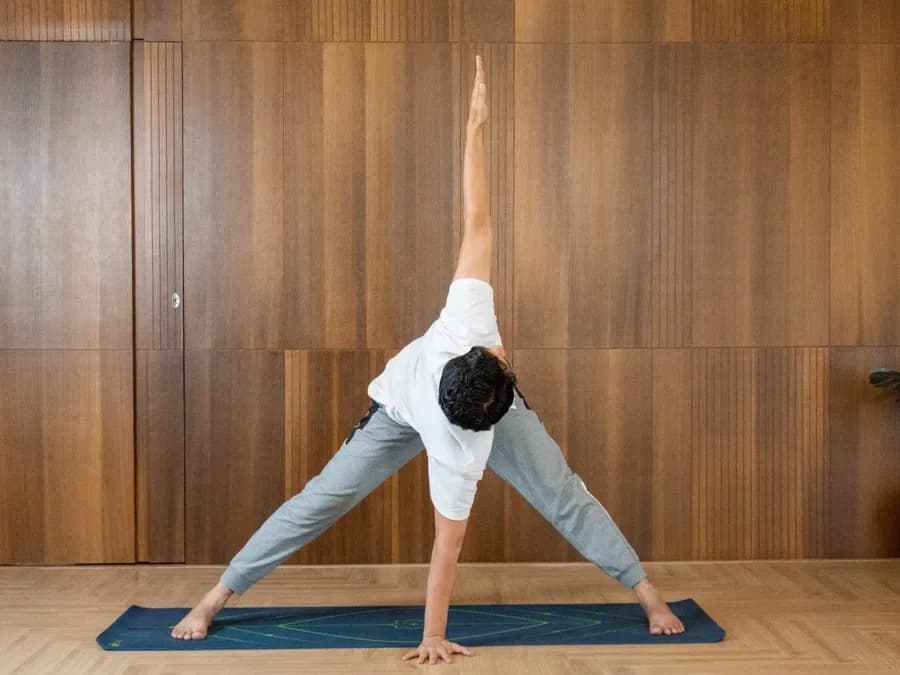
Trikonasana, the Triangle Pose, opens the hips, lengthens the lateral body, strengthens the legs and core, and improves spinal alignment in one complete standing pose.

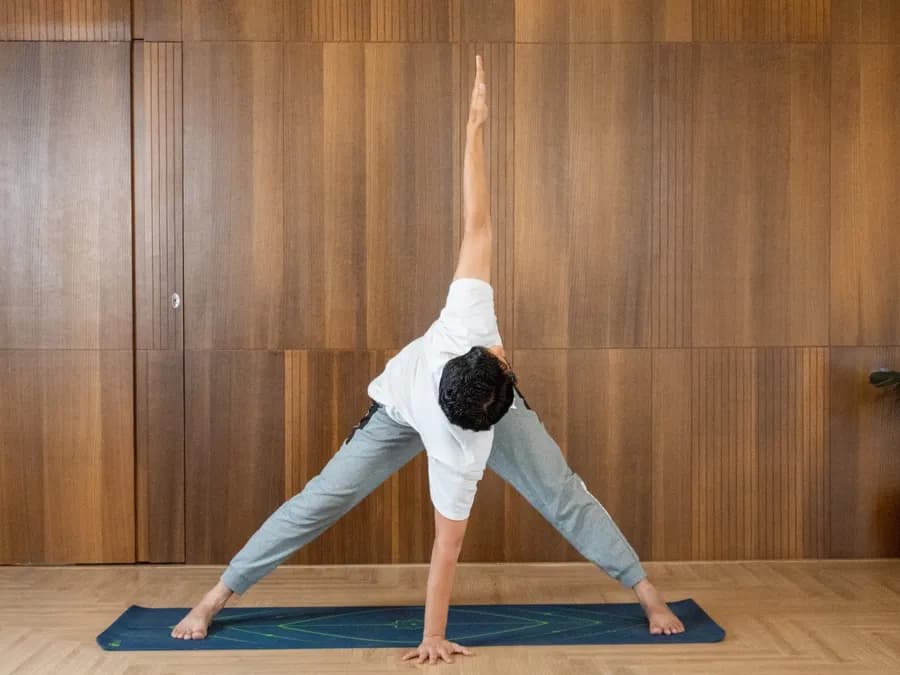
Parivrtta Trikonasana (Revolved Triangle): Steps and Key Benefits
Practice Parivrtta Trikonasana with Habuild. Follow the revolved triangle steps to improve digestion, boost flexibility, and build core strength. Start today!
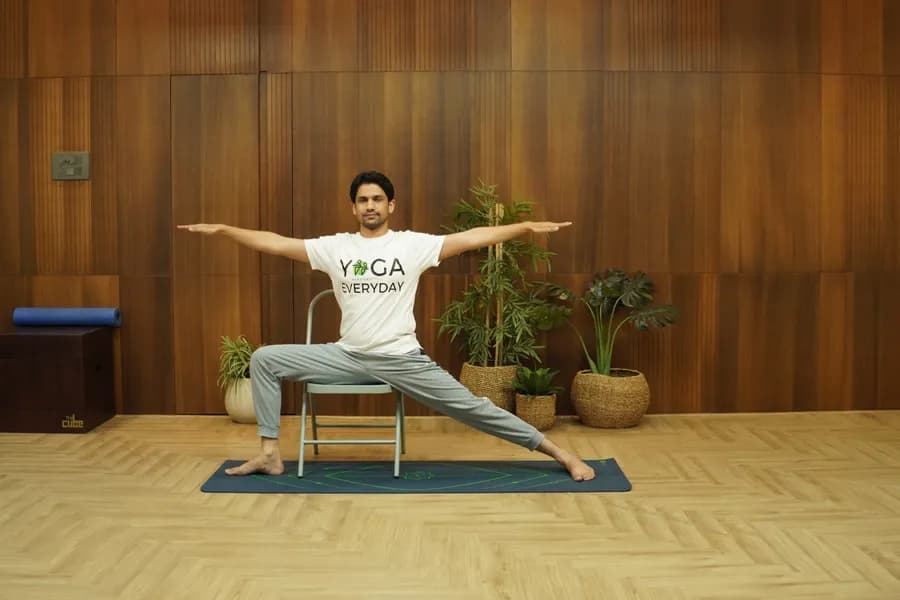
Virabhadrasana 2 (Warrior 2): Steps Benefits and Alignment Cues
Practice Virabhadrasana 2 with Habuild. Follow the Warrior II pose steps to strengthen your legs, open your hips, and build stamina and focus. Start today!
Konasana (Angle Pose): Steps Benefits and Spine Health
Practice konasana with Habuild. Follow the steps of trikonasana to strengthen your legs, improve flexibility, and boost your lateral body stretch. Start today!