
Shambhavi Mahamudra Benefits: Effects, Side Effects & Practice Guide
Breath regulation, mantra repetition, and a specific upward eye-gaze toward the eyebrow centre combine to deepen meditation and sharpen focus. See the
Key Takeaways
- Combines controlled breathing, soft mantra repetition, and an upward gaze to the ajna chakra.
- A 2016 International Journal of Yoga study found improved heart rate variability after six weeks.
- The first four weeks carry the highest risk of incorrect gaze tension and over-breathing.
- Traditionally taught only after years of preparatory practice, unlike its compressed modern form.
- Most practitioners notice mental clarity within 3-6 weeks of daily 21-minute practice.
- Practitioners without a concentration-practice foundation often struggle with eye position.
What is Shambhavi Mahamudra?
Shambhavi mahamudra is described in the Hatha Yoga Pradipika and Gheranda Samhita as a mudra — a “seal” or gesture that holds energy. The practice has three layers: a controlled breathing pattern (often a form of bhastrika or alternate-nostril breath), a soft internal mantra repetition, and the shambhavi eye-gaze itself, where the eyes are turned gently upward toward the ajna chakra (eyebrow centre) while the rest of the face remains relaxed. A 2016 study published in the International Journal of Yoga found measurable improvements in heart rate variability and reduced cortisol markers after six weeks of shambhavi-style kriya practice in healthy adults — one of the more concrete physiological validations of this tradition.
Habuild’s instructors are certified in classical mudra and kriya practices and teach shambhavi mahamudra under live observation — specifically because the first four weeks carry the highest risk of incorrect gaze tension and over-breathing, both of which are invisible in a recorded video.
It is part of the broader family of yogic gazing practices. Practitioners who have built a steady yoga for concentration foundation — including sustained internal focus practices — typically find shambhavi mahamudra accessible. Those who jump in without it often struggle with the eye position and report tension headaches in the first two weeks.
The “maha” (great) prefix marks it as one of the most refined mudras — and traditionally, it was taught only after years of preparatory practice. Modern transmission has compressed that timeline, which is part of why side effects are now more commonly reported.
Shambhavi Mahamudra Benefits
The verified benefits of shambhavi mahamudra appear with consistent practice — typically 21 minutes daily, every day, for 6–12 weeks before measurable shifts are observed.
Physical Benefits
1. Activates the Parasympathetic Nervous System****The combined breath, gaze, and mantra trigger a deep relaxation response. Heart rate variability typically improves over 4–8 weeks, indicating better autonomic regulation.
2. Supports Better Sleep****Practitioners report falling asleep faster and reaching deeper sleep stages. The effect is especially strong for those with stress-driven insomnia — where the nervous system is stuck in overnight activation patterns.
3. Improves Hormonal Balance Markers****Cortisol patterns smooth out over 6–12 weeks of daily practice, and several published studies on shambhavi-style practices show measurable improvements in stress hormone profiles.
4. Strengthens Eye Muscles and Visual Focus****The deliberate upward gaze trains the superior rectus and oblique eye muscles. Over months, practitioners often report less eye fatigue and better screen-related focus.
Mental and Emotional Benefits
5. Sharpens Concentration and Reduces Mental Chatter****The simultaneous breath-mantra-gaze loop occupies the wandering mind. Most practitioners notice a calmer, more linear thought pattern within 3–4 weeks of consistent daily practice.
6. Builds Emotional Steadiness****Daily practitioners describe a “ground-level calm” — not numbness, but a baseline that doesn’t spike as easily under stress. This effect is especially valuable for those who also work with a structured yoga for mental health routine for long-term emotional regulation.
7. Deepens Meditative CapacityShambhavi acts as a doorway to deeper meditation. Practitioners report longer, more stable meditation sessions afterwards — which is why it is traditionally placed before, not after, sitting practice.
How to Do Shambhavi Mahamudra — Step-by-Step
Step 1: Establish the Seat
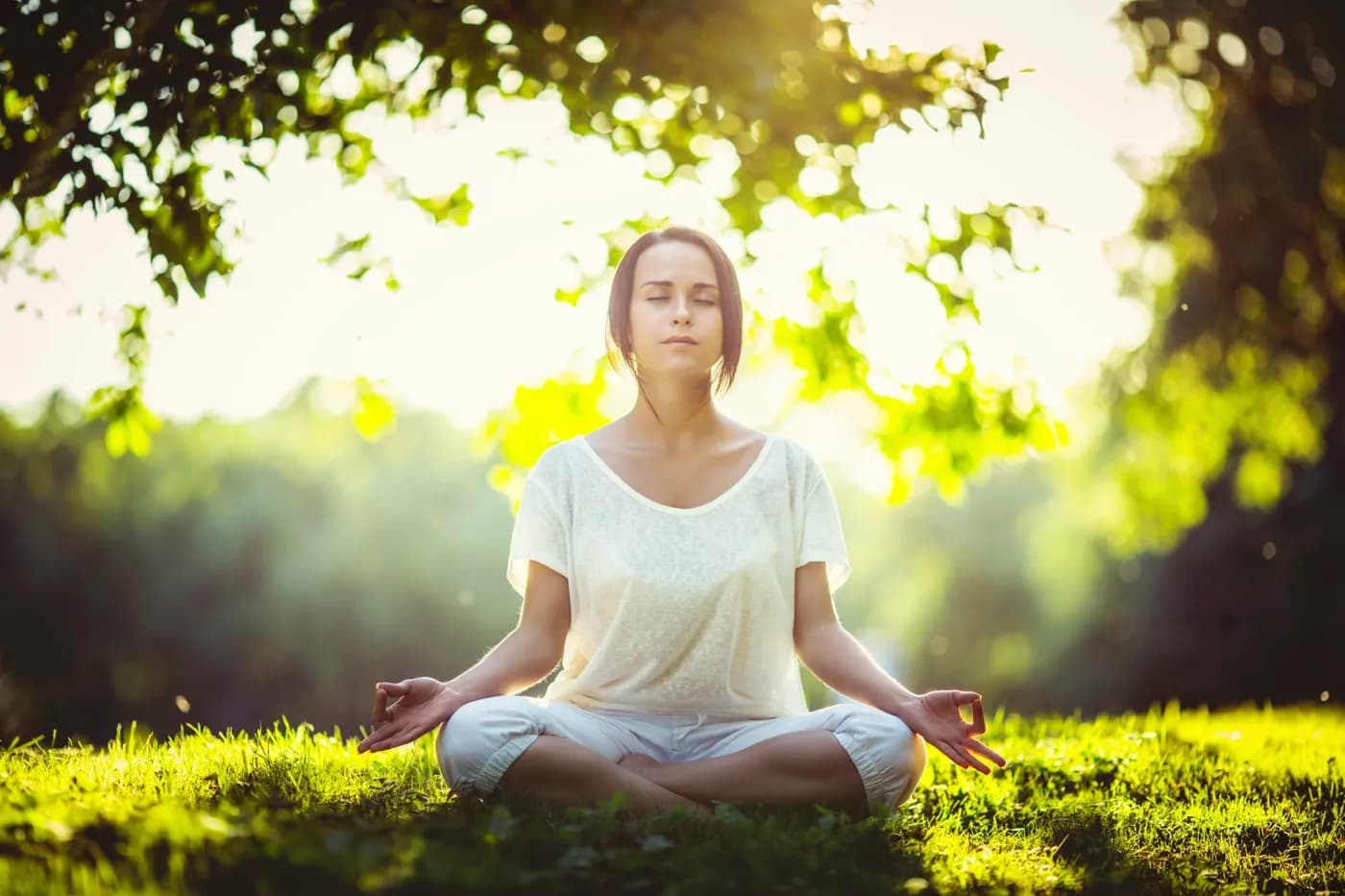
Sit in Sukhasana, Padmasana, or on a chair with feet flat. Spine tall, shoulders relaxed, palms resting on knees in chin mudra.
Step 2: Three Calming Breaths
Take three slow, deep breaths to settle the body and clear residual tension.
Step 3: Begin the Breath Pattern
Practise rapid, equal-paced inhales and exhales through both nostrils for 1–2 minutes. The pace should energise, not exhaust. Stop if you feel dizzy.
Step 4: Introduce the Eye-Gaze
With eyes gently closed, turn the gaze upward and inward toward the space between the eyebrows. The gaze should feel soft, never strained. The face stays relaxed throughout.
Step 5: Add the Mantra
Internally repeat a short mantra (commonly “So-Hum” — so on inhale, hum on exhale). The mantra runs quietly underneath the breath, not on top of it.
Step 6: Hold for 7–11 Minutes
Maintain the gaze, breath, and mantra together. If the gaze tires, soften it for a few breaths and resume. There should be no strain — only sustained gentle attention.
Step 7: Release Gradually
Slowly release the gaze. Sit in stillness for 5 minutes. Open the eyes gently when ready. The complete practice with preparatory and closing components typically takes 21 minutes.
Preparatory Practices Before Shambhavi Mahamudra
This is the difference between a smooth practice and one filled with side effects.
- 4–6 weeks of sustained internal focus practice first — trains the eye muscles and inward awareness that shambhavi requires.
- Basic Anulom Vilom for 2 weeks — stabilises the breath rhythm before adding the gaze layer.
- Establish 30 minutes of daily seated practice tolerance — beginners who can’t yet sit comfortably for 30 minutes will struggle with shambhavi’s full duration.
Variations of Shambhavi Mahamudra
Soft Shambhavi (Beginner)
The eye-gaze is gentler, the breath rate is moderate, and the duration is reduced to 7–11 minutes. Most safe entry point for new practitioners and the version Habuild instructors typically introduce first.
Classical Shambhavi (Intermediate)
The full 21-minute version with bhastrika-style energising breath. Requires established daily practice and live supervision for the first 4–6 weeks.
Shambhavi with Khechari Mudra (Advanced)
Combines the eye-gaze with the khechari mudra practice — a tongue position behind the soft palate. Reserved for advanced practitioners under direct teacher transmission only.
Common Mistakes to Avoid in Shambhavi Mahamudra
- Mistake 1: Hard, forced eye-gaze. The gaze is a soft inward turn, not a strained upward stare. Forcing it causes immediate eye fatigue.
- Mistake 2: Over-breathing in the bhastrika component. Breathing too fast or too forcefully causes lightheadedness within minutes.
- Mistake 3: Practising during emotional crisis. Strong emotional states can be amplified, not calmed, by intense practice. Choose gentler practices in those phases.
- Mistake 4: Skipping the closing rest. The 5-minute integration after practice is not optional — it lets the nervous system reset properly.
- Mistake 5: Practising more than once a day. Twice daily is sometimes promoted but typically counterproductive. One full session is sufficient.
- Mistake 6: Self-teaching from condensed video courses. The technique looks simple but the side-effect profile is real. Live correction in the first month dramatically reduces adverse outcomes.
Who Should Practise Shambhavi Mahamudra?
- Established Meditators Looking to Go Deeper Those with 3–6 months of consistent meditation or pranayama practice are the strongest candidates. The practice rewards a prepared nervous system — and punishes an unprepared one with the side effects described in the FAQ.
- Stressed Working Professionals (with Caveats) Practised gently, shambhavi pairs powerfully with structured yoga for stress management routines. The stronger the underlying stress, the gentler the shambhavi version should be — starting with soft shambhavi and building only when the nervous system shows stability.
- Beginners Building Toward Advanced Practice Beginners should not start with shambhavi mahamudra. Build the foundation through a structured yoga for beginners base for 2–3 months, develop breath control through Anulom Vilom, and approach shambhavi only when sitting quietly for 30 minutes feels natural.
Start Your Meditation Practice for 14-day free trial
Make Shambhavi Mahamudra a Part of Your Life
You now have an honest view of shambhavi mahamudra benefits, the real side effects, the procedure, the contraindications, and the path to introducing it safely. The practice is one of the most discussed and most misunderstood yogic kriyas — partly because it works for many, partly because it has been over-promised and under-supervised in modern transmission.
What Live Guidance Changes
Practitioners who arrive with 2–3 months of consistent yoga and breathwork — and who learn shambhavi under live observation — see the depth the practice promises. Practitioners who attempt it cold from a video, particularly during stressful life phases, account for most of the negative reports online. The technique looks identical in both cases. The outcome is entirely different.
The Right Progression
The practical path is to begin with daily yoga and breathwork, add sustained focus practices after a few weeks, and introduce shambhavi mahamudra only when both feel established. Habuild’s live morning sessions provide that progression — the foundation, the breath, and then the kriya — with daily teacher contact throughout.
What 1.5 Crore+ Members Already Know
The consistency is the practice. Shambhavi mahamudra practised for 21 minutes, every morning, for 90 days — inside a community that holds the same schedule — produces the shift that once-a-week self-attempts never reach. That structure is what Habuild’s live sessions provide. Your first 7 days are ₹1, and you can decide from there.
Most practitioners notice mental clarity only after three to six weeks of daily practice, which says a lot about how this kriya works — the eyebrow-gaze technique and breath regulation need repeated daily sessions to steady the nervous system, not a single 21-minute attempt. Habuild’s Yoga Everyday program can help anchor a practice like this into a consistent daily rhythm.
Frequently Asked Questions
Related Articles
Shambhavi Mahamudra Kriya: the Eyebrow Gaze Meditation Technique
The practitioner gazes upward and inward toward the space between the eyebrows while seated in stillness with focused breathing, mentioned in classical

Chakravakasana (Ruddy Goose Pose): Steps, Benefits and Precautions
This four-point kneeling anti-rotation exercise builds lumbar stability and shoulder alignment, named after the ruddy shelduck of Hindu mythology. See the steps, benefits, and precautions.
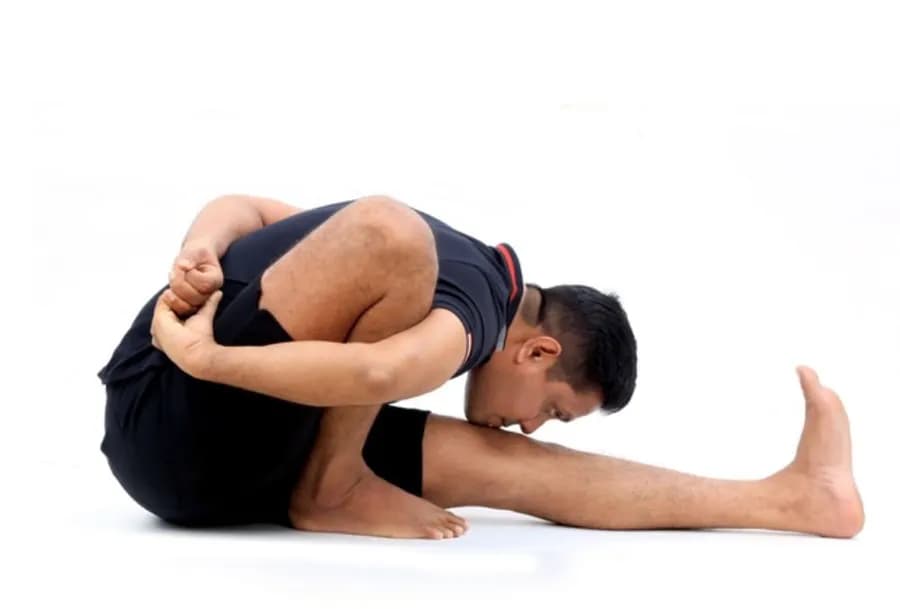
Marichyasana a (Sage Marichi’s Pose a): Steps, Benefits and Precautions
The first of four Marichi poses, this seated forward fold with one knee bent and an arm wrapped behind the back establishes the base that the more complex C and D variations build upon. See the steps, benefits, and precautions.