
Shankh Mudra Benefits: Steps, Uses & Precautions
Discover shankh mudra benefits for throat, thyroid, and stress. Learn how to do shankh mudra step-by-step.
Key Takeaways
- The hand formation is said to mirror the spiral shape of a sacred conch shell.
- Believed to activate and purify the throat center, or Vishuddha Chakra.
- Particularly useful for teachers, singers, and professionals who rely on their voice daily.
- Often paired with chanting Om to amplify its effect on the throat and chest region.
- The mudra is known in classical texts for its influence on the thyroid-adjacent throat area.
- Held for 10-15 minutes during meditation to create a sense of quieting, inward focus.
Shankh Mudra is a two-handed yoga gesture that mirrors the shape of a sacred conch shell. Practiced for 10–15 minutes daily in a seated position, it is used to support throat health, ease mental restlessness, and deepen meditation — no equipment, no prior experience, and no physical flexibility required.
What is Shankh Mudra?
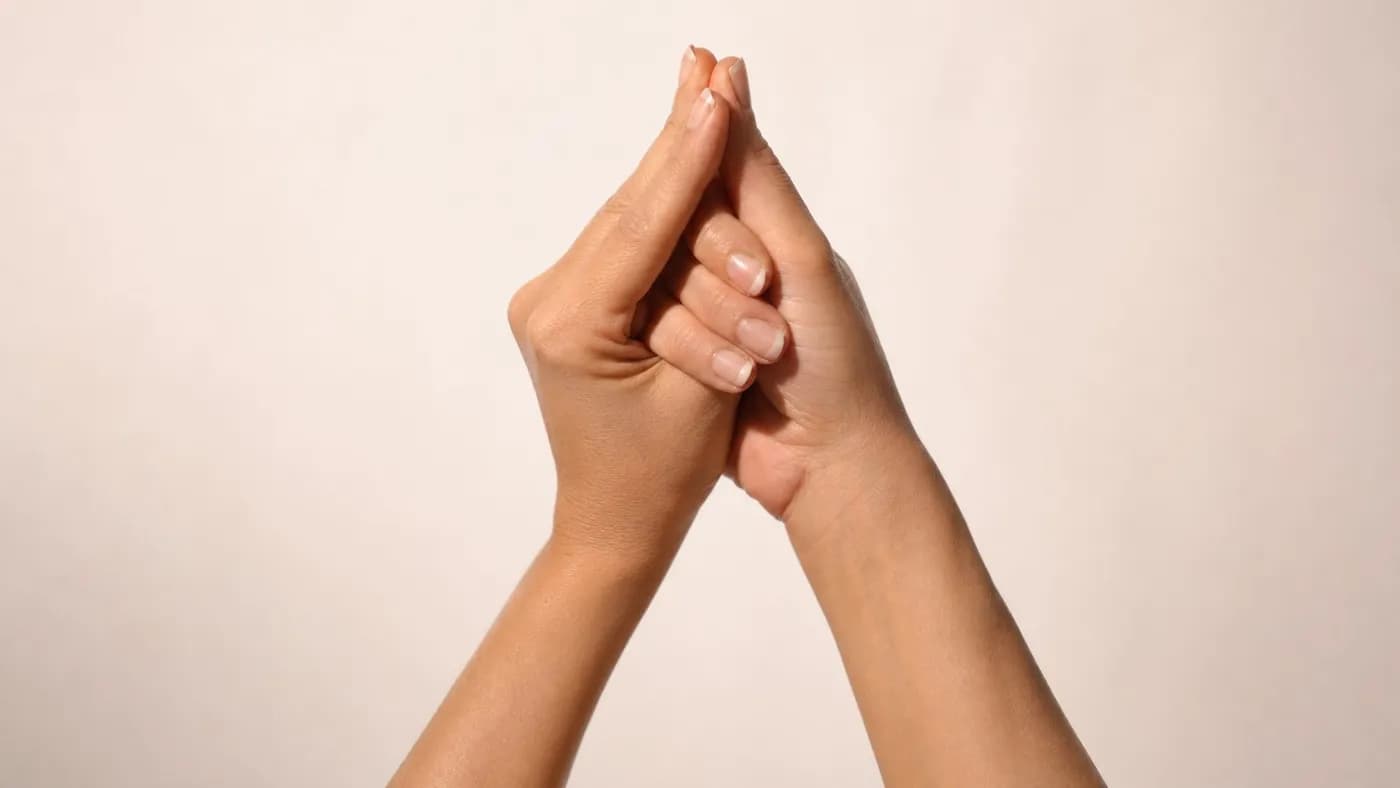
Shankh Mudra — pronounced shankh moo-dra — translates from Sanskrit as the “Conch Shell Gesture.” The word shankha (शंख) refers to the sacred conch shell that holds deep spiritual significance across Indian traditions, and the hand formation in this mudra is said to mirror the spiral form of a conch. It belongs to the broader family of Hasta Mudras — hand gestures that redirect pranic energy within the body.
In Hindu and Buddhist ritual, the conch shell is blown to purify the atmosphere and invoke divine presence. Shankh Mudra carries that symbolism inward — it is believed to activate and purify the throat centre (Vishuddha Chakra), supporting clear communication, vocal resonance, and inner stillness. Practitioners across traditions have used it to complement chanting, pranayama, and meditative practice.
Within the broader yoga system, Shankh Mudra sits alongside gestures that work on specific organ systems and energy channels. It is practiced seated, held for several minutes, and often paired with breathing exercises or the chanting of “Om” to amplify its effect on the throat and chest region.
Shankh Mudra Benefits
Physical Benefits
- Supports Throat and Vocal Health Shankh Mudra is traditionally associated with the throat region. Regular practice may help ease tension in the throat muscles and support vocal clarity over time — making it particularly useful for teachers, singers, and professionals who rely on their voice daily. When combined with steady breathing, it can gradually ease mild throat discomfort that builds up from overuse or dryness.
- May Help Manage Thyroid-Related Discomfort The mudra is known in classical yoga texts for its influence on the throat area, where the thyroid gland is located. While it is not a treatment for thyroid conditions, consistent practice alongside a broader yoga routine supports management of thyroid-related fatigue and sluggishness over time. It complements — but does not replace — medical care for thyroid conditions.
- Supports Digestive Ease Several practitioners report that Shankh Mudra, when held with rhythmic breathing, helps ease mild digestive discomfort. The sustained hand pressure and the calming effect on the nervous system may support smoother digestive function when practiced regularly. It pairs well with poses like Pawanmuktasana for a more complete digestive-support routine.
Mental and Emotional Benefits
- Calms the Nervous System and Reduces Stress One of the most commonly noted shankh mudra benefits is its quieting effect on an overactive mind. Holding the gesture for 10–15 minutes during meditation creates a sense of inward focus that can gradually ease the restlessness associated with daily stress. Over weeks of consistent practice, many practitioners notice a shift in how they respond to pressure and anxiety.
- Improves Focus and Mental Clarity By drawing attention to the breath and the hand formation, Shankh Mudra naturally anchors a wandering mind. This quality makes it a useful starting point for meditation sessions, as it reduces mental chatter and creates a stable inner environment for deeper concentration. Shankh mudra steps practiced in sequence — formation, hold, release — themselves build a habit of intentional focus.
How to Do Shankh Mudra — Step-by-Step Instructions
Key Principles
Shankh Mudra requires both hands working together to form the conch shape. The grip should be firm but never tense — think of holding a delicate object gently. Always perform this mudra seated with a straight spine, either in Sukhasana or Vajrasana. The hands rest at chest or navel height, and the eyes can be gently closed throughout.
Step 1: Starting Position
Sit in a comfortable cross-legged position or on your heels in Vajrasana. Rest both hands on your thighs with palms facing upward. Take three slow, deep breaths to settle the body and bring your attention inward before beginning the formation.
Step 2: Wrap the Left Thumb
Bring both hands in front of your chest. Wrap the four fingers of your right hand around the left thumb, enclosing it completely. The grip should feel secure — the left thumb sits inside a channel formed by the right fingers, much like the spiral channel of a conch shell.
Step 3: Touch the Right Thumb to the Left Middle Finger
Extend your right thumb and bring its tip to touch the tip (or pad) of your left middle finger. This contact point is the energetic seal of the mudra. Feel a gentle, deliberate pressure between the two — not strained, just purposeful.
Step 4: Align the Remaining Fingers
Allow the remaining fingers of the left hand — the index, ring, and little fingers — to rest naturally against the back of the right hand or extend gently outward. There should be no rigid tension in these fingers. The overall shape of both hands together should loosely resemble a conch shell from the side.
Step 5: Final Position and Hold
Bring the joined hands to the centre of your chest — roughly at the level of the heart or throat. Hold this position for 10 to 15 minutes while breathing slowly and evenly. If chanting, repeat “Om” softly three times as you begin the hold. Feel the gentle pressure points in the hand and let your focus rest there.
Step 6: How to Come Out of Shankh Mudra
To release, gently uncurl the right fingers from around the left thumb. Lower both hands to your thighs with palms facing upward. Take two or three natural breaths before opening your eyes, allowing the nervous system to transition out of the practice gradually.
Breathing in Shankh Mudra
The ideal breathing pattern while holding Shankh Mudra is slow, nasal, and diaphragmatic. Inhale for a count of four, retain briefly for one count, then exhale for a count of six. This extended exhale activates the parasympathetic nervous system and deepens the calming effect of the mudra. Avoid mouth breathing or shallow chest breathing during practice.
Preparatory Poses Before Shankh Mudra
While Shankh Mudra itself is a seated hand gesture, a few gentle practices prepare the body and mind to settle into it more effectively.
- Neck Rolls (Greeva Sanchalana): Slowly roll the neck in both directions to release tension in the throat and upper shoulders before practice.
- Vajrasana (Thunderbolt Pose): Sitting in Vajrasana for two to three minutes grounds the body and calms digestive activity, creating a settled base for mudra practice.
- Anulom Vilom (Alternate Nostril Breathing): Five minutes of alternate nostril breathing before holding Shankh Mudra significantly deepens its effect on the nervous system.
- Shoulder Rolls: Simple circular movements of the shoulders release chest and upper-back tightness, allowing the hands to rest comfortably at chest height throughout the hold.
Variations of Shankh Mudra
Variation 1: Reversed Hand Formation (Ardha / Mirror Version)
Difficulty: Beginner–Intermediate
In this variation, the right thumb is enclosed by the left hand’s fingers instead, and the left thumb touches the right middle finger. Everything else remains the same. This is often practiced alternately — one round with the standard formation, one round with the reversed formation — to balance energy on both sides of the body.
Variation 2: Shankh Mudra with Chanting
Difficulty: Beginner
The mudra is held while softly chanting “Om” or humming with lips closed (similar to Bhramari). The vibration created by sound amplifies the gesture’s resonance in the throat and chest cavity, making this variation particularly effective for vocal health and stress management.
Variation 3: Extended Hold with Trataka (Advanced Version)
Difficulty: Intermediate–Advanced
In this variation, the practitioner holds Shankh Mudra for an extended session of 20–30 minutes while practicing soft-gaze Trataka — a fixed-gaze meditation on a candle flame or a point on the wall. This deepens concentration significantly and is used in traditional practices to develop sustained mental stillness.
Common Mistakes to Avoid in Shankh Mudra
Gripping too tightly: The most common error is clutching the thumb with excessive force. The right fingers should enclose the left thumb snugly but without strain — over-gripping creates tension that defeats the purpose of the practice.
Incorrect thumb contact point: The right thumb must touch the left middle finger — not the index or ring finger. Touching the wrong finger changes the energetic circuit the mudra is intended to create. Take a moment to confirm the contact point before closing your eyes.
Slouching the spine: Many practitioners relax the posture too much during extended holds. A neutral, lifted spine is essential — imagine a thread gently pulling the crown of your head upward throughout the session.
Mouth breathing: Breathing through the mouth during the mudra reduces its calming effect considerably. Keep the lips gently closed and breathe exclusively through the nose.
Positioning the hands too low: Resting the joined hands in the lap rather than at chest or heart height reduces the gesture’s connection to the throat centre. Aim to keep the hands between the navel and collarbone.
Rushing the release: Snapping out of the mudra abruptly — standing up immediately or reaching for a phone — disrupts the quieting effect that has built up during the hold. Always take a gentle breath or two before transitioning out.
Who Should Practise Shankh Mudra?
- Those with Throat Tension or Vocal Fatigue People whose work involves sustained use of their voice — teachers, public speakers, trainers, and singers — often carry chronic tension in the throat muscles. Shankh Mudra, practiced for 10 minutes daily, may gradually ease that tightness and support vocal resilience over time. It does not treat any medical condition but supports the management of mild, everyday vocal strain through consistent practice.
- Those Managing Stress and Anxiety If daily stress leaves you mentally scattered and physically tense, Shankh Mudra offers a simple, equipment-free tool to settle the nervous system. Its pairing with slow breathing makes it effective as a pre-sleep or midday reset practice. For a broader approach to managing stress through movement, exploring yoga for stress management alongside mudra practice is worthwhile.
- Is Shankh Mudra Good for Beginners? Absolutely. Shankh Mudra requires no prior yoga experience, no equipment, and no physical flexibility. The hand formation takes less than a minute to learn, and most beginners can hold it comfortably from the very first session. It is an ideal entry point for anyone curious about mudra practice who has not yet built a yoga routine. If you are new to yoga overall, pairing mudra practice with structured guidance makes the experience far more rewarding — Habuild’s live sessions are a natural starting point.
- Intermediate Practitioners and Meditators For those who already have an established practice, Shankh Mudra becomes a powerful addition to pranayama and meditation routines. Holding it during extended breathwork sessions or Yoga Nidra deepens the inward focus and adds a tactile anchor that many practitioners find stabilising. It complements poses like Sarvangasana, which also works on the throat and thyroid region.
Make Shankh Mudra a Part of Your Life
Shankh Mudra is a hand gesture rooted in centuries of yogic tradition that works on the throat centre, supports vocal and nervous system health, and creates a calm, focused inner state — all through a simple, portable, equipment-free practice that takes under 15 minutes a day.
Whether you are a complete beginner who has never held a mudra before, or someone dealing with throat tension or stress who is looking for a consistent daily tool — Shankh Mudra is genuinely accessible. The formation is straightforward, modifications are minimal, and the main requirement is simply showing up each day with a straight spine and steady breath.
The best way to build this habit correctly is with live guidance — someone who can check your hand formation, correct your breathing pattern, and keep you accountable. Habuild’s daily live sessions are designed exactly for this: a structured, community-supported morning practice where real-time corrections ensure you get the most from every mudra, every day.
Frequently Asked Questions
Related Articles
Pranayama Asana: A Guide to Breathing Poses Benefits and Practice
Practice Pranayama Asana with Habuild. Learn pranayama breathing types, steps, and benefits for lung health, stress relief, and daily vitality. Start today!

Dhyana Mudra: How to Practice and Its Benefits for Meditation
Practice Dhyana Mudra with Habuild. Follow the meditation hand gesture steps to calm the mind, deepen concentration, and support your daily practice. Start!

Apana Mudra: How to Practice and Its Benefits for Detox and Digestion
Practice Apana Mudra with Habuild. Follow the downward energy hand gesture steps to support digestion, detoxification, and reproductive health. Start today!