
Suryabhedan Pranayam: How to Practice and Its Energy Benefits
Practice Suryabhedan Pranayam with Habuild. Follow the right nostril breathing steps to boost energy, improve circulation, and activate your body. Start today!
Key Takeaways
- Suryabhedan means ‘sun-piercing breath,’ inhaling only through the right nostril.
- Activates Pingala Nadi, the solar channel governing heating and metabolic functions.
- Its energising effect is described as becoming noticeable within just 2-3 minutes.
- Recommended specifically as a complementary support for hypothyroidism and sluggish metabolism.
- Best practised in the morning, functioning as a natural stimulant rather than in the evening.
- Paired with its complementary practice, Chandrabhedan, within the full pranayama curriculum.
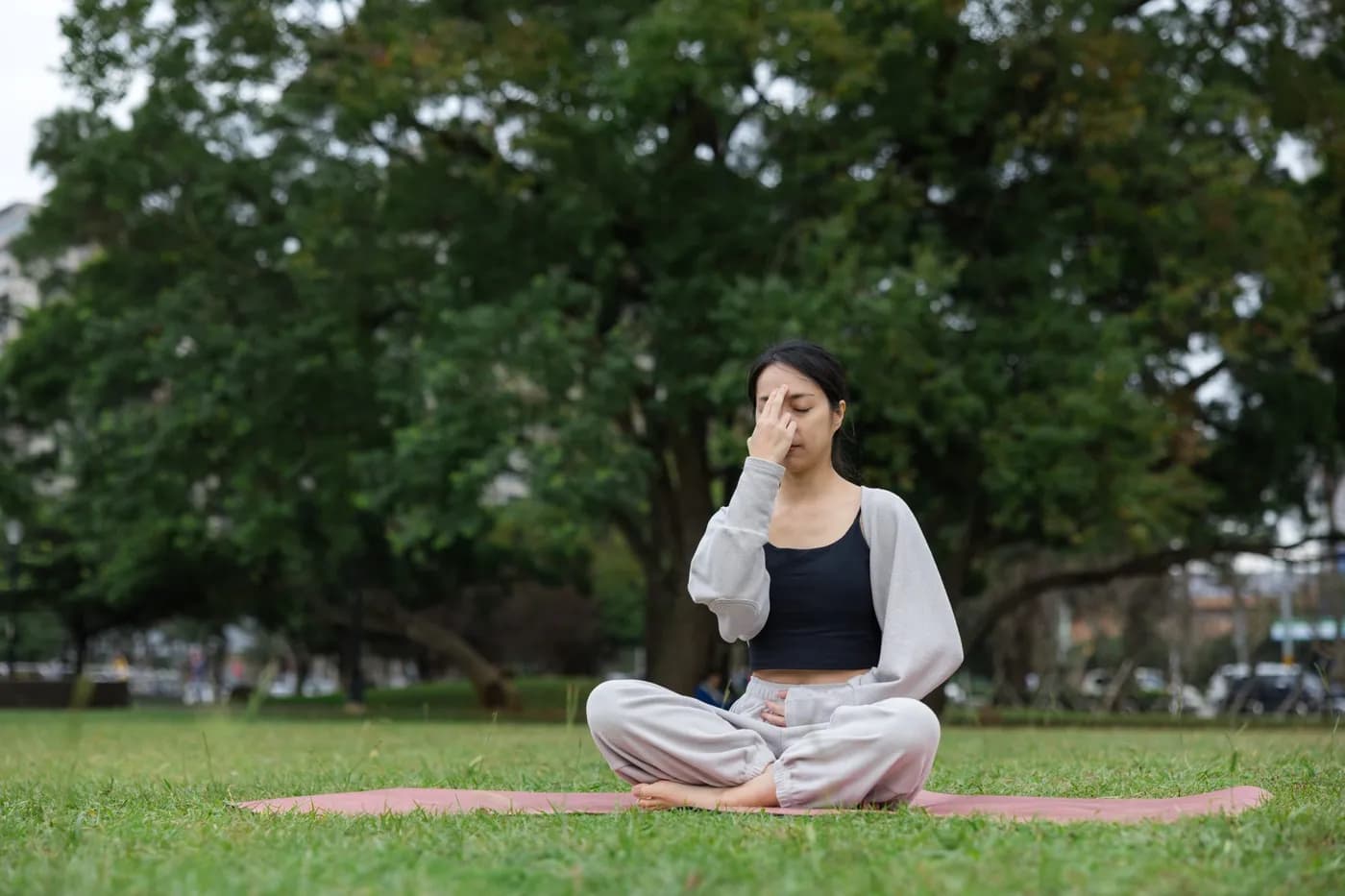
Suryabhedan Pranayam, or Right Nostril Breathing, activates the solar energy channel (Pingala Nadi) by inhaling exclusively through the right nostril to generate internal heat, stimulate metabolism, improve digestion, and elevate energy and mental alertness. Best practised in the morning as a natural stimulant. Suitable for all levels progressively.
What is Suryabhedan Pranayam?
Suryabhedan Pranayam — also written as Surya Bhedana Pranayama and Surya Bhedi Pranayam — derives from Sanskrit: Surya (sun), Bhedana (piercing or passing through), and Pranayama (breath control). The name translates as ‘sun-piercing breath’ — the activation of the Pingala Nadi (solar energy channel) through exclusive inhalation through the right nostril.
In yogic physiology, the right nostril corresponds to the Pingala Nadi — the solar energy channel governing the body’s activating, heating, and metabolic functions. Breathing through the right nostril activates this solar channel, generating internal heat, improving digestion, supporting thyroid function, and elevating energy and mental alertness.
At Habuild, Suryabhedan Pranayam is taught as part of the complete pranayama curriculum — always contextualised within the broader system of Nadi Shodhana and its complementary practice Chandrabhedan.
Benefits
Physical Benefits
- Generates Internal Heat and Activates Metabolism Suryabhedan activates the Pingala Nadi — generating internal body heat, increasing metabolic rate, and improving the digestive fire that efficient metabolism and digestion require.
- Stimulates the Thyroid and Endocrine System The Pingala Nadi activation is associated in yogic physiology with stimulation of metabolic endocrine functions — including thyroid activation. Recommended as a complementary support for hypothyroidism and sluggish metabolism.
- Improves Circulation and Supports Scalp Health The increased sympathetic activation and improved circulation enhance blood flow throughout the body — including to the scalp, supporting hair growth goals through improved follicle circulation.
- Energises and Reduces Mental Fatigue Suryabhedan produces a rapid and reliable increase in mental alertness and physical energy — one of the most effective natural stimulants in yoga practice. The energising effect typically becomes noticeable within 2–3 minutes.
Mental Benefits
- Elevates Mood and Reduces Depressive Tendency The sympathetic nervous system activation and increased internal heat produce an elevated, alert, and optimistic mental state — specifically recommended for practitioners with fatigue or excessive lunar energy dominance.
- Supports Solar-Lunar Energy Balance Suryabhedan balances the relationship between the solar (Pingala) and lunar (Ida) nadis — supporting the overall hormonal balance that comes from harmonious flow through both energy channels.
How to Do Suryabhedan Pranayam — Step-by-Step Instructions
Key Principles
Key Principles Two principles: always inhale through the right nostril and exhale through the left — never the reverse (which would be Chandrabhedan); and use Vishnu Mudra — the index and middle fingers fold, thumb and ring finger extended for nostril control.
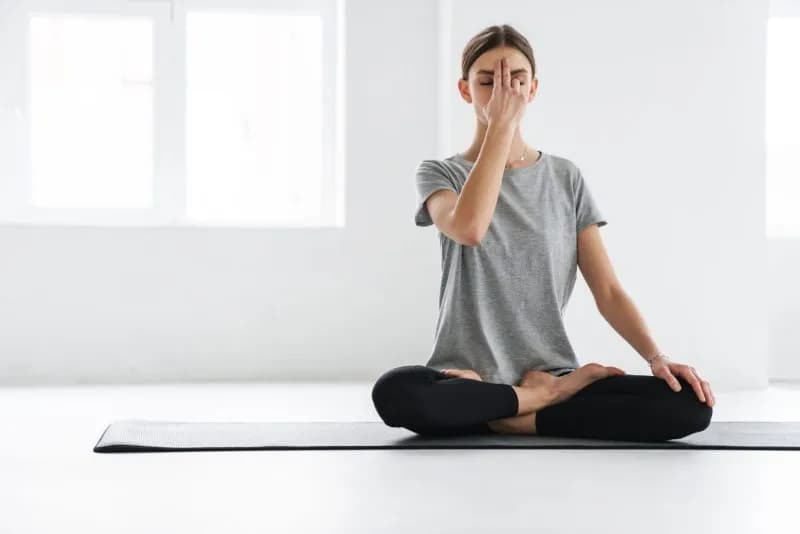
Suryabhedan Pranayam — Step by Step Step 1: Morning Seated Position Sit in Sukhasana or Vajrasana on an empty stomach — ideally in the morning. Spine tall, eyes closed. Right hand to Vishnu Mudra — index and middle fingers folded.
Step 2: Close Left Nostril and Inhale Right Close the left nostril with the ring finger. Inhale slowly and fully through the right nostril for 4–8 counts — drawing solar warmth into the body.
Step 3: Optional Retention (Antara Kumbhaka) Close both nostrils with thumb and ring finger. Retain for 4–8 counts if comfortable. Beginners omit retention initially.
Step 4: Exhale Through Left Nostril Release the ring finger. Exhale completely through the left nostril for 8–16 counts.
Step 5: Complete One Round This completes one round. Classical ratio: 1:4:2. Beginners practise 4:0:8 without retention.
Step 6: Continue 5-10 Rounds Practise 5–10 rounds. After the final round, observe the internal warmth, mental sharpening, and subtle energetic elevation.
Breathing
The breath should be slow, controlled, and completely voluntary — never forced. The right nostril inhalation should feel like drawing solar warmth into the body; the left nostril exhalation releases what has been processed. Over a complete session of 10 rounds, a gentle internal warmth and mental sharpening typically become noticeable.
Preparatory Practices
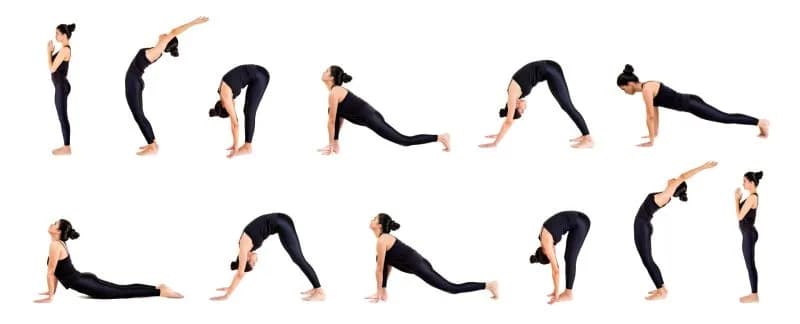
- Morning asana warm-up (Surya Namaskara) — Warms the body before the pranayama session.
- Natural breath observation (2 minutes) — Settling the breath before introducing the deliberate nostril focus.
Variations
- Variation 1: Without Kumbhaka — Beginner Inhale right, exhale left — no retention. The foundational form for all new practitioners.
- Variation 2: With Antara Kumbhaka — Intermediate Inhale right, retain both nostrils closed, exhale left — the classical form producing the full energising and endocrine effects.
- Variation 3: Suryabhedan with Jalandhara Bandha — Advanced The chin lock applied during retention — locking prana in the upper body. This advanced integration should be learned under direct instruction.
Common Mistakes to Avoid
- Inhaling Through the Left Nostril (Reversing Direction) Inhaling left and exhaling right is Chandrabhedan. Suryabhedan is always inhale RIGHT, exhale LEFT. The nostril direction is the entire therapeutic mechanism.
- Practising in the Evening Suryabhedan’s sympathetic activation can interfere with sleep onset if practised within 2–3 hours of bedtime. Practise Suryabhedan in the morning and Chandrabhedan in the evening.
- Practising Without Balancing with Chandrabhedan Exclusive solar breathing over extended periods can create excess internal heat and Pitta symptoms. Always maintain the solar-lunar balance through complementary evening Chandrabhedan practice.
Who Should Practise?
- Those with Sluggish Metabolism and Low Energy The most direct yogic intervention for low energy, poor circulation, and sluggish metabolism — generating internal heat and metabolic activation that complements asana practice.
- Those with Digestive and Thyroid Health Goals The direct solar plexus activation and thyroid stimulation make Suryabhedan a specific tool for digestive function improvement and thyroid support — always as a complement to medical management.
- Is Suryabhedan Good for Beginners? Yes — the no-retention form (inhale right, exhale left, 5 rounds) is accessible from the first pranayama session and produces immediate energising effects.
Make Suryabhedan Pranayam a Part of Your Practice
Suryabhedan Pranayam is yoga’s most directly energising and metabolically activating breath practice — its exclusive right nostril inhalation activating the Pingala Nadi’s solar quality to produce the internal heat, mental alertness, and digestive fire that the morning requires.
Whether using five rounds as a morning energy activation or ten rounds with gentle retention as the therapeutic practice for hypothyroidism and sluggish metabolism, Suryabhedan rewards consistent daily morning practice with progressive energetic and metabolic improvement.
The most effective way to learn Suryabhedan correctly — with nostril direction, Vishnu Mudra technique, and constitutional guidance — is under live expert guidance with Habuild.
Start your 14 day free yoga journey with Habuild, today!
Related reads: Chandrabhedan Pranayam: How to Practice and Its Cooling Benefits · Kapalbhati Pranayam: How to Practice Benefits and Precautions
Right-nostril breathing is meant to be practiced in short, regular doses — the energising effect it’s known for builds cumulatively rather than in one long sitting. Five focused minutes each morning, repeated over weeks, does more for circulation and alertness than an occasional longer session. That kind of steady rhythm is what Habuild’s Yoga Everyday program is designed to give you, pairing pranayama like this with the rest of a daily flow.
Frequently Asked Questions
Related Articles
Kapalbhati Pranayam: How to Practice Benefits and Precautions
Practice Pranayam Kapalbhati with Habuild. Follow the skull-shining breath steps to boost digestion, strengthen your core, and energise your body. Start today!
Chandrabhedan Pranayam: How to Practice and Its Cooling Benefits
Practice Chandrabhedan Pranayam with Habuild. Follow the left nostril breathing steps to calm your mind, cool your body, and improve sleep quality. Start today!
Pranayama Asana: A Guide to Breathing Poses Benefits and Practice
Practice Pranayama Asana with Habuild. Learn pranayama breathing types, steps, and benefits for lung health, stress relief, and daily vitality. Start today!
Moola Bandha (Root Lock): How to Practice and Its Energy Benefits
Practice Moola Bandha with Habuild. Learn the root lock steps to strengthen your pelvic floor, improve digestion, and support hormonal balance. Start today!