
Ushas Mudra (Dawn Gesture): Steps, Benefits & Precautions
Ushas Mudra — the Dawn Gesture — is a yogic hand gesture invoking the energy of Ushas, the Vedic goddess of the dawn, who represents the awakening of consciousn
Key Takeaways
- Named after Ushas, the Rigveda’s dawn goddess, described as the most beautiful celestial being.
- Traditionally practised as the very first act of the morning, before even rising from bed.
- Right thumb rests on top for men, left thumb on top for women, in the traditional form.
- Activates Svadhisthana, the sacral chakra governing creativity and emotional fluidity.
- Paired immediately with Kapalbhati after rising for the most complete morning sequence.
- Practitioners report reduced sleep inertia grogginess when it’s part of their routine.
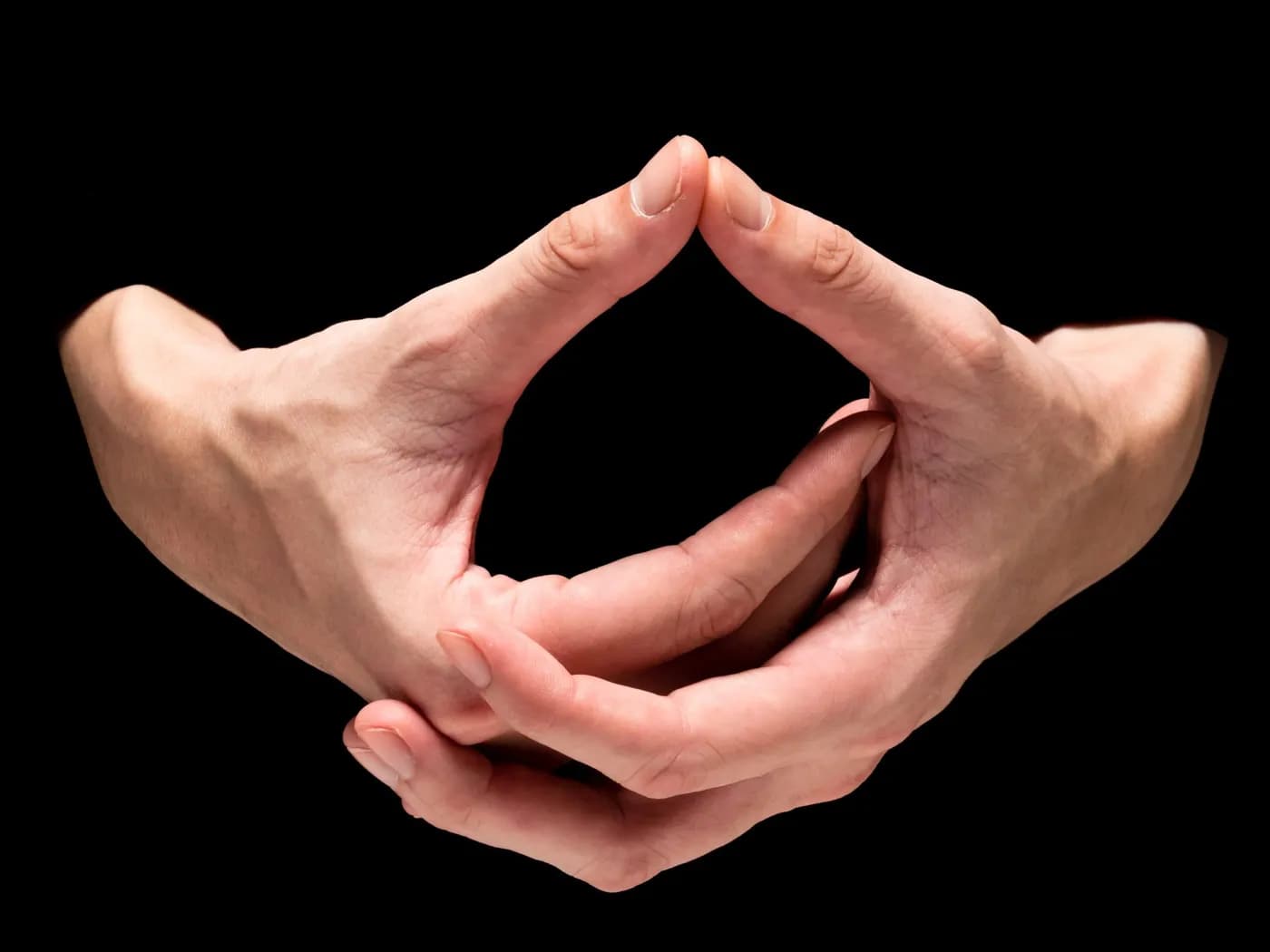
Ushas Mudra — the Dawn Gesture — is a yogic hand gesture invoking the energy of Ushas, the Vedic goddess of the dawn, who represents the awakening of consciousness, the renewal of energy, and the clear, fresh awareness of the new day. Formed by interlacing the fingers with the thumbs touching, it activates the Svadhisthana (sacral) chakra, energises the body and mind upon waking, and is traditionally practised as the very first act of the morning — before rising from bed.
What is Ushas Mudra?
Ushas Mudra — pronounced oo-SHAHS moo-DRAH — is named after Ushas, the dawn goddess of the Rigveda who is described as the most beautiful of all celestial beings — the first light that dissolves darkness, awakens the sleeping world, and sets all beings into their daily activity. The mudra invokes this awakening quality: the transition from sleep to wakefulness, from unconscious to conscious, from darkness to light.
The formation: interlace all eight fingers with the right thumb on top (for men; women interlace with the left thumb on top — though contemporary practice often omits this gender distinction). The right thumb presses gently on the left thumb (or the tip of the left thumb presses gently into the base of the right). The interlaced hands rest at the pelvic or navel level. Ushas Mudra specifically activates the Svadhisthana (sacral) chakra — the energy centre of sexuality, creativity, and the flowing, pleasure-oriented engagement with life. At Habuild, Ushas Mudra is taught as part of the morning mudra awakening sequence, complementing Kapalbhati pranayama for the most complete morning energisation practice.
Ushas Mudra Benefits
Physical Benefits
- Energises the Body Upon Waking Ushas Mudra practised immediately upon waking — before rising from bed — activates the Svadhisthana energy and the awakening prana that the body requires to transition from the sleep state to alert, energised wakefulness. Pair with
- Kapalbhati immediately after rising for the most comprehensive morning energisation sequence. Activates the Svadhisthana (Sacral) Chakra
- The Svadhisthana chakra governs the water element, creativity, sexual energy, emotional fluidity, and the pleasure-oriented, relational engagement with experience. Ushas Mudra’s activation of this chakra supports the healthy expression of all these qualities — balancing the sacral energy that supports both creative work and emotional wellbeing. This complements the broader yoga for hormonal balance programme that addresses the endocrine-sacral chakra connection.
- Sharpens Morning Mental Clarity and Alertness The Ushas (dawn) quality — the transition from unconscious sleep to clear, bright awareness — is what the mudra cultivates as a morning mental state. Practitioners consistently report sharper mental clarity, improved morning alertness, and reduced the grogginess (‘sleep inertia’) that disrupts productive mornings when Ushas Mudra is part of their consistent morning routine.
Mental and Emotional Benefits
- Cultivates Creativity and Emotional Fluidity The Svadhisthana chakra’s domain — creativity, emotional fluidity, and the pleasure of engaged, relational experience — is what Ushas Mudra cultivates as a quality of awareness. Consistent morning practice progressively opens the creative and emotionally expressive capacities that Svadhisthana governs. Pair with
- yoga for hormonal balance for comprehensive endocrine and sacral chakra support. Invokes the Freshness and Renewal of Dawn
- The dawn quality that Ushas embodies — the absolute freshness of a new beginning, unconditioned by yesterday’s concerns — is the psychological state that Ushas Mudra cultivates as a morning intention. Each morning’s practice is an invocation of this renewal quality: the willingness to meet the new day with fresh, open awareness. Pair with yoga for anxiety to reduce the morning anticipatory anxiety that prevents the fresh start that Ushas Mudra invokes.
- Supports Healthy Sexual Energy Balance In the yogic tradition, sexual energy (the creative life force at the Svadhisthana level) is most beneficially expressed when consciously directed — Ushas Mudra’s sacral chakra activation and conscious morning intention provides the redirecting quality that channels this energy toward creative, relational, and spiritual expression.
How to Do Ushas Mudra — Step-by-Step
Key Principles
Ushas Mudra is most effective when practised immediately upon waking — before rising from bed, before checking the phone, before any morning activity. The traditional instruction is to hold the mudra for 5–15 minutes in the waking-from-sleep state, when the boundary between conscious and unconscious is most permeable and the Svadhisthana activation most potent.
Step 1: Upon Waking — Before Rising When the morning alarm sounds or natural waking occurs: remain lying or sit gently upright in bed. Do not check the phone or engage with external stimuli. Bring both hands to the navel or pelvic level.
Step 2: Interlace the Fingers Interlace all eight fingers — right thumb on top for conventional practice, or simply with whichever thumb feels natural. The fingers interlace completely.
Step 3: Apply the Thumb Contact Bring the right thumb to gently press the left thumbnail or the base of the left thumb. The contact is light and sustained — not forceful.
Step 4: Hold with Dawn Intention Close or half-close the eyes. Breathe naturally. Cultivate the Ushas intention: the fresh, clear awareness of the new day dawning within and around you. The sacral chakra at the lower abdomen begins to activate with each breath cycle.
Step 5: Hold for 5–15 Minutes Before Rising Hold throughout the waking transition — 5 minutes for a brief practice, 15 minutes for the complete classical practice. Release the mudra when ready to rise. The morning’s activity begins from this energised, clear state.
Breathing in Ushas Mudra
Natural, awakening breath accompanies Ushas Mudra — the body’s own morning breathing rhythm deepening naturally as the sacral chakra activates. No specific breath ratio or pattern is imposed; the breath simply awakens with the body.
Suryabhedan pranayama (right nostril, solar, warming) can be added after the initial Ushas Mudra hold for the most complete morning energisation practice.
Preparatory Practices
Waking up naturally or with a gentle alarm — the sleep-to-waking transition is the most potent state for Ushas Mudra Ushas Mudra is one of yoga’s most practically transformative morning practices — requiring no special space, no equipment, and minimal time, yet producing the quality of clear, energised, creative morning awareness that the rest of the day is built upon. Practised daily before rising, it gradually transforms the quality of morning consciousness from groggy reactivity to clear, intentional engagement. Habuild’s sessions include the complete morning mudra and pranayama curriculum. Your first 7 days start at just 14-day free trial.
Start your 14 day free yoga journey with Habuild, today!
Ushas Mudra draws its meaning from repetition — invoking the energy of dawn each morning, day after day, is what slowly shifts how alert and centered you feel through the rest of your routine. Practiced only once in a while, that awakening quality has little chance to settle in. Habuild’s Yoga Everyday program offers a structured daily flow where mudras like this one can become a genuine morning anchor.
Frequently Asked Questions
Related Articles
Kundalini Mudra (Awakening Gesture): Steps, Benefits & Precautions
Enclosing the extended left index finger within the right fist directs prana upward through the body’s central channel. See the steps, benefits, and.

Dhyana Mudra: How to Practice and Its Benefits for Meditation
Practice Dhyana Mudra with Habuild. Follow the meditation hand gesture steps to calm the mind, deepen concentration, and support your daily practice. Start!
Shakti Mudra: How to Practice and Its Benefits for Deep Sleep
Practice Shakti Mudra with Habuild. Follow the power gesture steps to relieve insomnia, calm the anxious mind, and deepen your sleep practice. Start today!