
Ustrasana: Camel Yoga Pose, Steps & Yoga Benefits
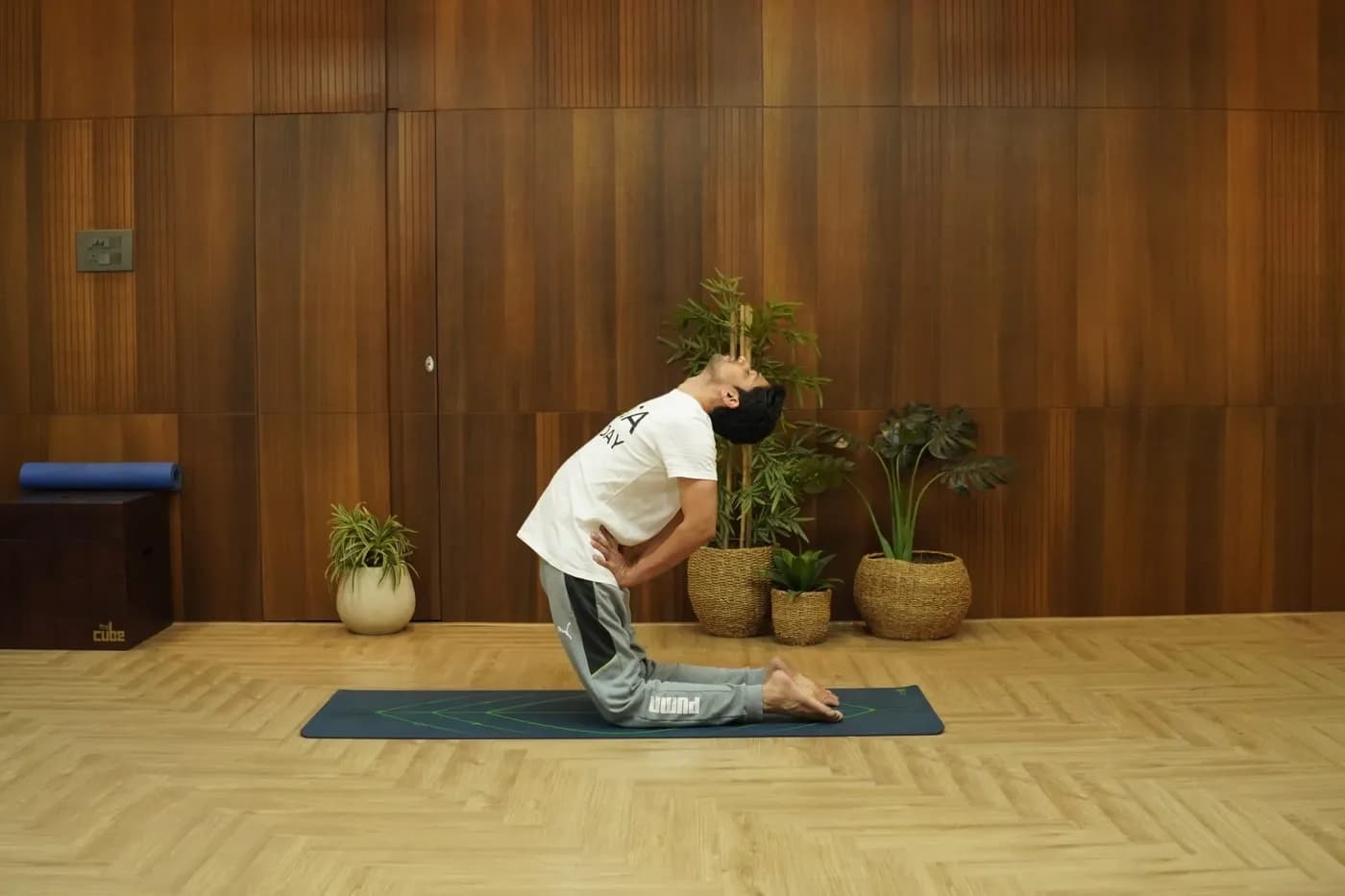
Ustrasana, or Camel Pose, is a kneeling backbend that deeply stretches the hip flexors, chest, and entire anterior spine while strengthening the back.
Key Takeaways
- The kneeling position fully extends the hip flexors, reaching a depth prone backbends can't.
- Progresses through supported hands-on-lower-back and block-at-heels before the full expression.
- Neck extension in the full pose exposes the anterior throat to stimulate the thyroid.
- Named for replicating a camel's characteristic hump and deeply arched back.
- Delivers one of the deepest anterior body openings of any kneeling yoga posture.
- Builds emotional openness and courage alongside its physical flexibility benefits.
Ustrasana, or Camel Pose, is a kneeling backbend that deeply stretches the hip flexors, chest, and entire anterior spine while strengthening the back musculature and stimulating the thyroid and abdominal organs. It builds emotional openness and courage. Suitable for all levels with progressive modifications.
What is Ustrasana?
Ustrasana — known in English as Camel Pose — is one of the most powerful and transformative kneeling backbend postures in yoga. The name derives from Sanskrit: Ustra meaning camel, and asana meaning posture. The pose replicates the characteristic hump and arched back of a camel — the practitioner kneeling upright and arching deeply backward, the hands reaching for the heels and the chest opening fully toward the sky.
Ustrasana delivers one of the deepest anterior body openings available in kneeling postures — stretching the hip flexors, abdominals, chest, anterior shoulders, and the entire anterior spinal column simultaneously. Unlike prone backbends such as Bhujangasana, Ustrasana is performed in a kneeling position that fully extends the hip flexors — addressing the chronic hip flexor shortening of sedentary lifestyles that prone backbends cannot fully reach.
At Habuild, Ustrasana is a key posture in our backbend sequences — taught progressively from the supported hands-on-lower-back variation through the intermediate block-at-the-heels variation to the full hands-on-heels expression.
Ustrasana Benefits
Physical Benefits
- Opens the Chest and Improves Thoracic Extension — The backward arch of Ustrasana creates one of the most complete anterior chest openings in yoga — stretching the pectorals, anterior deltoids, intercostals, and sternocleidomastoid muscles simultaneously. This comprehensive chest opening directly counteracts the thoracic kyphosis and forward shoulder posture that modern life systematically creates — delivering respiratory and postural benefits that deepen progressively with consistent practice.
- Stretches the Hip Flexors Deeply and Completely — The kneeling position of Ustrasana places the hip joint in full extension — maximally lengthening the iliopsoas, rectus femoris, and anterior hip capsule. For practitioners dealing with the hip flexor shortening that contributes to lower back pain, anterior pelvic tilt, and limited lumbar extension, regular Ustrasana provides the most direct and effective hip flexor release available in kneeling yoga postures.
- Strengthens the Back and Spinal Extensors — The active backward arch of Ustrasana engages the entire posterior spinal musculature — building the erector spinae and multifidus strength that supports spinal health, postural endurance, and the deeper backbend practices that require significant posterior chain capacity.
- Stimulates the Thyroid and Abdominal Organs — The neck extension of the full Ustrasana exposes the anterior throat — stimulating the thyroid gland through increased local circulation and the compression-release cycle of entry and exit. The abdominal organs receive a sustained, deep stretch that stimulates digestive function and liver and kidney circulation.
Mental and Emotional Benefits
- Energises the Body and Cultivates Emotional Openness — Ustrasana is one of yoga's most emotionally significant postures — the complete backward arch and fully exposed front body creates a physical experience of vulnerability and openness that many practitioners find deeply emotionally releasing. The courage required to fully open the anterior body produces a sense of emotional expansion that experienced practitioners consistently identify as one of the most powerful effects of regular Ustrasana practice.
How to Do Ustrasana — Step-by-Step Instructions
Key Principles
Two principles govern safe Ustrasana: the arch initiates from the thoracic spine, not the lumbar — the chest leads the backbend upward and backward, not the lower back compressing; and the hips press forward throughout — maintaining the hip-over-knee alignment that distributes the arch across the whole spine rather than concentrating it in the lumbar region.
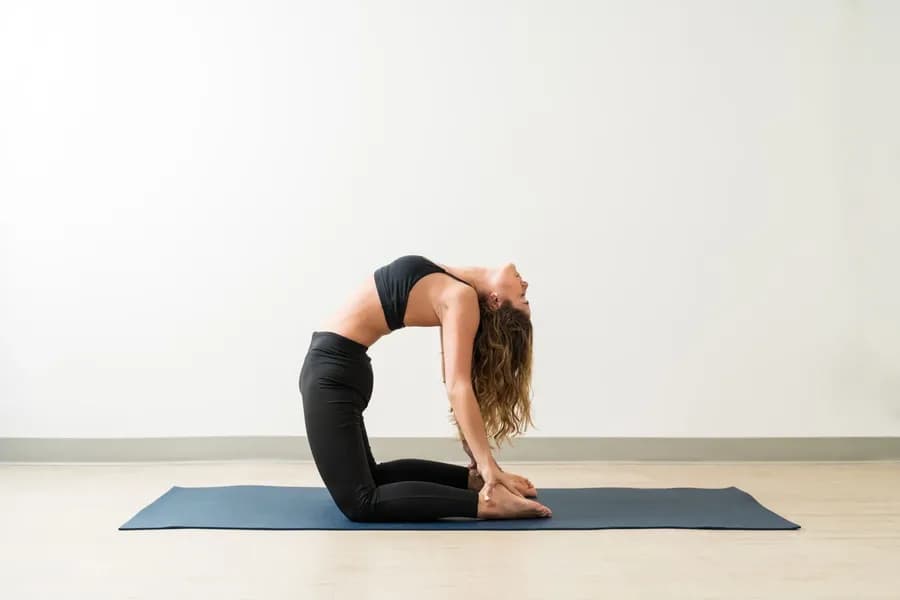
Step 1: Starting Kneeling Position — Kneel on the mat with the knees hip-width apart. The feet may be behind the hips with toes tucked under (raising the heels and making them easier to reach) or tops of feet flat on the mat.
Step 2: Hands to Lower Back — Place the hands on the lower back — fingers pointing downward, palms supporting the lumbar region. On an inhalation, press the hips forward and begin to arch backward from the thoracic spine.
Step 3: Open the Chest and Arch Back — Continue arching until the chest is fully open toward the ceiling and the gaze naturally follows backward. Keep the thighs vertical — hips directly above the knees — throughout.
Step 4: Reach for the Heels (If Accessible) — If comfortable, lower one hand at a time to reach for the heel — maintaining the hip-forward position that protects the lower back. Both hands reach both heels in the full expression.
Step 5: Final Position and Hold — Hold for three to five breaths. Breathe expansively — each inhalation creating more chest space, each exhalation maintaining the structural openness without collapse.
Step 6: How to Come Out of Ustrasana — Bring one hand back to the lower back, then the other. Slowly return to the upright kneeling position on an inhalation — using core engagement and the hands to support the return. Rest in Balasana or Vajrasana before repeating.
Breathing in Ustrasana
Each inhalation in Ustrasana lifts and expands the chest further — the breath and the backbend working together. Each exhalation maintains the openness without deflating. Never hold the breath in any backbend posture.
Preparatory Poses Before Ustrasana
These poses warm the anterior chain and kneeling base before the deep Camel Pose arch.
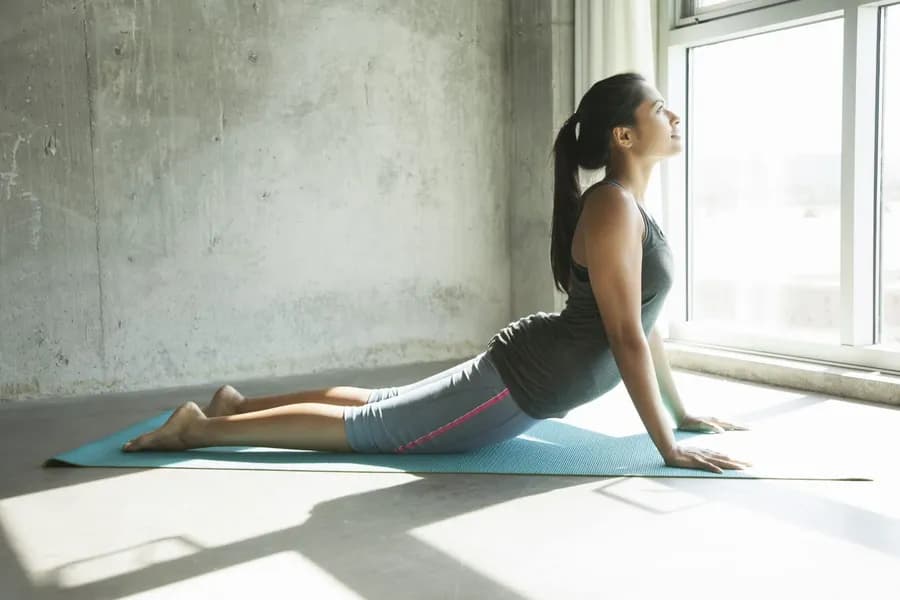
- Bhujangasana (Cobra, 2-3 rounds) — Warms the spinal extensors and anterior chest before the more demanding kneeling arch.
- Low Lunge (Anjaneyasana) — Directly warms the hip flexors that Ustrasana stretches most deeply.
- Setu Bandhasana (Bridge Pose) — Prepares the posterior chain for the active engagement required in Ustrasana.
- Knee padding check — Always ensure adequate kneeling surface — a folded blanket under the knees prevents kneecap discomfort throughout the hold.
Variations of Ustrasana
- Variation 1: Supported Ustrasana — Hands on Lower Back (Beginner) — Hands remaining on the lower back throughout — this delivers all the chest opening, hip flexor stretching, and spinal extension benefits of the full posture while significantly reducing the depth and strength demands. This is the recommended starting point for all beginners and the daily form for those with lower back sensitivity.
- Variation 2: Ustrasana with Blocks at Heels — Intermediate — A block placed vertically beside each foot elevates the heels — making the hand-to-heel connection accessible to those with limited thoracic extension or shoulder flexibility, while maintaining the full hip-forward, spine-extended geometry of the complete posture.
- Variation 3: Full Ustrasana with Extended Neck — Advanced — Allowing the head to drop completely back — cervical spine in full extension — in the complete hands-on-heels posture. This maximises the thyroid stimulation and anterior cervical stretch. Only appropriate when the full posture is established comfortably and the neck is free of conditions that make extension unsafe.
Common Mistakes to Avoid in Ustrasana
- Arching Only from the Lumbar Rather Than the Full Spine — The most common and consequential Ustrasana error — crunching into the lower back rather than opening the thoracic spine and chest. Focus on lifting the sternum upward before arching backward, keeping the thoracic extension as the primary movement throughout.
- Allowing the Hips to Drift Behind the Knees — The hips must remain directly above the knees throughout Ustrasana — the thighs vertical. Allowing the hips to shift backward reduces the hip flexor stretch and concentrates the arch in the lumbar rather than distributing it across the complete spine.
- Releasing Without Core Support — Returning from Ustrasana without adequate core engagement and hand support can cause a sudden spinal extension followed by compression on exit. Always use the hands actively on the lower back to support the controlled return to the upright kneeling position.
Who Should Practise Ustrasana?
- Those with Chronic Hip Flexor Shortening and Lower Back Pain — Ustrasana is the most directly effective kneeling yoga posture for the hip flexor shortening that causes anterior pelvic tilt, lower back pain, and limited lumbar extension in sedentary adults. Regular practice progressively addresses the iliopsoas restriction that underlies many chronic lower back complaints.
- Desk Workers Seeking Postural Correction — The comprehensive anterior body opening of Ustrasana counteracts the thoracic kyphosis, shortened pectorals, and restricted breathing of prolonged sitting more thoroughly than most other backbend postures — making it a high-value daily addition for working professionals.
- Is Ustrasana Good for Beginners? — Yes — the supported variation with hands on the lower back is accessible from early in a yoga practice and delivers meaningful therapeutic benefit. Most beginners can safely practise the supported Ustrasana from the first session with adequate warm-up.
Make Ustrasana a Part of Your Daily Practice
Ustrasana is the yoga tradition's most comprehensive kneeling anterior body opener — its full-extension hip flexor stretch, thoracic chest opening, and spinal extension delivering a depth of anterior chain release that no prone backbend fully reaches. Its emotional opening quality makes it one of the most psychologically as well as physically transformative postures in the backbend family.
Whether you are practising the supported variation with hands on the lower back, building toward the full hands-on-heels expression, or deepening the neck extension of the advanced form, every stage of Ustrasana delivers meaningful progressive benefits.
The most effective way to learn Ustrasana correctly — with thoracic-led arch technique, hip-forward alignment, and the safe exit guidance — is under live expert guidance with Habuild.
Start your 14 day free yoga journey with Habuild, today!
Related reads: Ustrasana Benefits: What the Camel Pose Does for Your Body and Mind · Ardha Ustrasana (Half Camel Pose): Steps, Benefits & Precautions
Camel Pose opens the chest and energises the body in the moment, but the spinal strength and flexibility that Ustrasana builds need repeated backbending to really take hold. Practising it occasionally keeps you flexible enough to attempt it; practising it regularly is what makes it feel easier each time. Habuild's Yoga Everyday program includes backbends like this in a structured daily routine built for that kind of progression.
Frequently Asked Questions
Related Articles

Tadasana — The Mountain Pose
Tadasana, or Mountain Pose, is the quiet foundation every standing yoga pose is built on — simple to look at, precise to get right.

Adho Mukha Svanasana — The Downward-Facing Dog Pose
Adho Mukha Svanasana, universally known as Downward-Facing Dog, is one of yoga's most iconic and versatile postures.
Marjaryasana–Bitilasana — The Cat–Cow Pose
Marjaryasana–Bitilasana, commonly known as Cat–Cow Pose, is a gentle, dynamic flow between two postures that warms up the body and brings flexibility to the entire spine.

Vajrasana (Thunderbolt Pose): Steps, Benefits and Alignment Tips
Master Vajrasana (Thunderbolt Pose) with Habuild. Practise Vajrasana to improve digestion, strengthen your posture, calm the mind, and enhance meditation. Start your wellness journey today.
Ardha Matsyendrasana: Steps Benefits and How to Practice v2
Learn ardha matsyendrasana with Habuild. Discover ardha matsyendrasana benefits for spinal health, improved digestion, and flexibility. Start your practice now!