
Utthita Hasta Padangusthasana (Extended Big Toe Pose): Steps, Benefits & Precautions
Utthita Hasta Padangusthasana — the Extended Big Toe Pose — is a standing balance in which the practitioner stands on one leg, extends the other leg forward (or
Key Takeaways
- Grips the big toe of the extended foot in a specific Padangustha grip while balancing.
- Has two distinct expressions – forward extension and lateral extension – trained separately.
- Appears both in the Ashtanga Primary Series and as a standalone pose in every tradition.
- The lateral variation activates the hip abductors of both the standing and extended leg at once.
- Complements Trikonasana specifically for comprehensive lateral hip strength and stability.
- Forward extension is taught before the lateral variation is ever introduced.
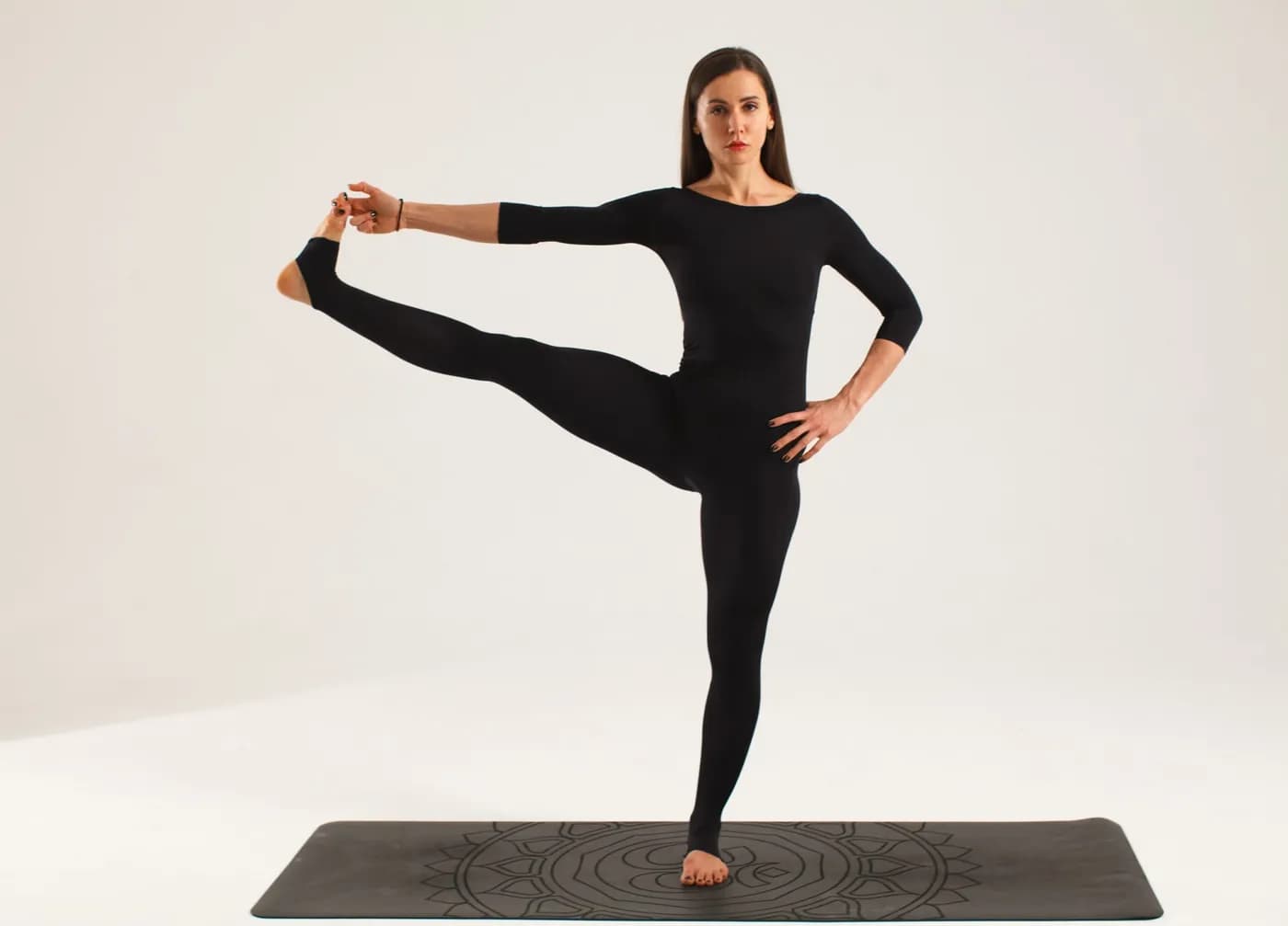
Utthita Hasta Padangusthasana — the Extended Big Toe Pose — is a standing balance in which the practitioner stands on one leg, extends the other leg forward (or to the side), and grasps the big toe of the extended foot. It simultaneously develops single-leg balance, hamstring and hip flexibility, and the focused concentration that sustained standing balance demands. It appears in both the Ashtanga Primary Series and as a standalone standing balance in all yoga traditions.
What is Utthita Hasta Padangusthasana?
Utthita Hasta Padangusthasana — pronounced oo-TEE-tah HAHS-tah pah-dahn-goosh-TAHS-ana — translates as Extended Hand to Big Toe Pose (Utthita = extended, Hasta = hand, Pada = foot, Angustha = big toe, Asana = posture). The pose is performed on both sides: the standing leg bears the body’s weight while the opposite leg is held at hip height or above, with the hand gripping the extended foot’s big toe in a Padangustha grip.
The pose encompasses two primary expressions — the forward extension and the lateral extension — each challenging balance and flexibility differently. Like Virabhadrasana III and Vrksasana, Utthita Hasta Padangusthasana develops the single-leg stability and focused gaze (drishti) that define advanced standing balance practice. At Habuild, both extensions are taught progressively — beginning with the forward extension before introducing the lateral variation.
Utthita Hasta Padangusthasana Benefits
Physical Benefits
- Builds Single-Leg Balance and Proprioception Utthita Hasta Padangusthasana places the complete demand of balance on one leg — developing the vestibular, proprioceptive, and neuromuscular coordination of the standing leg’s hip, knee, and ankle stabilisers. This single-leg balance development directly supports
- yoga for flexibility and general movement quality in daily activity. Stretches the Hamstrings and Hip Flexors
- The extended leg requires both hamstring length (for the forward extension) and hip abductor flexibility (for the lateral extension). Progressive Utthita Hasta Padangusthasana practice provides meaningful hamstring and hip opening alongside the balance training — complementing seated forward fold practices like Paschimottanasana with the added balance challenge.
- Strengthens the Standing Leg and Core The standing leg’s glute medius, quadriceps, and ankle stabilisers work continuously throughout the pose — the sustained single-leg load progressively building the lower limb strength and ankle stability that injury prevention and daily function require.
- Improves Hip Abductor Strength in the Lateral Variation The lateral extension of Utthita Hasta Padangusthasana — leg held to the side at hip height — specifically activates the standing leg’s hip abductors and the extended leg’s hip abductors simultaneously. This bilateral hip abductor work is a meaningful complement to
- Trikonasana for comprehensive lateral hip strength and stability.
Mental and Emotional Benefits
- Develops Drishti and Single-Pointed Concentration The sustained balance demand of Utthita Hasta Padangusthasana requires unwavering drishti (fixed gaze) — any distraction of the gaze immediately disrupts the balance. This pose is among yoga’s most direct practices for developing the single-pointed concentration that both meditation and high-performance daily focus require.
- Builds Equanimity Under Physical Demand Holding a challenging balance while maintaining even breathing and composed expression develops the quality of equanimity — the calm, non-reactive presence — that distinguishes advanced yoga practice from mere physical exercise.
How to Do Utthita Hasta Padangusthasana — Step-by-Step
Key Principles
The standing leg is active throughout — never lock the knee but engage the quadriceps and keep the hip over the ankle. The gaze (drishti) is fixed at a single unmoving point — changing the gaze topples the balance. The spine stays long — do not round the back to reach the foot. If the hamstrings do not allow the full grip, use a strap around the arch of the extended foot.
Step 1: Establish Tadasana Stand in Tadasana — feet together, weight even, spine tall, gaze steady at a fixed point at eye level.
Step 2: Lift the Right Knee Inhale and lift the right knee to hip height — thigh parallel to the floor. Hold the right knee with the right hand momentarily. Establish balance on the left leg.
Step 3: Grip the Big Toe and Extend Forward Loop the right index and middle fingers around the right big toe (Padangustha grip). Exhale and extend the right leg forward — straightening the knee as much as hamstring flexibility allows. Left hand on the left hip. Hold for 5 breaths.
Step 4: Open the Leg to the Right (Lateral Variation) Inhale. On an exhale, open the right leg to the right — extending it to the side at hip height. Turn the gaze to the left. Left arm may extend to the left for counterbalance. Hold for 5 breaths.
Step 5: Return to Centre and Release Inhale and bring the right leg back to centre (forward extension). Exhale and release the grip, lower the right knee, and return to Tadasana. Repeat on the left side.
Breathing in Utthita Hasta Padangusthasana
Each transition is initiated on an inhale (creating length and space) and settled on an exhale (grounding the balance). During the held positions, breathe slowly and evenly — the quality of breath directly reflects and influences the quality of the balance. Laboured breathing indicates too much muscular tension; a steady, quiet breath reflects genuine postural composure.
Preparatory Poses
Supta Padangusthasana — supine big toe pose builds hamstring length before the standing version Utthita Hasta Padangusthasana combines single-leg balance, hamstring flexibility, hip opening, and drishti concentration in one demanding but accessible standing pose. Its strap variation makes it immediately available; its full expression develops over weeks of consistent practice. Habuild’s daily sessions include the complete standing balance curriculum with live guidance. Your first 7 days start at just 14-day free trial.
Start your 14 day free yoga journey with Habuild, today!
Balance poses like this one are notoriously wobbly the first several times you try them, and that’s by design — your nervous system needs repeated exposure to get steadier. Practicing it within a regular sequence, rather than as a standalone challenge, is what turns the wobble into real stability over weeks. Habuild’s Yoga Everyday program can guide that kind of gradual, daily progression.
Frequently Asked Questions
Related Articles
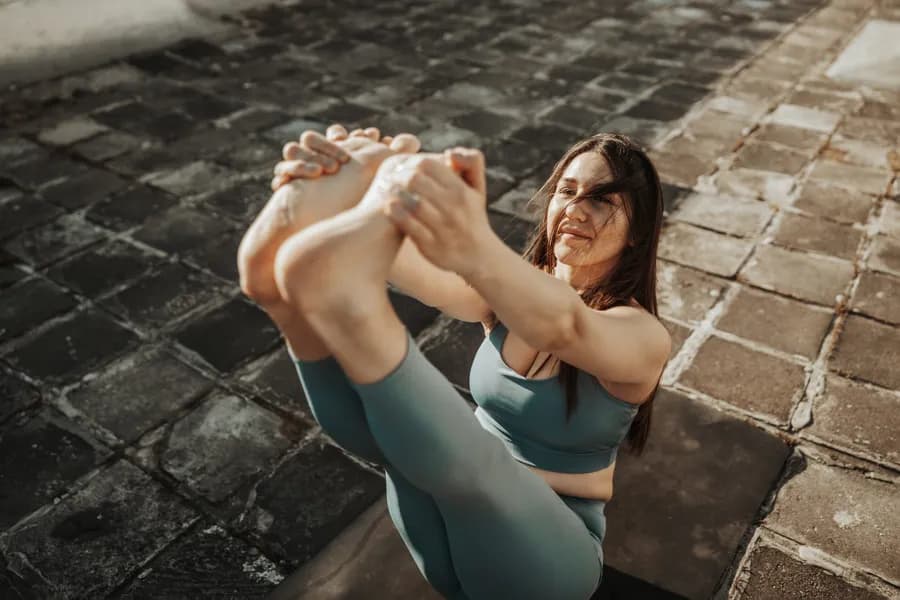
Ubhaya Padangusthasana (Both Big Toe Pose): Steps, Benefits and Precautions
Holding both big toes while balancing on the sitting bones with legs extended challenges core strength, hamstring flexibility, and balance all at once. See the steps, benefits, and precautions.

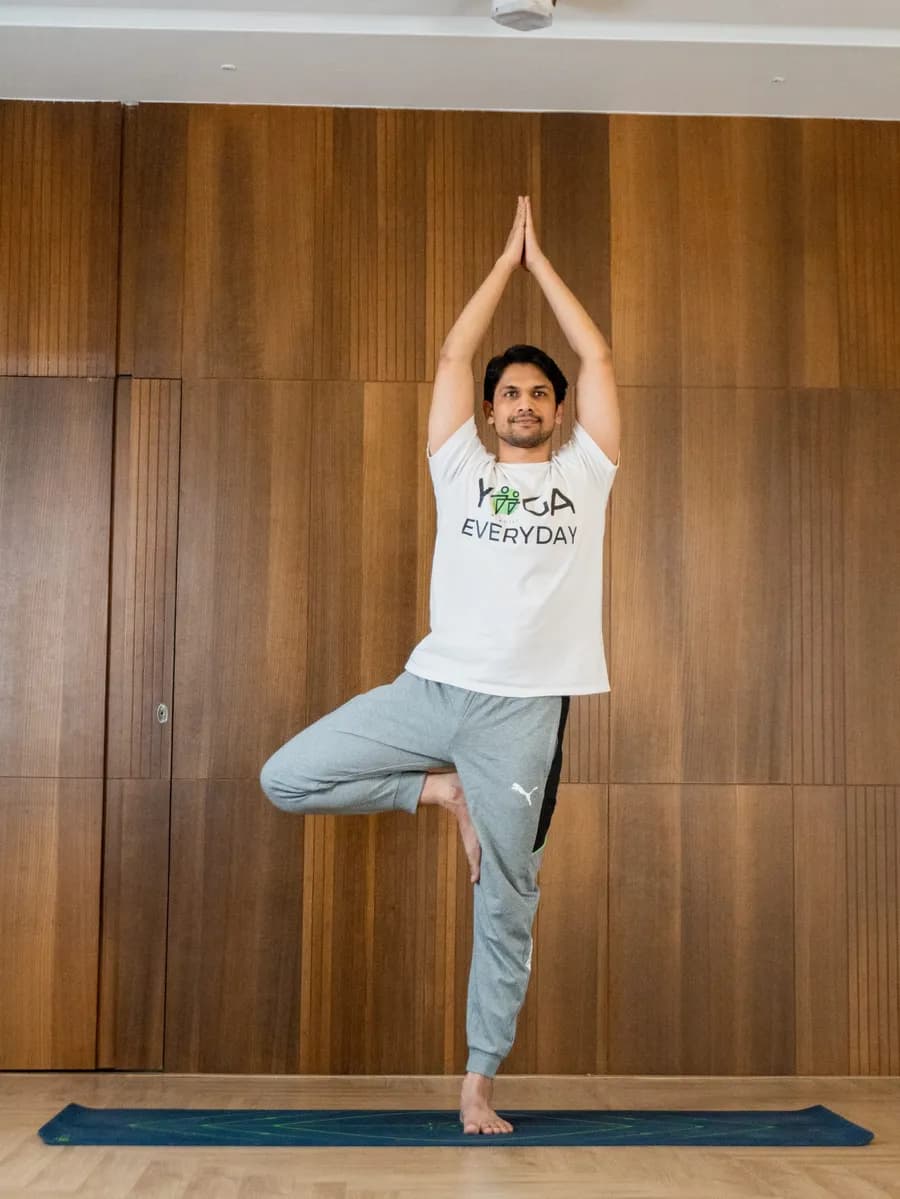
Vrksasana (Tree Pose): Steps Balance and Concentration Benefits
Practice Vrksasana yoga with Habuild. Follow the tree pose steps to improve balance, strengthen your legs, and build focus and mental clarity. Start today!
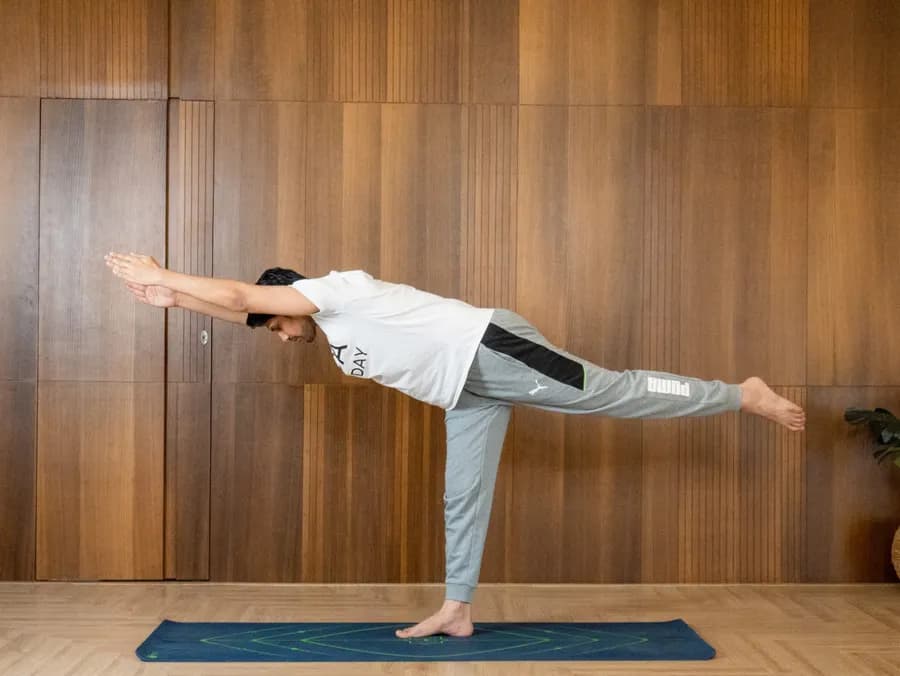
Virabhadrasana 3 (Warrior 3): Steps Balance and Core Benefits
Practice Virabhadrasana 3 with Habuild. Follow Warrior III steps to improve balance, build leg strength, and develop core stability and focus. Start today!