
Vakrasana: Twisted Pose, Steps & Yoga Benefits
Vakrasana, or Twisted Pose, is a seated spinal rotation that improves spinal flexibility, stimulates digestive organs, and strengthens the core.
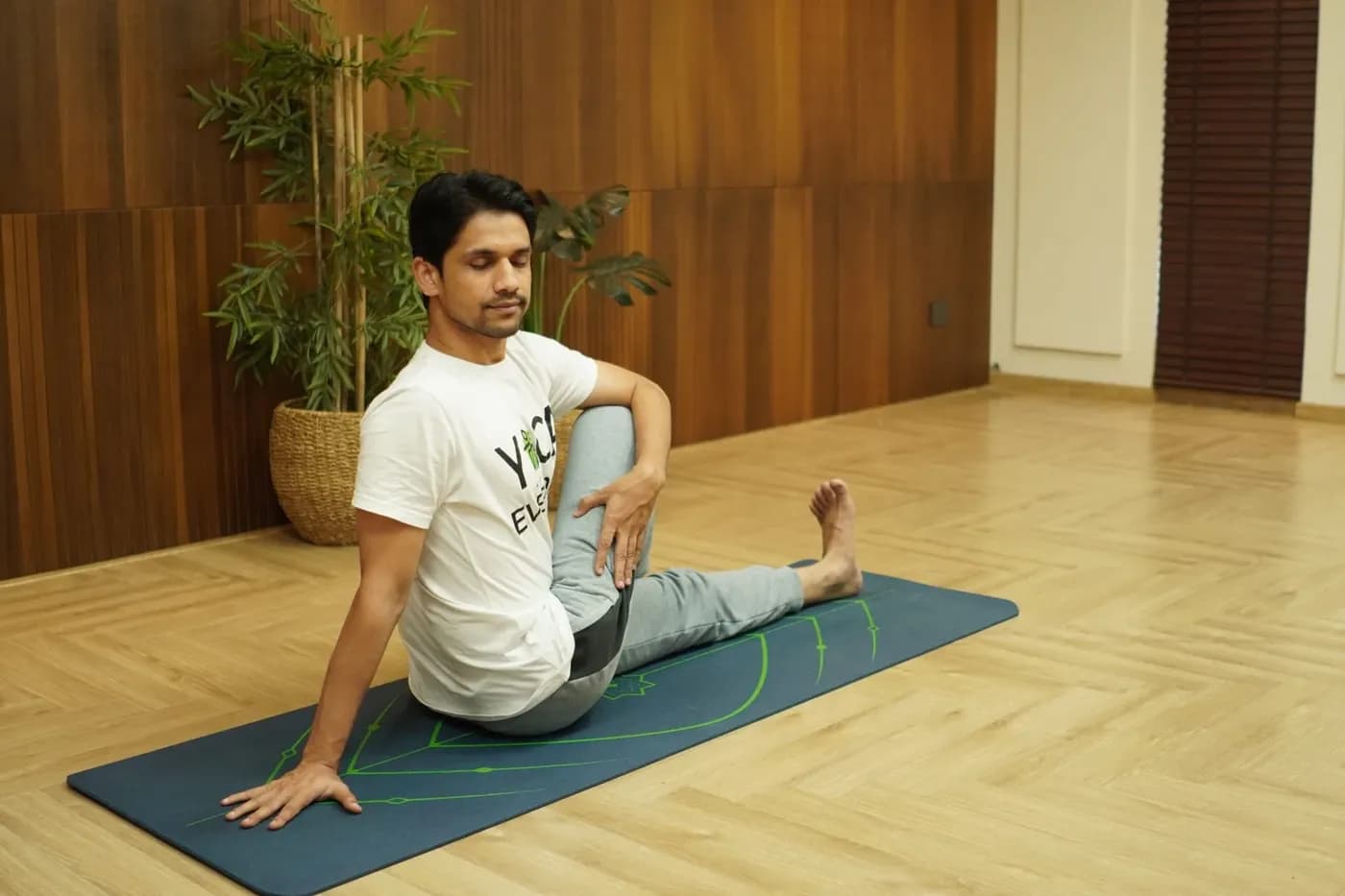
Key Takeaways
- Serves as the beginner-friendly gateway pose that prepares the body for Ardha Matsyendrasana.
- One leg stays extended while the other's foot sits beside the extended knee for the twist.
- Digestive stimulation from the twist is present even at the gentle depth beginners use.
- Rotational depth ranges from mild in beginners to progressively deeper with practice.
- Massages the liver, kidneys, and intestines through alternating compression and release.
- Builds deep core stabiliser and spinal rotator strength while holding the upright twist.
Vakrasana, or Twisted Pose, is a seated spinal rotation that improves spinal flexibility, stimulates digestive organs, and strengthens the core. It serves as the beginner-friendly gateway to yoga's family of twisting postures, making the physiological benefits of spinal rotation accessible to all levels including those with limited spinal mobility.
What is Vakrasana?
Vakrasana — known in English as Twisted or Crooked Pose — is a seated spinal rotation posture that serves as the foundational introduction to yoga's twisting family. The name derives from Sanskrit: Vakra meaning twisted or curved, and asana meaning posture. Vakrasana is essentially a preparatory version of the more demanding Ardha Matsyendrasana — with a simpler leg position and gentler rotational depth that makes the core spinal twist and digestive benefits accessible to complete beginners.
Vakrasana is performed seated with one leg extended and the other bent, the foot placed beside the extended knee. The torso rotates toward the bent knee — creating a spinal twist that ranges from mild in beginners to progressively deeper with continued practice. This simplicity of entry makes Vakrasana one of the most important gateway postures in yoga — introducing the physiological benefits of spinal rotation to practitioners who are not yet ready for more demanding twisting postures.
At Habuild, Vakrasana is regularly incorporated into our seated posture sequences as both an accessible twisting posture in its own right and as progressive preparation for Ardha Matsyendrasana.
Vakrasana Benefits
Physical Benefits
- Improves Spinal Rotation and Flexibility — The primary Vakrasana benefit is its progressive development of spinal rotational mobility. The gentle seated twist rotates the lumbar, thoracic, and lower cervical spine in a supported, accessible position — progressively restoring the rotational range that sedentary lifestyles restrict. Regular practice relieves the spinal stiffness that is a primary contributor to lower back pain and postural rigidity in adults.
- Stimulates Digestive Organs and Improves Digestion — Like all spinal twisting postures, Vakrasana creates an alternating compression and release of the abdominal organs as the torso rotates — stimulating digestive enzyme secretion, improving peristaltic movement, and massaging the liver, kidneys, and intestines. This digestive stimulation is the posture's most clinically significant physical benefit and is present even at the gentle rotational depth accessible to beginners.
- Strengthens the Core and Spinal Muscles — Maintaining the upright spinal position during the twist requires sustained engagement of the deep core stabilisers and spinal rotator muscles — building the functional core strength and spinal muscle balance that protect against back injury and postural deterioration.
Mental Benefits
- Improves Focus and Embodied Body Awareness — The rotational demand of Vakrasana requires attentive body awareness and deliberate breath synchronisation — cultivating the same quality of focused, present-moment attention that meditation develops. The posture's physical specificity and bilateral practice on each side develops the proprioceptive awareness and internal focus that all seated yoga practices build toward.
How to Do Vakrasana — Step-by-Step Instructions
Key Principles
The rotation initiates from the base of the spine and moves upward — never from the shoulders. The spine lengthens on every inhalation and the rotation deepens on each exhalation. Both sitting bones remain grounded throughout — if one lifts, sit on a folded blanket to level the pelvis before rotating.
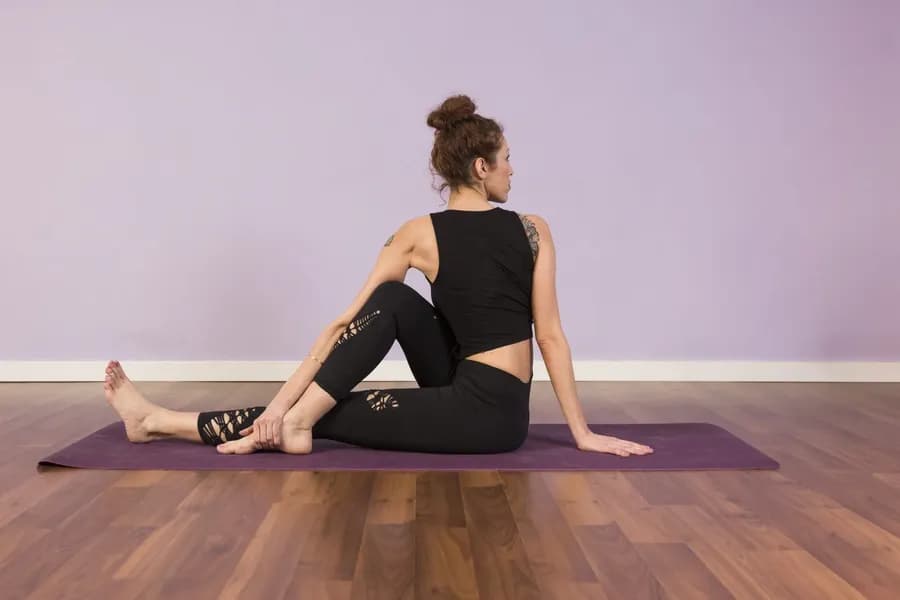
Step 1: Starting Seated Position — Sit on the mat with both legs extended. Sit on a folded blanket if the lower back rounds when sitting upright.
Step 2: Bend One Knee and Place the Foot — Bend the right knee and place the right foot flat on the mat beside the left knee — the right knee pointing upward.
Step 3: Lengthen the Spine — On an inhalation, lengthen the spine — growing tall through the crown of the head and drawing the shoulder blades gently together.
Step 4: Rotate the Torso — On an exhalation, rotate the torso to the right — placing the left hand on the right knee (or outside the right knee for a deeper twist) and the right hand on the mat behind the right hip for support.
Step 5: Breathe and Hold — With each inhalation, lengthen the spine. With each exhalation, deepen the rotation gently. Keep both sitting bones grounded throughout. Hold for five to eight breaths.
Step 6: Release and Repeat Other Side — Release on an inhalation, return to centre, and repeat on the left side. Always practise both sides with equal duration.
Breathing in Vakrasana
Inhalation creates the spinal length; exhalation deepens the rotation. This breath-led approach is the key quality that makes Vakrasana a therapeutic spinal twist rather than a mechanical stretch. The rotation should feel like a gentle wringing that softens with each breath cycle — never a forced pulling.
Preparatory Poses Before Vakrasana
These poses warm the spine and hips for seated twisting.
- Surya Namaskara (2-3 rounds) — Warms the complete spine before rotational work.
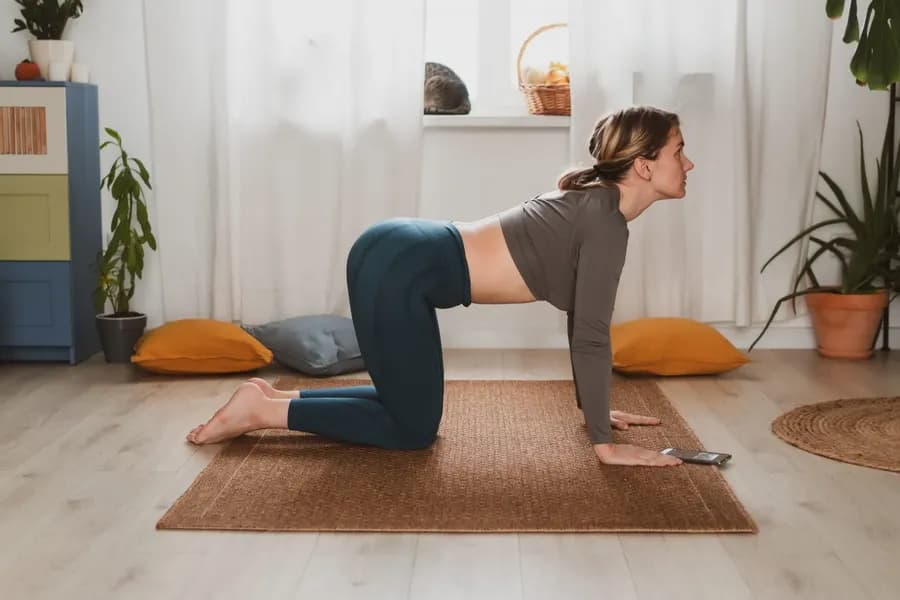
- Cat-Cow (5-8 rounds) — Mobilises the entire spine before the rotational demands of the seated twist.
- Janu Sirsasana (Head-to-Knee Pose) — Opens the hip and hamstring of the extended leg in the Vakrasana starting position.
Variations of Vakrasana
- Variation 1: Vakrasana with Both Legs Extended — Maximum Beginner Access — Keeping both legs extended rather than bending one creates an even more accessible seated twist — appropriate for practitioners with very limited hip flexibility or those in early convalescence where the bent-knee position is uncomfortable.
- Variation 2: Standard Vakrasana — Foundational — One knee bent, foot beside the opposite knee, torso rotating toward the bent knee — the classical form as described in the step-by-step instructions. This is the primary daily form appropriate for most practitioners.
- Variation 3: Vakrasana with Deeper Arm Wrap — Intermediate — Instead of the hand simply on the outside of the knee, the elbow hooks around the bent knee — creating a stronger lever for the spinal rotation. This deepens the thoracic and lumbar rotation and serves as the direct preparation for Ardha Matsyendrasana.
Common Mistakes to Avoid in Vakrasana
- Initiating the Rotation from the Shoulders — Reaching the rotation target by turning the shoulders without rotating the spine misses the lumbar and thoracic rotation that makes the posture therapeutically significant. Always initiate from the lower back upward — the shoulders rotate last as the expression of a spine that has already rotated.
- Allowing a Sitting Bone to Lift — When one sitting bone lifts to accommodate a tight hip or hamstring, the twist becomes a lateral bend rather than an axial rotation — losing the spinal rotation benefit. Sit on a folded blanket to level both sitting bones before rotating if one tends to lift.
- Collapsing the Spine in the Rotation — A rounded, shortened spine under rotational load compresses the vertebrae. Prioritise the inhale-lengthening of the spine on every breath cycle — the rotation develops within the length, not by sacrificing it.
Who Should Practise Vakrasana?
- Complete Beginners to Yoga Twisting Postures — Vakrasana is the universally recommended starting point for spinal twisting practice in yoga — its accessible leg position and gentle rotational depth making it appropriate for absolute beginners, older practitioners, and those returning from spinal stiffness or restricted mobility.
- Those with Digestive and Metabolic Health Goals — The digestive organ stimulation of the spinal twist — even at the gentle depth of Vakrasana — is meaningful and consistent. Daily Vakrasana practice provides progressive digestive improvement alongside its spinal mobility benefits.
- Is Vakrasana Good for Beginners? — Yes — Vakrasana is specifically designed as the beginner's introduction to spinal twisting. It is one of the first seated postures taught in foundational yoga sequences and delivers the full spectrum of twisting benefits in its most accessible form.
Make Vakrasana a Part of Your Daily Practice
Vakrasana is the yoga tradition's most accessible gateway to the profound benefits of spinal rotation — its simple one-bent-knee seated twist delivering digestive stimulation, spinal mobility, and core strengthening in a posture that every practitioner can access from the very first session.
Whether you are using Vakrasana as your foundational daily twist practice, building toward Ardha Matsyendrasana, or maintaining spinal rotational mobility as a standalone daily practice, the posture rewards consistency with progressive and meaningful spinal health benefits.
The most effective way to learn Vakrasana correctly — with the base-to-crown rotation initiation and breath-led deepening — is under live expert guidance with Habuild.
Start your 14 day free yoga journey with Habuild, today!
Related reads: Vakrasana Benefits: Steps, Poses & Precautions · Parighasana (Gate Pose): Steps Core and Flexibility Benefits
A single twist in Vakrasana won't transform your spine, but the gentle rotation, repeated regularly, is what keeps the spine supple and digestion moving. Think of it less as a stretch and more as maintenance your body needs on a recurring basis. Habuild's Yoga Everyday program includes twists like this within a broader daily sequence built around exactly that kind of maintenance.
Frequently Asked Questions
Related Articles

Tadasana — The Mountain Pose
Tadasana, or Mountain Pose, is the quiet foundation every standing yoga pose is built on — simple to look at, precise to get right.

Adho Mukha Svanasana — The Downward-Facing Dog Pose
Adho Mukha Svanasana, universally known as Downward-Facing Dog, is one of yoga's most iconic and versatile postures.
Marjaryasana–Bitilasana — The Cat–Cow Pose
Marjaryasana–Bitilasana, commonly known as Cat–Cow Pose, is a gentle, dynamic flow between two postures that warms up the body and brings flexibility to the entire spine.

Vajrasana (Thunderbolt Pose): Steps, Benefits and Alignment Tips
Master Vajrasana (Thunderbolt Pose) with Habuild. Practise Vajrasana to improve digestion, strengthen your posture, calm the mind, and enhance meditation. Start your wellness journey today.
Ardha Matsyendrasana: Steps Benefits and How to Practice v2
Learn ardha matsyendrasana with Habuild. Discover ardha matsyendrasana benefits for spinal health, improved digestion, and flexibility. Start your practice now!