
What is Kriya Yoga? Meaning, Techniques and How to Practise It
Specific breath techniques, mantra repetition, and energy practices combine to accelerate spiritual development in this meditation-focused branch of
Key Takeaways
- Kriya Pranayama visualises breath ascending and descending along the spine in coordinated cycles.
- Japa, mantra repetition during breath cycles, is traditionally received from a qualified teacher.
- Kechari Mudra, an advanced tongue-position technique, is taught only after substantial foundation.
- Formal initiation by a qualified teacher is the traditional entry point into deeper practice.
- Daily commitment of 30-60 minutes is the foundation; results emerge over months to years.
- Beginners are directed toward Anulom Vilom, alternate nostril breathing, as a safe starting point.
Benefits of Kriya Yoga: Why People Practise It
How to Get Started with Kriya Yoga
What You Need to Begin
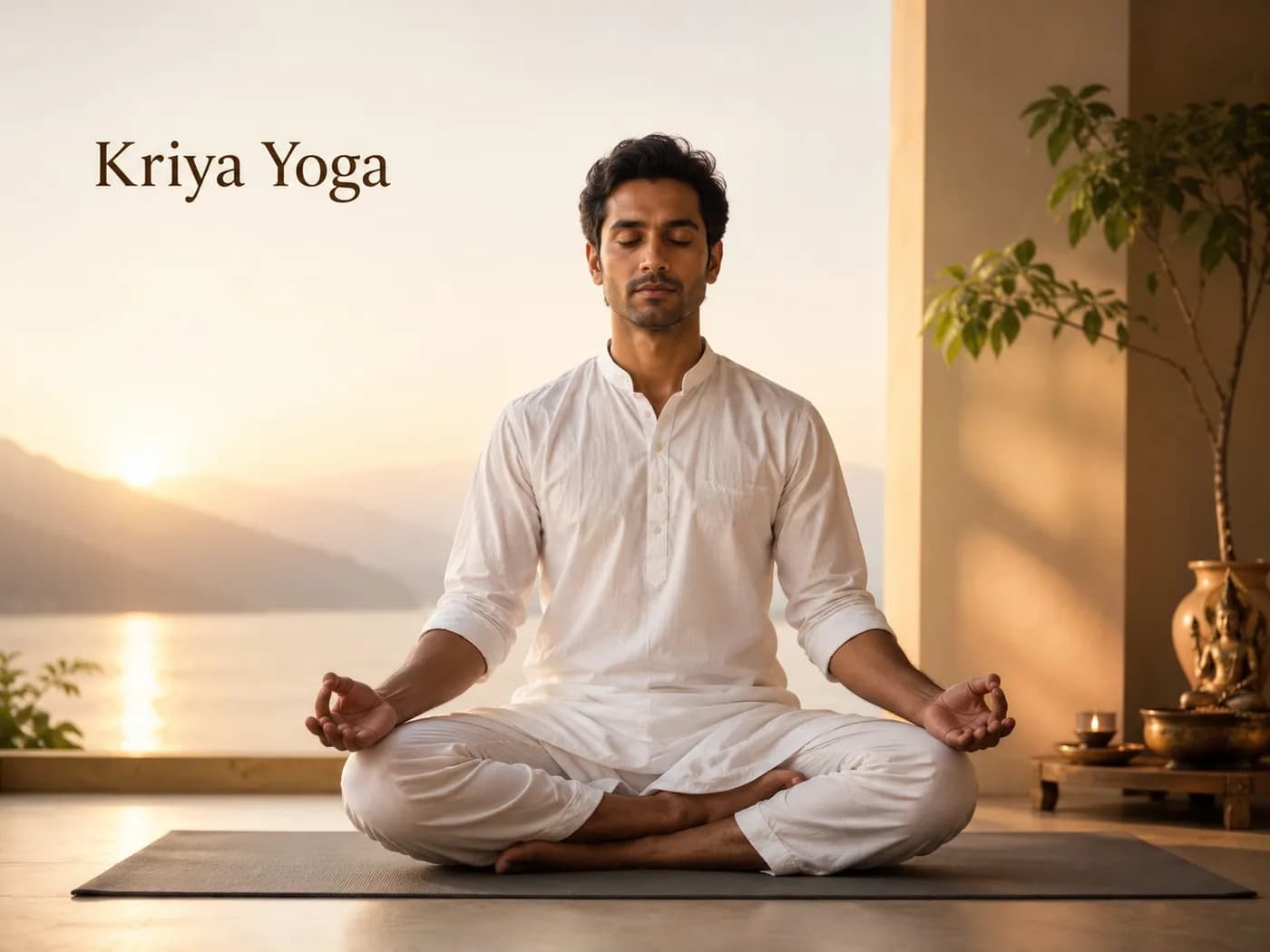
Understanding what is Kriya Yoga and how to do it starts here. Kriya Yoga requires minimal external equipment but significant internal commitment. A comfortable seated meditation pose (Sukhasana, Svastikasana, or Siddhasana) is required — practised on a yoga mat with optional cushion. The traditional approach requires formal initiation by a qualified teacher; for beginners exploring Kriya, foundational meditation and pranayama practice provides an excellent entry.
Setting Realistic Goals
Kriya is not a quick-results practice. Daily commitment of 30–60 minutes is the foundation; meaningful results typically emerge over months to years of consistent practice. Beginners should set process-oriented goals (consistent daily practice) rather than outcome-oriented goals (specific spiritual experiences). Members focused on broader posture development often pair their practice with ouryoga for posture programme.
Start with the Basics
Begin with foundational seated meditation (10–20 minutes daily), then add Anulom Vilom (alternate nostril breathing) for 5–10 rounds. These prepare the body and mind for the deeper Kriya techniques traditionally taught after formal initiation. Live guided classes provide the meditation foundation that Kriya practice requires.
Core Techniques of Kriya Yoga
Kriya Pranayama (Spinal Breathing)
Kriya Pranayama is the foundational breath technique — visualising the breath ascending and descending along the spine in coordinated cycles. The technique combines specific breathing pattern with mental visualisation along the chakras.
Mantra Repetition (Japa)
Specific mantras repeated mentally during the breath cycles deepen concentration and access the subtle energetic dimensions of practice. The mantras are traditionally received from a qualified teacher.
Mudra and Bandha Practices
Specific hand mudras and energy locks (Mula Bandha, Uddiyana Bandha, Jalandhara Bandha) accompany Kriya practice — directing energy according to traditional teachings.
Kechari Mudra (Advanced Technique)
An advanced technique involving the tongue position — taught only after substantial foundation in basic Kriya techniques. Not for beginner self-practice.
Yoni Mudra (Meditative Sealing)
A meditative gesture involving specific finger positions and sensory awareness — used to deepen concentration and inward attention.
Maha Mudra (Great Seal)
The combined practice of seated forward fold with breath retention and energy locks — considered one of the foundational Kriya practices.
Trataka (Concentrated Gazing)
Steady gazing on a single point (typically a candle flame) — builds the concentration that Kriya meditation requires.
Common Mistakes to Avoid in Kriya Yoga
Who Should Try Kriya Yoga?
Build a Yoga and Meditation Practice with a Routine That Actually Works
Building a sustainable Kriya or general meditation practice isn’t about occasional retreats — it’s about consistency, expert guidance, and a structured routine that progresses with you. With the right support, you can practise yoga and meditation effectively from home and see real progress over weeks and months. The same daily-practice habit foundation drives ourdaily online yoga classes that members rely on every morning.
What You Get with Habuild’s Yoga Everyday Program:
- Daily live guided yoga sessions
- Beginner to advanced progression
- No-equipment & home-friendly practice
- Expert guidance to ensure correct form
- Community support to stay consistent
Start Your Yoga Journey Kriya Yoga is a meditation-focused branch of classical yoga combining specific breath techniques, mantra repetition, and energy practices. Popularised in the modern era by Paramahansa Yogananda through his book “Autobiography of a Yogi” (1946).
Is Kriya Yoga Good for Beginners?
Pure beginners benefit from establishing basic meditation foundation (3–6 months) before exploring Kriya techniques. The advanced techniques traditionally require formal initiation by a qualified teacher.
How Often Should I Practise Kriya Yoga?
Daily practice of 30–60 minutes is the foundation. Consistency matters more than session length — even 30-minute daily sessions outperform longer occasional ones.
Can I Do Kriya Yoga at Home?
Foundational Kriya practices (basic meditation, pranayama) are well-suited to home practice. Advanced techniques traditionally require teacher guidance. Live online sessions help establish the foundation that meaningful Kriya practice requires.
Do I Need Equipment for Kriya Yoga?
Minimal equipment — a yoga mat, comfortable seated posture (with cushion if needed), and quiet space. The practice is internal rather than equipment-dependent.
How Long Before I See Results from Kriya Yoga?
Foundational benefits (reduced stress, better sleep, improved focus) emerge within 4–8 weeks of consistent daily practice. Deeper meditative experiences develop over months to years of patient practice.
Kriya yoga’s breath techniques and mantra work are built for repetition — the shift in awareness they’re associated with is cumulative, and a technique read about once rarely produces the same result as one practised daily with some structure. Starting small, with a few consistent minutes rather than an ambitious but irregular routine, tends to serve beginners better here. If you’d like guided support as you build that consistency, Habuild’s Yoga Everyday program offers daily sessions that pair breathwork and meditation practices like these.
Frequently Asked Questions
Related Articles
Gyan Mudra: How to Do It and Its Benefits for Focus and Memory
Practice Gyan Mudra with Habuild. Follow the wisdom hand gesture steps to improve focus, reduce anxiety, and enhance your meditation practice. Start today!

Prana Mudra: How to Practice and Its Life Energy Benefits
Practice Prana Mudra with Habuild. Follow the life force hand gesture steps to boost energy, strengthen immunity, and improve your eye health. Start today!
Kapalbhati Pranayam: How to Practice Benefits and Precautions
Practice Pranayam Kapalbhati with Habuild. Follow the skull-shining breath steps to boost digestion, strengthen your core, and energise your body. Start today!
