
Yoga Poses for Students: Steps, Benefits & Precautions
This selection of asanas counters the physical and mental demands of academic life — prolonged sitting, exam stress, and disrupted sleep. See the poses.

Key Takeaways
- Targets the physical and mental toll of prolonged sitting, exam stress, and disrupted sleep.
- Balasana and Cat-Cow decompress the spine compressed by four to eight hours of desk sitting.
- Paschimottanasana and Uttanasana lengthen hamstrings tightened by prolonged sitting.
- Inverted postures send fresh blood toward the brain to support cognitive focus.
- Traditionally taught to young practitioners since the adolescent nervous system responds well.
- Complements, not competes with, study time – typically 20-30 minutes as a focused sequence.
Yoga poses for students are a targeted selection of classical asanas designed to counter the physical and mental demands of academic life — prolonged sitting, exam stress, cognitive fatigue, and disrupted sleep. Practised consistently for 15–20 minutes daily, these poses support spinal health, sharpen focus, and help the nervous system reset between study sessions.
What Are Yoga Poses for Students?
Yoga poses for students are a curated set of asanas drawn from the classical yoga tradition that directly address the physical and mental demands of academic life. The word asana comes from the Sanskrit root ās, meaning “to sit” or “to be present” — a fitting description for practices designed to bring the mind into full, relaxed alertness. In English, this collection is often called “student yoga” or “study-support yoga,” though no single pose carries that label alone. Together, they form a system that prepares the body and mind for long hours of reading, writing, and concentration.
Visually, these poses range from seated forward folds that release tension in the lower back to inverted postures that send fresh blood toward the brain, and balancing poses that sharpen coordination and attention. Each shape has a distinct physiological effect — and when practised consistently, those effects accumulate into measurable improvements in energy, memory, and emotional resilience.
Within the broader yoga system, student-focused asanas sit comfortably in both the Hatha and Vinyasa traditions. Many were traditionally taught to young practitioners precisely because the adolescent and young-adult nervous system is highly receptive to mindful movement. They complement — rather than compete with — study time, typically taking no more than 20 to 30 minutes when practised as a focused sequence.
Yoga Poses for Students: Benefits
Physical Benefits
- Benefit 1: Relieves Postural Strain from Long Sitting Hours Students spend four to eight hours daily hunched over desks, laptops, and textbooks. This sustained flexion compresses the lumbar spine and tightens the hip flexors. Poses like Balasana (Child’s Pose) and Marjaryasana-Bitilasana (Cat-Cow) actively decompress the spine and restore neutral alignment, reducing the ache that builds up by afternoon. Regular practice gradually eases the chronic stiffness that makes it hard to sit still and focus.
- Benefit 2: Improves Flexibility in the Hamstrings and Hips Tight hamstrings — a near-universal side effect of prolonged sitting — tilt the pelvis backward and flatten the lumbar curve, contributing to lower-back fatigue. Forward folds like Paschimottanasana (Seated Forward Bend) and Uttanasana (Standing Forward Fold) gently lengthen the posterior chain. As flexibility improves over weeks of consistent practice, students often report being able to sit more comfortably for longer periods — making these among the best yoga asanas for students with sedentary academic routines.
- Benefit 3: Supports Digestion and Reduces Bloating Irregular meals, stress eating, and reduced movement are common in student life, and together they disrupt the digestive system. Twisting poses such as Ardha Matsyendrasana massage the abdominal organs and stimulate peristalsis. Yoga for digestion is well-documented in both classical texts and modern physiology: the gentle compression and release of the abdominal cavity during twists helps move food through the gut more efficiently, reducing the heavy, sluggish feeling that derails an afternoon study session.
Mental and Emotional Benefits
- Benefit 4: Sharpens Focus and Memory Retention Balancing poses like Vrikshasana (Tree Pose) and Garudasana (Eagle Pose) require sustained single-pointed attention — the practitioner must hold both physical and mental stillness simultaneously. This trains the prefrontal cortex, the brain region responsible for working memory and decision-making. Students who practise these poses regularly often notice they can re-enter deep focus more quickly after a distraction, which directly improves study efficiency.
- Benefit 5: Calms Exam Anxiety and Manages Stress The combination of slow breathing and deliberate physical movement in yoga activates the parasympathetic nervous system, counteracting the cortisol spike that exam pressure triggers. Poses like Viparita Karani (Legs-Up-the-Wall) and Savasana are particularly effective at signalling safety to the nervous system. For students dealing with performance anxiety and deadline pressure, even a ten-minute evening practice can make the difference between restless worry and restorative sleep.
- Benefit 6: Builds Consistent Energy Without Caffeine Dependency Backbends like Ustrasana (Camel Pose) and Bhujangasana (Cobra Pose) open the chest, expand lung capacity, and stimulate the adrenal glands in a balanced way — providing an energy lift that lasts hours rather than the sharp-then-crash cycle of caffeine. Students who build a morning yoga habit frequently report needing fewer stimulants to stay alert through lectures and evening revision.
How to Do Yoga Poses for Students — Step-by-Step Instructions
The sequence below walks through Vrikshasana (Tree Pose) — one of the most universally recommended yoga poses for students because it builds focus, balance, and calm in under five minutes.
Key Principles
Before you begin, find a quiet spot with at least one arm’s length of clear space around you. Use a non-slip yoga mat. Keep your gaze (drishti) fixed on a single, stationary point — this is the primary tool for maintaining balance. Breathe steadily through the nose throughout; do not hold the breath.
Step 1: Starting Position
Stand tall in Tadasana (Mountain Pose) — feet together, arms relaxed at your sides, spine long, shoulders gently drawn back. Take three slow breaths here, letting your weight settle evenly across both feet. Feel the floor beneath you before you attempt the balance.
Step 2: Shift Weight to One Leg
Inhale and slowly transfer your body weight onto your right foot. Press all four corners of the right foot firmly into the mat — big toe mound, little toe mound, inner heel, outer heel. Engage the right thigh muscle gently to stabilise the knee. Do not lock the knee joint.
Step 3: Place the Left Foot
Bend the left knee and, using your left hand, bring the left foot to rest on the inner right thigh — above the knee, never directly on it. Press the foot into the thigh and the thigh back into the foot equally; this mutual resistance is what creates stability. If the full placement feels unsteady, rest the foot on the inner calf instead — both are valid.
Step 4: Raise the Arms
On an inhale, bring both palms together at the chest in Anjali Mudra (prayer position). Hold here for two breaths, finding your balance. Then, on the next inhale, extend the arms overhead — palms still together or shoulder-width apart, fingers pointing upward. Soften the shoulders away from the ears; there should be no tension in the neck.
Step 5: Final Position and Hold
Hold the full expression of Vrikshasana for 5 to 8 breaths — approximately 30 to 60 seconds. Keep your fixed gaze steady. If you wobble, that is entirely normal; micro-adjustments are part of the pose. Feel the length from your standing foot through the crown of your head. This is the moment the pose does its work: the nervous system is learning to be calm under mild challenge.
Step 6: How to Come Out of Vrikshasana
On an exhale, lower the arms back to the chest, then to the sides. Release the left foot slowly to the floor. Return to Tadasana and stand quietly for two breaths, noticing the difference in steadiness between your two sides. Then repeat the entire sequence on the left leg to balance the body.
Breathing in Vrikshasana
Inhale as you raise the arms; exhale to settle into the hold. During the hold, breathe in a 4-count inhale and 6-count exhale pattern — the extended exhale activates the parasympathetic response, reinforcing the calming effect that makes this pose particularly valuable for stress-carrying students.
Preparatory Poses Before Practising These Asanas
Spending five minutes on the following poses before your main student yoga sequence significantly reduces the risk of strain and deepens the benefits of each posture.
- Tadasana (Mountain Pose) — activates postural awareness and grounds the feet before any standing or balancing work.
- Marjaryasana-Bitilasana (Cat-Cow) — warms the entire spine, from the cervical vertebrae through the sacrum, preparing it for forward folds and twists.
- Supta Baddha Konasana (Reclined Bound Angle) — opens the hips gently and releases the groin, making seated poses far more accessible.
- Adho Mukha Svanasana (Downward Dog) — lengthens the hamstrings and calves, warms the shoulders, and gently increases blood flow to the brain before inversions.
If you are new to yoga, exploring 12 foundational yoga poses for beginners is an excellent starting point before building into a full student sequence.
Variations of Yoga Poses for Students
Variation 1: Ardha Vrikshasana (Half Tree Pose) — Beginner Level
Instead of placing the foot on the inner thigh, rest the toes of the bent leg on the floor for a light “kickstand” support. This dramatically reduces the balance challenge while still training the postural muscles and focus skills. It is the recommended entry point for students who have never practised standing balances before.
Variation 2: Wall-Supported Tree Pose — Beginner to Intermediate
Stand with the fingertips of one hand lightly touching a wall for support. This version lets students focus on the hip and foot placement without the fear of falling, making it ideal for exam-season practice when emotional bandwidth is already low. Gradually reduce wall contact over days until freestanding balance is natural.
Variation 3: Eagle Arms in Tree Pose (Garudasana Arms) — Intermediate Level
Rather than raising the arms overhead, wrap them into the Eagle Pose arm bind — one elbow stacked on the other, forearms entwined, palms pressing together. This adds a shoulder and upper-back stretch that is particularly beneficial for students who carry backpacks or spend hours typing. The added upper-body complexity also deepens the focus demand.
Variation 4: Dynamic Tree Flow — Intermediate to Advanced
Move fluidly between Vrikshasana and a standing split on each exhale and inhale respectively. This dynamic version builds both strength and breath awareness simultaneously, and its rhythmic quality makes it a powerful tool for students who need an energy reset between study blocks rather than a calming wind-down.
Common Mistakes to Avoid in Yoga Poses for Students
- 1. Placing the Foot Directly on the Knee The knee is a hinge joint with limited lateral tolerance. Resting the raised foot on the knee rather than above or below it creates a sideways torque that can strain the medial ligaments. Always place the foot on the inner thigh or inner calf — never on the joint itself.
- 2. Holding the Breath During Balance Many students instinctively hold the breath when concentrating on balance. This actually increases muscular tension and makes wobbling more likely. Consciously maintain a steady breathing rhythm throughout the hold — the breath is both the anchor and the feedback mechanism.
- 3. Collapsing the Standing Hip Outward When the standing hip juts to the side, it places uneven load on the sacroiliac joint and reduces the stability base. Keep both hip points facing squarely forward and stack the standing hip directly over the ankle.
- 4. Tensing the Neck and Shoulders During Arm Raises As the arms go overhead, students commonly shrug the shoulders toward the ears — a stress reflex carried straight from the desk. Actively slide the shoulder blades down the back as the arms rise. The neck should feel long, not compressed.
- 5. Rushing Through the Sequence to “Finish” A common student error is treating yoga like another task to complete quickly. The quality of attention during each pose determines the neurological benefit. Moving slowly and deliberately — especially during transitions — is where the real value lives.
- 6. Skipping Savasana at the End Savasana (Corpse Pose) is not optional rest — it is the period during which the nervous system consolidates the calming signals built up during practice. Skipping it is the equivalent of studying hard and then not sleeping: the integration never happens. Even three minutes of Savasana makes a measurable difference.
Who Should Practise Yoga Poses for Students?
- Those Dealing with Exam Stress and Anxiety Exam cycles create sustained cortisol elevation that impairs memory consolidation and decision-making — the exact cognitive functions students need most. A short daily yoga sequence, particularly one that includes forward folds and breathing-focused holds, helps the nervous system return to a baseline state between study sessions. It complements exam preparation rather than competing with it. Students managing deeper stress patterns may also benefit from exploring dedicated yoga for stress management.
- Is Yoga Good for Students Who Are Complete Beginners? Absolutely. The best yoga poses for students require no prior flexibility, strength, or experience. Poses like Balasana, Tadasana, and wall-supported Vrikshasana are accessible on day one. The modifications described in this guide ensure that every student — regardless of fitness level — can begin immediately and progress at a pace that feels natural rather than forced.
- Students with Back Pain or Postural Issues Prolonged sitting is one of the primary causes of adolescent and young-adult back pain. Yoga directly supports spinal mobility and strengthens the postural muscles that carry you through long study hours. Students in this group should start with gentle, floor-based poses and avoid deep forward folds until core strength improves. A dedicated resource on yoga for back pain offers a safe, progressive approach.
- Working Students and Those with Packed Schedules The most common objection is time. A purposeful 15-to-20 minute morning sequence covers all the benefits described in this guide. Practising with a structured live session — where the instructor sets the pace and sequence — removes the decision fatigue of designing your own practice and makes it far easier to stay consistent week after week.
Make Yoga Poses for Students a Part of Your Life
Yoga poses for students address the three most damaging side effects of academic life — postural deterioration, cognitive fatigue, and emotional overwhelm — through a single consistent practice. The poses in this guide work on the spine, the nervous system, and the breath simultaneously, making them unusually efficient for the time-pressed student.
Whether you are a first-year student who has never stepped on a mat, someone managing back pain from long study hours, or an experienced practitioner looking to make your routine more academically relevant — the modifications and progressions covered here make this practice genuinely accessible. With live instruction and real-time corrections, form errors disappear quickly and results follow much sooner than solo practice allows.
Frequently Asked Questions
Related Articles
Yoga Poses for Back Pain: Best Asanas for Lower Back, Upper Back and Sciatica
Back pain is the leading cause of disability worldwide, affecting 619 million people, and yoga is among the most evidence-supported non-pharmacological interventions for it. See the best asanas.

Sukhasana (Easy Pose): Steps Benefits and Meditation Foundation
Try sukhasana with Habuild. Discover the sukhasana pose to improve posture, reduce stress, and cultivate a calm and focused mind. Start your session today!
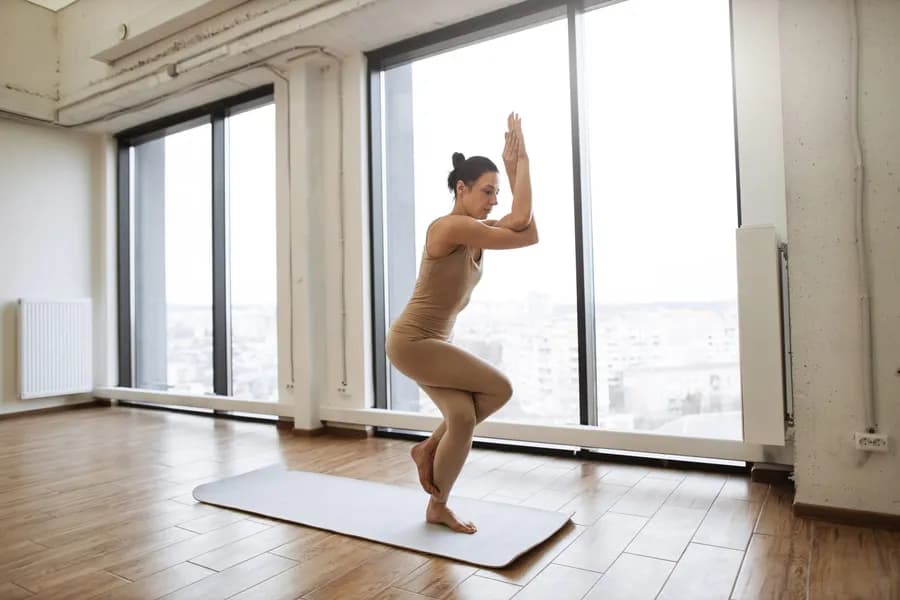
Garudasana (Eagle Pose): Steps Balance Benefits and Beginner Tips
Practice garudasana with Habuild. Try garudasana yoga to improve balance, strengthen your legs, open your shoulders, and develop sharp focus. Start today now!