
Garudasana (Eagle Pose): Steps Balance Benefits and Beginner Tips
Practice garudasana with Habuild. Try garudasana yoga to improve balance, strengthen your legs, open your shoulders, and develop sharp focus. Start today now!
Key Takeaways
- Named after Garuda, the eagle who serves as Lord Vishnu’s mythological vehicle.
- Wraps one leg around the other at both knee and ankle for its signature coiled shape.
- Any mental wandering is immediately reflected in a loss of balance during the hold.
- Specifically targets IT band and piriformis tightness that other standing poses rarely reach.
- The arm wrap stretches posterior shoulders and rhomboids tightened by prolonged computer use.
- Builds proprioceptive ankle stability that reduces fall risk in daily physical activity.
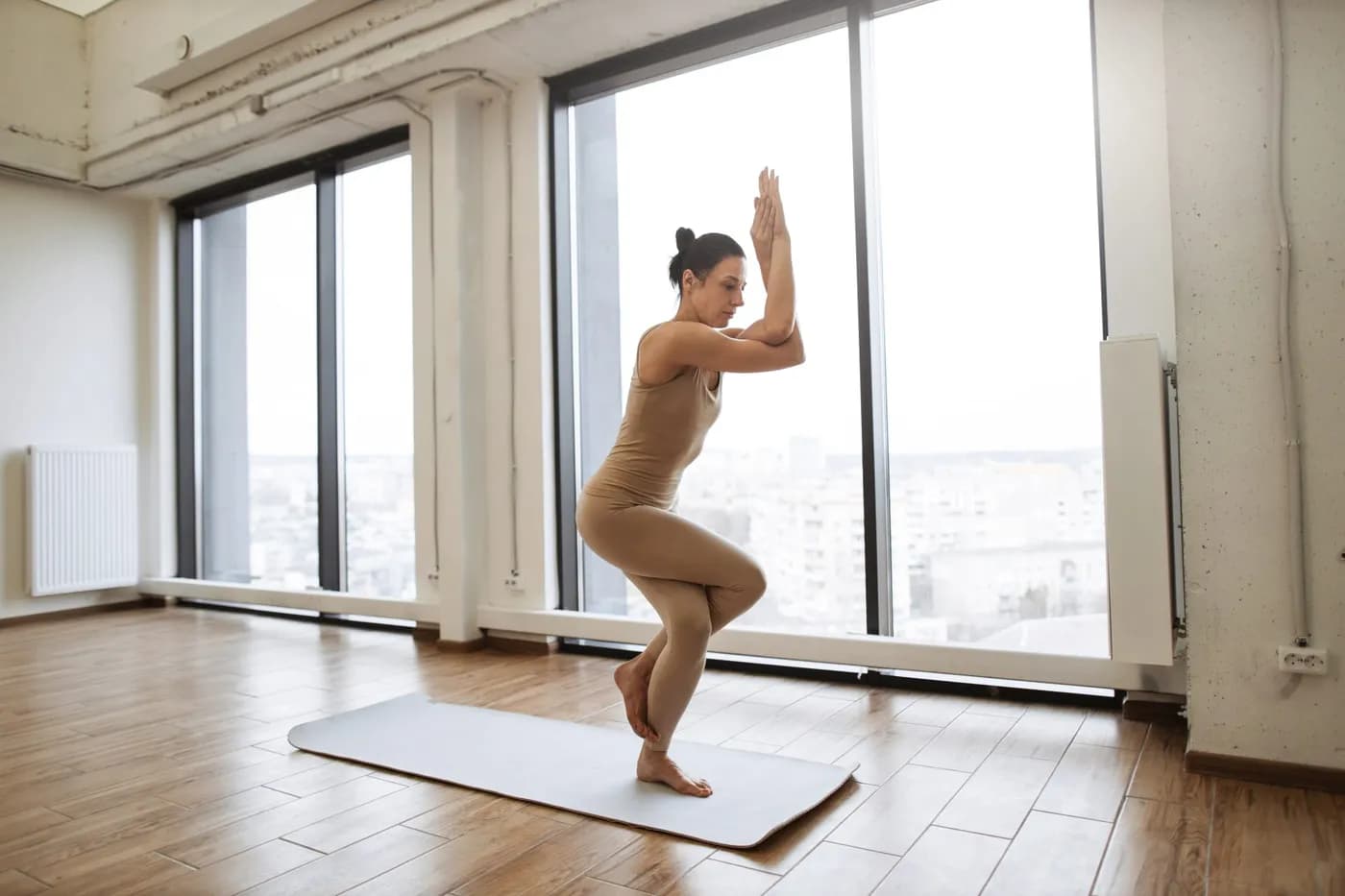
Garudasana, or Eagle Pose, develops single-leg balance, stretches the outer hips and upper back simultaneously, strengthens the standing leg and core, and trains the single-pointed mental concentration of the eagle’s focused watchfulness. Suitable for all levels with progressive modifications.
What is Garudasana?
Garudasana — known in English as Eagle Pose — is a standing balance posture that challenges and develops balance, concentration, and the simultaneous hip and shoulder mobility that few other standing postures demand. The name derives from Sanskrit: Garuda meaning eagle — the powerful, keen-eyed bird of Hindu mythology that serves as the vehicle of Lord Vishnu — and asana meaning posture.
Garudasana is a full-body integration posture: one leg wraps around the other at both the knee and ankle while one arm wraps around the other at both the elbow and wrist — creating a tightly interwoven, coiled shape that demands exceptional balance, hip and shoulder flexibility, and the focused concentration that gives the eagle its symbolic power. Maintaining the pose requires the quality of attention that quiets the mind completely — any mental wandering is immediately reflected in a loss of balance.
At Habuild, Garudasana is taught in our balance and standing posture sequences — valued for its unique combination of balance development, hip and shoulder opening, and the concentrated mental focus that distinguishes Eagle Pose from other standing postures.
Garudasana Benefits
Physical Benefits
- Develops Balance, Proprioception, and Ankle Stability Garudasana is one of yoga’s most effective balance-developing postures. The single-leg standing position combined with the crossed leg wrap creates a significant balance challenge that fully activates the proprioceptive system of the standing ankle, foot, and lower leg. The neuromuscular coordination and ankle stability that Garudasana builds reduces fall risk, improves athletic performance, and enhances movement quality in all physical activities.
- Stretches the Outer Hips, IT Band, and Piriformis The crossed leg position creates a deep stretch of the outer hip, iliotibial band, and posterior thigh of the wrapped leg — addressing areas of chronic tightness that other standing postures rarely reach. Practitioners with IT band syndrome, piriformis tightness, or outer hip restriction consistently report targeted relief from regular Garudasana practice.
- Opens the Upper Back and Posterior Shoulders The arm wrap creates a comprehensive stretch of the upper back rhomboids, posterior deltoids, and external rotators of both shoulders — addressing the posterior shoulder and upper back tightness that results from prolonged computer use, driving, and the forward shoulder posture of modern activities.
- Strengthens the Standing Leg and Core Maintaining the slightly bent standing leg requires sustained engagement of the quadriceps, hamstrings, glutes, and calf — building the leg endurance and stability that functional daily movement, athletic performance, and injury prevention all require.
Mental Benefits
- Develops Single-Pointed Concentration and Present-Moment Focus No other standing yoga posture demands and develops concentration as directly as Garudasana. The balance challenge is sufficiently demanding that the mind must be completely present — any mental wandering immediately destabilises the posture. Regular practice develops the quality of alert, single-pointed attention that meditation cultivates and sport demands.
How to Do Garudasana — Step-by-Step Instructions
Key Principles
Key Principles Two principles govern Garudasana: the gaze is fixed throughout — a single non-moving point at eye level is the balance anchor; and the crossed limbs are wrapped, not forced — the full wrap of the toes behind the ankle is a goal, not a requirement. A crossed thigh with hovering toes delivers the full balance and hip benefit.
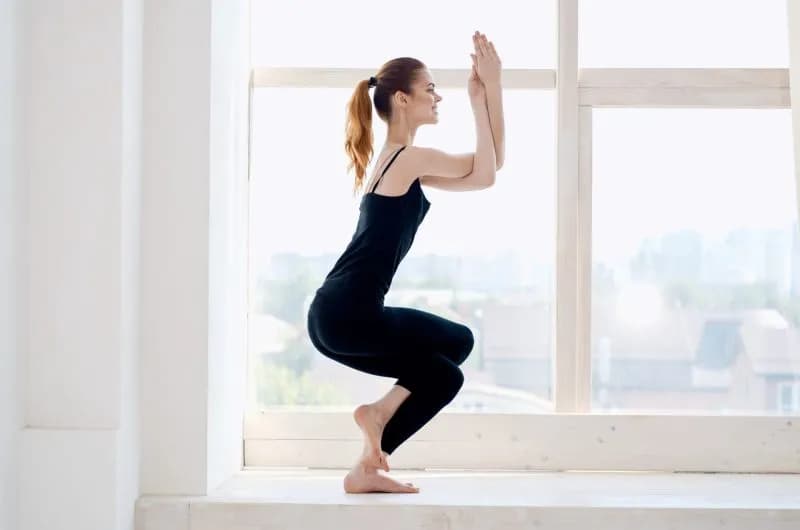
Garudasana — Step by Step Step 1: Standing Starting Position Stand upright with feet together and arms alongside the body. Fix the gaze on a single non-moving point at eye level — this drishti (gaze point) is the balance foundation for the entire pose.
Step 2: Establish the Standing Leg and Cross the Thighs Bend the right knee slightly. Lift the left leg and cross the left thigh over the right thigh above the knee. The thighs press together actively.
Step 3: Wrap the Lower Leg Wrap the left lower leg behind the right calf and hook the left toes behind the right ankle if flexibility allows. If not, hover the left toes beside the right foot — the thigh cross delivers the full hip benefit.
Step 4: Cross the Arms at the Elbow Extend both arms forward at shoulder height. Cross the right arm over the left at the elbow — the right elbow resting on the left upper arm.
Step 5: Wrap the Forearms and Raise the Elbows Bend both elbows to ninety degrees and wrap the forearms — bringing the right fingers toward the left palm (or as close as flexibility allows). Lift the elbows to shoulder height and draw the forearms away from the face.
Step 6: Sink and Hold, Then Switch Sides Sink slightly deeper into the standing leg — bending the right knee further. Fix the gaze and breathe steadily for five to eight breaths. Release and repeat on the opposite side, reversing both the leg and arm cross.
Breathing in Garudasana
Slow, steady breathing is the balance anchor in Garudasana. Any disruption to the breath immediately affects the balance. Direct the breath into the upper back on each inhale — feeling the wrapped arms spread the posterior shoulder blades with the expanding breath.
Preparatory Poses Before Garudasana
These poses warm the balance system, hips, and shoulders before the Eagle Pose challenge.
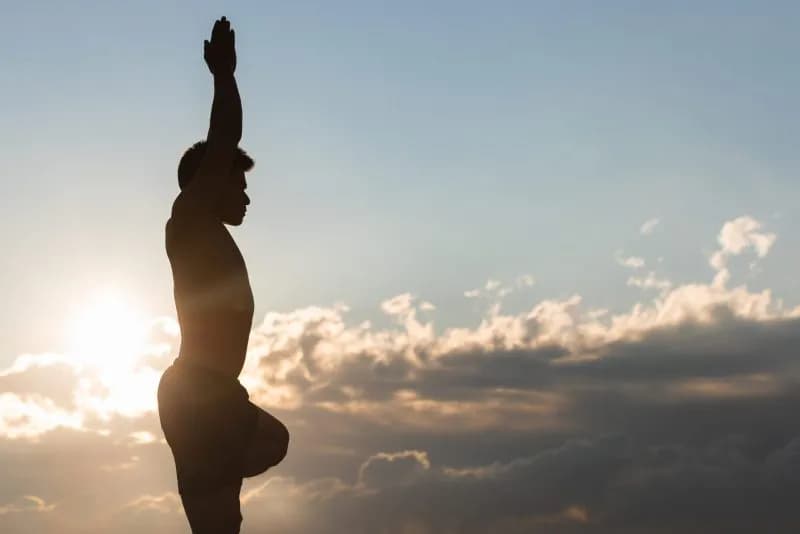
- Vrikshasana (Tree Pose) — Establishes single-leg balance and gaze-point focus before the added complexity of Garudasana’s limb wraps.
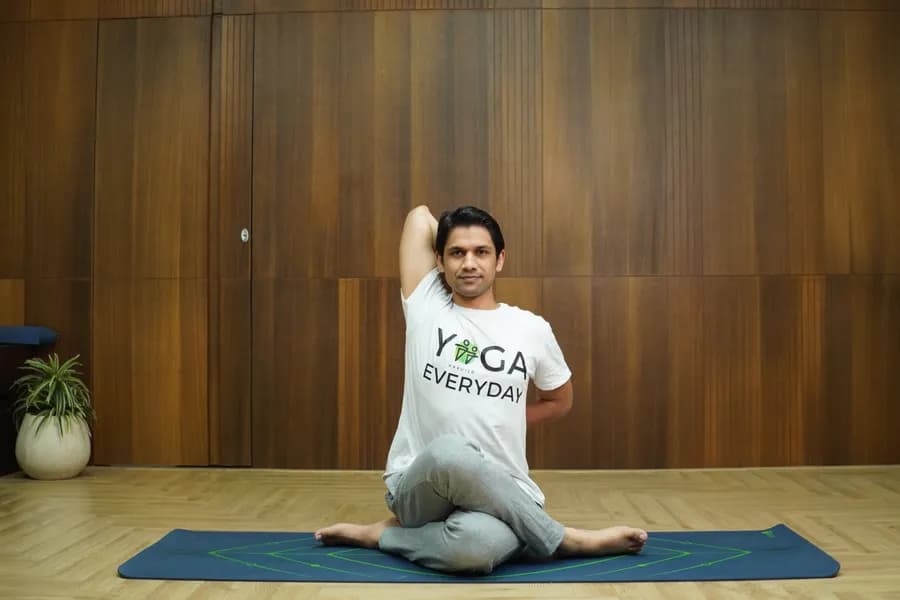
- Gomukhasana (Cow Face Pose) — arm position — Warms the posterior shoulder and upper back before the Eagle arm wrap.
- Pigeon Pose (Eka Pada Rajakapotasana) — Opens the outer hip and IT band that the Garudasana leg wrap stretches.
Variations of Garudasana
- Variation 1: Arms Only — Shoulder Focus (Beginner) Practising the arm wrap only — standing in Tadasana with both feet on the ground — to develop the shoulder opening and upper back stretch without the balance challenge. This variation is accessible from the first session and immediately targets the desk-work-related posterior shoulder tension.
- Variation 2: Thigh Cross Without Full Wrap — Balance Development The thigh cross without wrapping the lower leg — hovering the crossed toes beside the standing foot. This delivers the full balance and outer hip benefit of Garudasana without requiring the ankle wrap flexibility.
- Variation 3: Full Garudasana — Complete Integration The complete posture — toes wrapped behind the ankle, fingers approaching palm contact — requiring the full balance, hip, and shoulder flexibility that develops over weeks of consistent practice.
Common Mistakes to Avoid in Garudasana
- Losing the Gaze Point The single most consequential balance error in Garudasana. The gaze point is the primary balance anchor — looking around, blinking excessively, or softening the gaze immediately destabilises the posture. Establish the fixed gaze before lifting the foot and maintain it without interruption.
- Forcing the Toe Wrap Before the Hip Allows It Forcing the toes to hook behind the calf when the hip flexibility is insufficient creates knee rotational strain. The thigh-crossed, toes-hovering variation delivers the full therapeutic benefit without the joint risk of a forced wrap.
- Elbows Below Shoulder Height Allowing the elbows to drop below shoulder height in the arm wrap eliminates the upper back and posterior shoulder stretch that makes Eagle arms specifically therapeutic for desk workers. Keep the elbows consistently at shoulder height throughout the hold.
Who Should Practise Garudasana?
- Those Seeking Balance and Proprioceptive Training Garudasana is among yoga’s most directly balance-developing postures — its complex limb-wrapping balance challenge training the neuromuscular coordination that reduces fall risk and improves athletic performance more than simpler single-leg postures.
- Desk Workers with Posterior Shoulder and IT Band Tension The simultaneous posterior shoulder opening and outer hip stretch of Garudasana make it uniquely efficient for the most common tension patterns of desk-based workers — addressing both areas that sitting-dominant days systematically tighten.
- Is Garudasana Good for Beginners? Yes — the arms-only and thigh-cross-without-wrap modifications make Garudasana accessible from early in yoga practice. Beginning with the shoulder-opening arm wrap while standing on two feet is the recommended starting point.
Make Garudasana a Part of Your Daily Practice
Garudasana is the yoga tradition’s most complete single-leg balance posture — its simultaneous hip stretch, shoulder opening, leg strengthening, and single-pointed concentration challenge delivering a uniquely comprehensive integration of physical and mental training in a single standing pose.
Whether you are developing balance with the thigh-cross modification, building toward the full toe-wrap and finger-clasp, or using the arms-only variation as a daily posterior shoulder release, Garudasana rewards consistent practice with the confidence of earned balance and the relief of chronic tension released.
The most effective way to learn Garudasana correctly — with gaze-point guidance, safe limb-wrapping progression, and balance cues — is under live expert guidance with Habuild.
Start your 14 day free yoga journey with Habuild, today!
Related reads: Natarajasana (Dancer Pose): Steps and Balance Benefits · Vrksasana (Tree Pose): Steps Balance and Concentration Benefits
Eagle Pose demands balance and focus in the same moment, which is why Garudasana tends to wobble on the first attempt and steady with practice — the nervous system needs repeated exposure to learn that kind of stability. The leg strength and shoulder opening it builds follow the same curve. Habuild’s Yoga Everyday program includes balance poses like this in a daily flow designed to build that steadiness over time.
Frequently Asked Questions
Related Articles
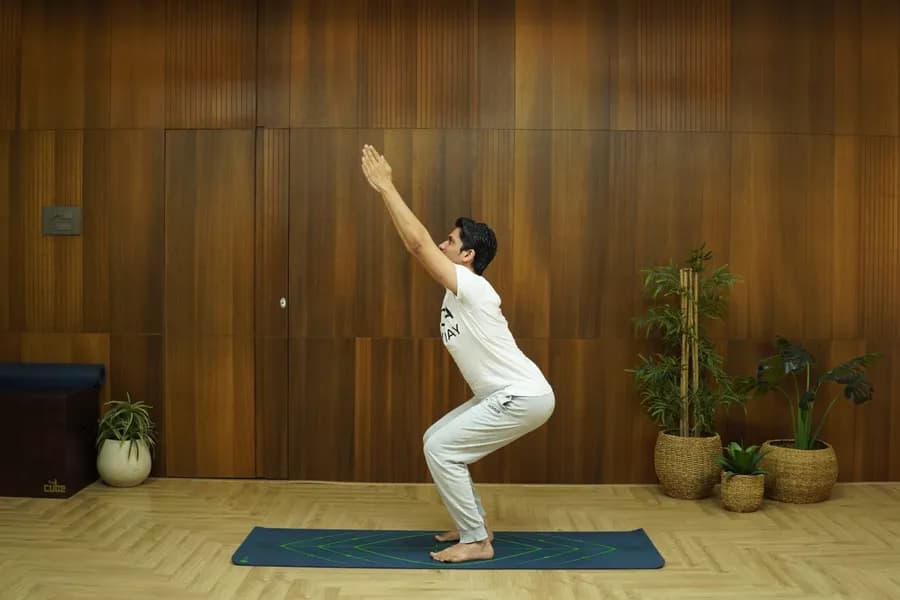
Utkatasana (Chair Pose): Steps Strength and Stamina Benefits
Practice utkatasana with Habuild. Try the utkatasana pose to strengthen your legs, build core power, and boost overall body endurance. Start your yoga session!
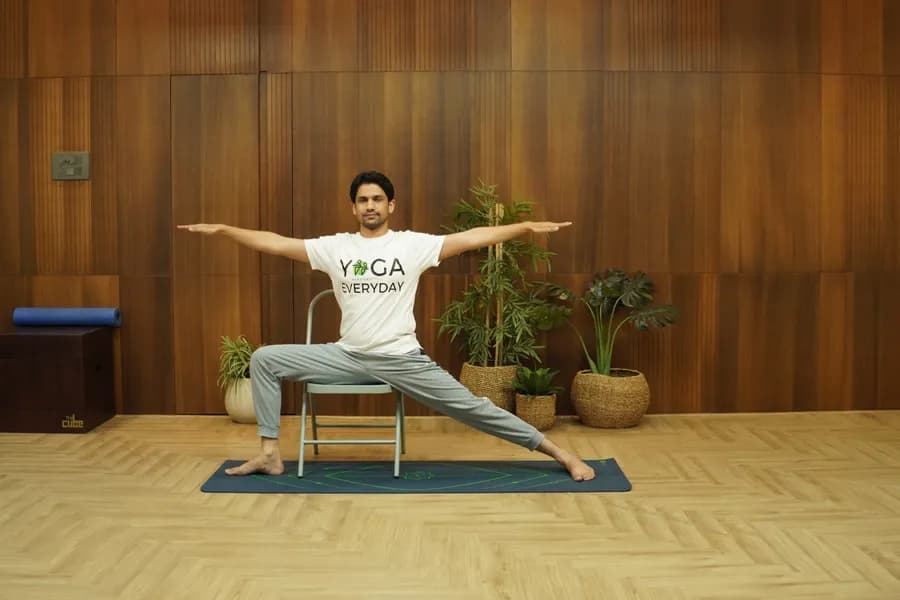
Virabhadrasana 2 (Warrior 2): Steps Benefits and Alignment Cues
Practice Virabhadrasana 2 with Habuild. Follow the Warrior II pose steps to strengthen your legs, open your hips, and build stamina and focus. Start today!

Tadasana — The Mountain Pose
Tadasana, or Mountain Pose, is the quiet foundation every standing yoga pose is built on — simple to look at, precise to get right.

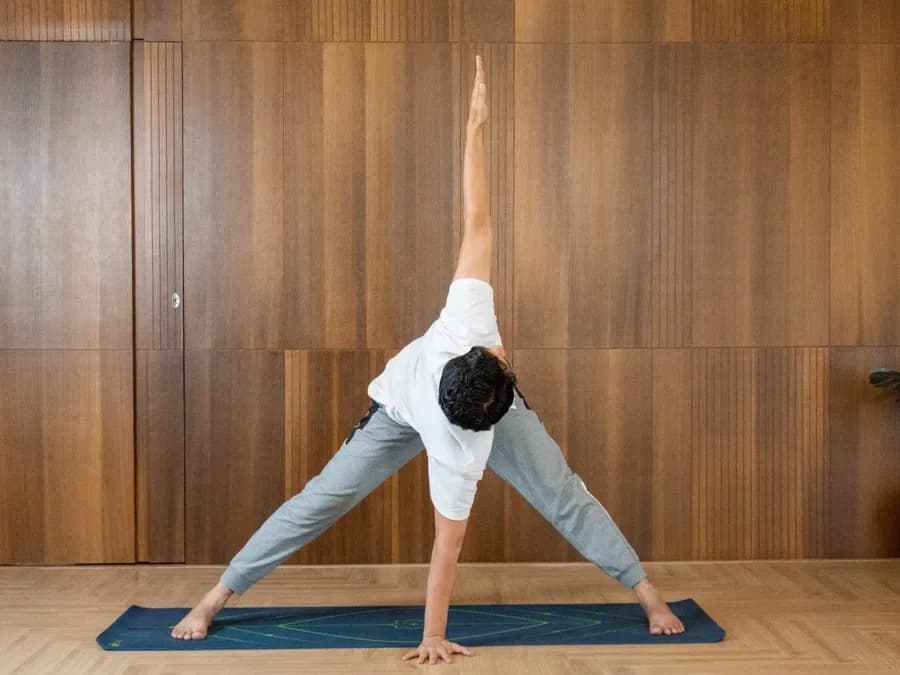
Trikonasana: Triangle Yoga Pose, Steps & Benefits
Trikonasana, the Triangle Pose, opens the hips, lengthens the lateral body, strengthens the legs and core, and improves spinal alignment in one complete standing pose.
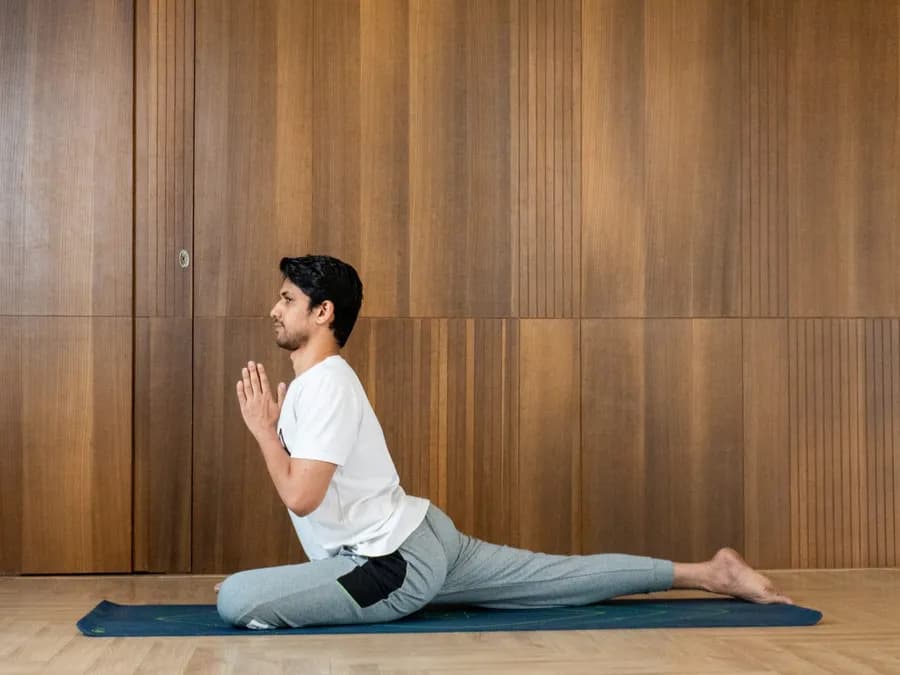
Eka Pada Rajakapotasana (Pigeon Pose): Steps and Hip Opening Benefits
Practice Eka Pada Rajakapotasana with Habuild. Follow the pigeon pose steps to open your hips, boost flexibility, and relieve lower back pain. Start today!
Gomukhasana (Cow Face Pose): Steps Benefits and Modifications
Practice gomukhasana with Habuild. Explore gomukhasana benefits to relieve shoulder tension, improve your posture, and enhance hip flexibility. Try it today!