
Almond Oil: Food Uses, Skin Care and Safety
Edible sweet almond oil and cosmetic almond oil are not interchangeable. Learn how to cook with it, use it on skin and store it safely.
Key Takeaways
- Use only bottles labelled as edible sweet almond oil in food, never hair or massage oil.
- Almond oil is about 70% monounsaturated fat and rich in vitamin E.
- One tablespoon adds roughly 120 kcal; it lacks the fibre and protein of whole almonds.
- It helps the heart only when it replaces saturated fat, not when added on top.
- Tree-nut allergy needs specialist advice before using any almond oil.
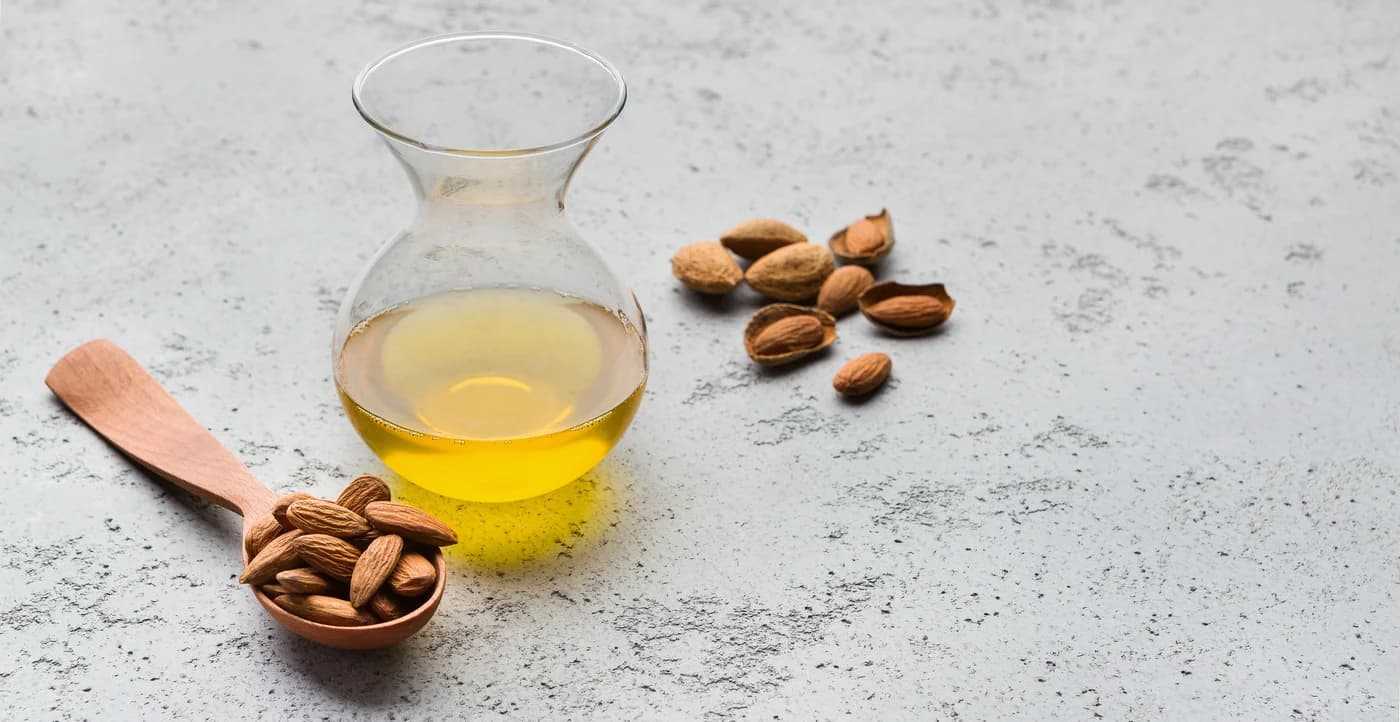
Almond oil can mean a food-grade cooking oil or a cosmetic oil for skin and hair. Those bottles are not interchangeable. Edible sweet almond oil provides mostly unsaturated fat and vitamin E, while cosmetic products may contain fragrance or additives and should not be swallowed.
What is in almond oil?
Like every oil, almond oil is almost entirely fat. USDA FoodData Central lists about 884 kcal per 100 g, which works out to roughly 120 kcal per tablespoon. About 70% of its fat is monounsaturated, around 17% polyunsaturated and about 8% saturated. It is also rich in vitamin E, an antioxidant nutrient for which almonds are among the best food sources.
What it does not provide is the fibre, protein and fullness of whole almonds. For those, see Habuild's guides to almonds and protein in almonds.
When it supports heart health
The American Heart Association advises replacing saturated and trans fats with unsaturated ones. Using almond oil instead of some butter or vanaspati fits that pattern. Pouring it on top of an already oily diet does not, because it adds calories without the swap. "Cold-pressed" describes processing, not a licence to use unlimited amounts; measure with a spoon at first if free-pouring makes portions hard to judge. Our article on good fats vs bad fats explains these choices.
How to cook with almond oil
- Unrefined almond oil has a nutty flavour and suits salad dressings, finishing a dish or gentle heat.
- Refined food-grade almond oil generally tolerates more heat; follow the label.
- Drizzle a little over roasted vegetables, or whisk it with lemon juice and seasoning for a simple dressing.
- For everyday Indian cooking, familiar oils such as groundnut, mustard or sesame can remain the mainstay; you do not need almond oil to eat healthily.
Edible, bitter and cosmetic oils
For food, choose a bottle clearly labelled as edible sweet almond oil. Bitter almonds are a different product and are not meant for home cooking. Keep cosmetic and cooking oils in separate places with their original labels, especially when several people in the household use similar bottles.
Using almond oil on skin
On skin, almond oil works mainly as an emollient: it does not add water but helps slow moisture loss, which can ease dryness for some people. Apply a small amount to intact skin after bathing, avoid the eye area and stop if redness or itching appears.
Dark circles, acne and hair thinning have many causes, and almond oil has not been shown to treat them. Eczema, infection, broken skin or an unexplained rash need a clinician rather than repeated home oils.
Storage and quality
Store the oil tightly closed, away from light and heat. A dark bottle helps protect unrefined oil. A stale, bitter or paint-like smell suggests rancidity, so discard it. Cloudiness in a cool room can be normal. Buy a small bottle if you use it rarely.
Who should avoid it
People with almond or other tree-nut allergy should not assume refined and unrefined oils carry the same risk. Ask an allergy specialist, read labels carefully and never test a product at home after a serious reaction. Skin use can also cause allergy. Breathing trouble, facial or tongue swelling needs emergency care.
Editorial sources
Frequently Asked Questions
Related Articles
Almonds: Nutrition, Portions and Smart Everyday Uses
Almonds provide protein, fibre, unsaturated fat, vitamin E and magnesium in a compact serving. Learn smart portions and everyday uses.
Good fats vs bad fats: choose fats wisely
Understand good fats vs bad fats in simple words. Learn which vegetarian fats to choose, what to reduce and how to read food labels better.

Ghee vs Refined Oil: Choose Healthy Fats Wisely
Understand ghee vs refined oil in simple words. Learn how to use fats in moderation, avoid reheated oils and choose better Indian cooking habits.
Protein in Almonds: Amount, Portions and Nutrition Facts
Almonds contribute protein, but they are mainly an energy-dense mix of unsaturated fat, fibre and micronutrients, so portion size matters.
