
Baking Soda vs Baking Powder: Differences, Uses and Safety
Baking soda and baking powder both make bakes rise, but they work differently. Learn what each contains and how to use them in recipes.

Key Takeaways
- Baking soda is pure sodium bicarbonate and needs an acidic ingredient to rise.
- Baking powder already contains bicarbonate, a dry acid and usually starch.
- Do not swap them spoon for spoon; the acid balance and strength differ.
- Both add sodium, and neither should be used as a routine home remedy.
Baking soda and baking powder both help baked foods rise, but they are not interchangeable spoon for spoon. One is pure sodium bicarbonate; the other combines it with acids and usually starch. Understanding the difference helps you choose the right one, fix recipes that go wrong and use both safely in the kitchen.
What baking soda contains
Baking soda is sodium bicarbonate, an alkaline compound. When it meets an acid and moisture, it releases carbon dioxide gas, and those bubbles lift a batter or dough. That is why recipes using baking soda usually include an acidic ingredient such as curd, buttermilk, lemon juice or vinegar.
Baking soda starts reacting as soon as it is wet, so batters that rely on it are usually best baked soon after mixing.
What baking powder contains
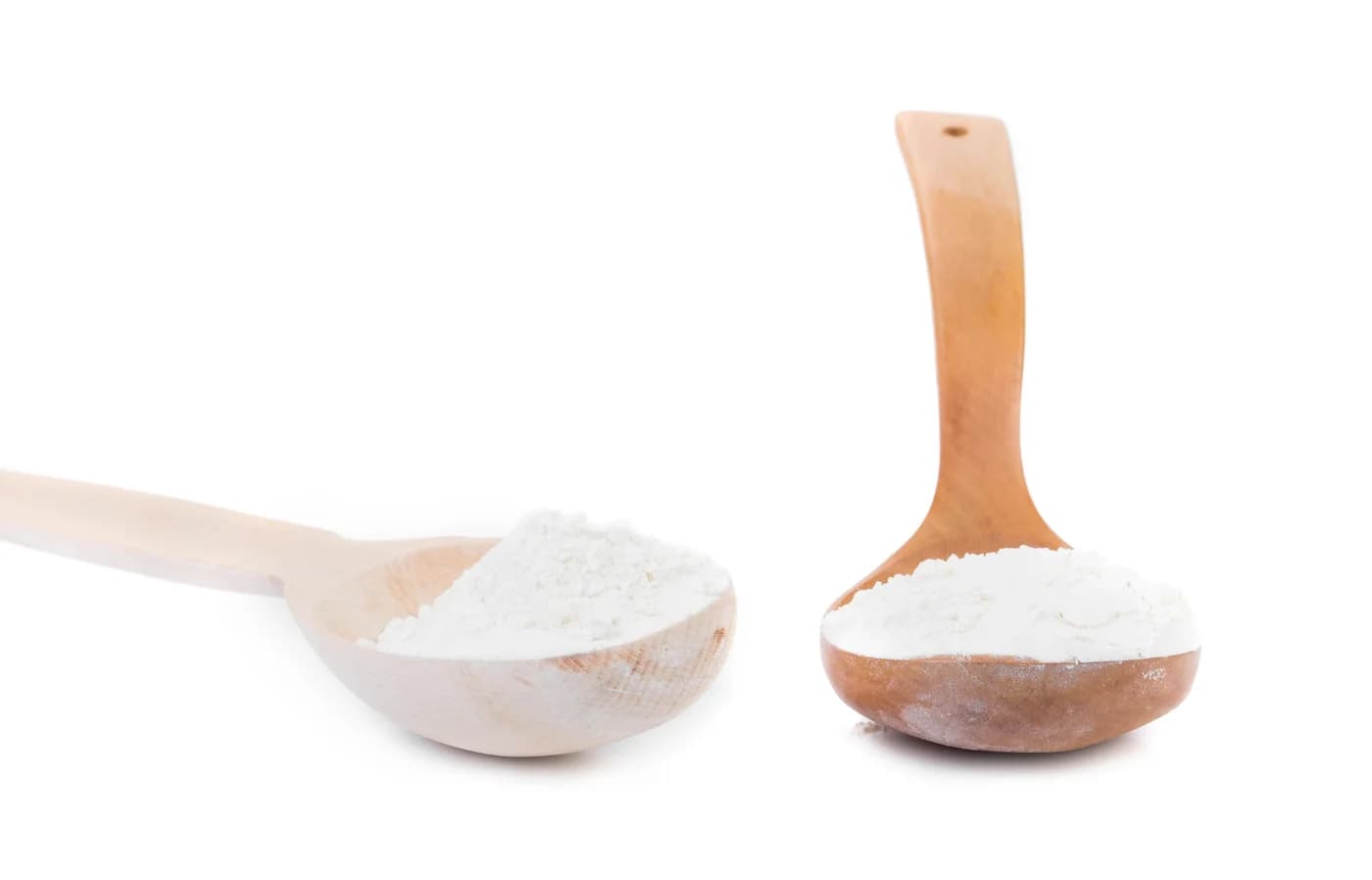
Baking powder includes sodium bicarbonate, one or more dry acids and usually starch, which keeps the mixture dry and stops it reacting in the container. Because the acid is already built in, baking powder can raise recipes that have no acidic ingredient. Double-acting versions release gas twice: once during mixing and again with heat in the oven.
Quick comparison
- Baking soda: a single ingredient that needs an added acid, is stronger per spoon and can taste soapy or bitter if overused.
- Baking powder: bicarbonate plus acid and starch, which works on its own with moisture and heat and is milder per spoon.
- Many recipes use both: soda to balance an acidic ingredient and powder for extra lift.
Why substitutions fail
Replacing baking powder with baking soda can leave too little acid, giving a poor rise and a soapy or metallic taste. Replacing baking soda with baking powder changes the sodium content and the leavening strength, so the texture may not match. If a substitution is necessary, use a tested conversion from a reliable recipe source rather than guessing.
Measure accurately
Use level measuring spoons and follow a tested recipe. Leaveners are used in small amounts, so a small excess can noticeably alter colour, flavour and texture. Too much can also make a cake rise quickly and then sink.
Freshness testing
Old leaveners may lose strength, especially if the container has absorbed moisture. Two simple checks help:
- Baking powder should bubble when a little is stirred into warm water.
- Baking soda should fizz when an acid such as vinegar or lemon juice is added.
If there is little or no reaction, replace the product before your next bake.
Baking at altitude
Lower air pressure at high altitude can change rising, moisture loss and baking time. A sea-level recipe may need adjustments to leavener, liquid or oven temperature, but adding extra baking powder blindly can make collapse worse. Use altitude-tested guidance for the location and change one variable at a time.
Sodium contribution
Both products add sodium to food, though amounts differ by brand and recipe. People limiting sodium, for example for blood pressure or kidney health, should check product labels and serving sizes, and count baked goods as part of their daily sodium. Do not taste the raw powder to judge it.
Kitchen use is different from home remedies
Baking soda is sometimes taken as a quick fix for indigestion. It can neutralise stomach acid, but it also delivers a large amount of sodium and, when misused, can cause gas and dangerous changes in the body's acid balance (alkalosis). Antacids can also change the absorption of some medicines, so follow the medicine label and ask a pharmacist before using bicarbonate near a dose. For a fuller look at health claims, see our guide to baking soda uses and safety.
Cleaning is different from eating
Baking soda is useful for some household cleaning tasks. Keep a separate, labelled pack for cleaning, do not mix cleaning products casually and do not assume a cleaning-grade product is meant for food.
Safe storage
Keep both products dry, sealed and clearly labelled, and store them away from children. Never transfer them into an unmarked jar beside cleaning chemicals. If a child swallows a large amount, contact a poison centre or seek medical help.
Editorial sources
Frequently Asked Questions
Related Articles
Baking Soda Uses: Health Claims and Safety
Understand safe baking soda uses, why home-remedy doses can be dangerous, sodium concerns and when to contact Poison Control.

Pink Salt: What It Contains and What It Does Not Do
Pink salt or sendha namak has similar sodium to table salt and often lacks iodine. Here is what it does and does not do.

MSG: What It Is, Sodium Facts and Safety
What MSG is, how its sodium compares with table salt, what safety reviews conclude, reported sensitivity and how to cook with a light hand.