
Pink Salt: What It Contains and What It Does Not Do
Pink salt or sendha namak has similar sodium to table salt and often lacks iodine. Here is what it does and does not do.

Key Takeaways
- Pink salt is still mostly sodium chloride, with similar sodium to table salt by weight.
- Its trace minerals, including the iron that gives its colour, are too small to matter.
- Many pink salts are not iodised, so check the pack or keep iodised salt as the default.
- Pink salt does not detox, hydrate better or lower blood pressure; using less salt does.
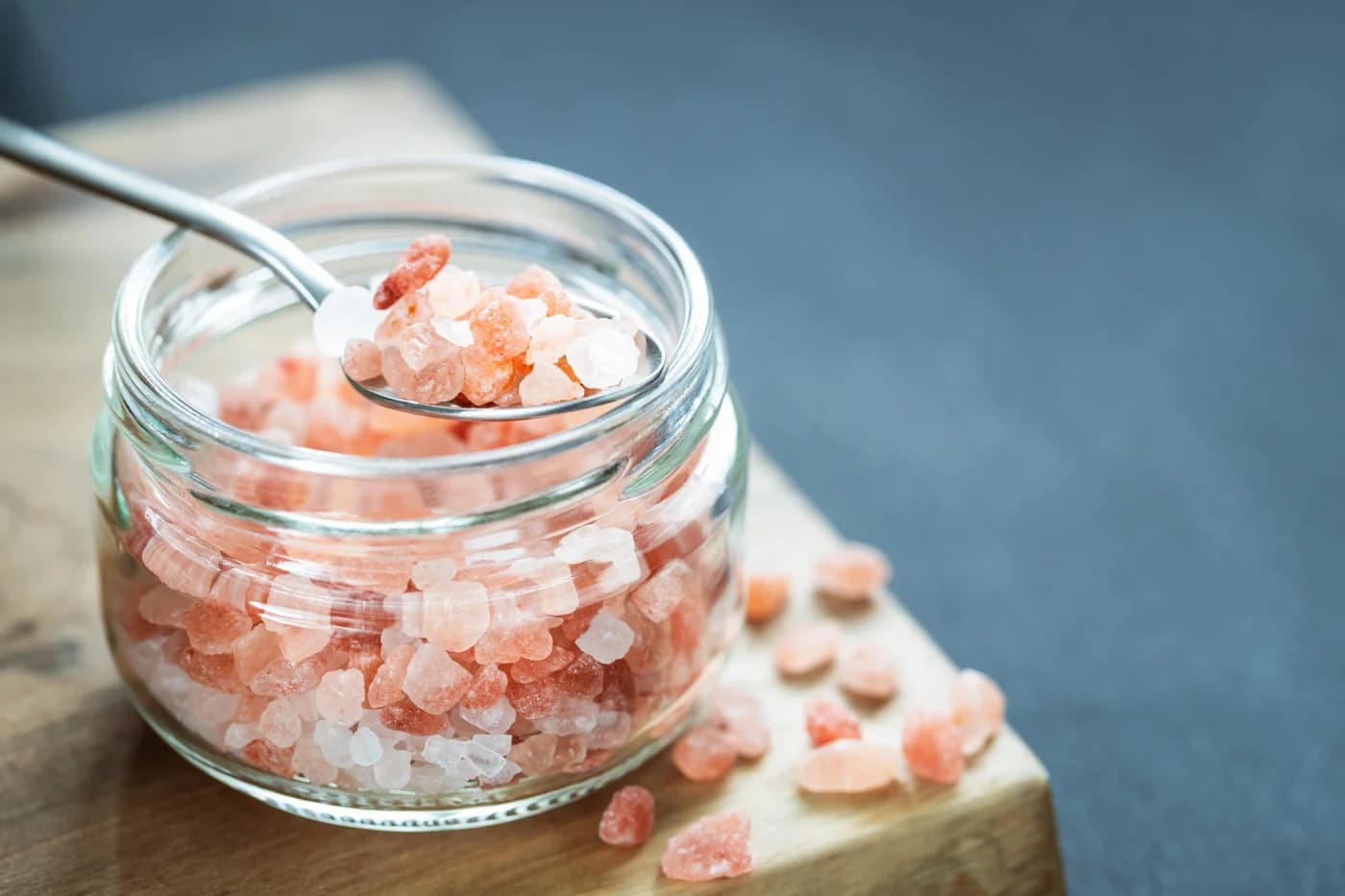
Pink salt, often sold in India as Himalayan rock salt or sendha namak, is rock salt coloured by trace minerals. Its main component is still sodium chloride, so the body handles its sodium much like ordinary salt. The attractive crystals may add texture to a meal, but tiny mineral traces do not turn it into a supplement, detoxifier or blood-pressure remedy. Iodine content is the most important practical difference to check.
Why is the salt pink?
Iron-containing mineral traces create the colour, while geography and processing influence the shade. Those minerals are present in small quantities compared with the sodium chloride. Eating enough salt to obtain meaningful iron or magnesium would deliver excessive sodium and is neither safe nor sensible.
Is pink salt lower in sodium?
By weight, pink and ordinary salt contain similar amounts of sodium. Coarse crystals pack less densely into a teaspoon, which may change the amount when measured by volume, but that is a crystal-size effect, not a healthier salt. Weighing, or simply using less, is more dependable than changing colour. Swapping table salt for pink salt gram for gram does not lower sodium intake.
What about iodine?
Iodised salt is a reliable public-health source of iodine, which the body needs to make thyroid hormones and which matters for growth and development. Many pink salts contain little or no added iodine, so check the pack. If pink salt or sendha namak replaces iodised salt entirely, make sure iodine comes from a dependable source rather than unmeasured seaweed. Review this with a qualified professional, especially during pregnancy or childhood, when deficiency has greater consequences.
Does pink salt balance electrolytes?
Salt supplies sodium and chloride, but an ordinary diet and normal hydration usually cover electrolyte needs. Pink salt water is not a superior hydration drink. Significant diarrhoea or vomiting calls for a properly formulated oral rehydration solution (ORS), not an improvised salty mixture.
Can pink salt detox the body?
No evidence shows that pink salt draws toxins out through drinks, baths or lamps. The kidneys and other organs regulate waste and fluids continuously. Drinking concentrated salt water can cause nausea and dangerous sodium shifts, and can worsen blood pressure rather than cleanse anything.
How much salt is too much?
Most sodium comes from the whole eating pattern: packaged foods, pickles, papad, sauces, snacks and salt added during cooking or at the table. Sodium reduction, not salt colour, is what matters for blood pressure. Taste before adding more, use herbs, spices, lemon and other sour flavours, and measure when needed. People with high blood pressure, heart failure or kidney disease may have specific limits from their doctor.
A seven-day salt check
For one week, note the pickles, papad, sauces, packaged snacks and table salt you eat. This reveals far more about sodium than debating pink versus white crystals. At the end, choose one high-frequency source to cut back. Small changes to foods you eat every day usually matter more than buying a premium salt.
Are contaminants possible?
Natural-source salts can contain several trace elements, and colour alone does not prove purity. Choose food-grade products from reputable sellers that meet contaminant standards. Decorative salt, bath salt and salt-lamp fragments are not food and should never be grated into meals.
Can you enjoy pink salt anyway?
Yes, as a seasoning in an appropriate amount, for example during fasts when sendha namak is traditionally used. Use it for flavour or texture, not as mineral therapy. Keep iodised salt as the household default if iodine intake otherwise looks uncertain, and use pink salt for a specific taste or texture if you like it.
What the evidence does and does not show
Pink salt does contain trace minerals, but in amounts too small to make a difference to health. It is still mostly sodium chloride, so it does not lower blood pressure, hydrate better or "detox" the body. Most pink salt is not iodised, which makes it a weaker everyday choice than iodised salt unless iodine comes from another reliable source.
Editorial sources
Frequently Asked Questions
Related Articles
Epsom salt: uses, evidence and safety
Epsom salt baths are popular for sore muscles and relaxation. Learn what the evidence says, how to soak safely and why swallowing it can be risky.


How to Maintain Blood Pressure: 7 Daily Habits That Keep Your Numbers in the Healthy Range
150-300 minutes of weekly moderate aerobic activity plus stress reduction form the foundation of lifestyle-based blood pressure management, per WHO

How to Make ORS at Home: The Correct Salt-Sugar-Water Ratio
Making ORS at home is useful during dehydration from diarrhoea or vomiting — but the salt-sugar-water ratio has to be exact. See the standard formula and.