
Banana Chips Calories: What a Small Bowl Really Adds
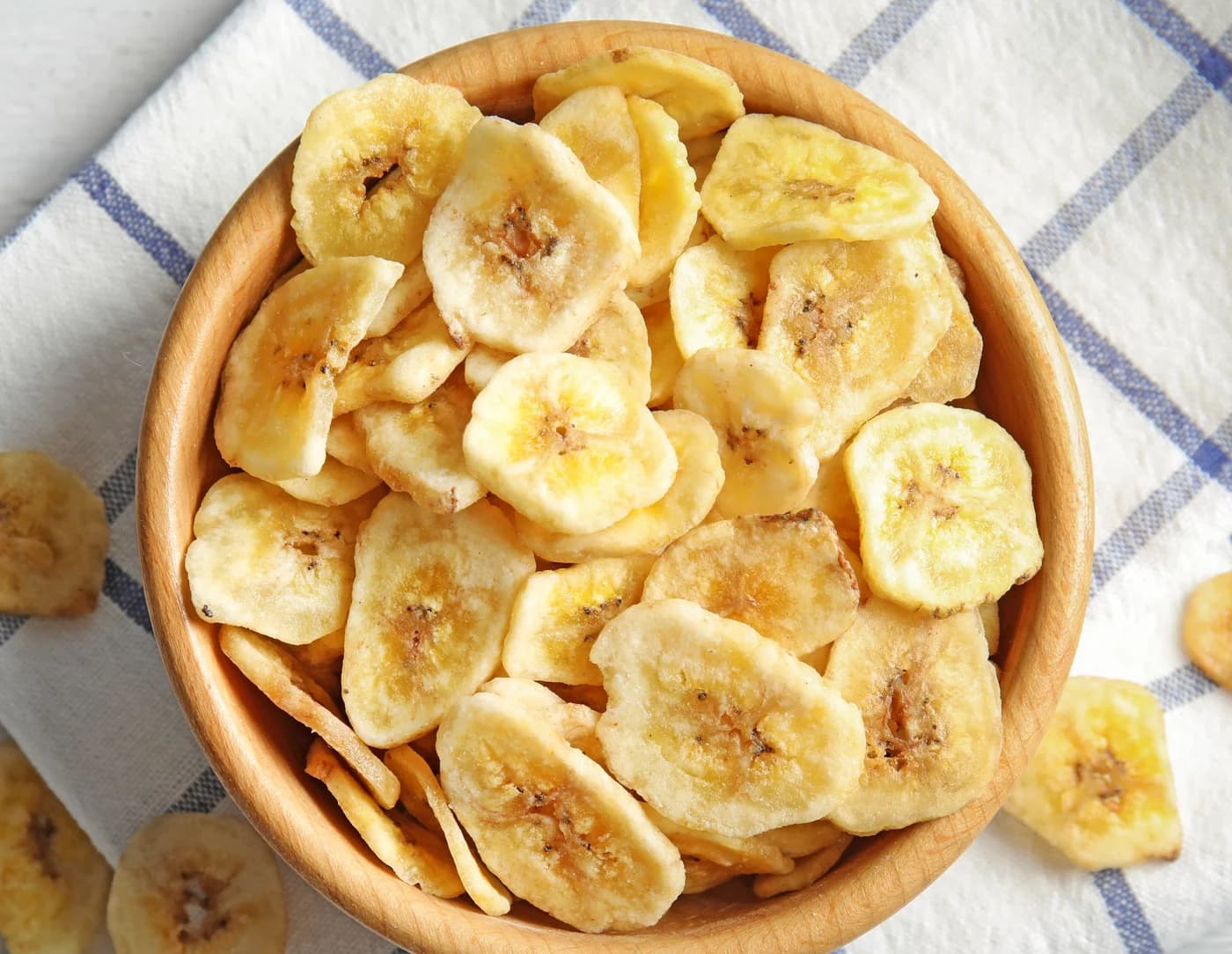
Banana chips are a concentrated snack, not the same as fresh fruit. See how a modest portion fits without turning snack time into a calorie test.
Key Takeaways
- Banana chips provide about 500 to 550 kcal per 100 g.
- They are not equivalent to a fresh banana.
- The oil and coatings add more than flavour.
- Serve a portion rather than eating from the packet.
Banana chips are crisp, salty and easy to keep eating while chatting or watching something. Their fruit origin can make them sound lighter than other fried snacks, but frying and drying create a concentrated food. Many versions provide roughly 500 to 550 kcal per 100 g. You can still enjoy them; the useful step is understanding the amount in your bowl rather than treating them as equivalent to a fresh banana.
Why the calories rise
A fresh banana contains plenty of water. Making crisp chips removes much of that water, and frying adds oil. The resulting slices contain more energy in a smaller weight and volume.
Some products are made from green bananas or plantains, while others are sweetened or made from ripe fruit. Oil type, slice thickness, frying and sugar coatings all change the final composition.
That is why one exact number cannot describe every packet or homemade batch. The range is useful for orientation, but the actual product is the better guide when you need a more precise calculation.
Translate 100 g into the amount you eat
Using 520 kcal per 100 g as an illustrative example:
- A 20 g portion supplies about 104 kcal.
- A 30 g portion supplies about 156 kcal.
- A 50 g portion supplies about 260 kcal.
These calculations show how portion size changes the total; they are not guaranteed values for every recipe.
A small packet may contain more than one printed serving. If you finish it, use the calories for the whole amount eaten rather than the small serving used in the nutrition panel.
A cup measure is less dependable because chips differ in size, thickness and how tightly they settle. Weighing your usual bowl once can help you recognise the amount. There is no need to turn every future snack into a weighing exercise.
Fresh banana and banana chips serve different purposes
A fresh banana is a convenient fruit with water, carbohydrate, fibre and potassium. Fried chips offer a crisp snack with added fat and often salt. Neither needs to be described as morally good or bad, but they are different choices.
If you want fruit to go with breakfast, a fresh banana is the more direct option. If you want the flavour and crunch of chips, have chips in an amount you enjoy rather than pretending they fulfil the same role.
Potassium or fibre in the fruit does not cancel the energy added during frying. Equally, enjoying a portion does not ruin the quality of the rest of your day.
The oil changes more than the flavour
Banana chips are often fried in coconut oil, which contributes a characteristic taste and a substantial amount of saturated fat. Other recipes use different oils, so the fat profile varies.
For someone managing LDL cholesterol, the overall pattern of saturated fat matters. Frequent large portions of coconut-oil chips can add to ghee, butter, rich dairy and other sources eaten during the day.
You do not need to remove a familiar snack entirely to respond. Having a smaller portion less often, while choosing pulses, nuts in suitable amounts and other snacks at different times, can make the pattern easier to manage.
Salt and sweet coatings are separate additions
Salt can accumulate when chips are eaten alongside salted nuts, namkeen or a heavily seasoned meal. If blood pressure is a concern, think about that combined intake rather than only the snack's calories.
Sweetened banana chips may have added sugar as well as oil. A honey or jaggery coating still contributes added sugar; the traditional name does not make it disappear.
Plain or less-salted versions may suit frequent use better, but the portion remains relevant. There is no need to compare every brand in the shop. Once you find a product you enjoy, understand its serving and use it deliberately.
Make the portion satisfying
For many adults, around 20 to 30 g can work as a modest snack portion, depending on appetite and the rest of the day. This is a practical example, not a requirement or a weight-loss prescription.
Put the portion in a small bowl and close the packet before sitting down. If you are genuinely hungry, chips alone may not provide the substance you need. Add a separate food such as plain curd, or choose a more filling snack and keep a few chips for taste.
Eating straight from a family packet makes it difficult to notice the amount, particularly while distracted. Changing how you serve them can be easier than trying to stop at an invisible limit.
Are baked or air-fried chips much lighter?
They may use less oil, but the result depends on the recipe. A homemade air-fried version brushed lightly with oil differs from one repeatedly coated until crisp. Drying still concentrates the fruit.
For a fair comparison, consider the finished portion, not just whether the cooking method sounds healthy. A larger bowl of a lower-fat version can still contribute a substantial amount of energy.
At home, make a manageable batch, use consistent slices and avoid burning them. You do not need to reproduce the exact texture of a deep-fried packet. A slightly different snack can be enjoyable on its own terms.
Can they fit with diabetes or fat loss?
Banana chips contain carbohydrate, and a savoury taste does not make them carbohydrate-free. During diabetes management, account for the portion within your usual plan rather than assuming unripe banana chips cannot affect glucose.
For fat loss, they are easiest to include as a planned food, replacing another snack rather than appearing as an unnoticed extra. There is no need to skip the next meal as punishment after eating more than intended.
If portions repeatedly feel unsatisfying, look at whether meals are too small or whether a large open packet is encouraging grazing. Adjust the situation rather than labelling yourself as lacking willpower.
Keep the crunch, avoid stale batches
Store chips in a sealed container away from heat and moisture. Buy an amount you can finish while the flavour remains fresh. Discard chips with a rancid, bitter or paint-like taste rather than trying to rescue them with more seasoning.
Hard chips can be difficult for young children or people with chewing and swallowing problems. Choose an appropriate texture rather than assuming a fruit-based snack is suitable for everyone.
The most useful approach is ordinary: enjoy a small bowl when you want it, know roughly what it contributes and let fresh fruit remain a regular part of the diet too.
Editorial sources
Frequently Asked Questions
Related Articles
Banana calories and carbohydrates: a practical guide
Understand banana calories and carbs by size, plus potassium, portions, blood sugar tips and easy balanced snack ideas for every day.

How Many Bananas Should You Eat a Day?
A flexible guide to banana portions without rigid rules or unnecessary food fears.

Banana and Milk Together: Nutrition, Digestion and Simple Shake Tips
Banana and milk are safe together for most people. Learn what the pair provides, why it may bloat some people and how to make a simple shake.
Red Banana: Nutrition, Portions and Easy Ways to Eat It
Red bananas are sweeter and softer than yellow ones but nutritionally similar. How ripeness, portion and pairings change what this fruit does for you.