
Bell Pepper (Capsicum) Nutrition, Benefits and Easy Ways to Use It
Bell peppers are rich in vitamin C and easy to eat raw or cooked. How colours differ, how to store them and simple Indian ways to use capsicum.
Key Takeaways
- Half a cup of raw red pepper gives about 95 mg vitamin C, more than a day's need.
- Green, yellow and red peppers are mostly the same plant at different ripeness.
- Vitamin C in capsicum helps you absorb iron from dal and beans.
- Long cooking lowers vitamin C, but cooked peppers are still nutritious.
- Pair peppers with paneer, tofu or beans; they are low in protein and fat.
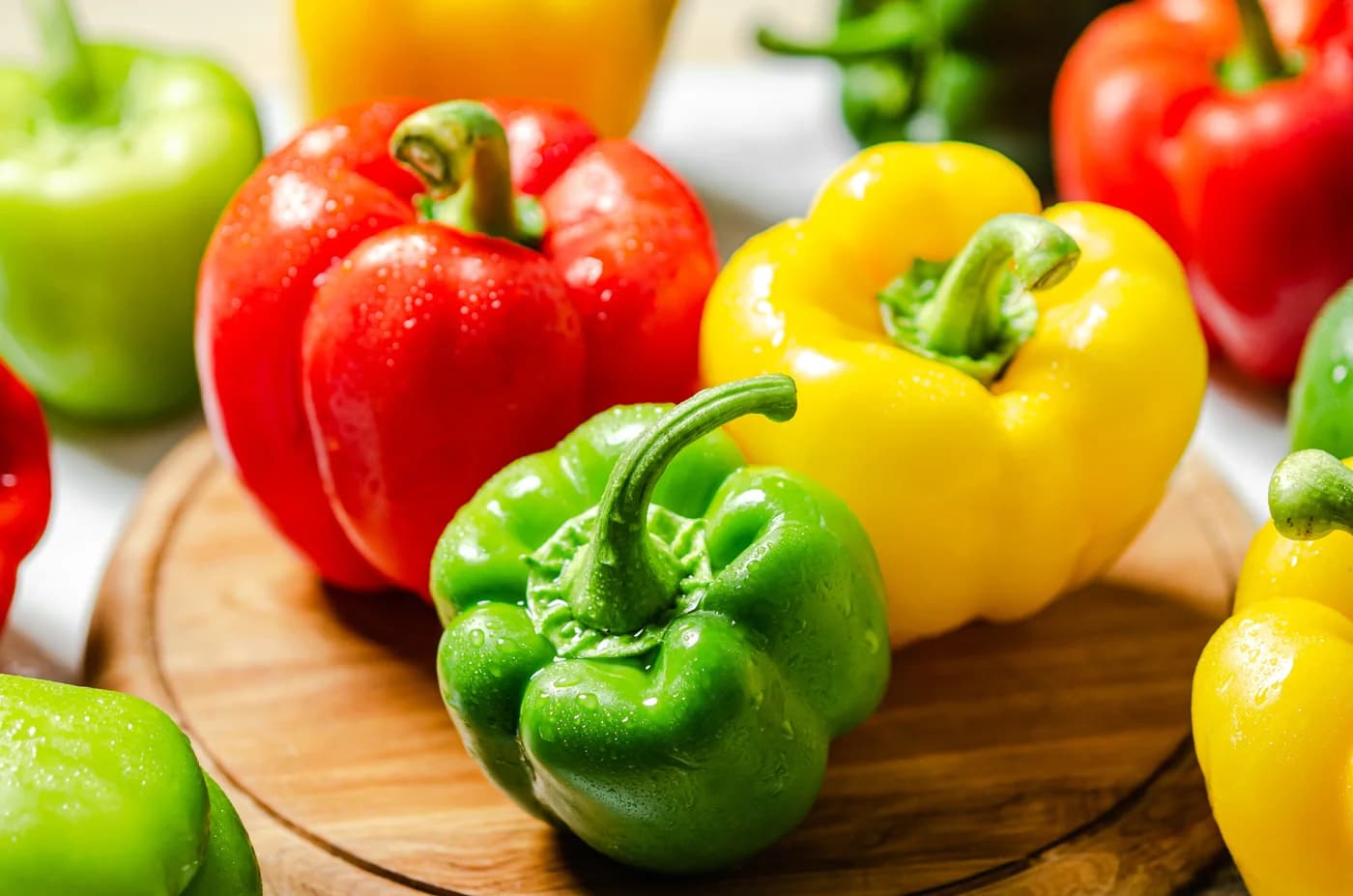
Bell peppers, usually called capsicum in India, are crisp, colourful vegetables with a naturally sweet flavour. They are rich in vitamin C, easy to eat raw or cooked, and fit into far more meals than salad alone.
What bell peppers bring to a meal
Bell peppers are mostly water, with fibre, vitamin C and plant pigments such as carotenoids. Raw red pepper provides about 26 calories and 128 mg of vitamin C per 100 grams, so half a cup of chopped red pepper gives roughly 95 mg, more than an adult's daily requirement. Green peppers contain less but are still a good source.
Vitamin C supports normal immune function and helps the body absorb iron from dal, beans and other plant foods. That makes sliced capsicum a useful addition to vegetarian meals; see our list of vitamin C foods for other options.
Peppers contain very little protein or fat, so they work best as the vegetable part of a meal. Pair them with paneer, tofu, beans, curd or eggs rather than expecting a pepper salad to keep you full for hours.
Does the colour make a difference?
Green, red, yellow and orange peppers are largely the same vegetable at different stages of ripeness, although varieties differ too. Green peppers are picked earlier and taste sharper; red, yellow and orange peppers are sweeter. Red peppers usually contain more carotenoids and vitamin C, but every colour is nutritious. You do not need the most expensive colour: freshness, taste and what you will actually eat matter more. If a recipe calls for a colour you do not have, use another.
Raw, roasted or cooked: all can work
- Raw: stays crunchy in salads, sandwiches and dips.
- Stir-fried: softens the pepper while keeping some bite.
- Roasted: brings out sweetness for pasta, soup, wraps or a blended dip.
Long cooking can reduce some vitamin C, because it is sensitive to heat, but cooked pepper is still a nutritious vegetable. For an Indian meal, add capsicum to paneer bhurji, mixed sabzi, poha, pulao or a besan chilla filling. Keep the pieces fairly large if you want them crisp, and add them later than vegetables that take longer to cook.
How much to use in a meal
There is no fixed serving. Half a medium pepper may be enough in a sandwich or stir-fry, while a larger amount suits a mixed vegetable dish. Because peppers are light, add a protein food and a grain or starchy vegetable when you need a complete meal; capsicum with paneer and roti will hold hunger far better than raw pepper strips alone. Colour variety across the week matters more than fitting every colour into one meal.
Buying and storing
Choose peppers that feel firm and heavy, with smooth skin. Refrigerate them unwashed, then rinse under running water before cutting. Remove the stem and seeds; the pale inner ribs are safe but can taste slightly bitter.
Cut peppers close to when you plan to use them. Pre-cut pieces keep for a short time in a clean, closed container in the fridge. Throw away pieces that turn slimy, smell sour or grow mould; a slightly wrinkled pepper can still go into a cooked dish if it has not spoiled.
Prepping for a busy week
- Sauté onion, bell pepper and a little spice as a base for paneer, tofu, beans or eggs over the next meal.
- Roast several pepper halves and refrigerate them for sandwiches or pasta; reheat only what you need.
- Buy one or two peppers with a clear meal in mind rather than a large mixed pack that may be forgotten.
Small details that improve flavour
Thin strips cook quickly and suit a stir-fry, while broad pieces keep more bite on a roasting tray. Do not crowd the pan if you want browned edges: high heat and space let moisture escape, whereas a crowded pan steams the pieces. For stuffed capsicum, choose peppers that stand upright and soften them slightly before adding a filling that is already mostly cooked.
Common concerns
Some people notice gas or reflux after raw peppers; a smaller portion or cooked peppers may feel easier. Bell peppers are not hot like chillies because they contain little to no capsaicin. True allergy is uncommon, but swelling, wheezing or breathing difficulty after eating needs urgent help.
What health claims miss
Red peppers are sometimes promoted as fat-burning or immunity-boosting foods. They do not melt fat, prevent every infection or replace medical care. Vitamin C supports normal immune function, but more of one nutrient does not create an invincible immune system; regular meals, sleep, movement and vaccination remain important. Read more on vitamin C benefits and the wider value of green vegetables.
Editorial sources
Frequently Asked Questions
Related Articles
Vitamin C Foods: Simple Indian Sources and Meal Ideas
Discover vitamin C-rich Indian foods, easy meal ideas, simple cooking tips, deficiency signs and safe supplement guidance to follow.

Vitamin C Benefits: Immunity, Skin, Antioxidants & Sources
Vitamin C strengthens immunity, builds collagen for skin and joints, and improves how well you absorb iron from plant foods. See its full benefits and.
Green Vegetables Benefits: Nutrition and Everyday Uses
Green vegetables include leafy greens, beans, peas, broccoli, okra and many local varieties.
Carrot Nutrition: Beta-Carotene and Easy Ways to Eat Them
Carrots provide beta-carotene, fibre, potassium and natural sweetness. The body can convert beta-carotene into vitamin A.