
Black Salt Benefits: Flavour, Sodium and Everyday Uses
Kala namak is useful for its distinctive flavour. Enjoy it as a seasoning while keeping sodium and iodine needs in perspective.
Key Takeaways
- Black salt adds a distinctive flavour to food.
- It is not a low-sodium loophole.
- It does not treat gas or acidity.
- Take extra care when sodium is restricted.
A pinch of black salt can make fruit chaat, raita or a chutney taste immediately familiar. Its strong aroma is the reason many people keep it in the kitchen. That culinary benefit is real; claims that it detoxes the body, treats acidity or makes salt harmless are much less convincing. Kala namak still contributes sodium, so use it for flavour rather than as a health supplement.
What gives kala namak its character?
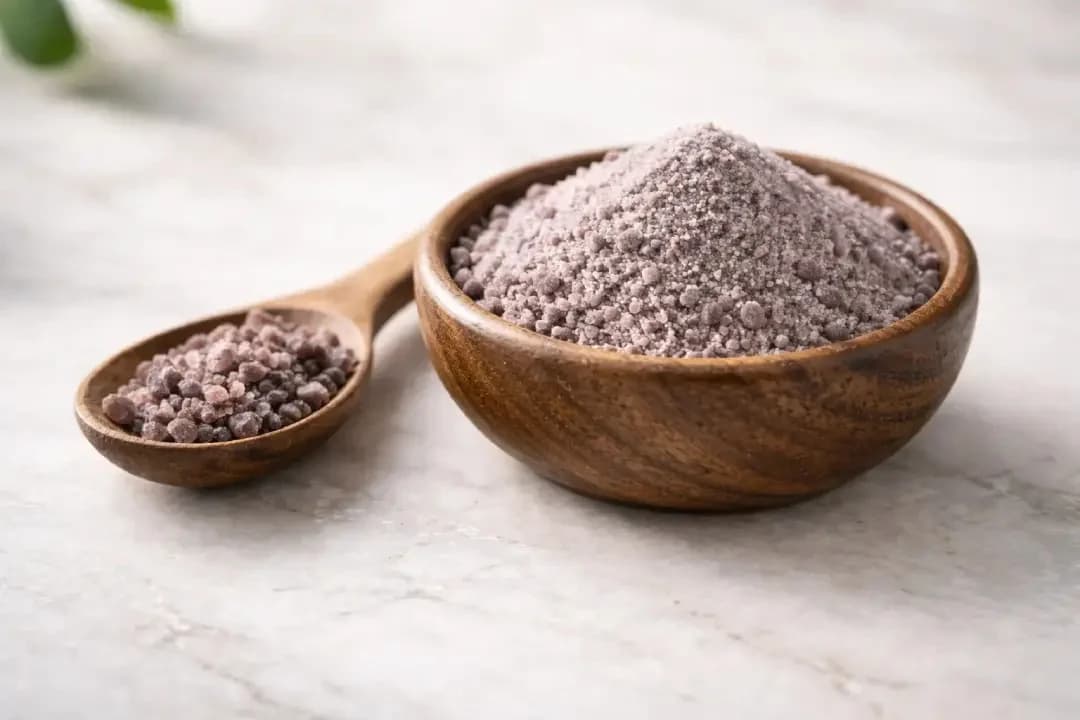
Black salt is a seasoning with a distinctive sulphurous smell, sometimes compared with cooked eggs. Despite its name, the finely ground product often looks pinkish or grey rather than jet black.
Its flavour is more noticeable than ordinary salt, which can make a small amount useful in a dish. Different products and textures can taste somewhat different, so start lightly and adjust.
The colour and aroma do not establish a medicinal effect. They describe the ingredient's culinary character. You do not need to swallow it separately or mix it into water every morning to benefit from having it in the kitchen.
The useful benefit is how it seasons food
Black salt can add a savoury edge to foods that do not need much preparation. Try a small pinch in cucumber raita, a mint chutney or a bowl of chopped tomato and cucumber.
In a vegan recipe, its egg-like aroma can add interest to tofu or a chickpea-flour preparation. Use it as one seasoning among others rather than expecting it to transform the nutrition of the meal.
It can also help you enjoy fruit without adding sugar. But fruit does not need salt to become healthy, and a plain guava or orange is a perfectly good choice. Keep the seasoning optional, especially when someone prefers the fruit's own flavour.
It is not a low-sodium loophole
Black salt contains sodium, as do table salt, rock salt and sea salt. ICMR–NIN guidance emphasises limiting all these forms rather than treating a natural-looking variety as exempt.
WHO recommends adults keep sodium below 2,000 mg a day, equivalent to less than 5 g of salt from all sources. That includes salt already present in prepared foods, sauces and snacks.
There is no need to calculate every pinch to begin. The practical mistake to avoid is adding kala namak on top of a dish that is already adequately salted because you regard it as a digestive ingredient rather than salt. Both additions contribute to the day's total.
Strong flavour may help you use less
Because its aroma is distinctive, a little black salt may provide the finish you want. Combine it with roasted cumin, mint, coriander or lemon instead of increasing the amount repeatedly.
For example, make a raita with plain curd, cucumber and cumin. Add a small pinch of kala namak at the end and taste before adding ordinary salt as well.
This is a flavour strategy, not proof that black salt itself lowers blood pressure. The useful outcome would be using less sodium overall. Substituting one generous spoonful for another does not necessarily achieve that.
Does it treat gas or acidity?
Black salt is traditionally used in digestive mixtures, but good evidence does not establish it as a dependable treatment for reflux, bloating or constipation. These symptoms have different causes and should not all receive the same salty remedy.
A large meal followed by a black-salt drink can also add more sodium without addressing the meal pattern or another cause of discomfort.
If you notice recurring symptoms, look at the situation: eating very quickly, large portions or a food that repeatedly causes trouble may be relevant. Persistent pain, difficulty swallowing, bleeding or repeated vomiting needs assessment. A familiar seasoning should not postpone attention to those signs.
Black salt and iodine are separate questions
Iodine is needed for normal thyroid function, and iodised salt is an important public-health source. Black salt should not automatically be assumed to provide the same iodine contribution as a product identified as iodised.
Do not replace all household iodised salt with a speciality salt on the assumption that trace minerals make it more complete. If you use kala namak for particular dishes, it can remain a small flavouring alongside the household's usual approach to iodised salt.
Using iodised salt does not mean increasing salt intake. The two goals can coexist: keep the amount modest and use an appropriate iodised source rather than adding extra to obtain iodine.
What about weight loss and detox drinks?
Black salt does not burn belly fat or draw toxins from the body. A salty lemon-water drink is not a necessary part of a weight-management plan.
If replacing a sugary drink with unsweetened water reduces sugar intake, that benefit comes from the replacement. Adding black salt is not required to make the change work.
For ordinary thirst, safe plain water is enough. Prolonged vomiting or diarrhoea may require properly prepared oral rehydration solution; a homemade black-salt drink is not an equivalent formula. Sports and rehydration needs should not be inferred from the fact that a seasoning contains sodium.
Use particular care when sodium is restricted
If you have a prescribed sodium restriction for a heart, kidney or other condition, black salt counts within that plan. A different colour or traditional use does not change the restriction.
You can still build flavour with herbs, spices, acidity and cooking methods. A small quantity of a strong seasoning may fit in some plans, but it should not be treated as unlimited.
Keep the decision practical at home. Rather than removing every enjoyable accompaniment, choose the one you most want and avoid combining several salty extras at every meal. That approach often gives more room for flavour than repeatedly adding salt in different forms.
Keep it in the seasoning role
Store black salt dry and covered, and use a clean spoon. Buy an amount you will use rather than several products promising increasingly special health effects.
A pinch in a dish can be useful and enjoyable. The habits that matter are the total salt in your routine and the quality of the meals around it. Kala namak does not need a medicinal reputation to earn its place beside the cumin and coriander.
Editorial sources
Frequently Asked Questions
Related Articles

Salt Intake: Hidden Sodium, Daily Limits and How to Cut Back
Most sodium comes from packaged foods, pickles and restaurant meals, not just the shaker. Learn the daily limit and easy ways to cut back.

Pink Salt: What It Contains and What It Does Not Do
Pink salt or sendha namak has similar sodium to table salt and often lacks iodine. Here is what it does and does not do.

Epsom salt: uses, evidence and safety
Epsom salt baths are popular for sore muscles and relaxation. Learn what the evidence says, how to soak safely and why swallowing it can be risky.