
Demerara Sugar: Flavour, Texture and Everyday Uses
Demerara adds caramel flavour and crunch to food. Find out when it works in cooking, when substitutions fail and what its colour means for nutrition.
Key Takeaways
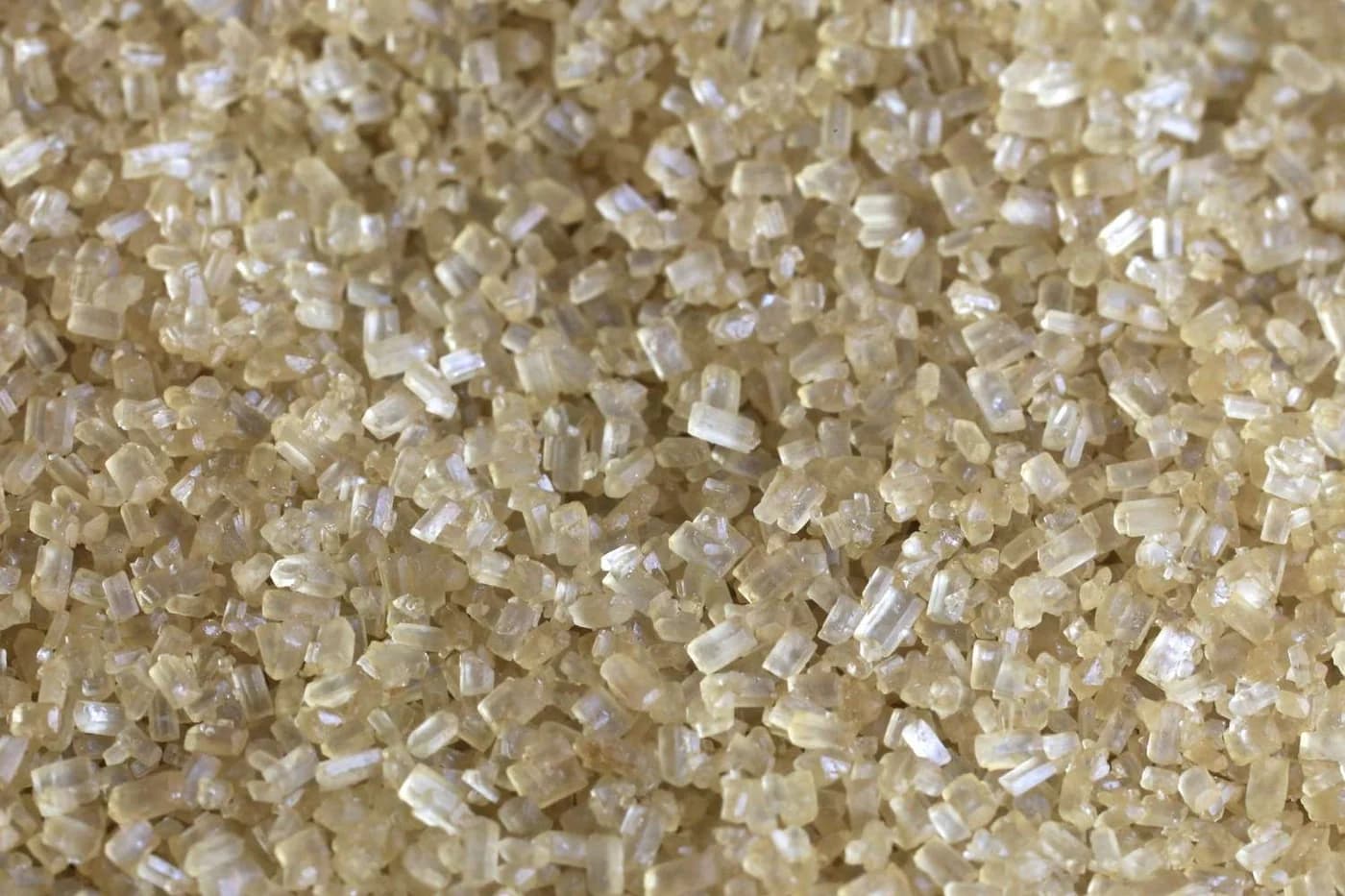
- Demerara sugar has coarse golden crystals.
- Brown colour does not mean nutrient-rich.
- It works best as a crunchy topping.
- With diabetes, count it like any sugar.
The golden crystals sprinkled over a café muffin are often demerara sugar. They look different from ordinary white sugar and add a satisfying crunch. That makes demerara useful in the kitchen, but it does not make a muffin a more nutritious food.
Demerara is best understood as a choice about flavour and texture. Knowing where those coarse crystals work well can help you use a small amount effectively, without treating a brown colour as a health benefit. You also do not need to buy a special sugar to make everyday eating healthier.
What makes it different?
Demerara is a cane sugar with large, pale-golden to light-brown crystals and a mild molasses flavour. Production methods vary, but the result is usually drier and coarser than a soft brown sugar.
The name originally comes from the Demerara region in what is now Guyana. Today, a product called demerara does not necessarily come from that region. In ordinary cooking, the name mainly tells you what texture and flavour to expect.
Its light caramel note is less intense than that of dark muscovado. The crystals are also quite different from powdered or icing sugar, which is fine enough for smooth icings. Choosing the right form can matter more to a recipe than choosing a particular brand.
Brown does not mean nutrient-rich
Demerara remains predominantly sugar. It supplies about four calories per gram, much like white sugar. An amount weighing 5 g contributes roughly 20 calories, whether it looks pale, golden or brown.
Small amounts of molasses-related minerals do not turn it into a useful source of iron, calcium or other micronutrients at normal portions. Eating more sugar to obtain those traces would bring much more sugar than nutritional benefit.
The word less-refined can describe processing, but it is not a guarantee of a meaningful advantage for weight, blood glucose or dental health. Treat demerara as a sweet ingredient you may enjoy, rather than a supplement hidden in the sugar jar.
Where the coarse crystals shine
Demerara is particularly useful when you want the crystals to remain noticeable. A light scattering can give texture and a little sweetness at the surface, where you taste it directly.
Good uses include:
- A small topping on a fruit crumble before baking.
- A few crystals on plain homemade biscuits.
- A crunchy finish on a tea loaf or occasional muffin.
- A measured amount in a chutney where its caramel note suits the flavour.
It can also sweeten tea or coffee, although the large crystals may take longer to dissolve. Stir and taste before adding more; undissolved sugar at the bottom can make the first sip seem less sweet than the final one.
Using it purposefully is more rewarding than adding it automatically to every dish. A topping can be a textural choice, but it still adds sugar to whatever is already in the recipe.
When it is the wrong substitute
A recipe that calls for caster sugar may depend on fine crystals dissolving or blending quickly. Coarse demerara can leave a grainy texture or change the way a cake mixture traps air.
Likewise, it is not a direct replacement for icing sugar in smooth frosting. If the recipe needs a syrup, the sugar must dissolve fully; crystals remaining in the pan can affect the result.
For a reliable bake, use a recipe written for demerara or one that explicitly allows it. If adapting a recipe, substitute by weight rather than assuming every cup of different sugar weighs the same. Crystal size changes how the sugar packs into a cup or spoon.
Reducing sugar in baking can also affect moisture, spread and browning. A dramatic reduction may produce a disappointing result even if the original recipe seemed very sweet. Start with a tested lower-sugar recipe when you want a substantial change.
Demerara, brown sugar and jaggery
These ingredients overlap in sweetness but are not identical. Soft brown sugar usually has finer crystals and more moisture; dark muscovado brings a stronger molasses flavour. Jaggery is a concentrated sweetener with a different texture and flavour that depends on its source and processing.
A substitution can change a dish. Jaggery may work beautifully in a traditional preparation without behaving like dry demerara in a biscuit topping. Choosing by the recipe gives a better result than assuming all brown sweeteners are interchangeable.
Nutritionally, none earns an unlimited portion because it looks traditional or natural. If a recipe uses several sweeteners, their contributions add together. Honey plus demerara is still more added sweetness, rather than two separate allowances.
What if you have diabetes?
Demerara can raise blood glucose. It is not a sugar-free sweetener, and its molasses flavour does not make it a reliable low-glucose alternative to white sugar.
For a person managing diabetes, the total carbohydrate and portion of the food matter. A cake contains more than the sugar sprinkled on top, while a large sweetened drink can deliver sugar without much fullness.
An occasional small dessert may fit an individual plan, but swapping the sugar colour does not make the portion irrelevant. If you already monitor glucose as part of your care, use the plan you have been given rather than treating demerara as an exemption.
Less sweetness can be a kitchen habit
For drinks, there is more flexibility than in baking. Measure your usual amount, reduce it gradually and give your taste time to adjust. A smaller cup can also reduce the amount needed if a large mug has become the default.
With breakfast, try fruit and spices for flavour before adding sugar. Ripe banana in porridge or cardamom in milk can change how much sweetness you want, although they do not cancel sugar that is already present.
The World Health Organization recommends limiting free sugars to reduce risks including unhealthy weight gain and tooth decay. That category includes added demerara, honey and syrups. You do not need to memorise a separate health rule for each sweetener.
Keep it dry and use it deliberately
Store demerara in a clean, dry, closed container away from moisture. Use a dry spoon so the crystals remain easy to portion. Buy a pack size that matches how often you actually bake or cook with it.
Demerara can be worth keeping for a favourite crumble or a particular biscuit texture. If you rarely use it, ordinary sugar may be all your kitchen needs. Its best role is to improve a dish in a modest amount, while the everyday food pattern does the larger work of supporting health.
Editorial sources
Frequently Asked Questions
Related Articles
Jaggery vs Sugar: Which Sweetener Is Actually Healthier?
Jaggery is often seen as the natural, guilt-free option, but nutritionally that’s only partly true — both are concentrated carbohydrates that affect.

Maple Syrup: A Flavourful Sweetener, Still Sugar
Enjoy maple syrup for its flavour while keeping portions and sugar claims realistic.
Brown Sugar vs White Sugar: Nutrition, Blood Sugar and Baking
Brown and white sugar are nutritionally almost identical. See what molasses really changes and how to cut free sugar in daily meals.

Is Diet Coke Healthy? Sugar, Sweeteners, Teeth and Caffeine
Diet Coke has almost no sugar, but it is still an acidic soft drink. What the swap does, what it does not, and how to keep it occasional.